You can refresh your everyday look with crochet braid styles that give you a new shape, texture, or color while keeping daily styling manageable. Save your favorites as you plan your next hair project, whether you love soft curls or neatly finished twists.
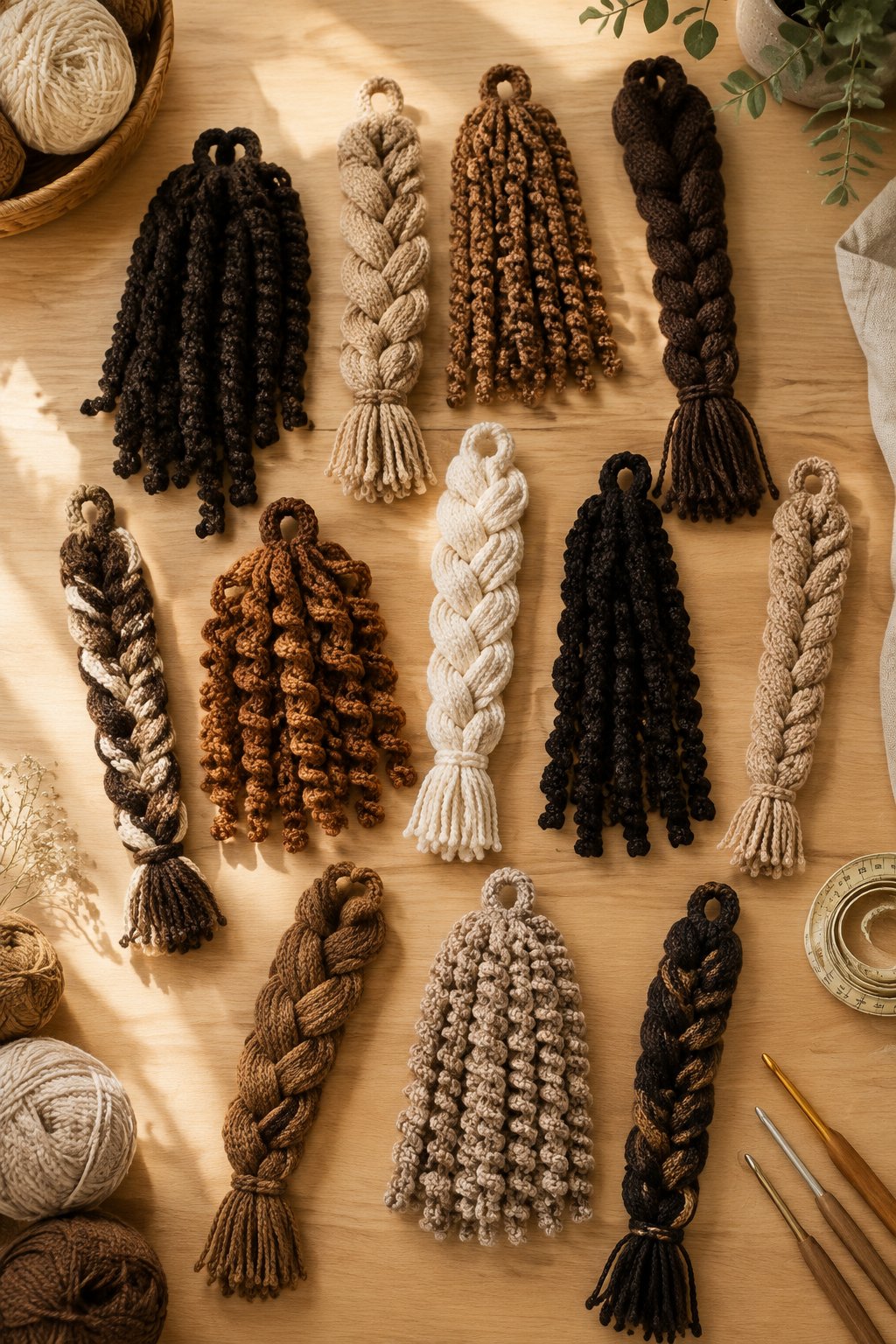
Your handmade creativity comes through in the placement, shaping, and finishing details. For these hairstyles, “crochet” describes attaching extensions with a latch hook; you use hair fibers for most looks, with yarn reserved for suitable yarn-loc designs. You get that cozy, hands-on project feeling through custom colors and careful finishing.
Quick picks:
- For a shorter routine: Side-Part Curly Crochet Bob.
- For a first installation: Shoulder-Length Crochet Passion Twists with pre-looped hair.
- For creative color: Two-Tone Crochet Yarn Locs.
1) Side-Part Curly Crochet Bob

A side-part curly crochet bob gives you a rounded shape with extra lift around your face. Choose natural black for a classic finish, or add a few dark brown curls near your part for gentle dimension. A jaw-to-neck length keeps your silhouette compact.
Use lightweight curly crochet hair and a small, smooth latch hook that passes comfortably beneath your base braids. Your texture comes from the extension’s curl pattern; you do not need crochet stitches or craft yarn. Ask for slightly longer curls toward the front.
Treat the shaping as an intermediate task, especially if you want an even rounded outline. Trim gradually on dry hair, checking both sides after each small adjustment. For everyday styling, lift your roots with your fingertips and tuck one side behind your ear without pulling your hairline tight.
|
Detail |
Specification |
|---|---|
|
Yarn Weight |
Not applicable; curly hair fiber |
|
Skill Level |
Intermediate |
|
Estimated Time |
Allow several hours |
2) Shoulder-Length Crochet Passion Twists

Shoulder-length passion twists give you soft movement with a relaxed, slightly rippled finish. Pick deep brown for subtle warmth, or blend black roots into caramel ends. Keeping your twists around shoulder level gives you enough length for a loose half-up style.
Choose pre-looped passion twists made from hair fiber, plus a latch hook sized to fit their loops. The visible texture comes from two-strand twisting and wavy fibers. Craft cotton and chunky yarn would change the finish and add different care needs.
You have an approachable first installation when your cornrow foundation is already secure and comfortable. Lay out your extensions before starting so you distribute them evenly across your head. Leave room between attachments, then check coverage before filling gaps. Wear a few twists loosely across one shoulder for a softer outline.
|
Detail |
Specification |
|---|---|
|
Yarn Weight |
Not applicable; pre-looped hair |
|
Skill Level |
Beginner |
|
Estimated Time |
Half-day project |
3) Medium Crochet Box Braids With Curled Ends

Medium crochet box braids with curled ends give you tidy definition through the lengths and playful movement at the tips. Choose black with chestnut ends for a gentle color shift. Keep the curl placement consistent if you want a balanced outline.
Select pre-braided crochet hair with factory-curled ends to simplify your project. You need a smooth latch hook and a base pattern suited to your planned part. Your braids use plaited hair fibers, so a yarn weight or crochet stitch count does not apply.
You will need intermediate placement skills if you want an individual-braid effect around your hairline. Check your attachment points before moving to the next row. Style your finished braids in a low ponytail with a broad fabric tie, leaving the curled tips free. Follow the hair label before applying heat or hot water.
|
Detail |
Specification |
|---|---|
|
Yarn Weight |
Not applicable; braided hair fiber |
|
Skill Level |
Intermediate |
|
Estimated Time |
Half-day project |
4) Tapered Afro Crochet Cut
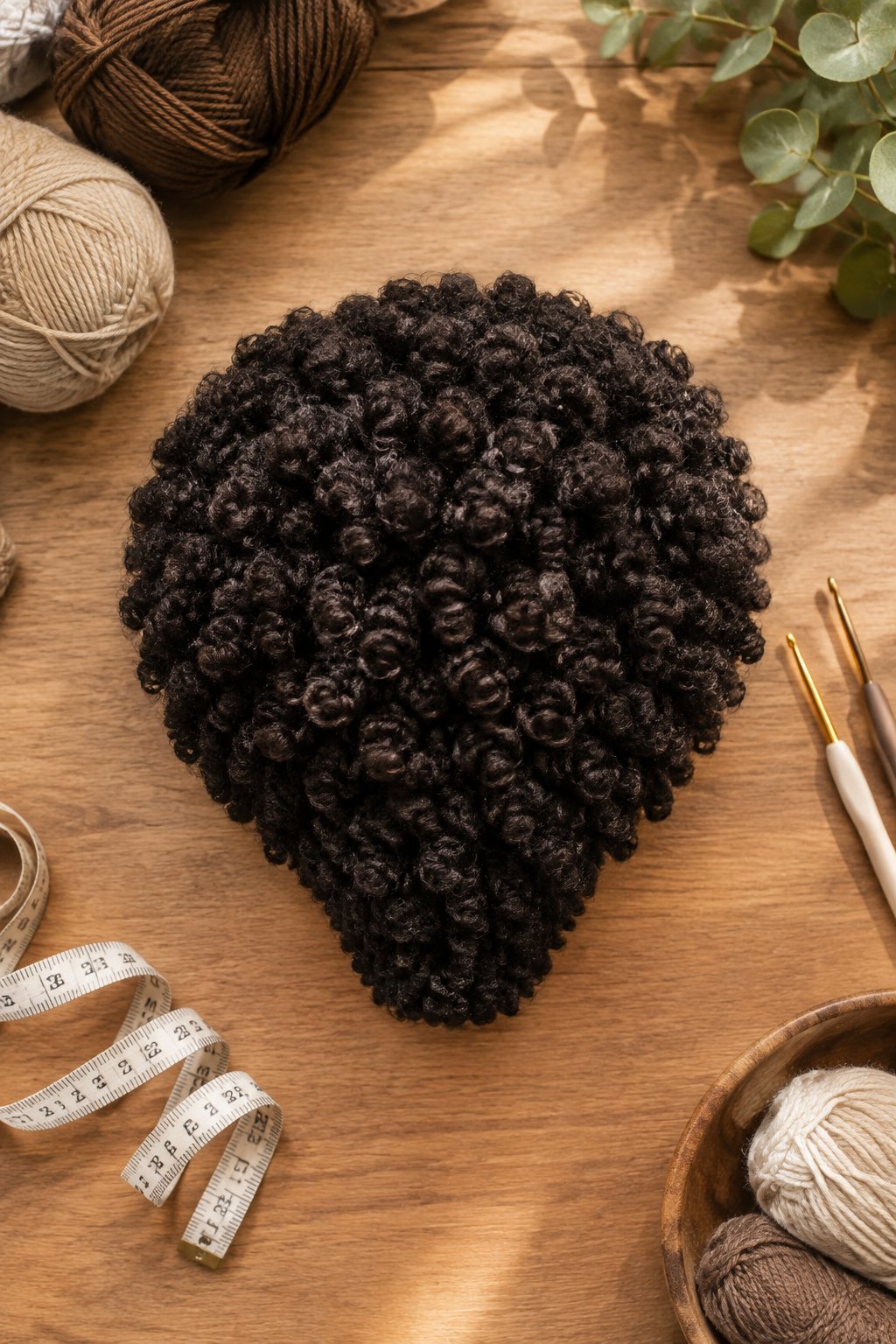
A tapered afro crochet cut gives you height through the crown and a close, rounded outline at the sides. Choose dark brown for a soft finish, or place a small copper accent near the front. Your strongest design detail is the change in length.
Use tightly coiled crochet hair that holds its shape after gentle separation. A small latch hook helps you work around the shorter perimeter sections. You create the silhouette through placement and trimming, with no yarn stitches involved.
Plan for intermediate shaping skills or book a stylist for the cut. Start with modest fullness because separating every coil increases volume quickly. Check your profile in a second mirror before shortening the back. For a simple everyday finish, lift only the crown and smooth the sides lightly with your palms to preserve the taper.
|
Detail |
Specification |
|---|---|
|
Yarn Weight |
Not applicable; coily hair fiber |
|
Skill Level |
Intermediate |
|
Estimated Time |
Half-day, including shaping |
5) Collarbone-Length Crochet Butterfly Locs

Collarbone-length butterfly locs give you a softly distressed texture with small loops along each loc. Choose espresso brown for a muted finish, or mix in a few warm highlights. The shorter length helps keep the looped outline easy to show off.
Use lightweight, pre-looped butterfly loc extensions and a latch hook that moves through the opening without stretching it. Your decorative loops come from wrapped hair fibers. Choose pieces with secure construction so loose texture stays intentional through everyday handling.
Installation suits an intermediate maker when you want neat coverage around a visible part. Keep each attachment relaxed, then let the loc hang freely before placing the next one. For styling, sweep your front pieces back with a wide clip. Avoid threading sharp accessories through the distressed loops, where they are easy to catch.
|
Detail |
Specification |
|---|---|
|
Yarn Weight |
Not applicable; wrapped hair fiber |
|
Skill Level |
Intermediate |
|
Estimated Time |
Allow several hours |
6) Boho Crochet Braids With Loose Curly Strands
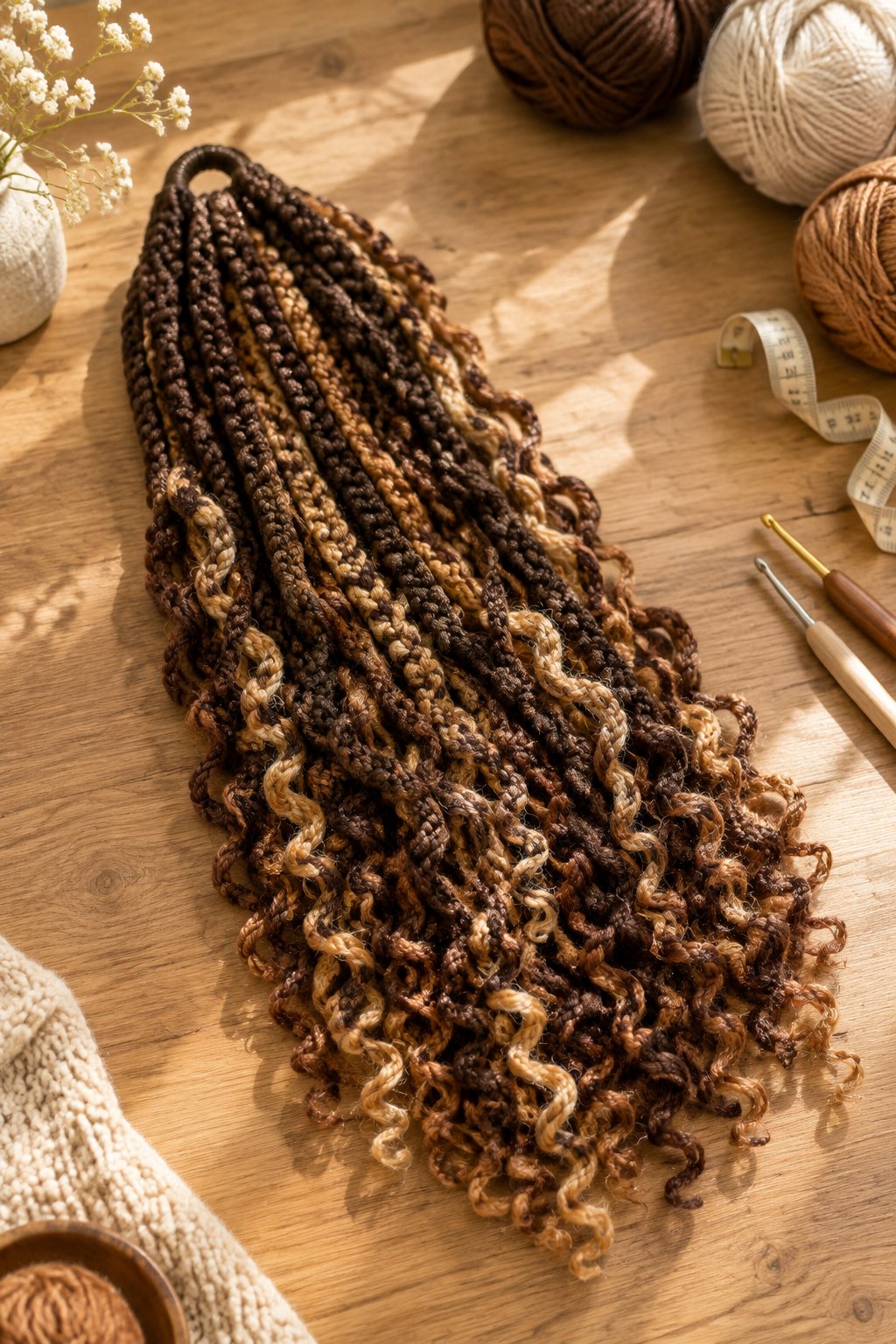
Boho crochet braids give you a mix of structured braids and loose curls for a flowing finish. Choose matching shades for quiet texture, or add honey-brown curls against darker braids. Place the loose strands unevenly enough to keep the pattern relaxed.
Start with pre-looped boho extensions to reduce the amount of separate attachment work. Use a small latch hook and check the fiber label for suitable products. Your key textures are plaiting and free curls; standard crochet stitches and yarn weights do not apply.
Choose this intermediate project when you are comfortable managing loose extension hair. Keep your curly accents sparse near the nape, where clothing creates friction. Wear your braids loose or gather them gently below the crown. Separate small tangles with your fingers before they develop into knots around neighboring braids.
|
Detail |
Specification |
|---|---|
|
Yarn Weight |
Not applicable; braided and curly hair |
|
Skill Level |
Intermediate |
|
Estimated Time |
Half-day project |
7) Layered Water-Wave Crochet Lob

A layered water-wave lob gives you a shoulder-skimming shape with soft, repeating waves. Pick a single deep shade to emphasize the texture, or use subtle brown highlights around your face. Light layering keeps the lower edge from looking too heavy.
Choose water-wave hair made for crochet installation and use a latch hook with a rounded tip. Preserve the wave bundles during attachment, then separate them only enough to reach your preferred fullness. You shape hair fibers here, so you do not need knitting or crochet yarn.
Your installation and haircut call for intermediate skills. Leave the front slightly longer if you want room for a side tuck. Trim dry waves in small sections because stretching them changes their apparent length. Pair your finished lob with a wide headband that rests comfortably behind your hairline.
|
Detail |
Specification |
|---|---|
|
Yarn Weight |
Not applicable; water-wave hair |
|
Skill Level |
Intermediate |
|
Estimated Time |
Half-day, including trimming |
8) Short Crochet Spring Twists

Short spring twists give you a bouncy, compact style with clear spiral texture. Choose black for a simple finish, or blend a few burgundy twists through the top. An ear-to-jaw length shows the spring shape without a long curtain of extensions.
Use pre-looped spring twists and a smooth latch hook that fits their openings. The two-strand construction and coiled fiber create the bounce. Skip craft yarn for this look so your finished texture matches the intended spring-twist shape.
You have a beginner-friendly attachment project once your foundation is prepared. Keep the twists loosely spaced at first, then check your coverage from several angles. Add pieces only where your base shows. For daily styling, move a few front twists to the opposite side or hold them with a small, smooth clip that closes without pinching your scalp.
|
Detail |
Specification |
|---|---|
|
Yarn Weight |
Not applicable; spring-twist hair |
|
Skill Level |
Beginner |
|
Estimated Time |
Allow several hours |
9) Long Crochet Goddess Locs With Wavy Ends

Long goddess locs give you a flowing shape with smooth loc lengths and loose, wavy tips. Choose black-to-brown ombré to emphasize the ends, or keep your color uniform for a quieter finish. The waves add movement around your lower layers.
Select pre-looped goddess locs with the ends already formed, plus a latch hook that glides through their loops. You get the wrapped texture from hair fiber. Avoid substituting heavy craft yarn if you want this particular drape and finish.
Treat this as an intermediate project because you need careful weight distribution across your foundation. Test a small section before committing to a dense installation. Wear your locs over one shoulder or secure them in a loose low ponytail. Keep dangling accessories limited near the tips, where extra weight pulls through the full length.
|
Detail |
Specification |
|---|---|
|
Yarn Weight |
Not applicable; loc extensions |
|
Skill Level |
Intermediate |
|
Estimated Time |
Half-day project |
10) Straight Crochet Lob With Blunt Ends

A straight crochet lob gives you a crisp outline that sits around your collarbone. Choose natural black for a sharp finish, or use dark chocolate for a softer effect. Your blunt ends make careful cutting and balanced density especially visible.
Pick straight crochet hair with a texture you like, such as lightly textured yaki fiber. Use a fine latch hook suited to your base braid size. Your smooth finish comes from the hair itself; craft yarn and stitch patterns are outside this design.
You will need intermediate attachment skills and precise trimming for an even perimeter. Plan your part before installation because straight hair exposes bulky attachment points. Ask a stylist to finish the cut if you want a clean line. Use heat only within the extension manufacturer’s stated limits, including on small touch-up sections.
|
Detail |
Specification |
|---|---|
|
Yarn Weight |
Not applicable; straight hair fiber |
|
Skill Level |
Intermediate |
|
Estimated Time |
Half-day, including cutting |
11) Curly Crochet Pixie With a Side-Swept Fringe

A curly crochet pixie gives you a close silhouette with a longer fringe sweeping across your forehead. Choose a deep base color with a few cinnamon curls at the front. The contrast draws attention to your fringe without changing the whole palette.
Use small-coil crochet hair and a compact latch hook that handles the perimeter comfortably. Keep your curl pieces intact during attachment so you retain definition. You build the style with hair placement and cutting, without yarn or fabric-making stitches.
This project needs intermediate shaping skills, especially around your ears. Leave extra length in the fringe until you have checked how the curls settle. Trim each side gradually and keep the back rounded. For an everyday variation, guide the fringe diagonally with your fingers and secure one small section using a flat pin.
|
Detail |
Specification |
|---|---|
|
Yarn Weight |
Not applicable; small-coil hair |
|
Skill Level |
Intermediate |
|
Estimated Time |
Half-day, including shaping |
12) Waist-Length Crochet Senegalese Twists

Waist-length Senegalese twists give you a sleek, rope-like texture with a long, defined outline. Choose a solid dark shade to highlight the twist pattern, or add restrained copper accents underneath. Your color placement becomes visible when you move or gather the lengths.
Choose lightweight, pre-looped Senegalese twists and a latch hook matched to their openings. The smooth finish comes from tightly formed two-strand twists. You do not need yarn, a standard crochet hook size, or a stitch pattern for this installation.
Plan this as an intermediate project with extra attention to comfort. Long extensions increase the load on your foundation, so compare the package weight before buying. Keep your finished style loose or gather it low with a broad tie. Avoid stacking the full length into a tightly secured bun at your crown.
|
Detail |
Specification |
|---|---|
|
Yarn Weight |
Not applicable; pre-twisted hair |
|
Skill Level |
Intermediate |
|
Estimated Time |
Half-day project |
13) Crochet Faux Hawk With Coily Curls

A crochet faux hawk gives you a raised center strip of curls with a close-fitting base at the sides. Choose dark coils with a copper center accent if you want extra definition. Your shape comes from focused height through the middle.
Use coily crochet hair and a small latch hook for controlled placement along your central braid rows. Ask for a foundation designed specifically for this silhouette. The texture comes from coiled hair fibers, while your base braids create the supporting structure.
You will want intermediate installation skills or help from a stylist for the directional foundation. Keep your side braids comfortably loose, even when you want a sleek finish. Build the center gradually so you control its width. Style your front curls forward for a rounded fringe, or lift them gently upward to show more forehead.
|
Detail |
Specification |
|---|---|
|
Yarn Weight |
Not applicable; coily hair |
|
Skill Level |
Intermediate |
|
Estimated Time |
Half-day project |
14) Crochet Braided Bob With Beaded Ends

A crochet braided bob with beaded ends gives you a defined shape and a customizable border. Pair dark braids with lightweight clear beads for a subtle finish, or choose warm wood-look beads. Keep the bead arrangement consistent if you want an even visual line.
Use bob-length pre-braided crochet hair, a small latch hook, and a bead-loading tool suited to your bead openings. Your braid texture comes from plaited hair fibers. Choose beads and securing methods compatible with the extensions, checking that every end stays closed.
This is an intermediate project because your finishing work adds weight and affects the outline. Start with one lightweight bead on selected braids before adding more. Check the feel around your temples and nape. Wear your bob loose, and remove any accessory that knocks against your skin or catches on clothing.
|
Detail |
Specification |
|---|---|
|
Yarn Weight |
Not applicable; braided hair |
|
Skill Level |
Intermediate |
|
Estimated Time |
Half-day, including beading |
15) Long Deep-Wave Crochet Hair With Face-Framing Layers

Long deep-wave crochet hair gives you pronounced waves with shorter pieces that open up your face. Choose deep brown with soft caramel framing for visible dimension. Begin your shortest layer near your chin if you want length around your cheeks.
Select deep-wave crochet hair and a latch hook with a smooth closure. Keep the wave sections organized during attachment to reduce early tangling. Your finished texture comes from the fiber’s wave pattern, so yarn weight and crochet stitches do not guide this project.
Installation and layering require intermediate skills. Keep your front density modest so the shorter pieces move freely. Trim on dry hair in its resting position, checking each side before taking more length. For everyday wear, gather the top section loosely with a broad clip and let your face-framing pieces fall forward without pulling at their roots.
|
Detail |
Specification |
|---|---|
|
Yarn Weight |
Not applicable; deep-wave hair |
|
Skill Level |
Intermediate |
|
Estimated Time |
Half-day, including layering |
16) Jumbo Crochet Havana Twists

Jumbo Havana twists give you bold, chunky texture with clearly defined sections. Choose matte black for a soft visual finish, or mix dark brown and auburn pieces. A shoulder-to-chest length lets you show the large twist shape without adding waist-length bulk.
Use lightweight, textured pre-looped Havana twists and a latch hook that fits the loops without forcing them open. Their chunky look comes from two-strand hair construction. Bulky craft yarn would create a different material feel and change your washing routine.
You have a beginner-friendly attachment option when your foundation is prepared for larger pieces. Match the number of extensions to the support your base provides. Large twists still need comfortable spacing and secure attachment. Wear them loose or gather only a few front pieces behind your head with a soft tie, leaving the remaining weight down.
|
Detail |
Specification |
|---|---|
|
Yarn Weight |
Not applicable; textured twist hair |
|
Skill Level |
Beginner |
|
Estimated Time |
Allow several hours |
17) Two-Tone Crochet Yarn Locs

Two-tone crochet yarn locs give you a matte, handmade finish with clear blocks of color. Pair black with burgundy for a muted palette, or choose brown with cream accents. Place your lighter color near the ends to emphasize the wrapped shape.
For an experimental set, start with smooth worsted-weight acrylic yarn and make a sample loc before preparing the full batch. Dense cotton and chunky yarn add bulk, especially when wet. Use a hair latch hook for attaching suitable preformed loops; standard crochet stitches are optional decorative construction.
Treat wearable yarn locs as an intermediate project and check your skin’s response to the material first. Keep your sample short and light. Plan generous drying time after washing, and avoid flame or heat tools. For gifting, share a color swatch or design plan so your recipient chooses their fit.
|
Detail |
Specification |
|---|---|
|
Yarn Weight |
Worsted, category 4 |
|
Skill Level |
Intermediate |
|
Estimated Time |
Weekend project |
How to Choose Your Crochet Style and Materials
Choose your crochet style by matching its length and loose-fiber care needs to the time you want to spend on your hair. Use this comparison to narrow your saved looks before buying materials.
|
Style |
Length |
Main Texture |
Routine Focus |
|---|---|---|---|
|
Side-Part Curly Bob |
Jaw to neck |
Loose curls |
Shape preservation |
|
Passion Twists |
Shoulder |
Rippled twists |
Gentle separation |
|
Box Braids With Curled Ends |
Medium |
Braids and curls |
Tip care |
|
Tapered Afro |
Short |
Tight coils |
Crown shaping |
|
Butterfly Locs |
Collarbone |
Looped locs |
Snag prevention |
|
Boho Braids |
Variable |
Braids and curls |
Curl detangling |
|
Water-Wave Lob |
Shoulder |
Soft waves |
Wave separation |
|
Spring Twists |
Ear to jaw |
Springy twists |
Root checks |
|
Goddess Locs |
Long |
Locs and waves |
Loose-end care |
|
Straight Lob |
Collarbone |
Straight |
Perimeter upkeep |
|
Curly Pixie |
Short |
Small curls |
Fringe shaping |
|
Senegalese Twists |
Waist |
Smooth twists |
Weight management |
|
Coily Faux Hawk |
Short sides |
Coily center |
Silhouette upkeep |
|
Beaded Braided Bob |
Bob |
Beaded braids |
Accessory checks |
|
Deep-Wave Layers |
Long |
Defined waves |
Length detangling |
|
Havana Twists |
Shoulder to chest |
Jumbo twists |
Attachment checks |
|
Two-Tone Yarn Locs |
Custom |
Wrapped yarn |
Thorough drying |
Which Length and Texture Fit Your Everyday Routine?
Choose a short bob or pre-looped twists if you want fewer loose lengths to manage. Your short style still needs scalp care, but you spend less time separating long curls.
Pick boho braids or deep waves when you enjoy hands-on texture maintenance. Loose strands require careful finger-detangling, especially where your hair rubs against collars.
Check your chosen length against your workout routine and work requirements. If you need to gather your hair regularly, leave enough length for a loose tie and choose a foundation that supports that movement.
How Do Hair Fiber, Density, and Added Weight Affect Comfort?
Your total extension weight and attachment tension affect comfort more directly than the style name. Compare package weights and plan how many packs you expect to use. Two styles with the same length will feel different when their density differs.
Start with a lighter installation, then inspect coverage before adding pieces. Extra extensions increase the load on your base braids, especially around fine edges.
Check whether your fiber is synthetic, human hair, or a blend. Follow its care label for washing and heat limits. If you have reacted to extension hair before, discuss suitable materials with your stylist and a healthcare professional before installing a full set.
Which Crochet Latch Hook and Supplies Do You Need?
Choose a hair latch hook with a rounded tip, a smooth closure, and a size that passes beneath your base braid without force. The hook must also fit the extension’s loop. Craft hook sizes do not translate directly to hair installation.
Prepare your workspace with:
- A rat-tail comb and sectioning clips.
- Two mirrors for checking your back sections.
- Suitable extensions and small scissors.
- A gentle cleanser and a satin bonnet.
Open and close the latch before starting to check for rough movement. Keep your scissors separate from your attachment work. Use them only when you have clearly identified the extension section you intend to cut.
When Is Yarn Appropriate Instead of Braiding Hair?
Use yarn when you specifically want yarn locs and have planned for their texture, weight, and drying needs. Your yarn choice should support a light, comfortable wearable piece.
Make one sample using smooth acrylic yarn before preparing a full set. Check its weight and test how long it takes to dry after washing. Worsted yarn gives you a clear starting point; finished loc thickness also depends on strand count and wrapping.
Reserve chenille and heavily shedding novelty yarns for other craft projects. Keep wearable yarn away from flame, and follow the yarn label’s care directions. If your scalp becomes irritated during a trial, remove the sample.
Installation, Maintenance, and Gentle Removal
Build your installation around a comfortable foundation, accessible scalp care, and a clear removal plan. Your style stays manageable when you check its condition throughout wear.
Which Installations Are Beginner-Friendly?
Start with pre-looped spring twists, passion twists, or Havana twists on a professionally prepared cornrow base. You get to practice attachment without also creating every extension from loose fiber.
Work with clean, fully dry hair that has been gently detangled. Once your foundation is ready, follow the extension manufacturer’s attachment instructions. Practice one loop at a time, checking that your latch has closed before drawing it back through.
Allow several hours for a first attempt, with extra time for your foundation. The list’s time estimates are planning allowances for DIY work; your speed and chosen density will change the schedule. Use a stylist for intricate parts or a tailored haircut.
How Can You Minimize Tension on Your Scalp and Edges?
Keep your base braids and extension attachments comfortable from the start. Pain, scalp tenting, or persistent pulling means you need to loosen or remove the affected attachment.
Use fewer extensions around delicate areas, and leave fine perimeter hairs free from added weight. Check your scalp again after the installation settles and after your first night.
Avoid tight updos that gather the full extension weight at one point. If you notice thinning, bumps, or ongoing tenderness, remove the source of tension and seek advice from a dermatologist. Prompt attention helps limit further damage from repeated pulling.
How Should You Refresh and Protect Your Style Overnight?
Protect your style with a roomy satin bonnet or a satin pillowcase that reduces friction. Gather long extensions loosely so your nighttime setup feels comfortable at the roots.
Separate loose curls with your fingers in small sections. Follow the fiber label before using mousse, oil, or leave-in products, and apply only what you need. Heavy buildup makes scalp cleaning harder.
Clean your scalp as needed, using gentle pressure and thorough rinsing. Allow your base braids and extensions to dry completely before covering them for sleep. Give dense locs and yarn styles extra drying time, checking the roots as well as the outer lengths.
When Should You Remove the Style?
Remove your crochet style when you develop discomfort, persistent tangling, or buildup that you cannot clean effectively. Follow the extension maker’s wear guidance and your stylist’s advice, while checking your own scalp throughout wear.
Work under bright light and release one attachment at a time. Find your natural hair before using scissors, and cut only a clearly separated extension section. Ask for help when a knot sits too close to your base braid.
After removing the extensions, undo your foundation gently. Detangle with a suitable conditioner or detangling product before shampooing to help release shed hair. If your scalp has sores or lasting pain, arrange a dermatologist appointment before your next installation.