You give everyday outfits an elegant finish with crochet shawls and wraps that add soft texture and a graceful drape. With these 15+ crochet shawls and wraps Styles for Effortlessly Elegant Outfits, you have plenty of cozy, save-worthy inspiration for your next handmade layer.
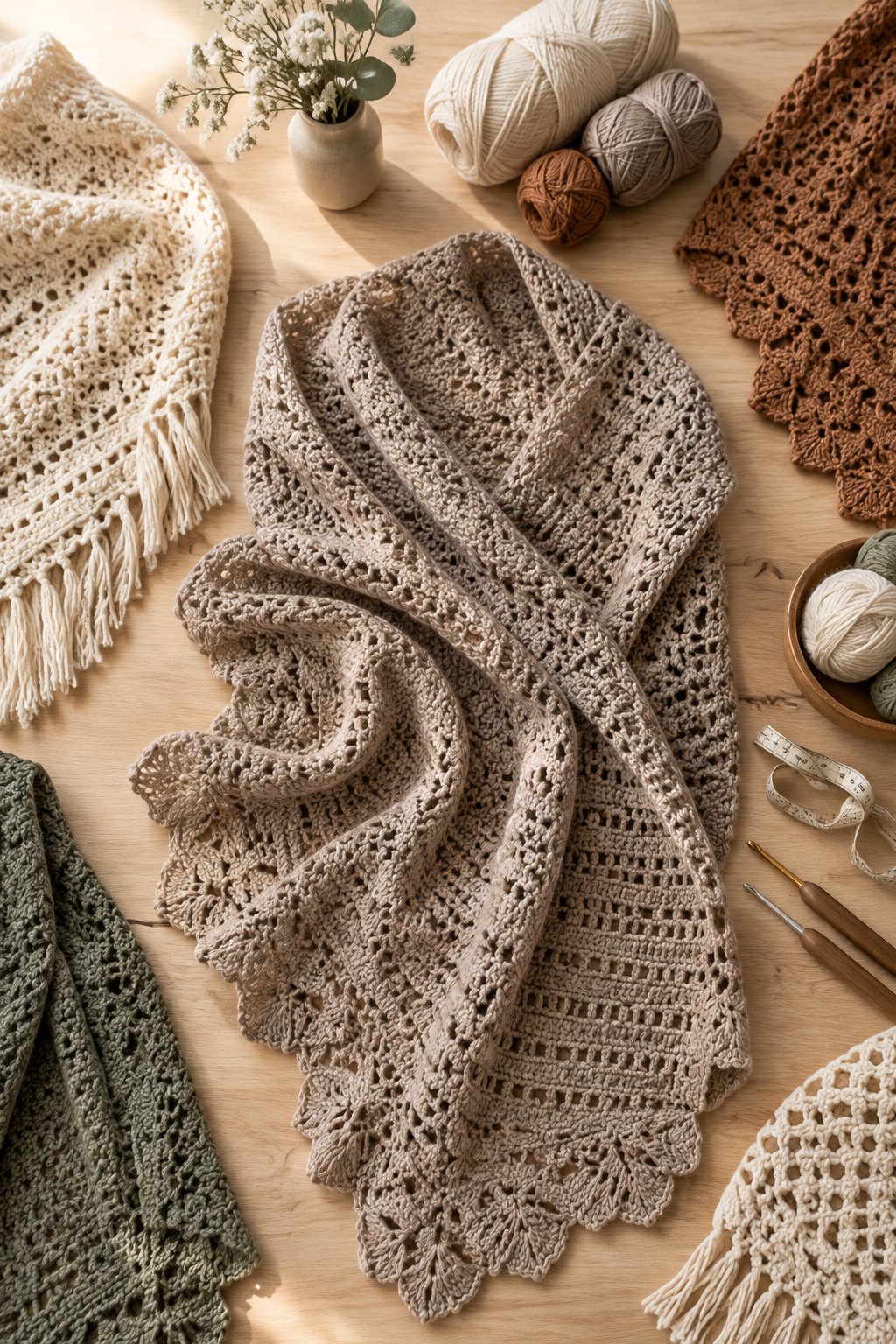
You can start with a familiar stitch or stretch your skills with decorative lace. Choose a shape you enjoy wearing, then match its color to clothes already in your closet. Treat the project times below as rough estimates for adult-size pieces; your pace, finished size, and stitch density will affect the total.
1) Granny-Stitch Triangle Shawl With Fringe Over Denim
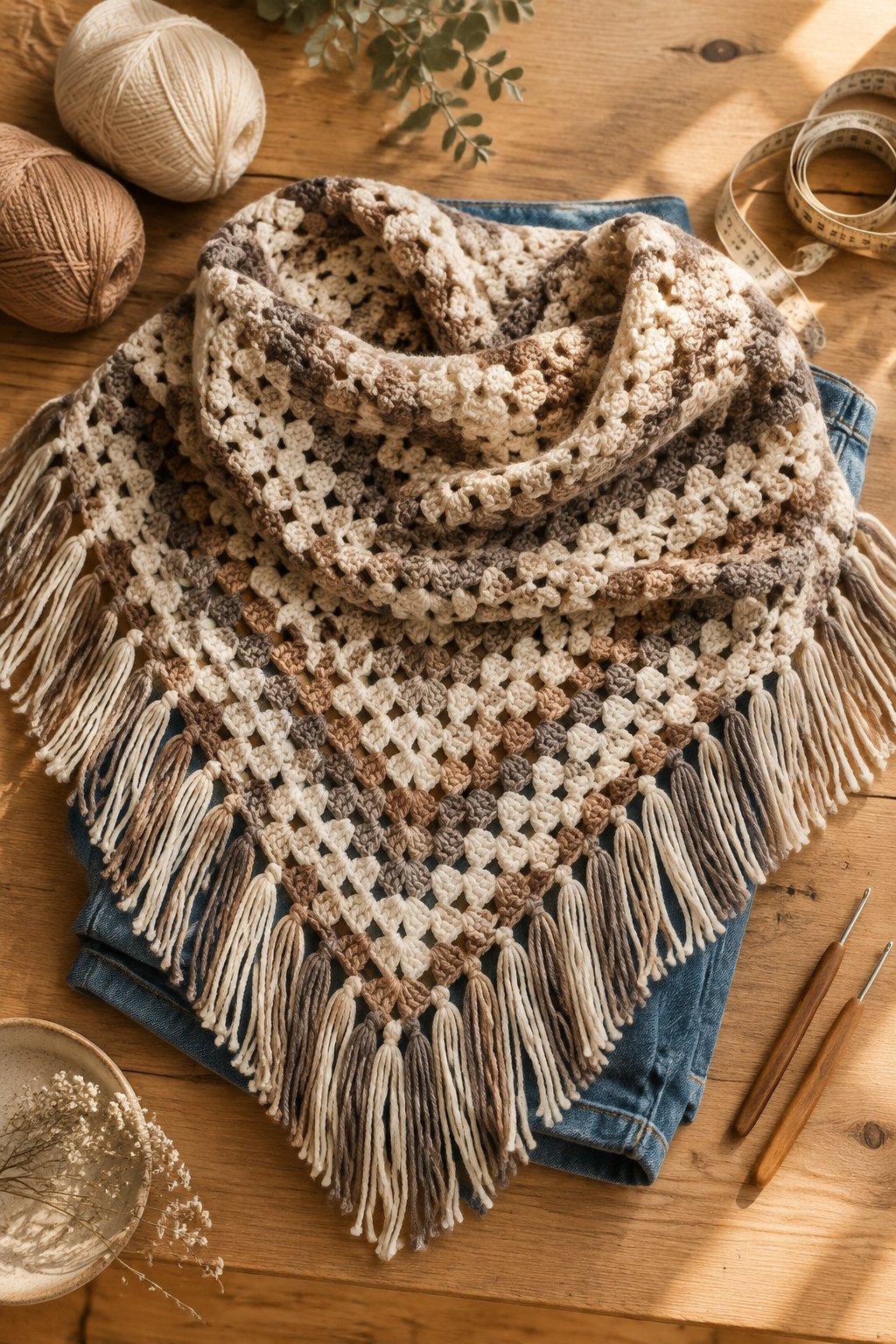
You give denim a relaxed, handmade finish with a granny-stitch triangle in rust, cream, or faded blue. Its pointed shape sits neatly across your back, while fringe adds movement along the lower edges. For an easy color plan, repeat one shade from your favorite jeans or shirt.
Choose worsted-weight acrylic or a washable wool blend and begin with a 5.5 mm hook. You’ll work groups of double crochet into spaces, with increases shaping the center and outer corners. Mark those increase points so you catch missed groups early.
As a beginner, you’ll appreciate the clear repeats once you establish the first few rows. Wear the point down your back or bring it forward for scarf-style coverage. Cut fringe from a cardboard template, and keep it short enough to clear your bag straps.
|
Detail |
Specification |
|---|---|
|
Yarn Weight |
Worsted, #4 |
|
Skill Level |
Beginner |
|
Estimated Time |
10–16 hours |
2) Shell-Stitch Rectangular Wrap Over a Slip Dress
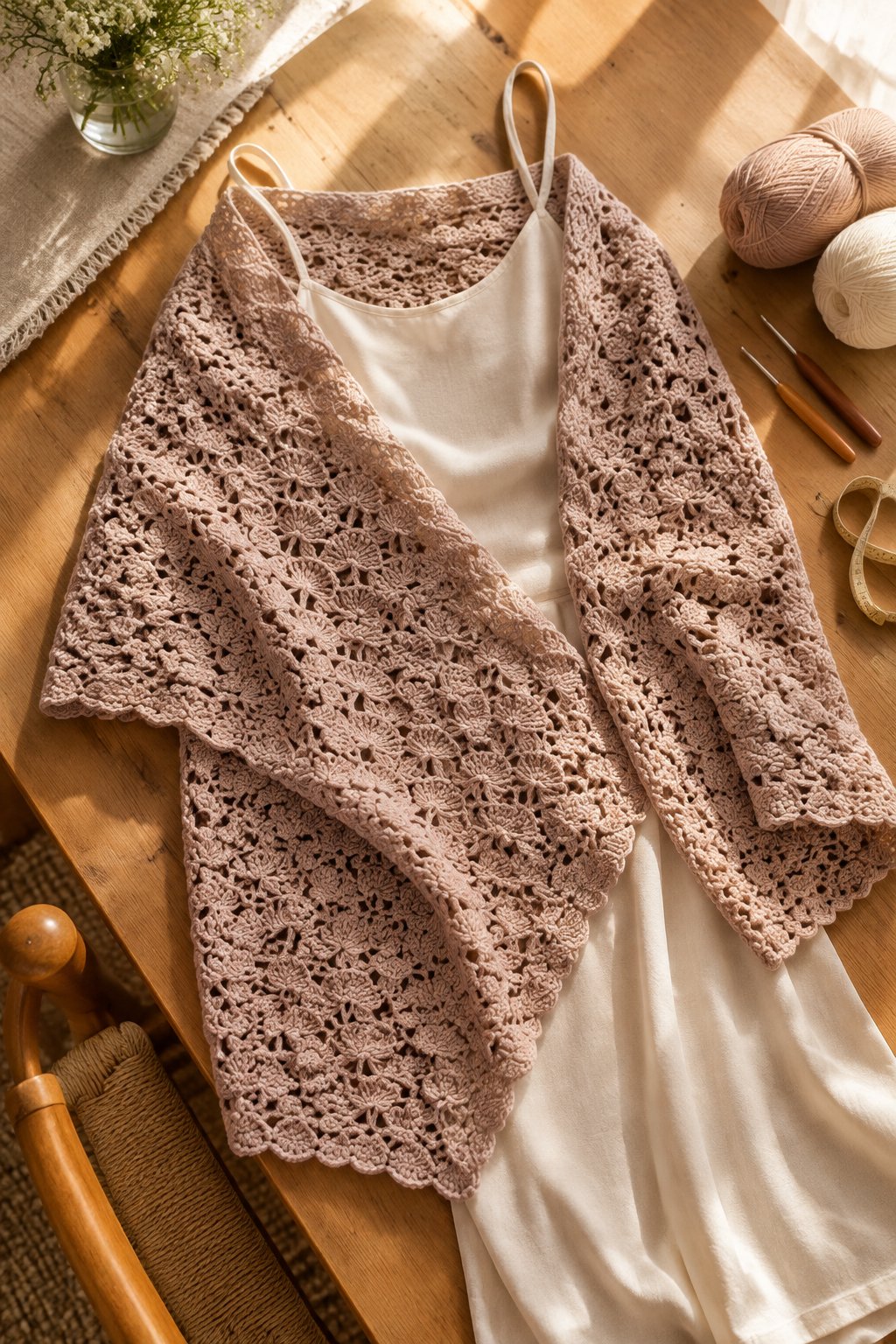
A shell-stitch rectangle gives your slip dress soft coverage and a scalloped finish. You get a dressy look with champagne, dusty rose, or deep plum, especially when the yarn has a gentle sheen. Keep the wrap long enough for both ends to fall comfortably near your elbows.
For fluid fabric, choose DK-weight bamboo-cotton yarn and test a 4.5 mm hook. Your shells will combine several double crochets in one stitch or space, separated by shorter stitches. Count the repeats across each row to keep the sides even.
You’ll find this an easy project after you’re comfortable reading a stitch repeat. Wear it loosely across your shoulders so the shell pattern stays visible. Before adding a border, check whether your starting and finishing edges look balanced when folded together.
|
Detail |
Specification |
|---|---|
|
Yarn Weight |
DK, #3 |
|
Skill Level |
Easy |
|
Estimated Time |
14–22 hours |
3) Cotton Mesh Stole for Linen Summer Outfits

For a light layer over linen, you’ll get airy coverage from a narrow cotton mesh stole. White, oatmeal, and pale aqua suit its clean grid, while a bright coral adds contrast to neutral clothes. The rectangular shape also folds neatly into your summer tote.
Use sport-weight cotton with a 4 mm hook as your starting combination. You’ll alternate chains and double crochet, keeping the chain spaces consistent so the openings stay even. A smooth yarn helps you see where to place each stitch.
This beginner-friendly style gives you a useful first project in openwork. Drape it over a sleeveless linen top or loop it once around your neck when the air conditioning feels cool. Add a narrow single-crochet border to strengthen the edges, checking that your stitches leave the corners flat.
|
Detail |
Specification |
|---|---|
|
Yarn Weight |
Sport, #2 |
|
Skill Level |
Beginner |
|
Estimated Time |
8–14 hours |
4) Asymmetrical Gradient Shawl With a Simple Black Dress

You turn a plain black dress into a colorful outfit with an asymmetrical gradient shawl. A long, angled triangle draws attention across your shoulders, and a teal-to-violet fade gives the fabric depth. Let the changing yarn color provide the detail while you keep your accessories small.
Choose a fingering-weight gradient cake and try a 4 mm hook for a loose fabric. You’ll build the shape through increases along one side, using double crochet or a simple eyelet repeat. Check the cake’s yardage against your chosen pattern before starting.
For an easy-level project, select a design with a short repeat and clearly marked increase rows. Place the longest tip over one shoulder, leaving the opposite end lower. If you join another cake, match the colors at the join for a smooth transition.
|
Detail |
Specification |
|---|---|
|
Yarn Weight |
Fingering, #1 |
|
Skill Level |
Easy |
|
Estimated Time |
18–28 hours |
5) Worsted-Weight Pocket Shawl With Jeans and Ankle Boots

With a pocket shawl, you get cozy coverage and a casual layer for jeans and ankle boots. Choose camel, charcoal, or olive for an easy match with your wardrobe. Its long rectangular body hangs down your front, with patch pockets adding a useful handmade detail.
Start with worsted-weight acrylic or wool-blend yarn and a 6 mm hook. Half double crochet gives you a substantial fabric, while back-loop rows add gentle ribbing. Make both pockets from the same stitch count so their finished sizes match.
You’ll find this beginner-friendly if you’re comfortable sewing straight seams. Try on the shawl before attaching the pockets, then pin them where your hands naturally rest. Reinforce each upper corner with a few extra stitches, and carry light items to help your pockets hold their shape.
|
Detail |
Specification |
|---|---|
|
Yarn Weight |
Worsted, #4 |
|
Skill Level |
Beginner |
|
Estimated Time |
14–22 hours |
6) Lace Crescent Shawl for Wedding Guest Outfits
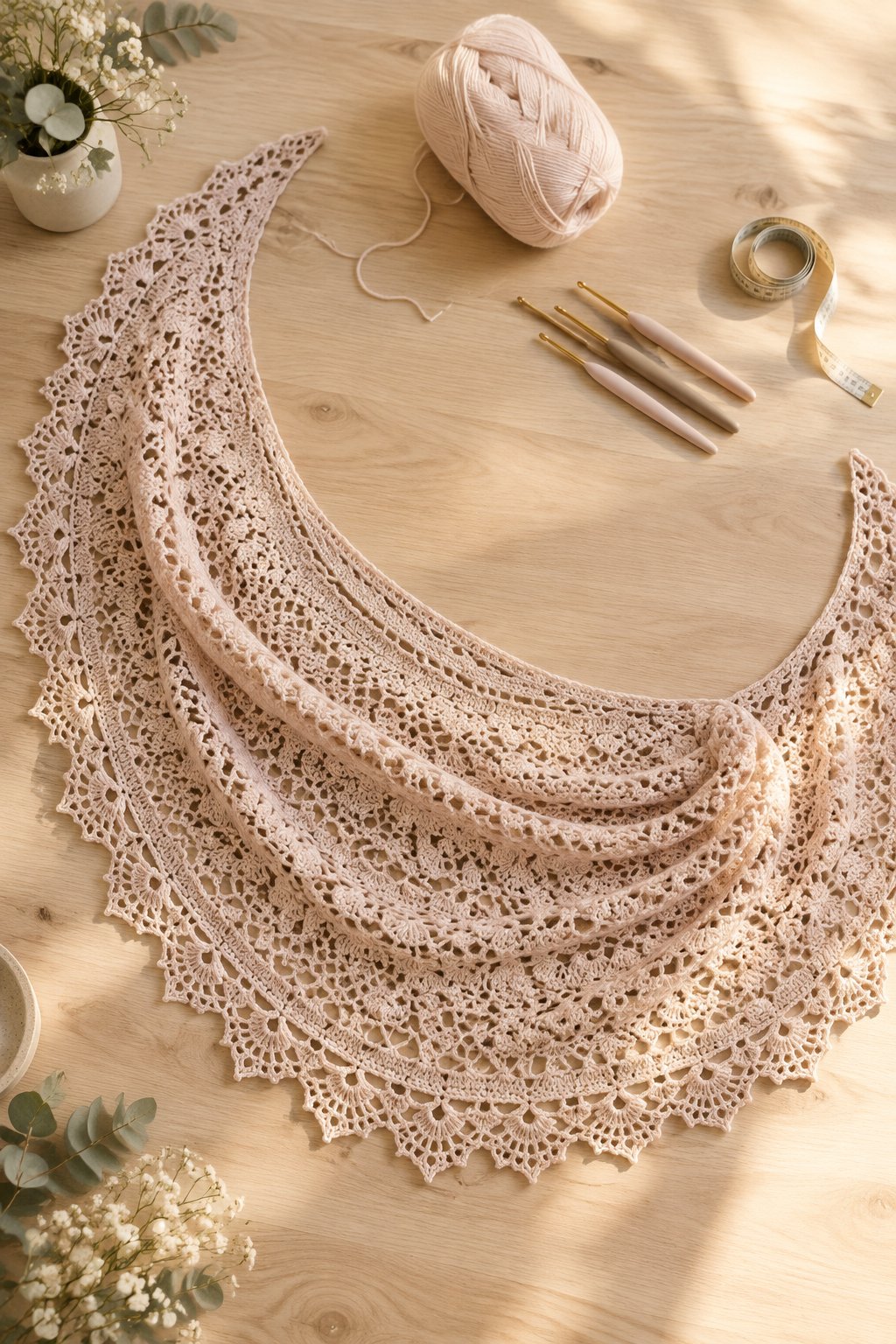
A lace crescent gives you delicate shoulder coverage with curved ends that settle around your arms. Soft silver, sage, or muted lavender pairs beautifully with a wedding guest dress. You’ll get the clearest lace detail from a solid color with minimal fuzz.
Use fingering-weight merino-silk yarn and test a 3.5–4 mm hook. Your pattern might combine chain arches with grouped double crochets and increases spread across the rows. Place markers between repeat sections so you can check counts before the rows become long.
Choose this intermediate project when you’re ready to follow a lace chart alongside written instructions. Try it over your planned outfit before deciding on the final depth. For outdoor events, allow enough upper-back coverage to feel comfortable through dinner, and keep decorative points clear of bracelets that might catch them.
|
Detail |
Specification |
|---|---|
|
Yarn Weight |
Fingering, #1 |
|
Skill Level |
Intermediate |
|
Estimated Time |
25–40 hours |
7) Two-Tone Chevron Wrap Over a Turtleneck

You add crisp pattern to a plain turtleneck with a two-tone chevron wrap. Try cream and espresso for a soft contrast, or navy and gray for a cooler palette. The repeated peaks and valleys give your rectangular layer a lively edge without extra trim.
Choose DK-weight wool or an acrylic-wool blend with a 4.5–5 mm hook. You’ll create the zigzags through grouped increases at the peaks and decreases at the valleys. Keep a marker in each peak while you learn the repeat.
This easy-level project suits you once you’re confident counting stitches and working decreases. Change colors at the row ends, leaving tails long enough for secure weaving. Wear one end over your shoulder to show the stripes diagonally, and keep your turtleneck smooth so the textured layers sit comfortably together.
|
Detail |
Specification |
|---|---|
|
Yarn Weight |
DK, #3 |
|
Skill Level |
Easy |
|
Estimated Time |
16–24 hours |
8) Pineapple Lace Shawl With a Flowy Maxi Dress

You bring intricate, vintage-inspired detail to a maxi dress with a pineapple lace shawl. Repeated teardrop motifs give the triangular fabric an airy look, especially in ivory, terracotta, or sea green. Pair a solid shawl with your printed dress to keep the lace easy to see.
For defined motifs, use smooth sport-weight cotton and start swatching with a 3.5 mm hook. You’ll work chains, fans, and clustered stitches according to the pattern’s lace chart. Check every motif row carefully because an extra chain space shifts the rows above it.
Save this intermediate design for a project where you enjoy following detailed instructions. Rest it across your upper arms for coverage that leaves your neckline visible. If you add tassels, keep them small so their weight places less strain on the openwork tips.
|
Detail |
Specification |
|---|---|
|
Yarn Weight |
Sport, #2 |
|
Skill Level |
Intermediate |
|
Estimated Time |
25–40 hours |
9) Corner-to-Corner Colorblock Wrap With Tailored Trousers
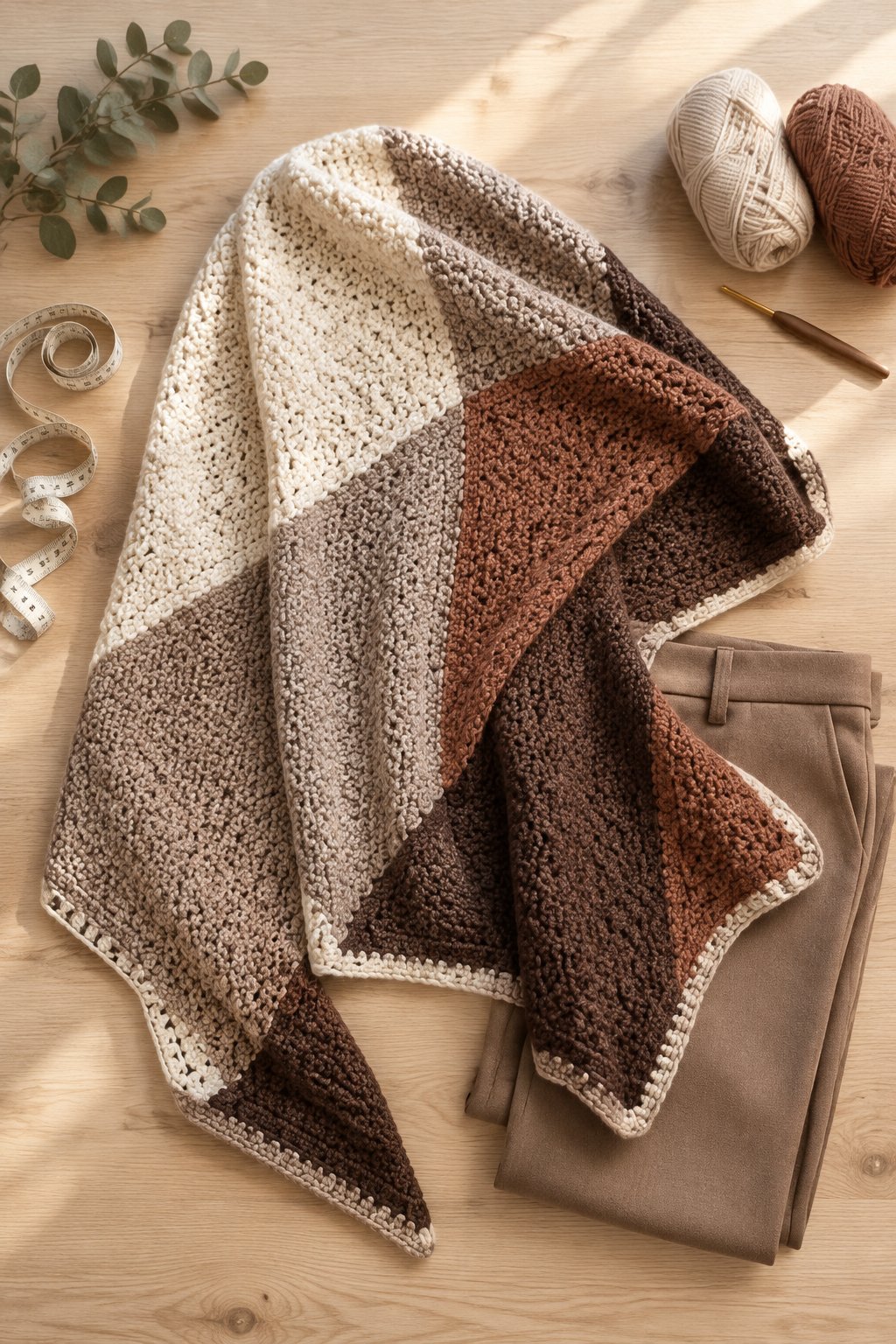
For a polished layer with tailored trousers, you’ll get strong geometric lines from a corner-to-corner colorblock wrap. Combine cream with camel, or try slate with a narrow mustard panel. The small diagonal blocks give your rectangle texture while broad color sections keep the design readable.
Use DK-weight acrylic or a wool blend and a 5 mm hook. Your basic blocks combine chains with double crochet, growing diagonally from one corner. Follow a rectangular C2C pattern so you know when to increase one edge while decreasing the other.
You’ll find this an easy next step after learning basic double crochet. Use separate yarn balls for distinct color areas to keep long strands off the back. Drape the finished wrap evenly over both shoulders, with the color boundaries visible against your plain top.
|
Detail |
Specification |
|---|---|
|
Yarn Weight |
DK, #3 |
|
Skill Level |
Easy |
|
Estimated Time |
18–28 hours |
10) Chunky Ribbed Shoulder Wrap With a Belted Midi Dress

A chunky ribbed shoulder wrap gives your belted midi dress a warm, sculpted top layer. You’ll get a balanced silhouette by keeping the wrap shallow enough to leave your waist visible. Choose warm gray, cinnamon, or cream for clear ribbing and easy outfit pairing.
Try bulky-weight wool-blend yarn with an 8 mm hook. Back-loop half double crochet creates raised ridges across a simple rectangle, depending on your working direction. Check the fabric over your shoulder while swatching; dense ribbing needs enough flexibility to bend comfortably.
This beginner project suits you if you want substantial texture from one repeated stitch. Leave the ends open or follow a pattern with a button closure. If you add a button, sew a small backing button behind it to spread the pull across your thick crochet fabric.
|
Detail |
Specification |
|---|---|
|
Yarn Weight |
Bulky, #5 |
|
Skill Level |
Beginner |
|
Estimated Time |
6–10 hours |
11) Floral Motif Shawl With a Plain Cotton Sundress

You give a plain cotton sundress a playful focal point with a shawl made from joined flower motifs. Try peach petals with golden centers, using cream joining rounds to connect the colors. A triangular layout creates a pointed back, while a rectangular arrangement gives you straighter ends.
Choose sport-weight cotton with a 3.5 mm hook for flowers that hold their shape. You’ll use petal clusters and chain spaces, then join the motifs with seams or a pattern’s join-as-you-go method. Make one complete sample before preparing all your flowers.
Choose this intermediate project if you enjoy small, portable pieces and careful finishing. Lay out your motifs before joining so you can balance the colors. Weave in tails as you complete each flower, leaving the final assembly easier to manage.
|
Detail |
Specification |
|---|---|
|
Yarn Weight |
Sport, #2 |
|
Skill Level |
Intermediate |
|
Estimated Time |
25–40 hours |
12) Tunisian Honeycomb Wrap for a Textured Office Layer
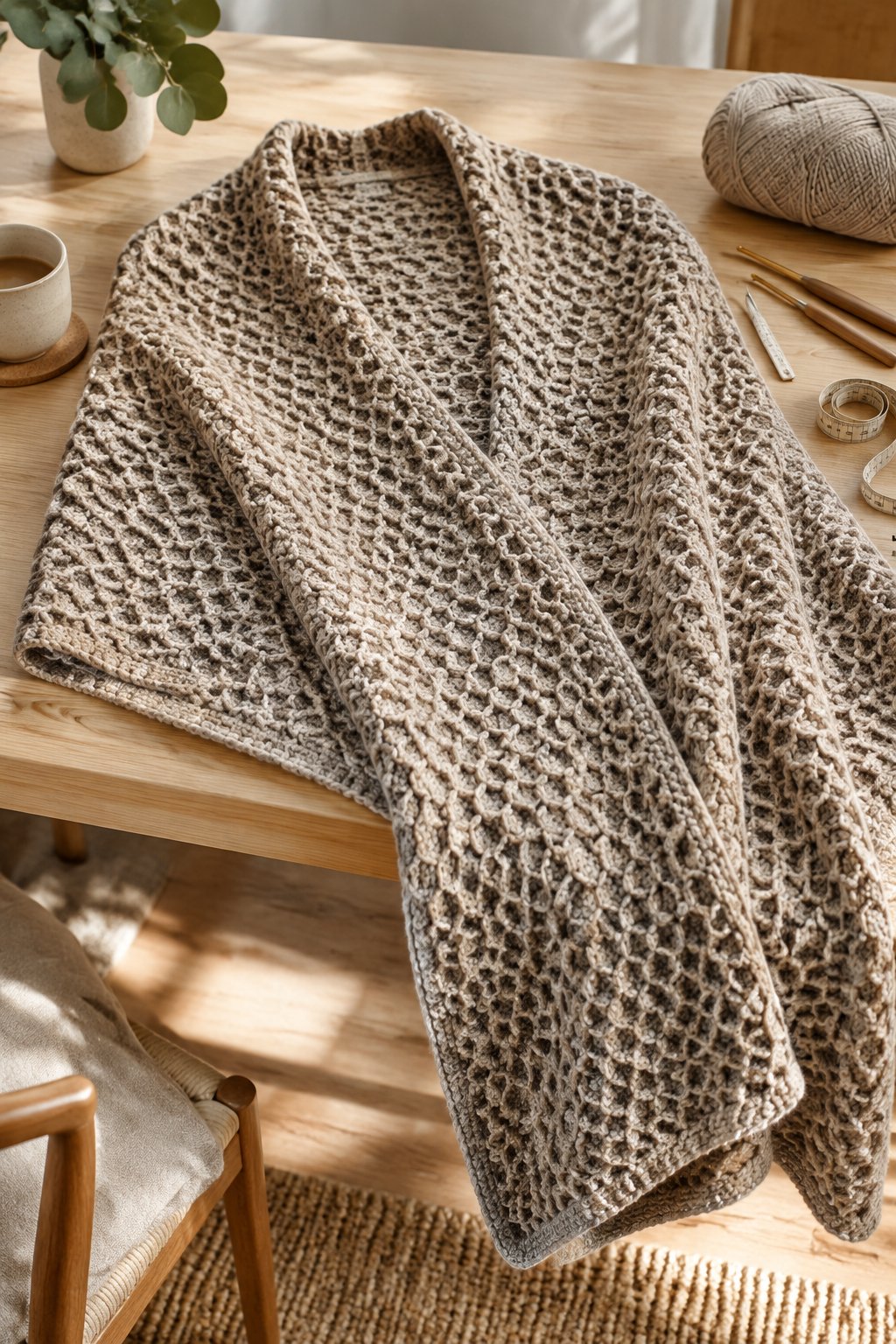
You get a neat, richly textured office layer from a Tunisian honeycomb wrap in a solid neutral. Choose charcoal, oatmeal, or muted blue to make the small cells visible. A straight rectangular shape sits cleanly over your blouse and folds across the back of a chair.
Use DK-weight wool-blend yarn and test a 6–6.5 mm Tunisian hook with a cable long enough for your stitches. You’ll alternate Tunisian simple and purl stitches, changing their positions on following rows. Keep the return passes relaxed to support an even fabric.
This intermediate choice introduces you to holding a full row of loops on the hook. Check your edge stitches carefully, especially at the end of each forward pass. Wear the wrap open across your shoulders, and choose a smooth yarn for crisp texture against your work clothes.
|
Detail |
Specification |
|---|---|
|
Yarn Weight |
DK, #3 |
|
Skill Level |
Intermediate |
|
Estimated Time |
22–35 hours |
13) Filet Crochet Rose Stole Over a Monochrome Outfit

A filet crochet rose stole gives your monochrome outfit a delicate floral pattern through open and filled squares. You’ll see the design clearly when you choose some contrast, such as a silver stole over charcoal clothing. Its narrow rectangular shape keeps the roses arranged in a clean panel.
Select smooth fingering-weight cotton and try a 2.75–3.25 mm hook. You’ll form the grid with double crochet and chains, following a chart to place the solid areas. Check whether your pattern uses three- or four-stitch mesh before calculating the foundation chain.
You’ll want intermediate chart-reading skills, even though the individual stitches are basic. Mark completed rows and check your rose outlines at regular intervals. Wear the stole with one flat panel across your chest so the motif stays visible, and finish with a restrained border.
|
Detail |
Specification |
|---|---|
|
Yarn Weight |
Fingering, #1 |
|
Skill Level |
Intermediate |
|
Estimated Time |
25–40 hours |
14) Broomstick Lace Wrap With a Satin Camisole
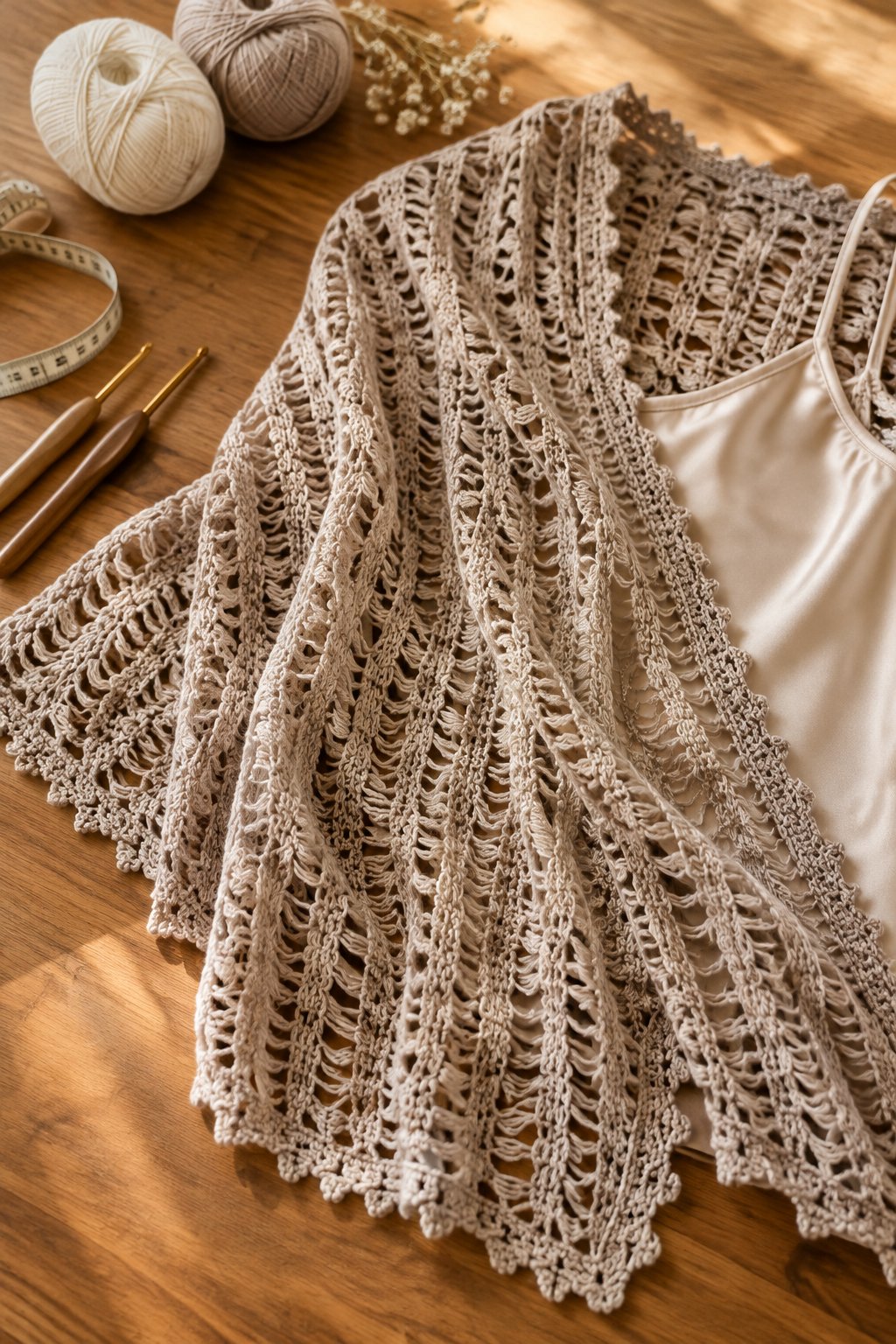
You pair soft shine with dramatic texture when you layer broomstick lace over a satin camisole. Long loops gathered into small groups create eye-shaped openings across the wrap. Choose pearl gray, dusty pink, or deep emerald for an evening layer with clear stitch definition.
Use DK-weight bamboo-cotton yarn, a 4 mm crochet hook, and a smooth 20–25 mm broomstick lace pin. You’ll draw elongated loops onto the pin, then gather them into groups secured with crochet stitches. Practice keeping each loop the same height before beginning your full width.
This intermediate technique rewards you with a striking fabric from a repeated sequence. Support the loops as you slide them off the pin to prevent twisting. Wear the rectangle loosely around your upper arms, keeping its open loops away from sharp jewelry or rough bag hardware.
|
Detail |
Specification |
|---|---|
|
Yarn Weight |
DK, #3 |
|
Skill Level |
Intermediate |
|
Estimated Time |
18–30 hours |
15) Half-Circle Fan-Stitch Shawl With Wide-Leg Pants

With a half-circle fan-stitch shawl, you get curved coverage that balances the long lines of wide-leg pants. Choose denim blue, wine, or soft taupe for a versatile layer. The expanding fans create a scalloped lower edge that looks decorative without needing fringe or tassels.
Try sport-weight wool-cotton yarn with a 4 mm hook. You’ll work fans of double crochet into spaces, following planned increases that widen the semicircle. Use the pattern’s stitch counts to check your progress, since extra increases create ripples along the outer edge.
This intermediate shape suits you once you’re comfortable reading repeats and tracking increases. Keep your top fitted or lightly tucked to show the pants’ waistline beneath the shawl. Check the depth against your arms before working the final border, especially if you want easy movement.
|
Detail |
Specification |
|---|---|
|
Yarn Weight |
Sport, #2 |
|
Skill Level |
Intermediate |
|
Estimated Time |
18–30 hours |
How to Choose Yarn, Hooks, and a Manageable Pattern
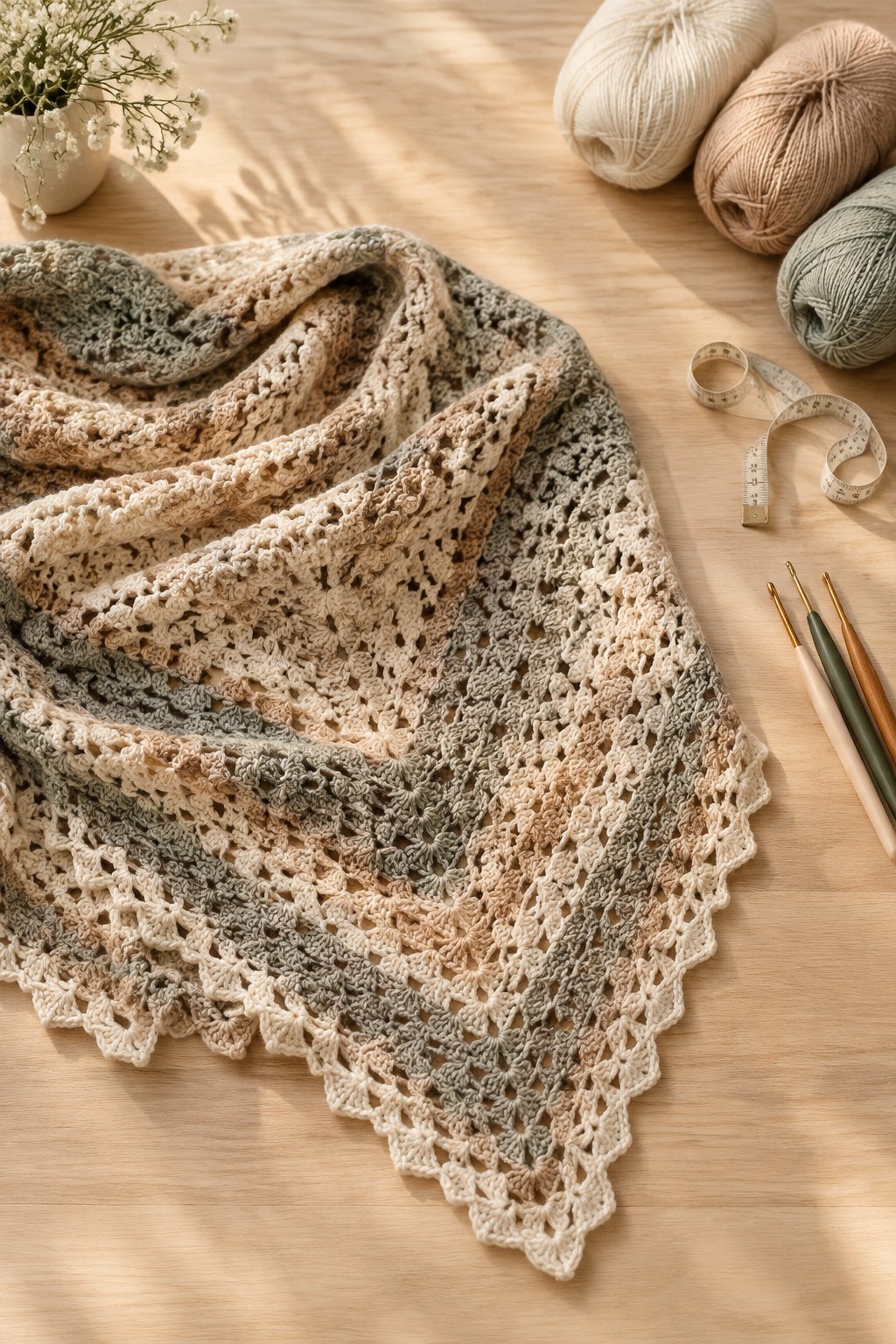
You’ll make a more wearable shawl by choosing yarn for its season and testing the fabric before committing. Use the hook sizes above as starting points, then follow your pattern’s gauge guidance.
Which Yarn Weights and Fibers Suit Each Season?
Choose fingering- or sport-weight cotton for warm-weather openwork, and DK wool blends for transitional layers. For winter warmth, use worsted or bulky yarn, remembering that a large wrap becomes heavier as you add rows.
How Do You Choose a Hook Size for Soft Drape?
Make a generous swatch and wash it according to the yarn label. If your dry fabric feels stiff, test a hook 0.5 mm larger and check the resulting gauge, openness, and size.
Which Pattern Skills Should Beginners Check First?
Look for a clear stitch key, repeat counts, and instructions for the starting rows. Choose a rectangle or a regularly increased triangle first, and practice any unfamiliar stitch in a small sample before buying your full yarn quantity.
How to Finish, Fit, and Care for Your Handmade Layer
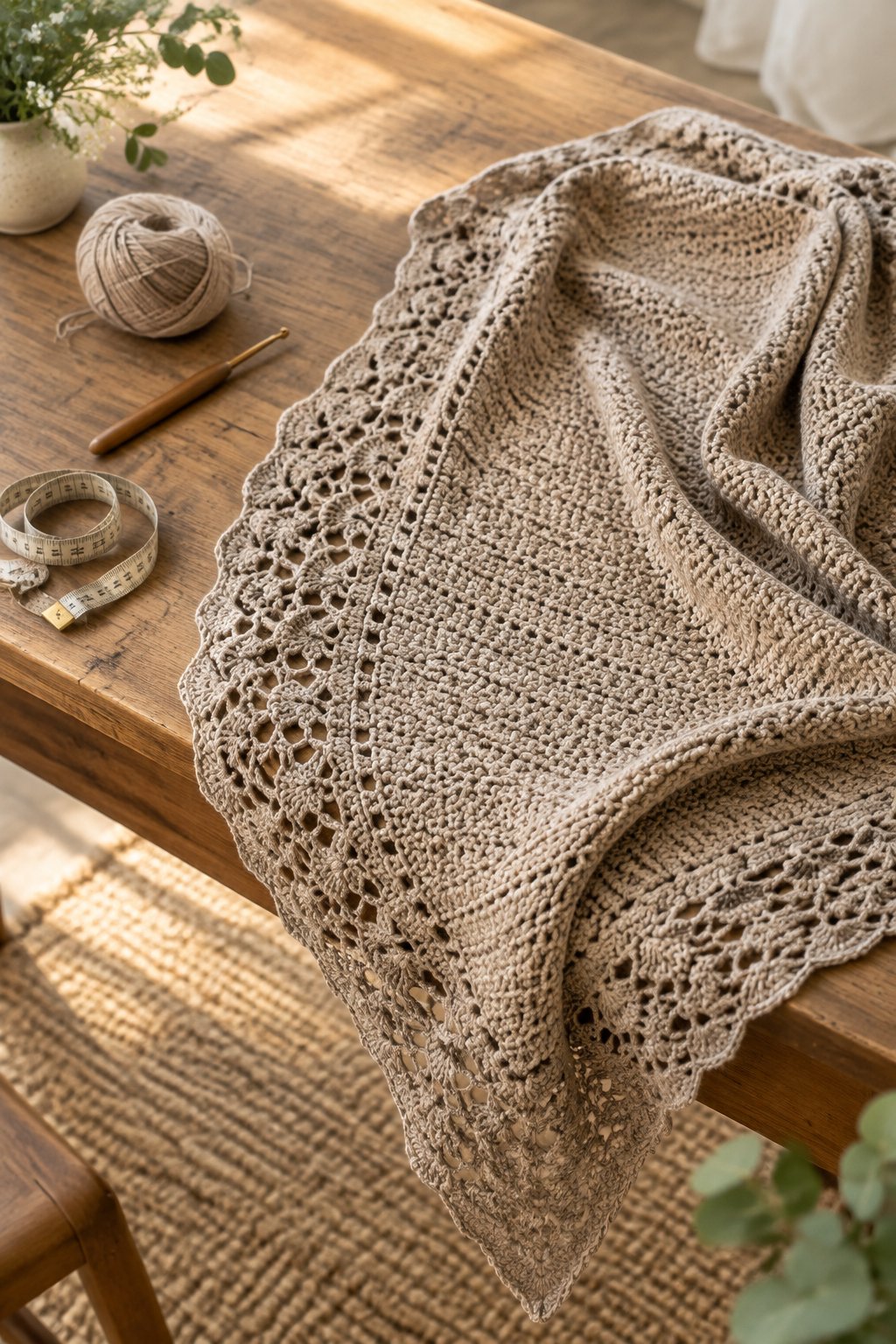
You protect your shawl’s shape by checking its fit before edging and following the yarn’s care instructions. Handle openwork gently whenever you finish or fasten it.
How Can You Adjust the Length and Width?
For rectangles, change the foundation by whole stitch repeats and add rows for the other dimension. For shaped shawls, follow the increase sequence and stop at a complete repeat, allowing yarn for the border.
When Should You Block a Crochet Shawl?
Block after weaving in your ends to open lace and settle uneven stitches. Follow the fiber’s care limits, shape damp fabric gently, and keep direct heat away from acrylic.
How Can You Secure a Wrap Without Stretching It?
Use a lightweight shawl pin through dense stitch areas or fasten the ends with a smooth shawl ring. Support both layers while fastening to spread the pull.
How Should You Wash and Store Your Finished Shawl?
Follow the yarn label, and support the wet fabric fully when lifting it. Dry flat if directed, then fold your clean, completely dry shawl for storage and check wool pieces regularly for moth activity.