For your “17+ corner to corner crochet Charts You Need on Your Pinterest Board” collection, save pixel-style designs with bold shapes, clear color keys, and readable diagonal rows. You get that cozy, handmade look from small crochet blocks, with plenty of room to personalize your colors.
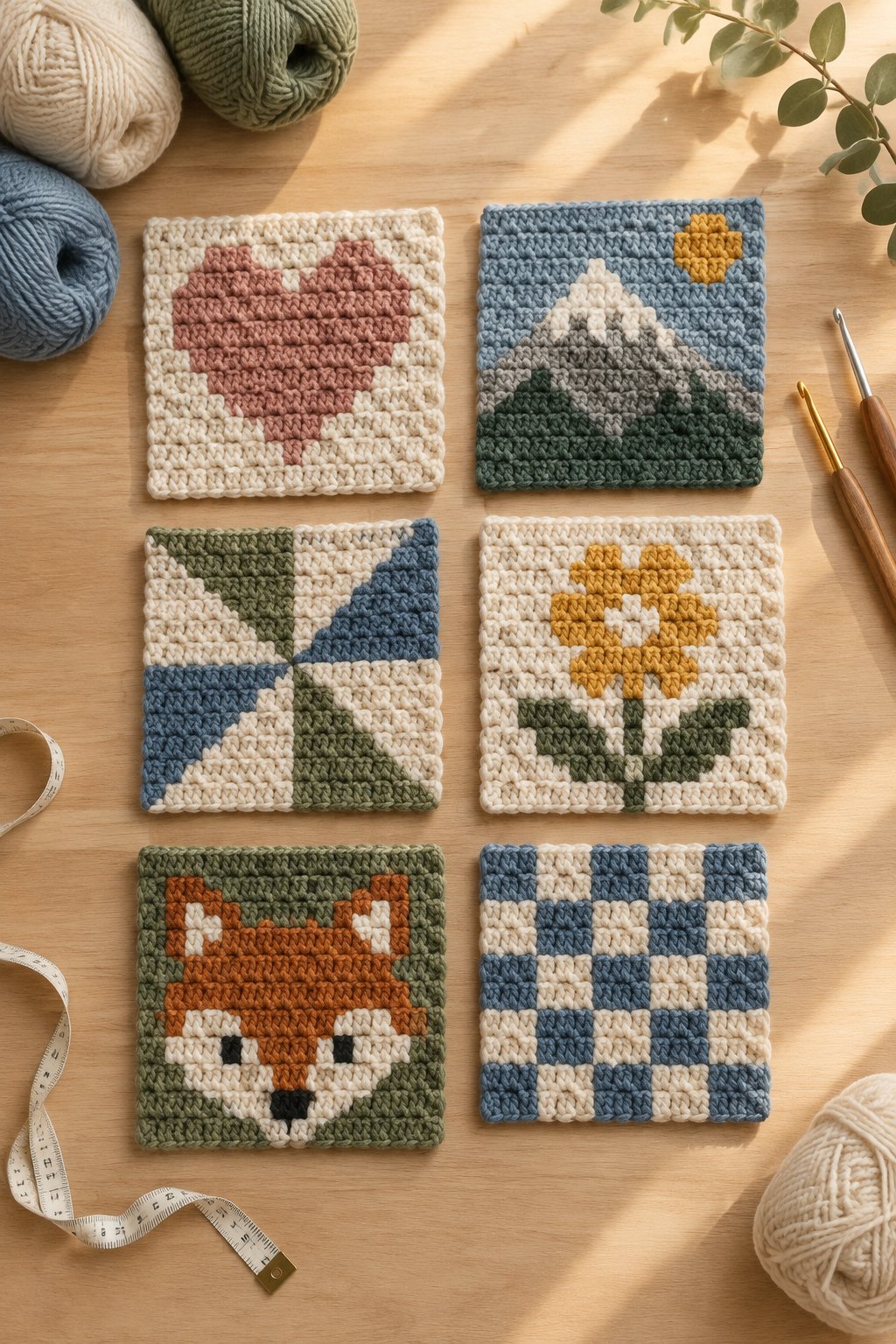
You’ll find plenty of inspiration in these chart styles, whether you want a small gift or a blanket for your couch. Use the suggested palettes as starting points, then find the original designer’s chart before gathering supplies. Treat the project times as planning estimates for the suggested sizes; your pace and color changes will affect your finish.
1) Pixel Heart C2C Baby Blanket Chart

Choose a single pixel heart for your first picture blanket because its broad shape keeps the colorwork manageable. A blush heart against cream gives your blanket a gentle nursery palette, while raspberry and oatmeal create stronger contrast. Look for a chart with generous background space so the heart stays easy to recognize after you add a border.
For a roughly 30-inch-square blanket, start with washable worsted-weight yarn and a 5 mm hook, then check your gauge. Use standard C2C blocks built from chains and double crochet, keeping separate yarn bobbins on either side of the heart. You’ll practice color changes without juggling tiny details across every row. Finish with a smooth single-crochet border, weave in every tail securely, and reserve your blanket for supervised awake-time use.
|
Detail |
Specification |
|---|---|
|
Yarn Weight |
Worsted, #4 |
|
Skill Level |
Beginner |
|
Estimated Time |
15–25 hours |
2) Pastel Gingham C2C Throw Chart

Save a pastel gingham chart when you want an orderly pattern with a soft, cottage-style finish. You’ll get the woven-check effect by pairing a pale shade with a deeper version of the same color and a light background. Try lavender with plum-tinted purple and cream, keeping each check several C2C blocks wide for a readable repeat.
Choose smooth worsted-weight acrylic or a washable blend, starting your swatch with a 5.5 mm hook. Your double-crochet blocks create a textured surface, while repeated color sections help you settle into the chart. Plan around a 40-by-50-inch lap throw for a useful couch size. You’ll need patience with the bobbins, so treat this as an intermediate project. Add a narrow border in your lightest shade to frame the checks cleanly.
|
Detail |
Specification |
|---|---|
|
Yarn Weight |
Worsted, #4 |
|
Skill Level |
Intermediate |
|
Estimated Time |
30–45 hours |
3) Mountain Silhouette C2C Blanket Chart

Give your next blanket a landscape feel with a mountain silhouette built from broad, stepped peaks. Slate blue and charcoal create depth against a pale sky, while a small cream summit adds a snowy accent. Choose a chart with two mountain layers if you want recognizable scenery without a crowded field of color changes.
For a roughly 40-by-50-inch throw, use worsted-weight yarn with a suggested starting hook of 5.5 mm. Standard double-crochet C2C blocks suit the angular ridgelines, and separate bobbins keep your sky yarn from crossing dark sections. You’ll want intermediate colorwork confidence where several peaks meet along one diagonal. Keep your border simple and dark to frame the landscape. Before starting, mark the chart’s top edge so your mountain scene stays correctly oriented throughout the project.
|
Detail |
Specification |
|---|---|
|
Yarn Weight |
Worsted, #4 |
|
Skill Level |
Intermediate |
|
Estimated Time |
30–45 hours |
4) Retro Rainbow C2C Pillow Chart

Bring warm color to your seating with a retro rainbow pillow in rust, mustard, dusty rose, and cream. Wide arches translate well into the stepped edges of a pixel chart. Look for a motif with enough background around its outer curve so your seam leaves the whole rainbow visible across the finished pillow front.
Use worsted-weight yarn and start with a 4.5–5 mm hook for a firm fabric around an 18-inch insert. Your C2C double-crochet blocks give the front texture; a plain crochet back keeps assembly straightforward. Expect intermediate work because each arch introduces several color boundaries on diagonal rows. Check your panel against the insert before joining, allowing for your chosen seam. For a removable cover, follow a pillow-finishing pattern with a buttoned or overlapping back.
|
Detail |
Specification |
|---|---|
|
Yarn Weight |
Worsted, #4 |
|
Skill Level |
Intermediate |
|
Estimated Time |
10–16 hours |
5) Sunflower C2C Cushion Chart
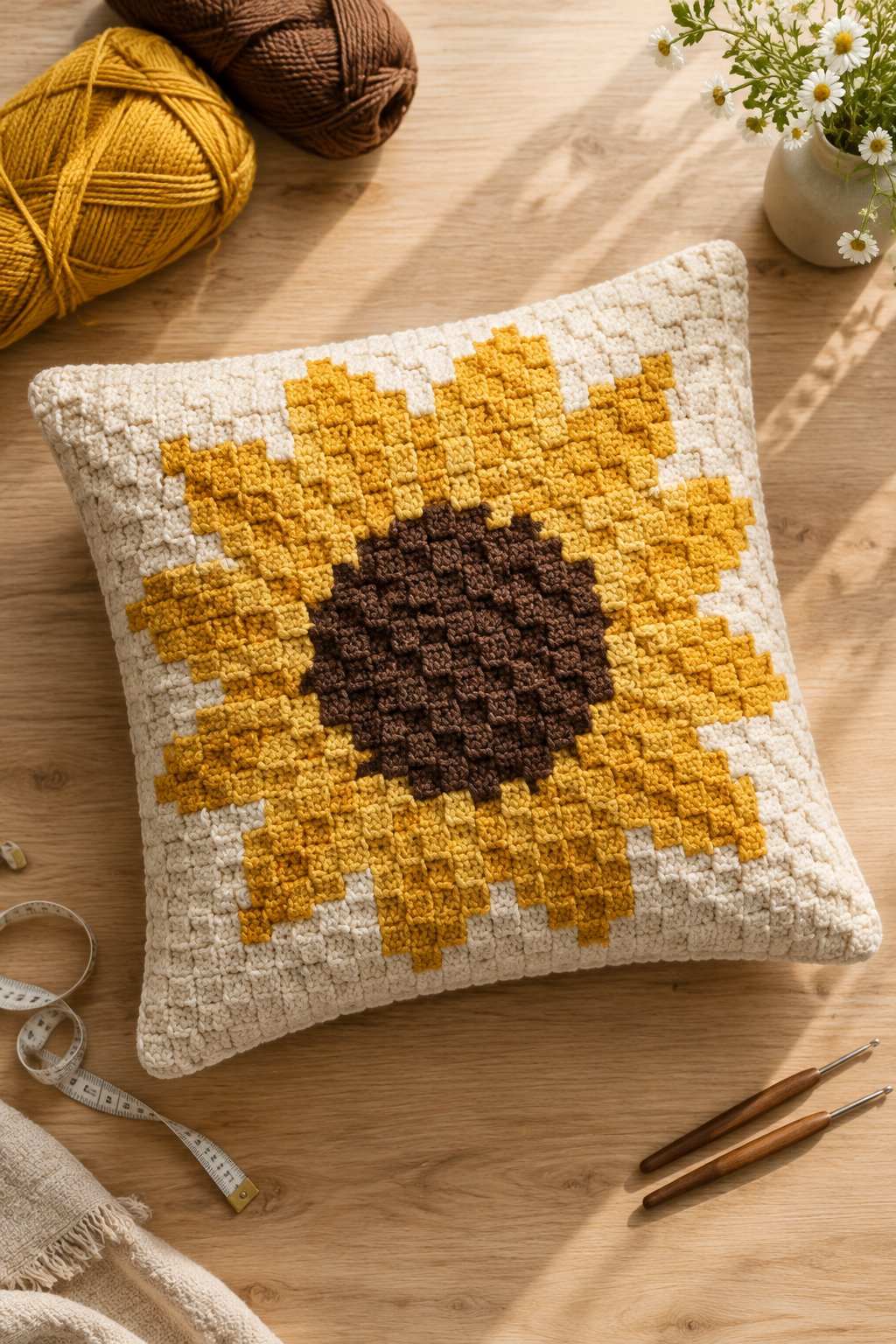
Choose a sunflower cushion when you want one bright focal point for your chair or bench. Golden petals and a deep brown center stand out against cream or muted sage. A large flower head reads clearly in C2C blocks, especially when your chart gives each petal enough width to hold its shape after stitching.
For a 16-inch cushion, try worsted-weight cotton-acrylic yarn with a 4.5 mm hook as your swatching starting point. You’ll work the picture in double-crochet blocks, then join it to a matching plain back. This is an intermediate choice because the petal tips create frequent short color sections. Prepare small bobbins for those areas before reaching them. Keep your joining stitches even around each corner, and choose an insert that fills the cover without stretching the flower.
|
Detail |
Specification |
|---|---|
|
Yarn Weight |
Worsted, #4 |
|
Skill Level |
Intermediate |
|
Estimated Time |
10–16 hours |
6) White Daisy C2C Baby Blanket Chart

For a soft floral blanket, save a white daisy chart with generous petals and a sunny yellow center. You’ll get clear contrast by placing the bloom on dusty blue or soft green. A single oversized daisy gives you fewer scattered color sections to manage than a field of little flowers spread across the background.
Pick smooth, washable DK yarn and begin swatching with a 4 mm hook for a lighter blanket around 30 inches square. Your double-crochet C2C blocks create the petals directly in the fabric, keeping the surface free of attached decorations. Plan for intermediate colorwork around the rounded petal edges. Choose a simple border that lies flat, and check every woven-in end after washing. Use your finished blanket during supervised awake time, keeping your baby’s sleep space clear of loose bedding.
|
Detail |
Specification |
|---|---|
|
Yarn Weight |
DK, #3 |
|
Skill Level |
Intermediate |
|
Estimated Time |
18–28 hours |
7) Toadstool Mushroom C2C Wall Hanging Chart

Add a woodland accent to your wall with a red-capped toadstool on an oatmeal background. The rounded cap and sturdy cream stem give your chart a recognizable shape at a modest size. Choose a design with a few large white spots so you have room to practice clean color changes around each patch.
For a hanging roughly 12–16 inches wide, use worsted-weight cotton and start with a 4.5 mm hook. Firm double-crochet C2C blocks help your panel hold its shape when displayed. You’ll need intermediate skills to manage the cap’s spots and stepped outline. Block the finished panel square before attaching it evenly to a dowel. Hang your work with a secure cord, and place it beyond children’s reach, especially if you add fringe along the bottom edge.
|
Detail |
Specification |
|---|---|
|
Yarn Weight |
Worsted cotton, #4 |
|
Skill Level |
Intermediate |
|
Estimated Time |
6–10 hours |
8) Bumblebee C2C Pillow Chart

Give your pillow a cheerful garden theme with a chunky yellow-and-black bee and pale blue wings. A cream background softens the strong stripes while leaving the outline easy to read. Favor a chart with a broad body and simple antennae, since narrow details need enough chart squares to remain visible in your finished fabric.
Choose worsted-weight acrylic or a cotton blend for a washable 16-inch cover, beginning with a 4.5–5 mm hook. Work standard C2C double-crochet blocks and keep the black yarn on separate bobbins where the stripes split. Your skill level should be intermediate, with extra attention at the wing edges. Stitch any facial details securely into the fabric, following your selected pattern. A solid yellow back ties the cover together and gives you a simpler panel to finish.
|
Detail |
Specification |
|---|---|
|
Yarn Weight |
Worsted, #4 |
|
Skill Level |
Intermediate |
|
Estimated Time |
10–15 hours |
9) Butterfly Silhouette C2C Blanket Chart

Save a butterfly silhouette when you want a striking blanket built around just two colors. Plum wings against pale lilac give you a gentle palette, while navy on cream creates a sharper outline. Look for broad upper wings and a clear center body so the butterfly remains recognizable through the chart’s stepped pixel edges.
Use worsted-weight yarn with a 5–5.5 mm hook as your starting point for a 36-inch-square lap blanket. Your C2C double-crochet blocks form the silhouette, and the open background gives you stretches of single-color work. Treat the project as intermediate because separate wing sections require careful yarn management. Check the centerline as you finish each diagonal to catch misplaced blocks early. Finish with a slim border in the background shade to preserve the butterfly’s visual breathing room.
|
Detail |
Specification |
|---|---|
|
Yarn Weight |
Worsted, #4 |
|
Skill Level |
Intermediate |
|
Estimated Time |
20–30 hours |
10) Woodland Fox C2C Nursery Blanket Chart
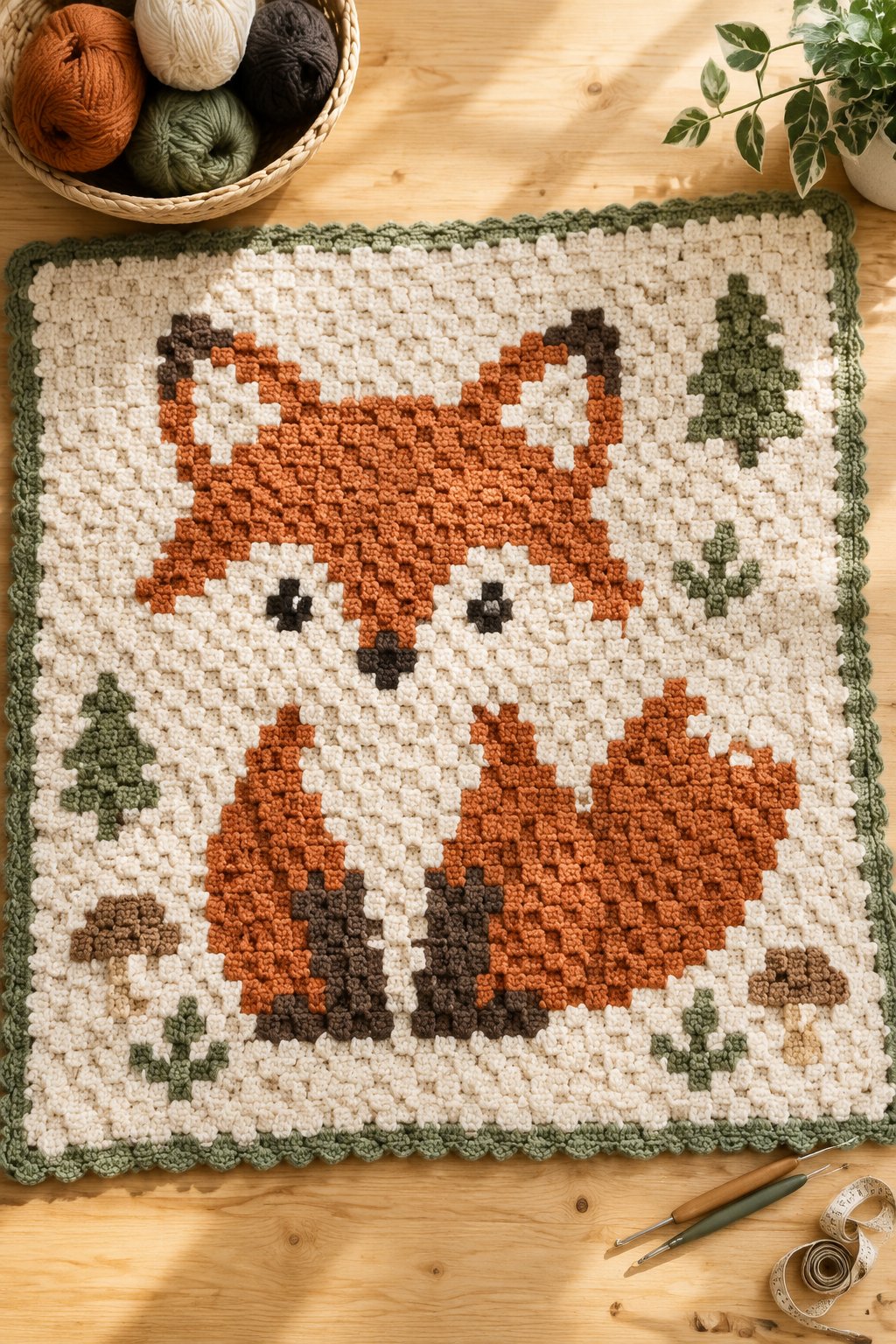
Choose a woodland fox chart for a nursery gift with warm color and a friendly face. Burnt orange pairs beautifully with cream cheeks and a deep brown nose on a muted green background. Search for a fox with large features, giving your chart enough space to show the ears and muzzle without crowded detail.
For a roughly 30-by-36-inch blanket, start with washable worsted-weight yarn and a 5 mm hook. You’ll create the picture with double-crochet C2C blocks, using small bobbins for isolated facial sections. This intermediate project rewards careful counting around the eyes, where one misplaced block changes the expression. Keep every feature stitched into the fabric and secure your ends thoroughly. Include care instructions when gifting, along with a reminder to use the blanket during supervised awake time.
|
Detail |
Specification |
|---|---|
|
Yarn Weight |
Worsted, #4 |
|
Skill Level |
Intermediate |
|
Estimated Time |
20–30 hours |
11) Sleepy Owl C2C Pillow Chart

A sleepy owl gives your reading chair a playful accent through its rounded body and curved, closed eyes. Choose warm gray with cream facial patches for a calm palette, or use dusty teal for a little color. A broad head and simple wings help your design stay readable on a compact square pillow front.
Try worsted-weight yarn and a 4.5 mm hook for a firm 16-inch cover. Your C2C double-crochet texture supplies the feather-like surface, while a small amount of embroidery adds the eyelids if your pattern calls for it. Plan on intermediate skills for the facial patches and finishing. Keep embroidery stitches short so they sit close to the fabric. Before joining the back, check that both eyes sit at the same height and secure their yarn tails on the reverse.
|
Detail |
Specification |
|---|---|
|
Yarn Weight |
Worsted, #4 |
|
Skill Level |
Intermediate |
|
Estimated Time |
10–16 hours |
12) Black Cat Silhouette C2C Wall Hanging Chart

Start with a seated black cat silhouette if you want an approachable two-color wall hanging. A curved tail and pointed ears give your motif character without extra facial details. Pair black with warm cream for year-round display, or choose a muted pumpkin background when you want a seasonal accent for your entryway or craft space.
Use worsted-weight cotton with a 4–4.5 mm hook, adjusting after a swatch to get firm C2C double-crochet blocks. A panel around 12 inches wide keeps the project manageable while giving the tail room to curve. You’ll find this an easy next step after a basic solid-color C2C square. Watch the narrow tail sections carefully, and keep background bobbins on both sides of the body. Block your panel before attaching it evenly to a wooden dowel.
|
Detail |
Specification |
|---|---|
|
Yarn Weight |
Worsted cotton, #4 |
|
Skill Level |
Easy |
|
Estimated Time |
5–9 hours |
13) Paw Print C2C Pet Blanket Chart
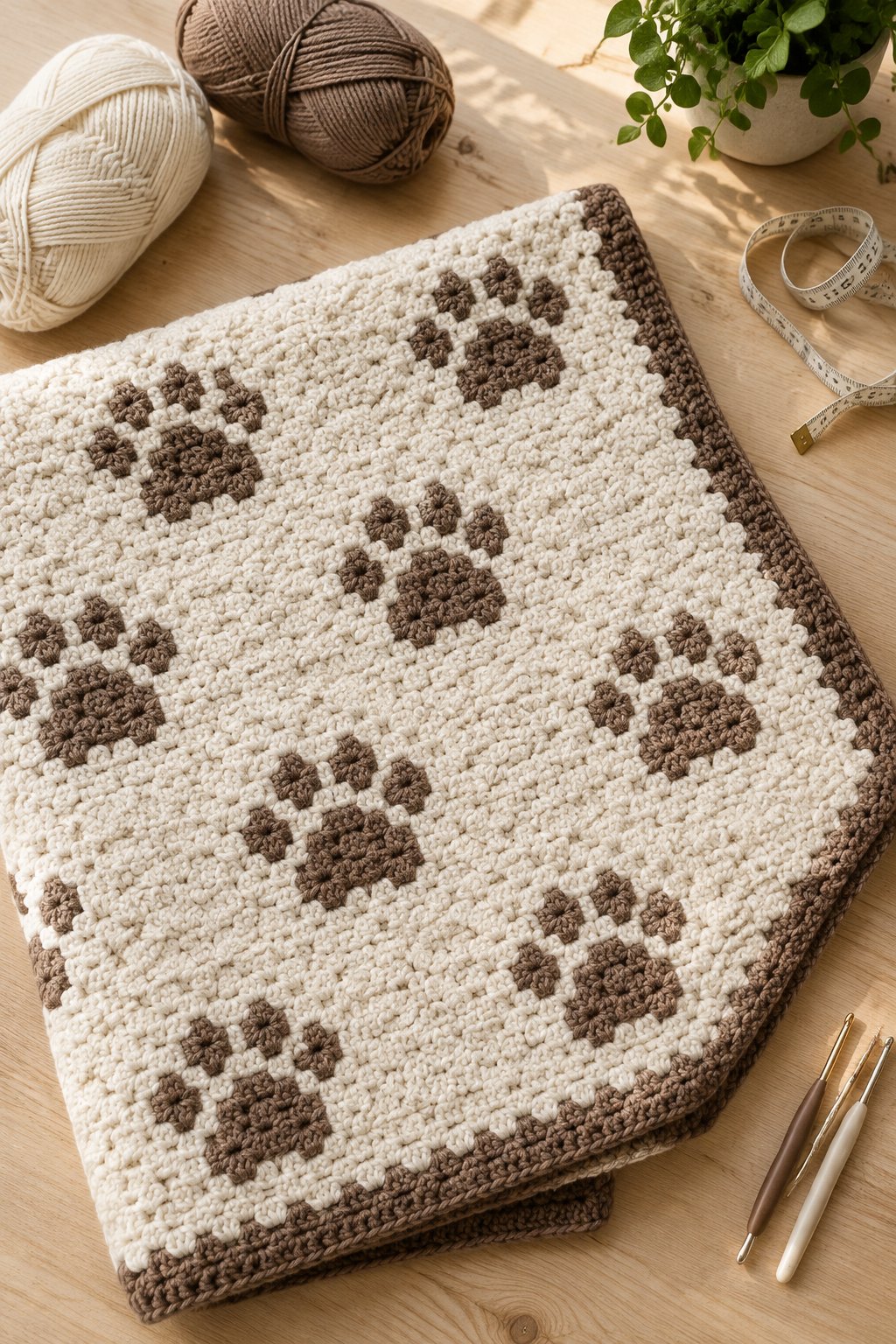
Make your pet’s resting spot feel coordinated with a large paw print in charcoal and oatmeal. The broad center pad gives you a strong focal point, while four rounded toe shapes add the familiar outline. Choose one oversized print for a small mat so you have fewer separate motifs to track across the diagonal rows.
Pick smooth, machine-washable worsted yarn and start with a 4.5 mm hook for a compact fabric around 24 by 30 inches. Standard double-crochet C2C blocks suit the design, though you should check the finished fabric for gaps that catch your pet’s claws. Plan for intermediate colorwork around the separate toe pads. Skip fringe and attached decorations, secure every end, and inspect the blanket regularly. Supervise use if your pet chews fabric, and remove any damaged blanket promptly.
|
Detail |
Specification |
|---|---|
|
Yarn Weight |
Worsted, #4 |
|
Skill Level |
Intermediate |
|
Estimated Time |
10–18 hours |
14) Potted Cactus C2C Cotton Dishcloth Chart

Save a potted cactus chart for a small kitchen project with a crisp green-and-terracotta palette. A simple upright cactus and wide pot fit the pixel style well. Choose a low-resolution motif with few details so your finished cloth stays useful in size, especially if you plan to work each chart square as a full C2C block.
Use worsted-weight cotton and a 4 mm hook as a starting point, or select lighter cotton if your chart contains many squares. For an 8–10-inch cloth, consider a mini-C2C pattern that uses half-double-crochet blocks and supplies matching instructions. You’ll need intermediate color-changing skills around the cactus arms and pot edges. Keep your border narrow, wash before use, and let the cloth dry fully between tasks. Check the yarn label for washing guidance and possible color bleeding.
|
Detail |
Specification |
|---|---|
|
Yarn Weight |
Worsted cotton, #4 |
|
Skill Level |
Intermediate |
|
Estimated Time |
3–5 hours |
15) Snowflake C2C Winter Throw Chart
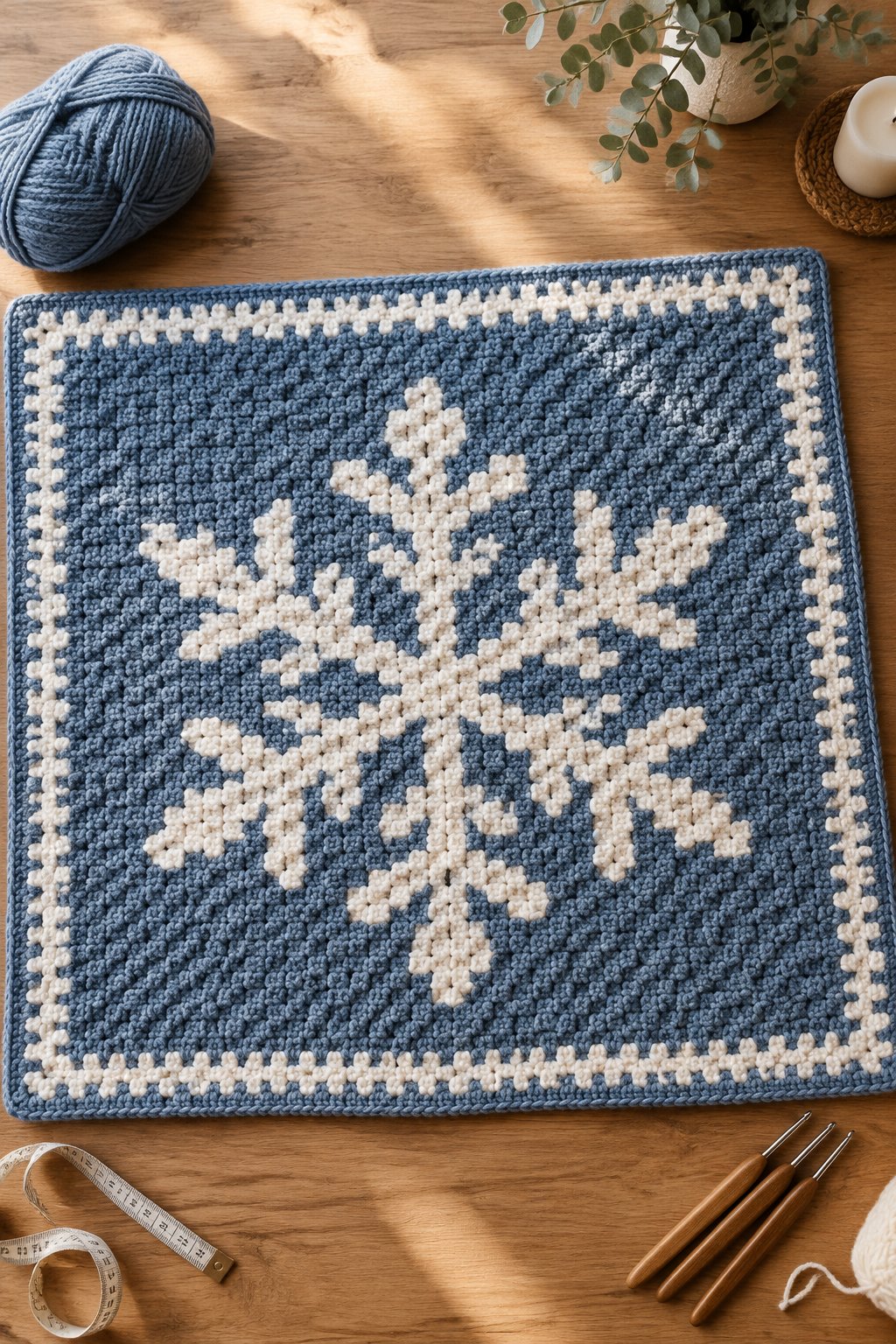
Give your winter seating a bold seasonal accent with a cream snowflake against navy or icy blue. A single oversized flake makes the stepped C2C edges part of the design. Look for balanced branches with clear gaps between them, so your snowflake holds its shape across the full blanket and reads well from a distance.
For a roughly 40-inch-square throw, try smooth chunky-weight yarn with a 6–6.5 mm hook, then adjust to your gauge. Your double-crochet blocks will grow quickly at this weight, so confirm the chart’s total dimensions before buying yarn. Treat this as intermediate work because the branching tips create several small color sections. Prepare extra background bobbins for those gaps. Use the same yarn weight throughout the motif to keep the surface even after washing and blocking.
|
Detail |
Specification |
|---|---|
|
Yarn Weight |
Chunky, #5 |
|
Skill Level |
Intermediate |
|
Estimated Time |
18–28 hours |
16) Christmas Tree C2C Table Runner Chart

Choose a Christmas tree runner to bring a clear holiday motif to your table without covering the whole surface. Forest green triangles on cream give you a classic look, with small brown trunks grounding each tree. Save a rectangular chart with trees placed for your preferred viewing direction, especially if your table is visible from both ends.
Use DK cotton and start with a 3.5–4 mm hook for a relatively flat runner around 12 by 36 inches. You’ll work C2C double-crochet blocks, following rectangular shaping instructions that hold one edge steady while the other grows. That shaping makes this an intermediate project. Keep decorations worked into the chart so dishes rest evenly, and block the runner to its finished measurements. Protect it from hot cookware with a suitable heat-resistant mat placed underneath each dish.
|
Detail |
Specification |
|---|---|
|
Yarn Weight |
DK cotton, #3 |
|
Skill Level |
Intermediate |
|
Estimated Time |
10–18 hours |
17) Monogram Initial C2C Pillow Chart

Personalize your next pillow with a large block initial in two strongly contrasting colors. A cream letter on navy feels crisp, while dusty rose on oatmeal gives your gift a softer finish. Choose a thick alphabet style with open interior spaces, allowing the letter to stay clear when each square becomes a textured crochet block.
For an 18-inch cover, use worsted-weight yarn and begin with a 4.5–5 mm hook. Standard double-crochet C2C blocks suit broad lettering, and a plain back keeps the project focused on the initial. You’ll find a simple letter approachable after learning basic color changes, though curved letters need closer counting. Mark the chart’s front-facing side before starting so your initial reads correctly. Check your panel against the insert before joining, then secure loose ends inside the cover.
|
Detail |
Specification |
|---|---|
|
Yarn Weight |
Worsted, #4 |
|
Skill Level |
Easy |
|
Estimated Time |
8–14 hours |
How to Choose a C2C Chart for Your Skill Level
Choose a large, simple motif with few separate color sections for your first C2C picture project. As your counting improves, move toward scattered details and more complex outlines.
Which Charts Have the Fewest Color Changes?
You’ll have fewer changes with a solid heart or a broad cat silhouette surrounded by one background color. Count separate color runs along several diagonal rows; two colors still require many changes when the motif has scattered dots.
Does the Chart Include Written Rows and a Color Key?
Look for both a color key and written diagonal rows, especially for your first graph project. Check that the written directions match your starting corner and explain the abbreviations used for each color.
Can the Graph Be Used for C2C Rather Than Only Single Crochet?
You can adapt a square-cell graph by treating each cell as one C2C block and reading diagonally. Confirm that its proportions suit that approach, then calculate the finished size because C2C blocks are much larger than individual single-crochet stitches.
How to Match Yarn, Hooks, and Chart Size
Match your chart’s block count to a washed gauge swatch before committing to yarn quantities. Your finished dimensions come from the size of those blocks.
When Should You Choose Worsted, Cotton, or Chunky Yarn?
Use worsted-weight yarn for versatile blankets and pillows, and choose cotton fiber for absorbent dishcloths. Cotton comes in several weights; chunky yarn creates larger blocks, which suits bold motifs with fewer chart squares.
Which Hook Size Produces the Fabric You Want?
Start with the pattern’s hook recommendation or your yarn label’s suggested range. Check the swatch for drape on blankets and closer coverage on pillows; change hook size when the fabric feels too loose or stiff.
How Can a Gauge Swatch Predict Finished Dimensions?
Make a swatch large enough to measure several blocks across its horizontal width, then wash and dry it as directed. If six blocks measure four inches, a 45-block-wide chart will measure about 30 inches across before borders; calculate the height separately.
How to Save and Prepare Your Favorite Charts
Save the designer’s original pattern page alongside your Pinterest pin so your project details stay accessible. Prepare a readable chart before winding bobbins or starting your first block.
How Do You Find the Original Designer From a Pinterest Pin?
Open the pin’s destination link and look for the designer’s name and pattern title. If the link leads to a roundup, follow the credited pattern link; use an image search when the credit is missing.
What Should You Check Before Printing a Chart?
Confirm the chart dimensions, color key, starting corner, and any page-joining marks. Print a test page to check that you can distinguish similar colors and read the grid; chart print size changes readability, while your crochet gauge determines fabric size.
How Do You Track Diagonal Rows and Manage Yarn Bobbins?
Number your diagonal rows and mark each completed row with a removable guide or digital highlight. Wind separate bobbins for disconnected color areas, keeping them attached near their working sections, and untwist the strands after each row before turning.