Your search for 15+ Cozy Pinterest-Worthy Crochet Sweater Pattern Free Ideas for Fall starts with wearable shapes and textures you’ll love pairing with your favorite jeans. For your first fall sweater, try the Crochet Peplum Sweater by Joy of Motion Crochet, with its four-piece construction and approachable half double crochet stitches.
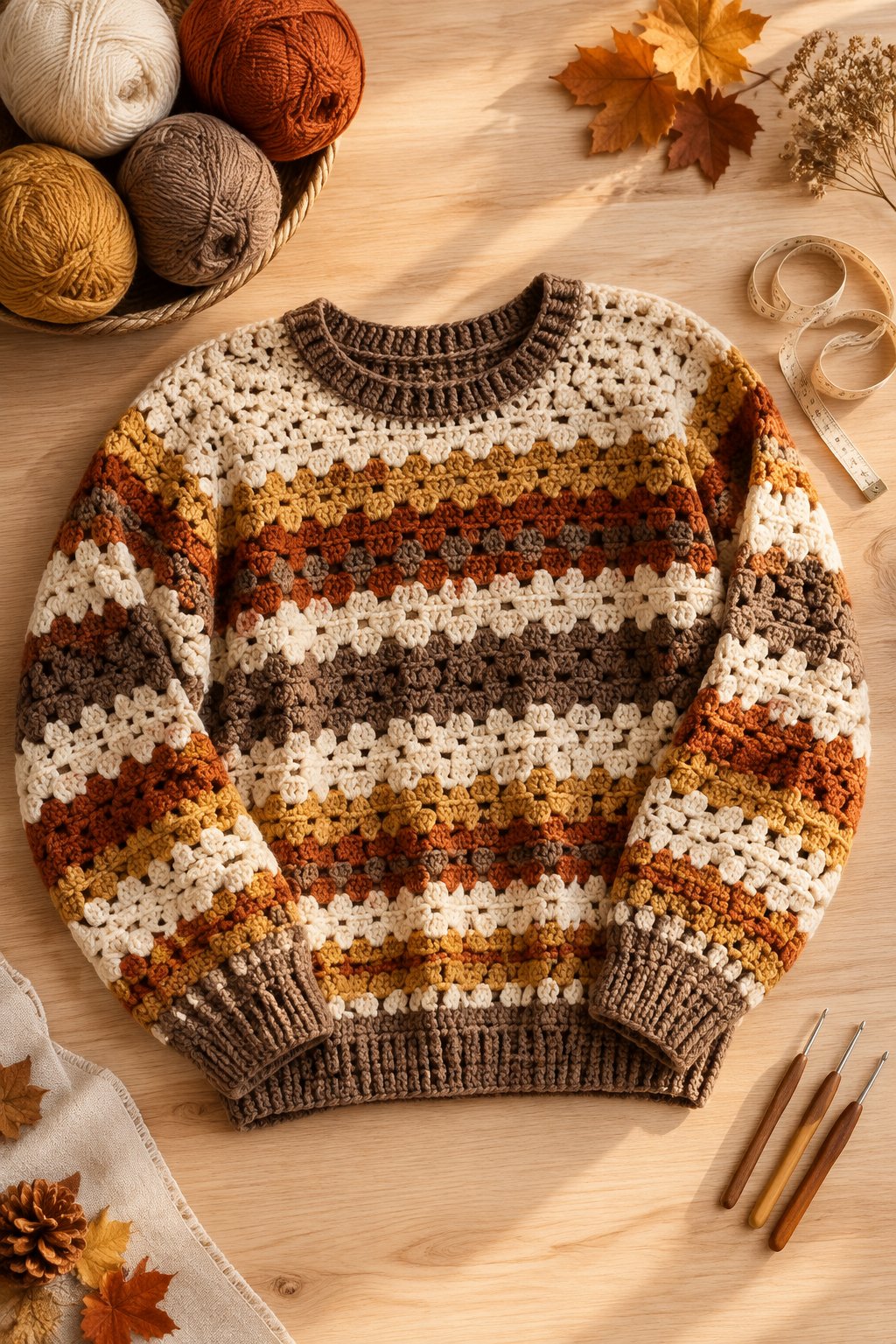
You’ll find plenty of inspiration in relaxed pullovers, colorful squares, and soft autumn shades. Treat the yarn and hook suggestions below as swatching starting points; follow your chosen designer’s gauge and materials list before buying supplies. Your project time will vary with size and pace, so the estimates allow for several relaxed stitching sessions.
1) The Home Girl Sweater by Meg Made With Love
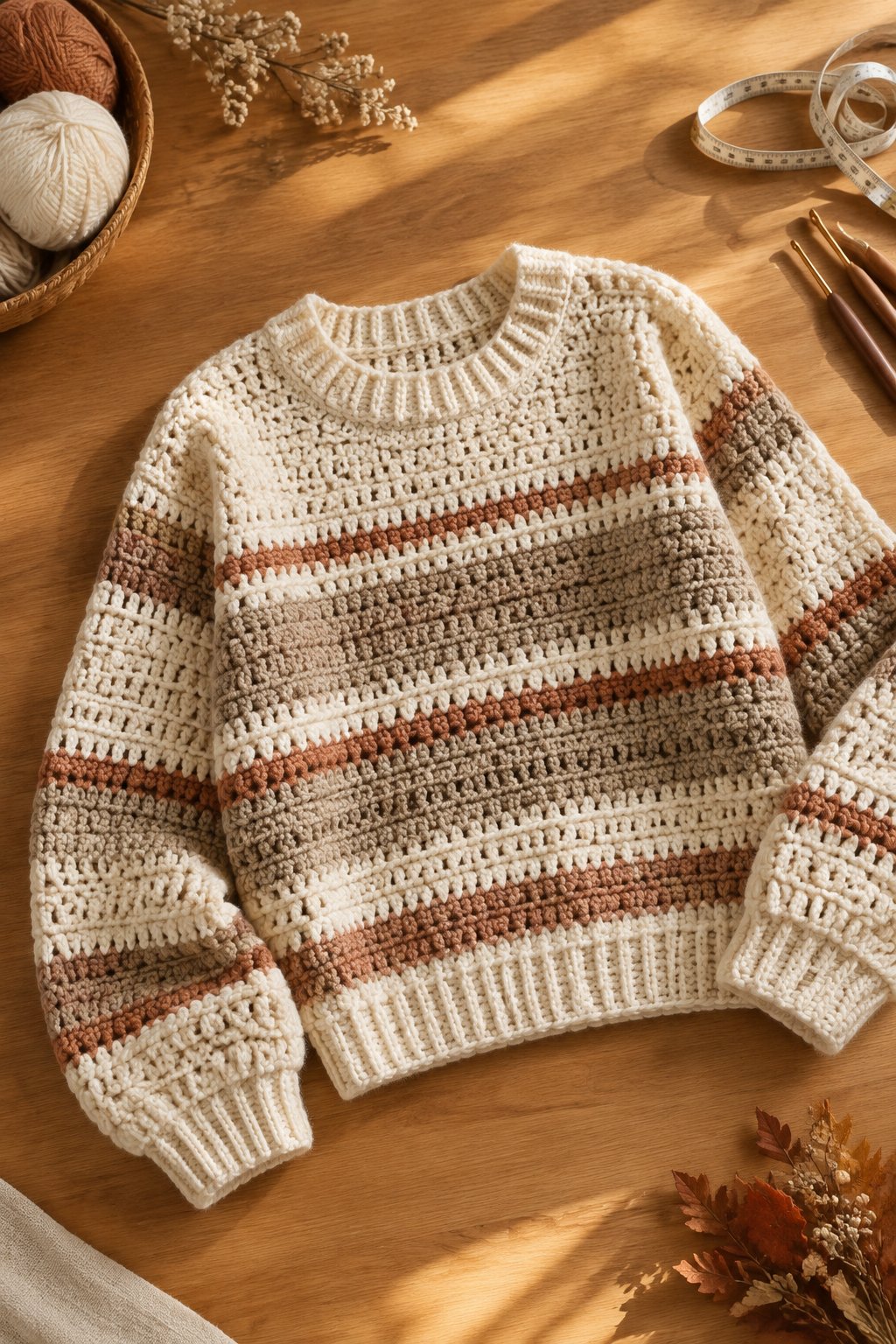
You’ll love the Home Girl Sweater if your ideal fall layer has a roomy, oversized shape. Choose oatmeal for an easy neutral, or try muted pumpkin for a warmer seasonal look. Pair your finished sweater with slim jeans to balance its generous silhouette.
For a soft version with visible stitch definition, consider worsted-weight acrylic or a washable wool blend that matches the pattern’s gauge. Start your swatch with the designer’s hook recommendation; a 5.5 mm hook offers a useful starting point for many worsted fabrics.
Give yourself time to practice the stitch repeat before starting the full panels. You’ll also have photos to help with the pattern, making this a friendly next step after scarves and blankets. Check sleeve length against a sweater you already enjoy wearing before completing your finishing.
|
Detail |
Specification |
|---|---|
|
Yarn Weight |
Suggested: worsted, #4 |
|
Skill Level |
Easy |
|
Estimated Time |
Several weekends |
2) Super Simple Sweater
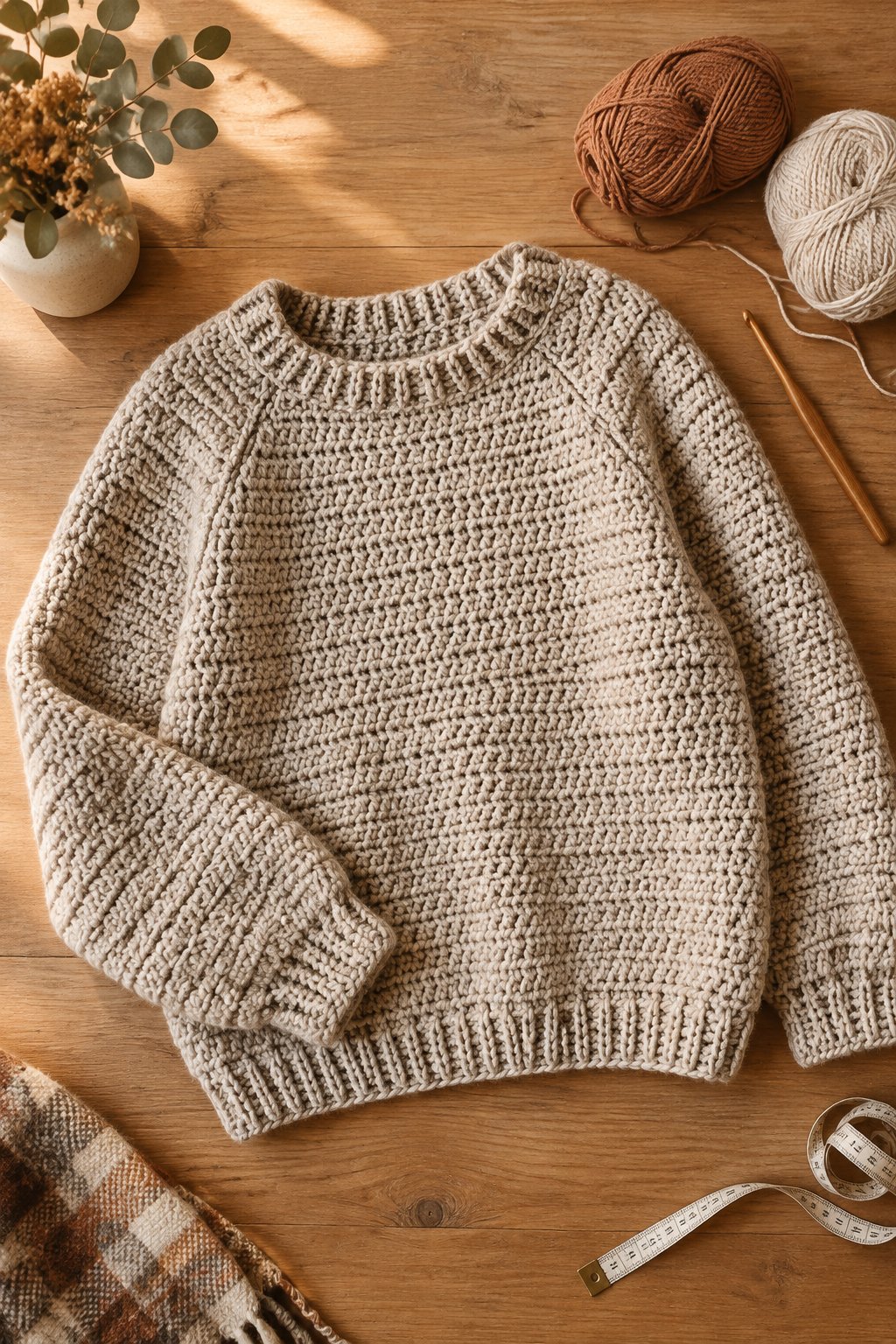
Choose the Super Simple Sweater when you want a clean everyday pullover that lets your yarn color shine. Your version will feel especially fall-ready in camel or deep olive. Keep the finish understated so you have an easy layer for patterned scarves and favorite denim.
Look for a smooth yarn that makes individual stitches easy to count. If your chosen version calls for worsted weight, begin with its specified hook and compare your swatch with the required gauge. A 5 mm hook is a reasonable trial size for a medium-weight practice swatch.
Before committing, read the complete instructions and check the shaping steps. You’ll have a more manageable beginner project when the pattern uses familiar single or double crochet repeats. Mark the first and last stitch of each row to keep your edges even.
|
Detail |
Specification |
|---|---|
|
Yarn Weight |
Suggested: worsted, #4 |
|
Skill Level |
Beginner |
|
Estimated Time |
Several weekends |
3) Easy Crochet Raglan Sweater
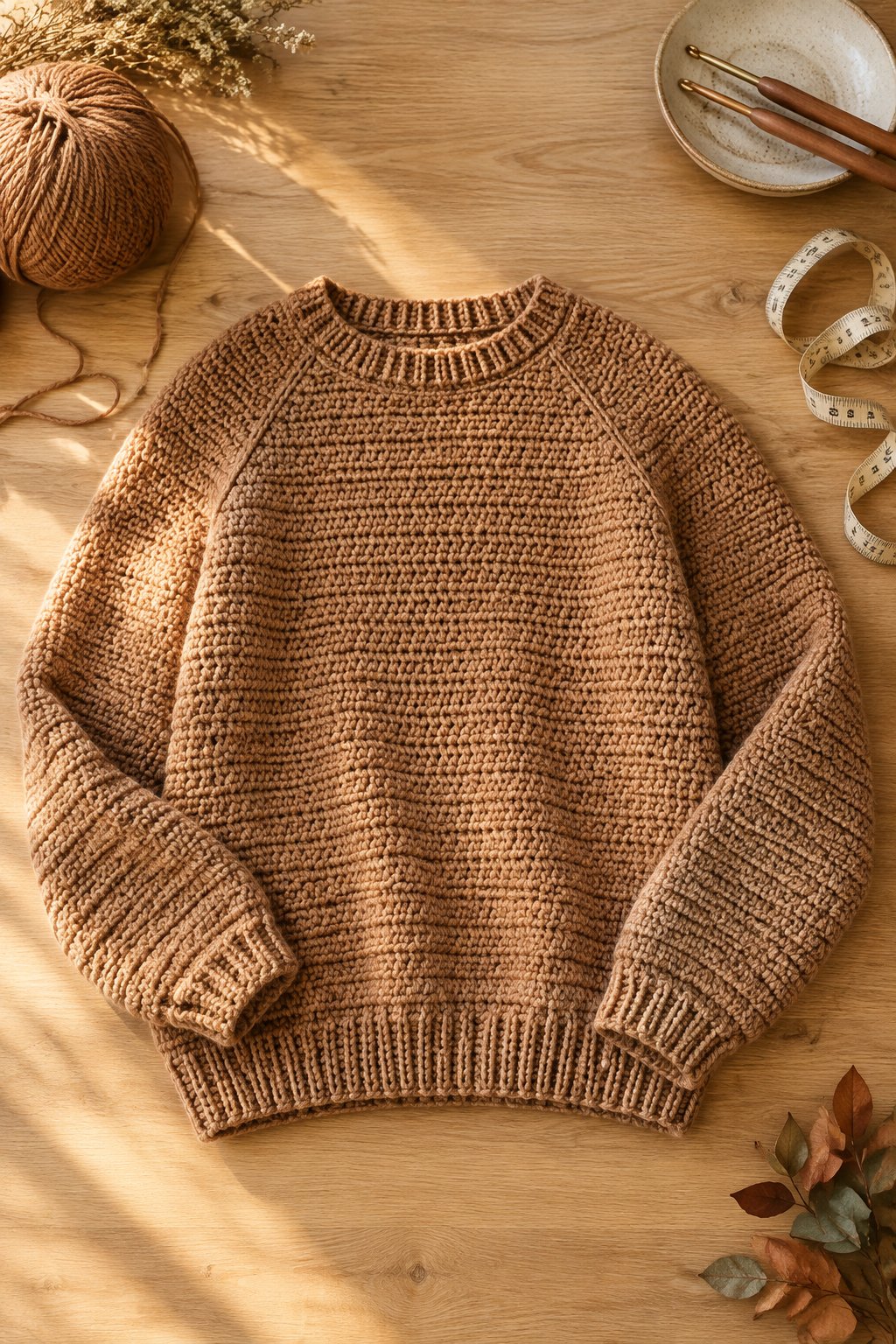
A raglan sweater gives you diagonal shoulder lines and a comfortable shape for layering over a light tee. Try your version in cranberry or soft gray, where the shoulder shaping becomes part of the design. A solid shade also helps you spot increases as you work.
For your first raglan, choose a smooth yarn in the weight specified by the pattern. With a worsted-weight version, use a 5–5.5 mm hook as a swatching reference, then adjust to match gauge. Practice the increase sequence separately before starting the neckline.
You’ll need steady stitch counting, especially around the shoulder markers. If you select a top-down version, pause after separating the sleeves to check the upper-body fit. Keep those markers in place until you feel confident that each section has the correct stitch count.
|
Detail |
Specification |
|---|---|
|
Yarn Weight |
Suggested: worsted, #4 |
|
Skill Level |
Easy |
|
Estimated Time |
Several weekends |
4) Claudia Crop by Two Of Wands
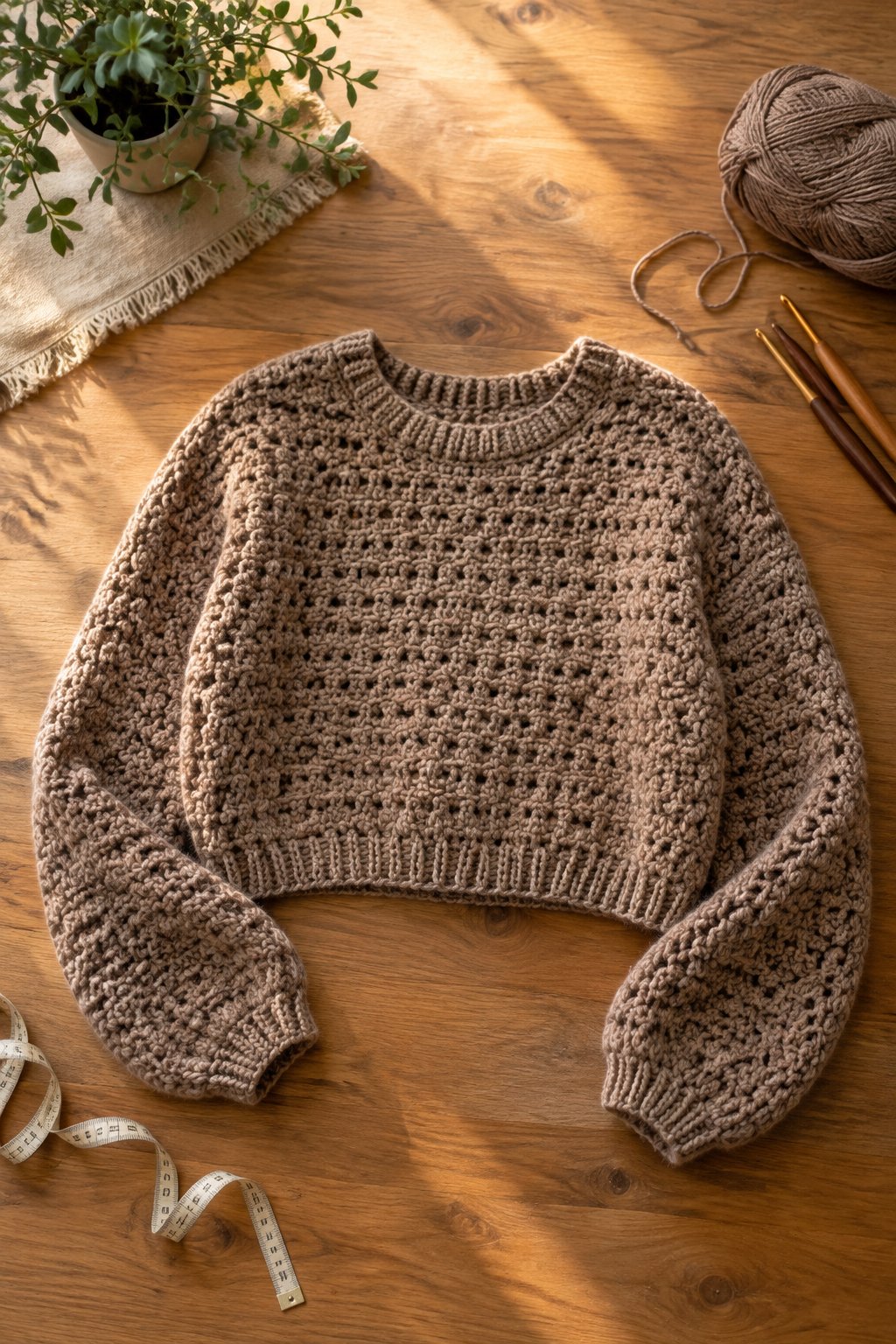
Your Claudia Crop gives you a short, cozy silhouette that pairs beautifully with high-waisted jeans. Choose cream for a soft neutral look, or make your fall wardrobe brighter with marigold. The cropped shape also works over a longer fitted tank when you want extra coverage.
Check the designer’s yarn requirements before shopping, then choose a substitute with similar fiber content and thickness. For a chunky swatch, start around 6.5 mm and assess both gauge and flexibility. Practice any ribbed sections so your edges stay consistent.
You’ll find sizing from XS through 4XL, giving you a useful range to compare against your measurements. Treat this as an easy-to-intermediate garment project and read the finishing steps early. Measure your preferred crop length while wearing the pants or skirt you plan to pair with it.
|
Detail |
Specification |
|---|---|
|
Yarn Weight |
Suggested swatch: chunky, #5 |
|
Skill Level |
Intermediate |
|
Estimated Time |
Several focused sessions |
5) Crochet Peplum Sweater by Joy of Motion Crochet
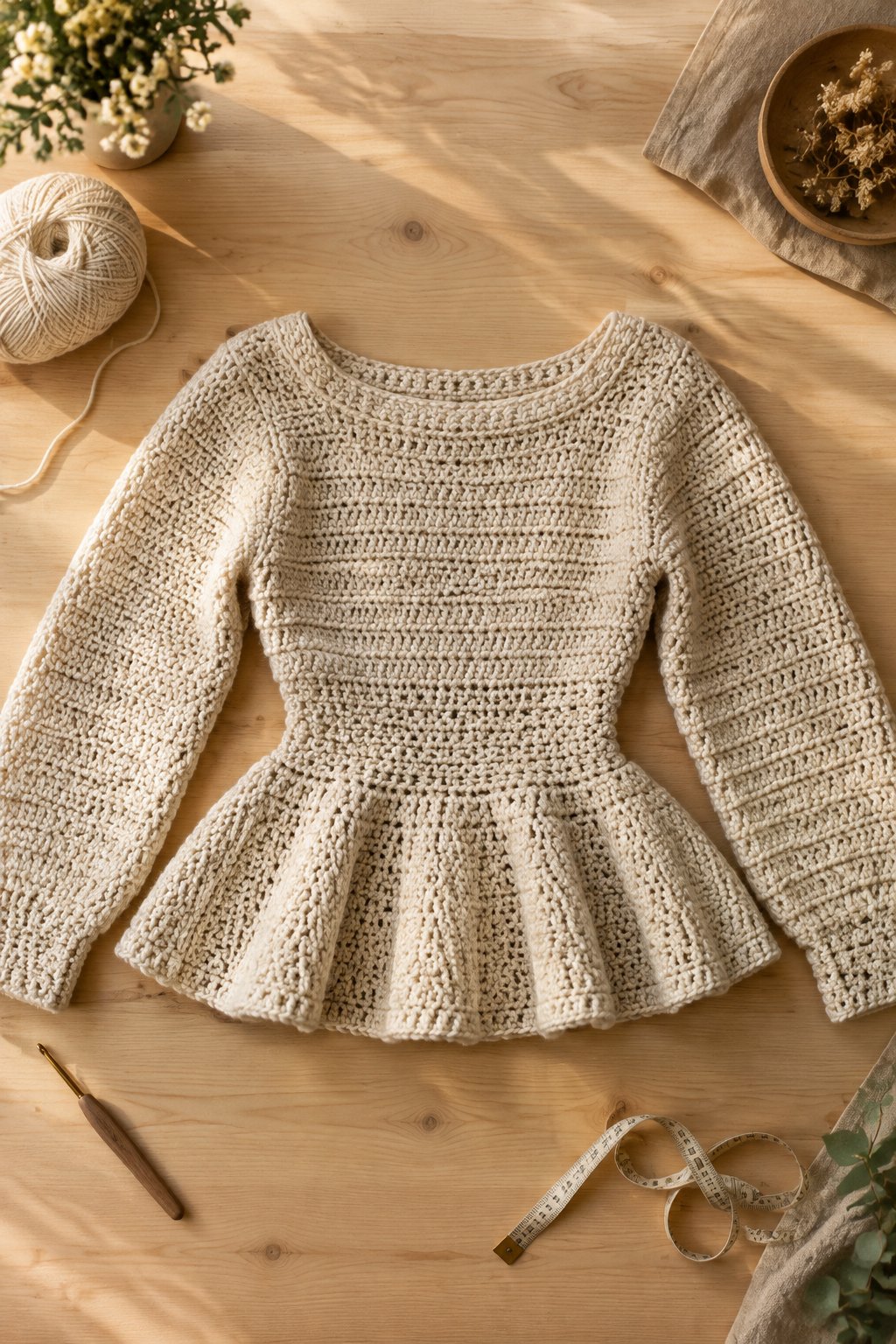
You get a defined waist and softly flared hem with this Crochet Peplum Sweater. Try dusty rose for a gentle autumn palette, or choose dark teal for a richer look. Your finished piece pairs neatly with straight-leg jeans or a simple skirt.
You’ll work four pieces using half double crochet and lightweight yarn. Choose a smooth DK-style yarn that meets the pattern’s requirements, then start swatching near 4 mm if that suits your yarn. Check that your fabric hangs softly around the peplum.
This is an easy garment option when you’re comfortable making consistent rows and sewing simple seams. Lay out every piece before joining so you clearly identify the waist and flared sections. For a polished finish, use removable markers to match the side seams, and check their alignment before pulling your sewing yarn snug.
|
Detail |
Specification |
|---|---|
|
Yarn Weight |
Lightweight; follow pattern |
|
Skill Level |
Easy |
|
Estimated Time |
Several weekends |
6) Modern Colorblock Sweater
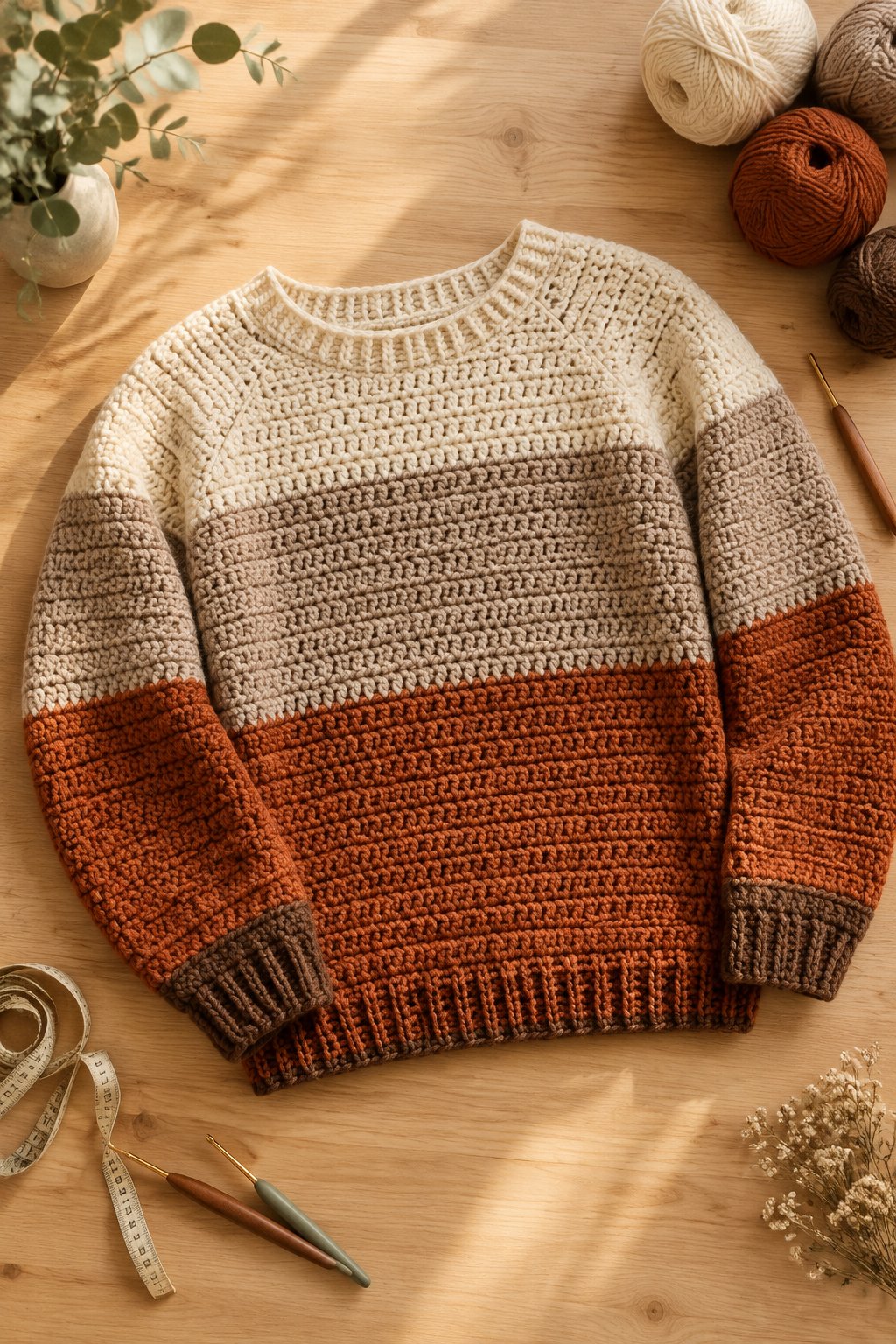
Make your Modern Colorblock Sweater stand out with broad areas of cream and rust. You’ll get a graphic fall look without juggling a different shade every few stitches. Keep one color dominant for a quieter finish, or divide the colors evenly for stronger contrast.
Choose every shade from the same yarn line when possible. Matching fiber content and weight helps your blocks behave consistently during washing. For a worsted-weight version, swatch around 5–5.5 mm and practice changing colors within the pattern’s stitch repeat.
Your main learning goal is tidy color transitions, making this an easy-to-intermediate project. Leave tails long enough to weave securely through the matching color area. Before starting, place your yarns beside the jeans or trousers you wear most, then decide which shade belongs closest to your face.
|
Detail |
Specification |
|---|---|
|
Yarn Weight |
Suggested: worsted, #4 |
|
Skill Level |
Easy |
|
Estimated Time |
Several weekends |
7) Cozy Campfire Striped Hoodie
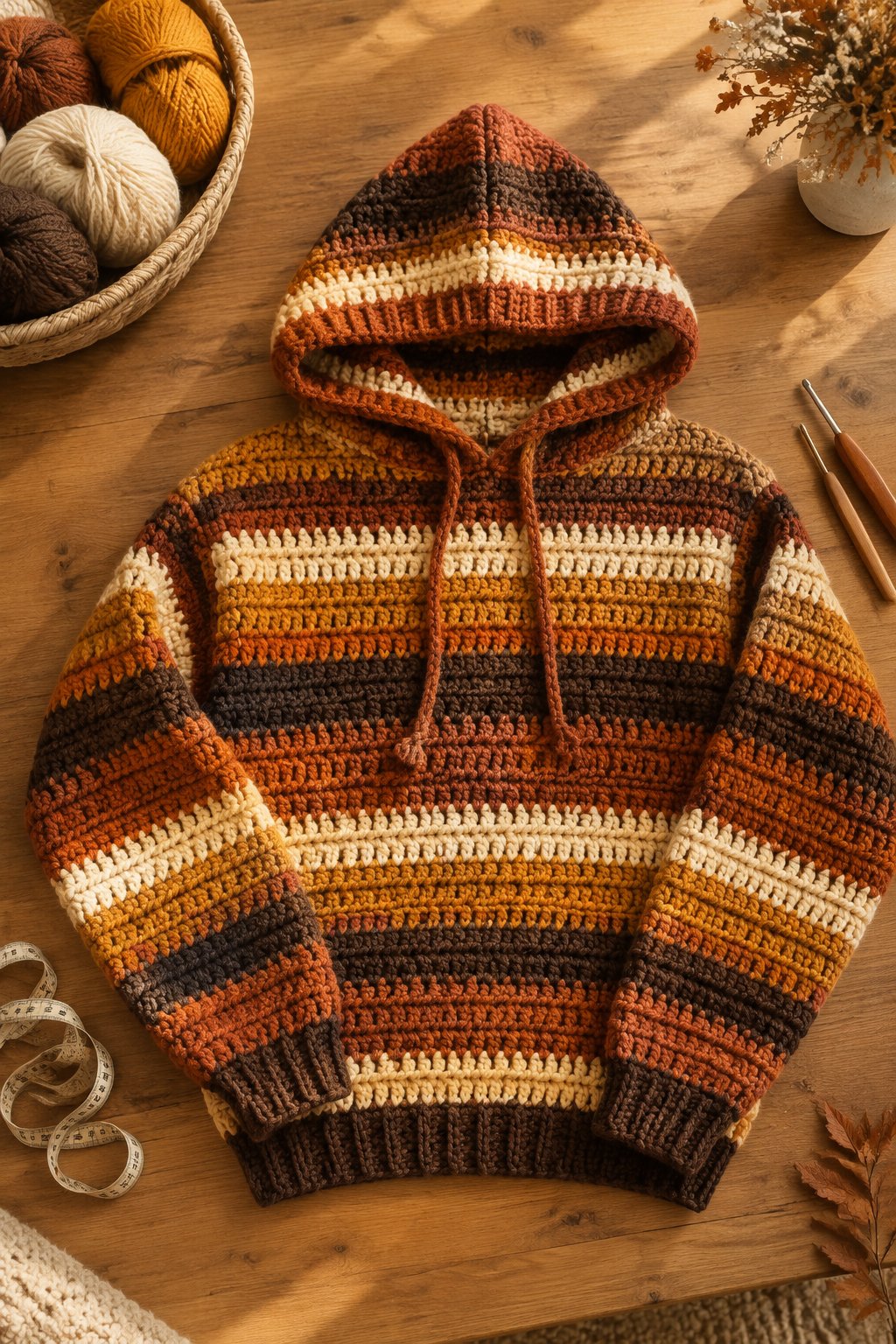
You’ll get familiar hoodie comfort from the Cozy Campfire Striped Hoodie, complete with a front hand-warming pocket. Use charcoal and cream for versatile stripes, or combine warm brown with faded blue. Your finished layer suits cool walks and relaxed weekends.
You’ll work alternating single and half double crochet rows, including back-loop sections that create subtle ridges. Choose a washable yarn in the specified weight, especially if you expect frequent wear. For a worsted substitute, begin your gauge check around a 5.5 mm hook.
Set aside extra finishing time for the hood and pocket. This is a satisfying intermediate step once you’re comfortable assembling simple shapes. Keep a written stripe sequence beside your project so the sleeves stay coordinated, and check pocket placement while wearing the body before you sew it down securely.
|
Detail |
Specification |
|---|---|
|
Yarn Weight |
Suggested: worsted, #4 |
|
Skill Level |
Intermediate |
|
Estimated Time |
Several weekends |
8) Whatever Sweater
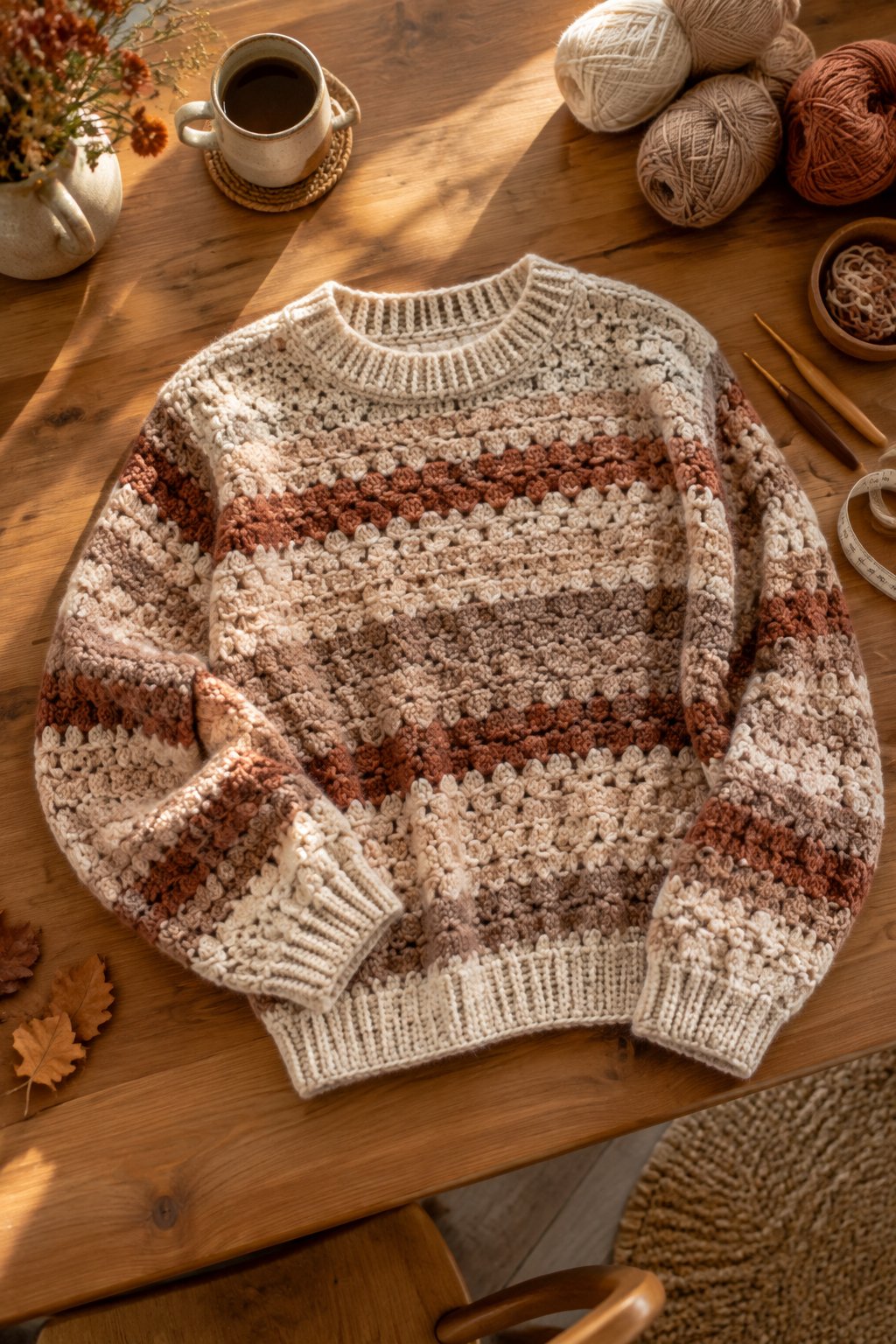
The Whatever Sweater gives you room to personalize your garment, with instructions for a pullover or cardigan. Choose forest green for an everyday fall layer, or use warm beige to highlight the fabric. You also have options for changing lengths and adding pockets.
You’ll practice herringbone half double crochet, which creates a gentle slant and subtle V-shaped texture. Use a smooth yarn so that detail stays visible. If your selected yarn is worsted weight, test a 5 mm hook and compare the washed swatch with the pattern gauge.
With sizes XS through 5X, you have several measurements to compare before starting. Treat the stitch as an easy skill-building exercise: make a small practice square until your edges look even. Write down every customization so you can repeat the same changes on both sleeves.
|
Detail |
Specification |
|---|---|
|
Yarn Weight |
Suggested: worsted, #4 |
|
Skill Level |
Easy |
|
Estimated Time |
Several weekends |
9) Wrap Me in Love Sweater by Katerina
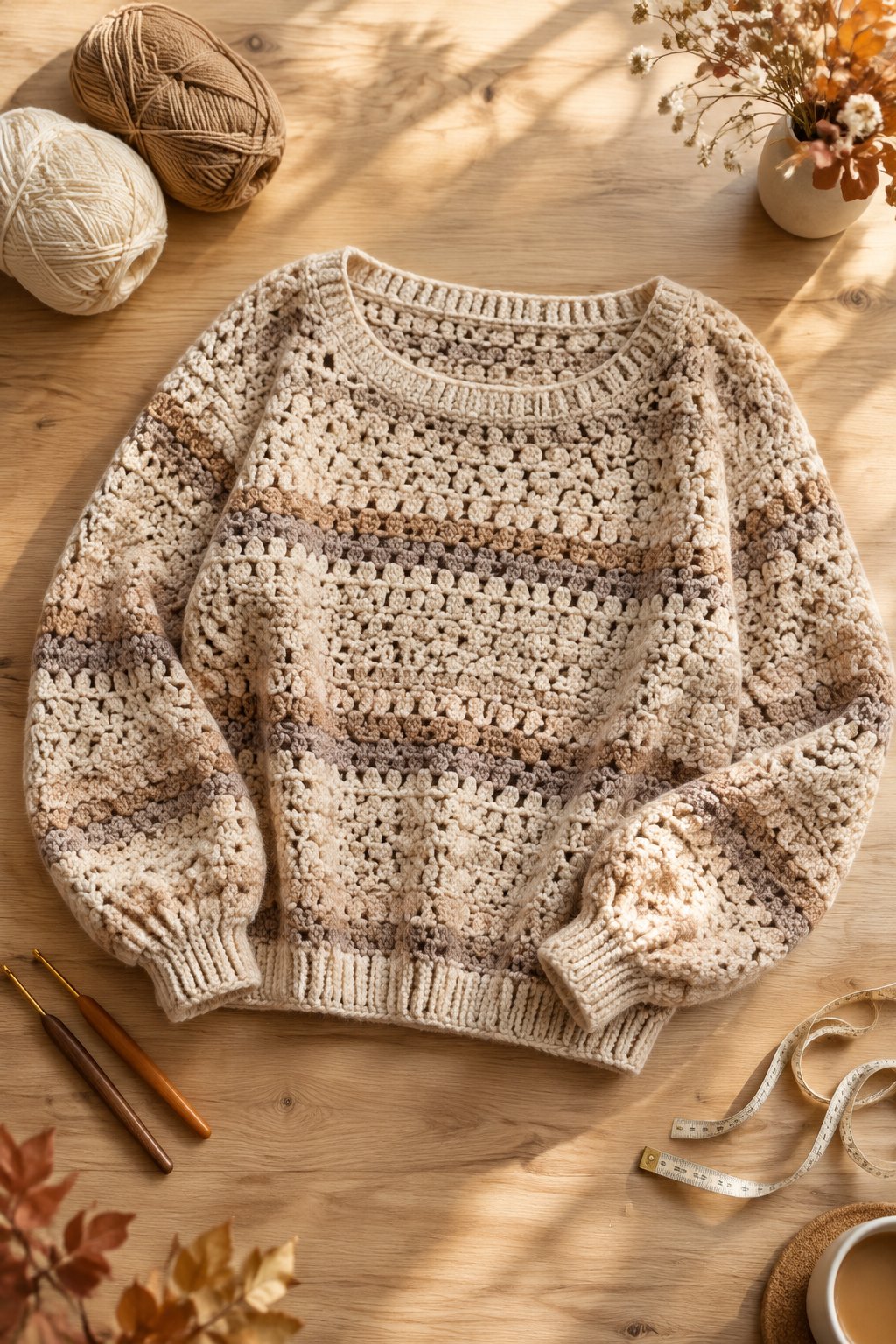
Choose Wrap Me in Love when you want a cozy wrap shape with a softer, dressed-up feel. Your version would look lovely in wine red or muted mauve. Pair it with dark jeans, or layer it over a simple dress for a handmade fall outfit.
Prioritize drape when selecting a substitute yarn. A flexible DK wool blend offers a useful swatching option, provided you match the designer’s gauge. Begin around 4.5 mm for that sample and check how easily the fabric folds across itself.
You’ll have a video tutorial available to help you follow the design. Approach the project at an intermediate level, allowing time to study the stitch repeat and wrap assembly. Before completing the edges, check how the overlap sits on your body over the layer you plan to wear underneath.
|
Detail |
Specification |
|---|---|
|
Yarn Weight |
Suggested swatch: DK, #3 |
|
Skill Level |
Intermediate |
|
Estimated Time |
Several weekends |
10) Chunky Berry Sweater
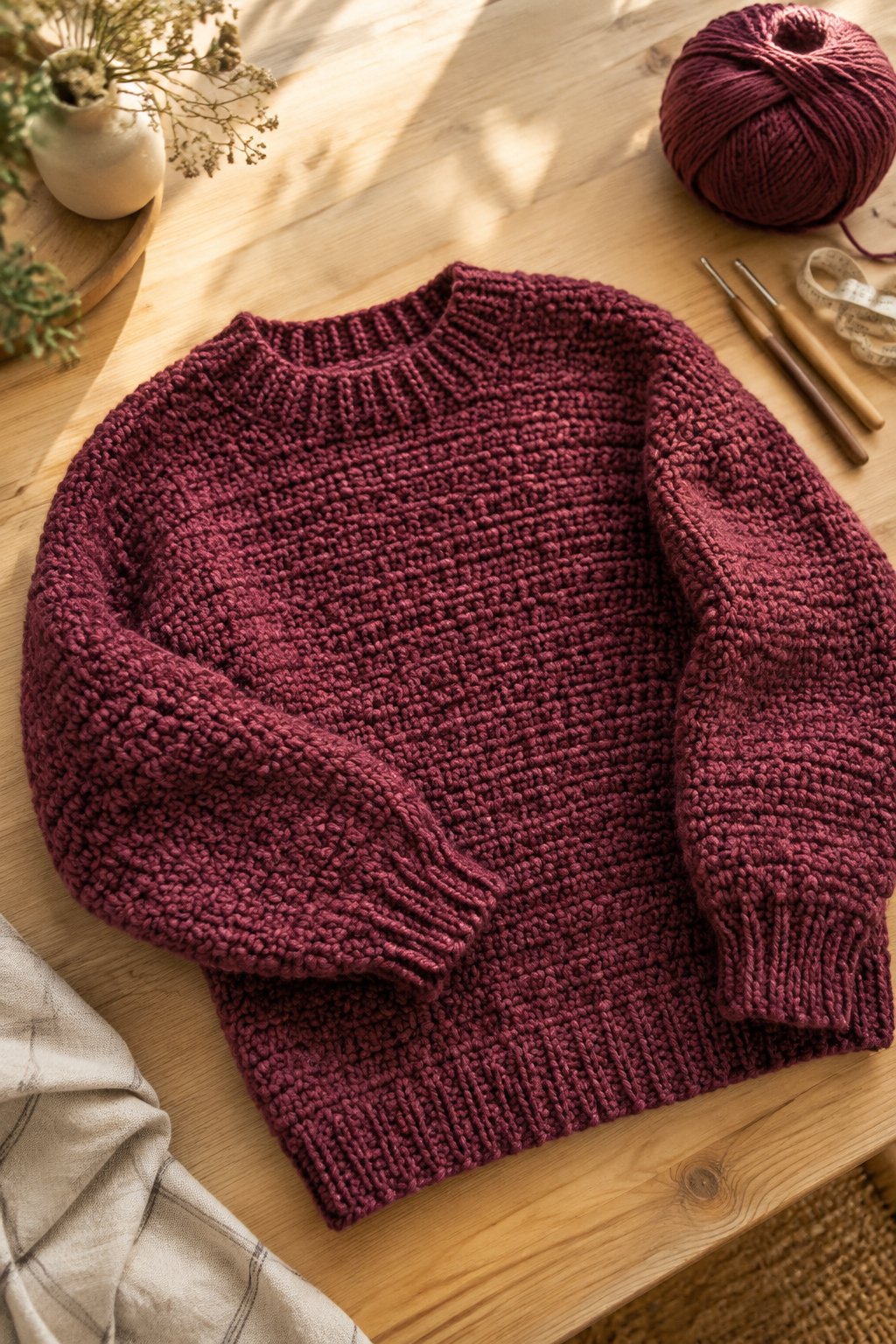
Your Chunky Berry Sweater brings bold texture and a V-neck shape to chilly fall outfits. Choose blackberry or burgundy to lean into the name, or try cream for clear stitch definition. Wear your finished sweater over a fitted long-sleeve tee when temperatures drop.
You’ll create the texture with crossed half double crochet: skip a stitch, work into the next stitch, then return to the skipped stitch. Use chunky yarn, or test two strands of worsted held together. Begin swatching around 6.5 mm, then follow the required gauge.
This is an easy project once you’re comfortable finding the skipped stitch. Keep your tension relaxed so the crossings lie neatly across the fabric. If you hold two strands together, check regularly that your hook catches both strands through every part of the stitch.
|
Detail |
Specification |
|---|---|
|
Yarn Weight |
Chunky, #5 |
|
Skill Level |
Easy |
|
Estimated Time |
Several focused sessions |
11) Mysa Velvet Sweatshirt Sweater
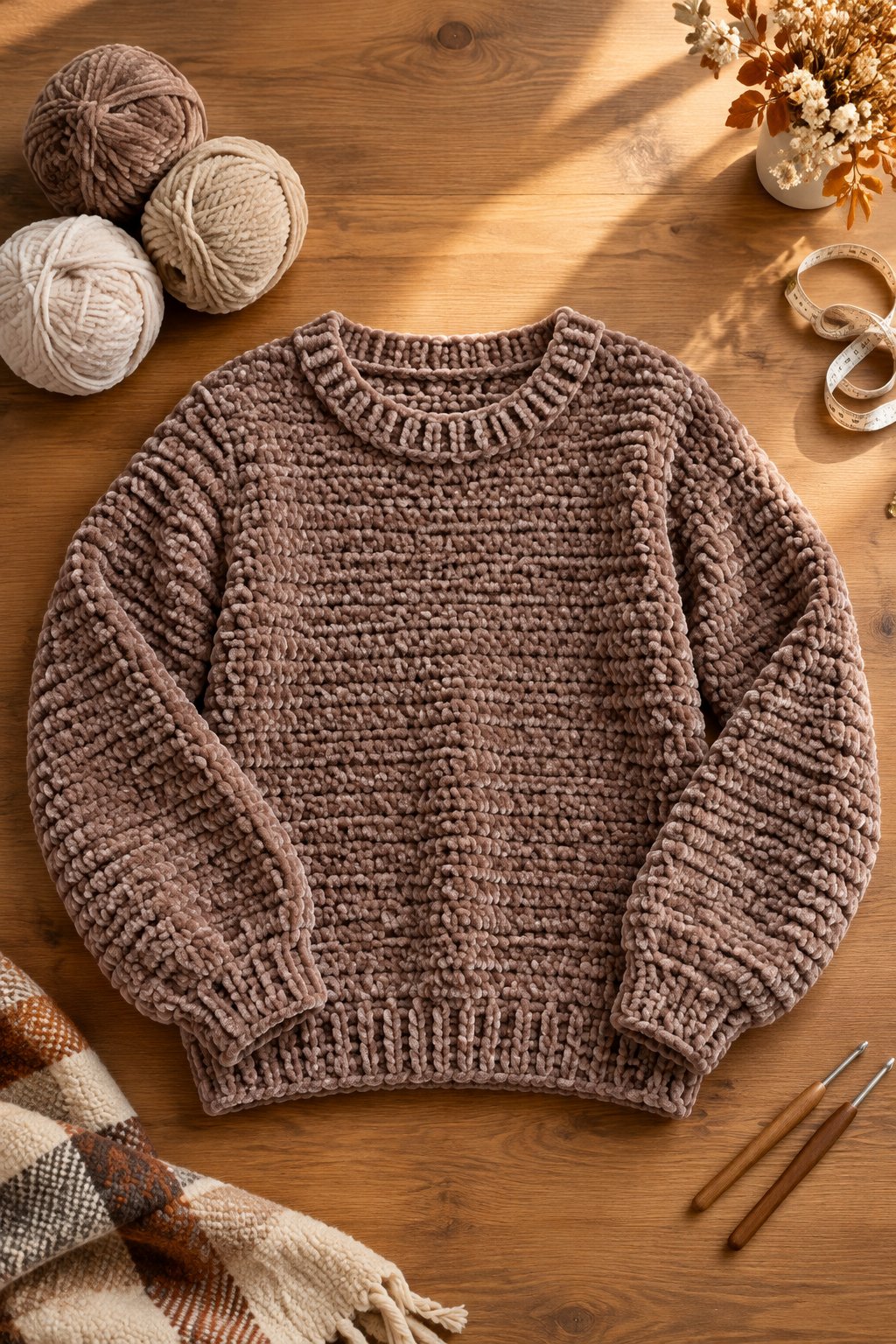
You’ll get a plush, sweatshirt-inspired look from the Mysa Velvet Sweater. Try your version in smoky blue or caramel for a soft fall palette. The velvet surface adds richness to a relaxed silhouette that pairs easily with leggings and casual trousers.
Choose the velvet yarn weight specified in the pattern and read its care label before buying. For a bulky velvet practice swatch, start around 6.5 mm. Work the stitch repeat carefully, since the fuzzy surface makes loops harder to distinguish.
Give this project intermediate-level patience even if you know the basic stitches. Place markers at row ends and count frequently so missed stitches stay easy to fix. Check your washed sample for loose loops, sometimes called worming, and adjust your tension or hook before committing to a full sweater’s worth of yarn.
|
Detail |
Specification |
|---|---|
|
Yarn Weight |
Bulky velvet; follow pattern |
|
Skill Level |
Intermediate |
|
Estimated Time |
Several weekends |
12) Rainbow Granny Square Sweater
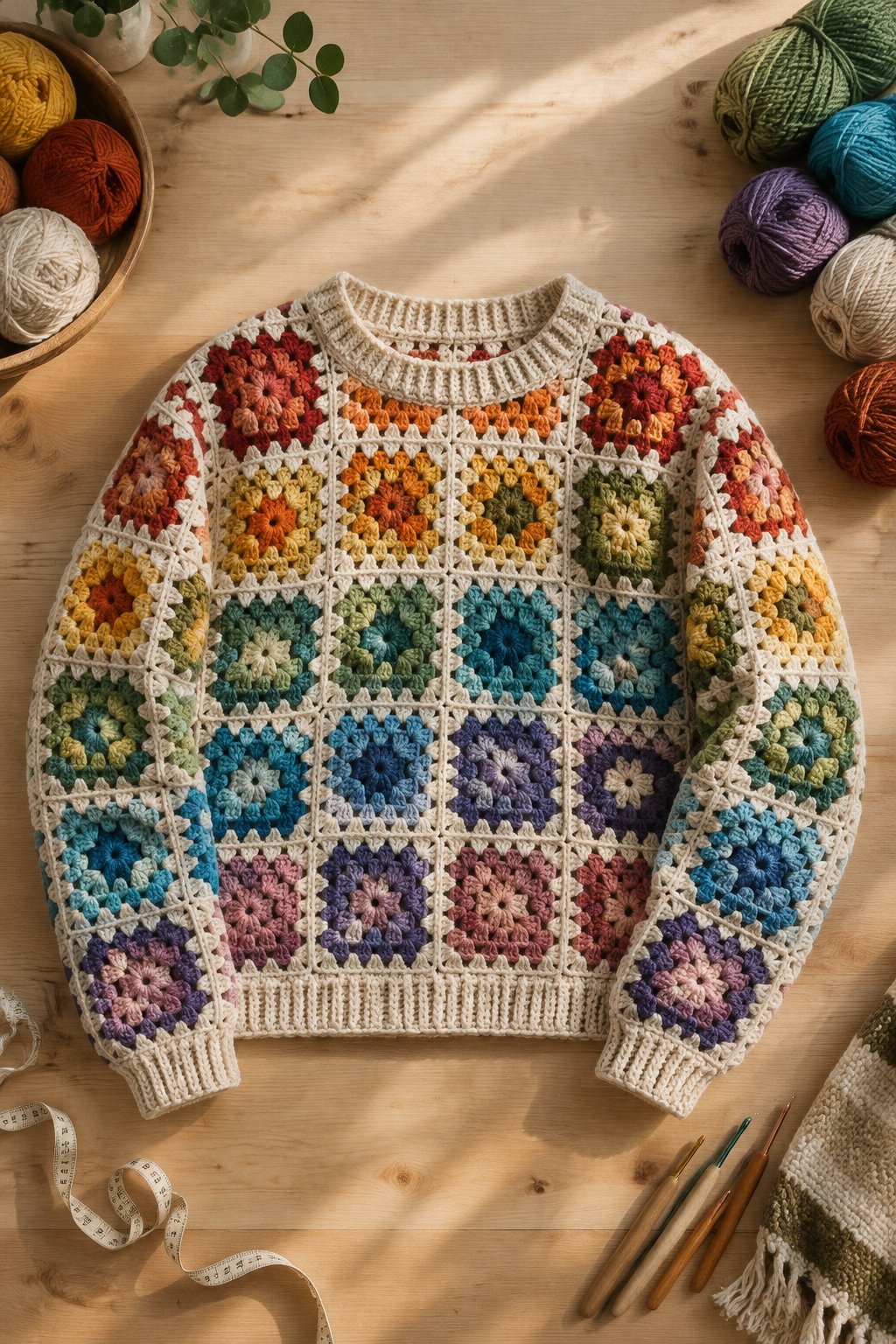
Your Rainbow Granny Square Sweater turns familiar motifs into a cheerful statement layer. Choose a bright rainbow, or build a fall palette around rust and mustard with a dark border. You’ll make four granny squares and finish with granny-stripe edging.
Use yarns with matching weights and care instructions so your squares wash consistently. For a worsted-weight version, test a 5 mm hook and check the finished motif measurements. Practice your double crochet clusters and corner spaces before starting the full-size squares.
This beginner-friendly design comes in sizes XS through 3X. Keep a written color order so each square develops as planned, and weave in ends as you finish each color. Before joining, lay all four motifs flat and check their dimensions; equal sizes make the assembly easier and help your finished sweater hang evenly.
|
Detail |
Specification |
|---|---|
|
Yarn Weight |
Suggested: worsted, #4 |
|
Skill Level |
Beginner |
|
Estimated Time |
Several weekends |
13) Autumn Belle Sweater
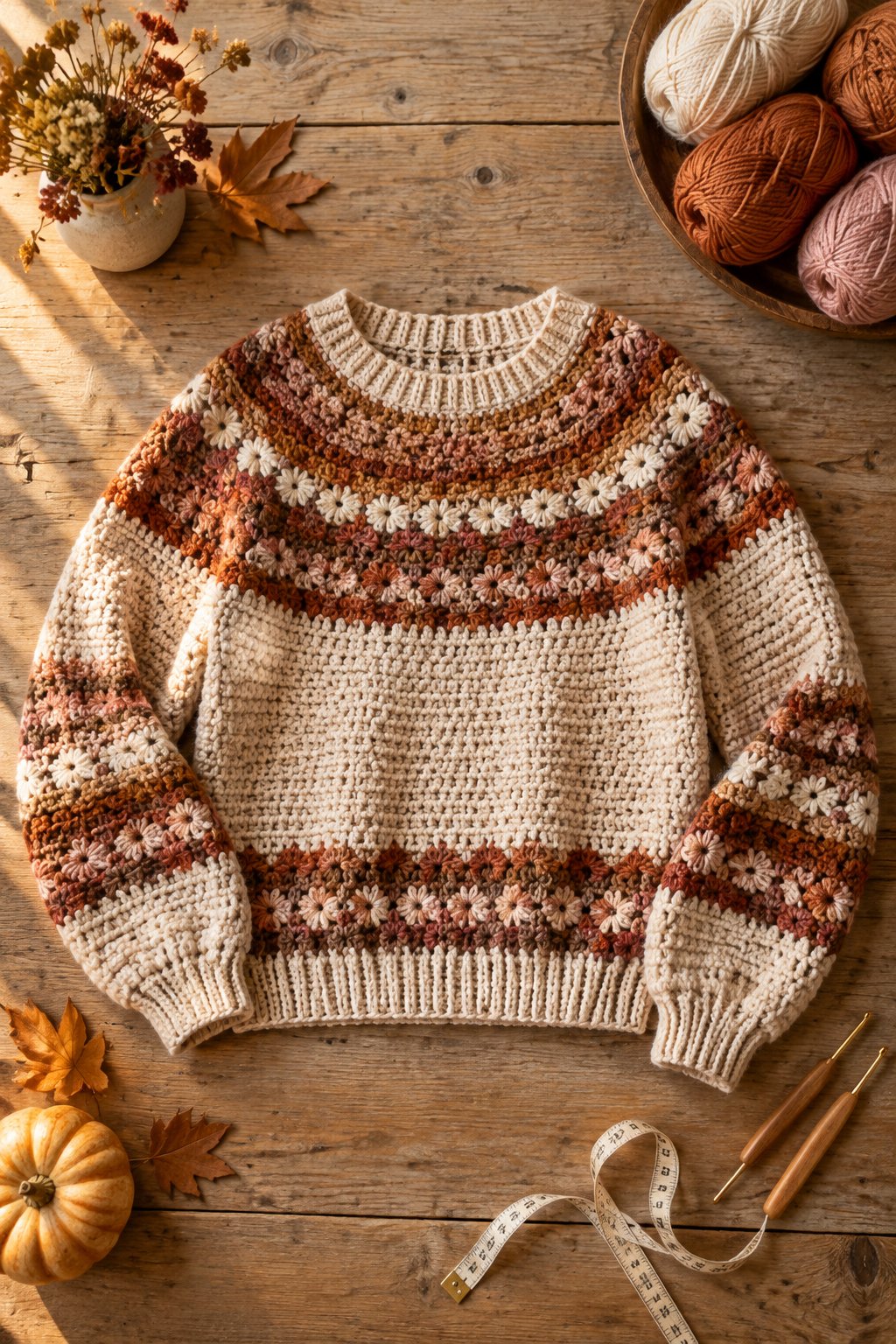
Make the Autumn Belle Sweater your starting point for a soft, romantic fall outfit. Choose copper or muted gold for seasonal warmth, then pair your finished silhouette with a flowing skirt. A single color keeps attention on your chosen pattern’s stitch texture and shaping.
Select the exact Autumn Belle instructions before buying yarn, since shared pattern names make careful matching useful. For a lightweight sweater sample, try smooth DK yarn with a 4.5 mm hook. Practice the listed stitch repeat and check whether the blocked fabric has the drape you want.
Plan for intermediate-level attention to shaping and finishing. Read the sleeve instructions early, and mark every increase or decrease row on a printed checklist. If you want to change the length, identify the straight body section before making adjustments around the hem.
|
Detail |
Specification |
|---|---|
|
Yarn Weight |
Suggested swatch: DK, #3 |
|
Skill Level |
Intermediate |
|
Estimated Time |
Several weekends |
14) The Sideways Fall Crochet Sweater
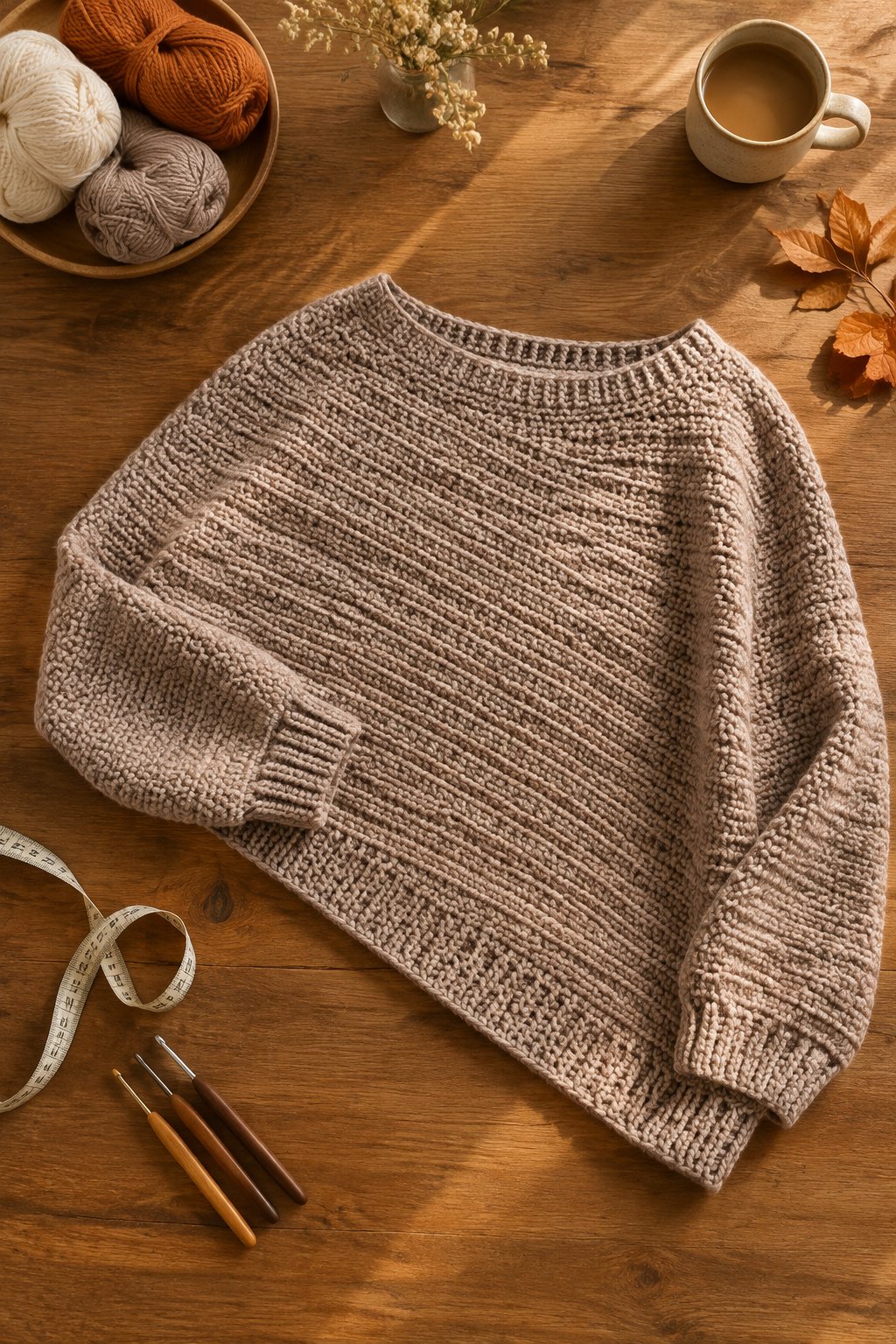
You’ll explore a different direction of garment construction with the Sideways Fall Crochet Sweater. Try cinnamon or moss green for a cozy seasonal look. As you study the schematic, notice how the sideways layout affects the direction of your stitch texture and finished shape.
Choose a smooth yarn that helps you read the rows clearly. If the pattern calls for worsted weight, begin near 5.5 mm and adjust after washing your sample. Practice any back-loop stitches separately so you recognize the correct loop throughout the project.
Give yourself intermediate-level planning time before changing measurements. With sideways construction, added rows and added stitches affect different dimensions than they do in a bottom-up sweater. Label the neckline, hem, and sleeve edges on your schematic, then check the measurement attached to each section before starting.
|
Detail |
Specification |
|---|---|
|
Yarn Weight |
Suggested: worsted, #4 |
|
Skill Level |
Intermediate |
|
Estimated Time |
Several weekends |
15) Sedona Sweater
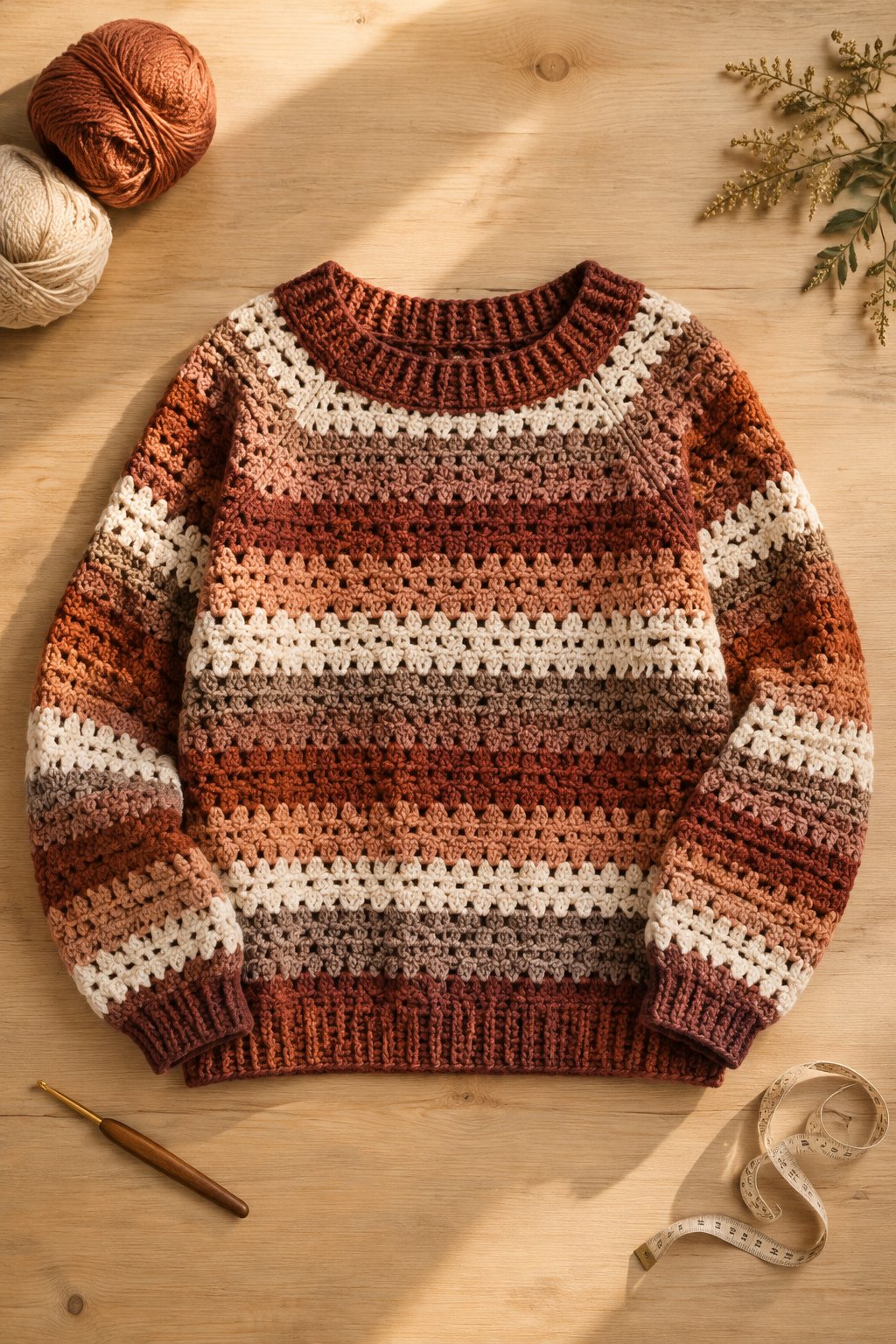
Your Sedona Sweater offers a lovely starting point for a desert-inspired fall palette. Choose terracotta for your main shade, or explore sand and faded turquoise as styling colors. Pair the finished sweater with dark denim to let your handmade fabric take center stage.
Select your yarn after checking the designer’s materials and gauge. A soft worsted wool blend is a useful sample choice for autumn warmth; begin that swatch around 5.5 mm. Work the actual pattern stitch so you can judge its texture and flexibility.
Treat this as an intermediate project until you’ve reviewed every shaping step. Compare the finished garment measurements with a sweater you own, then check sleeve width as well as bust size. Save a small amount of yarn for future repairs, especially if you choose a distinctive dyed color.
|
Detail |
Specification |
|---|---|
|
Yarn Weight |
Suggested swatch: worsted, #4 |
|
Skill Level |
Intermediate |
|
Estimated Time |
Several weekends |
How to Choose Yarn and Hooks for Your Fall Sweater
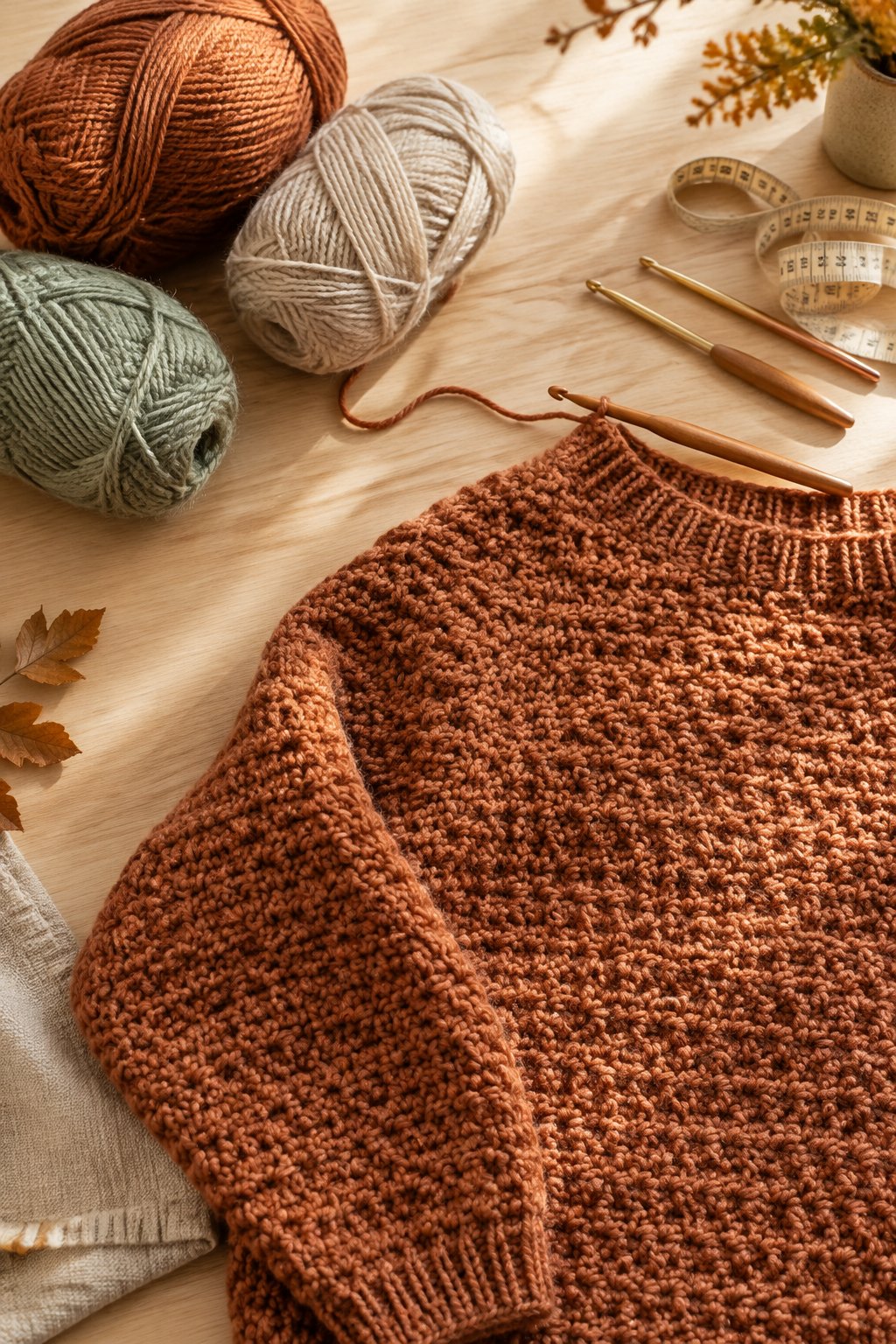
Choose your sweater yarn by matching the pattern’s gauge and the feel you want against your skin. Use the recommended hook as your starting point, then let your washed swatch guide any changes.
How Do Worsted and Chunky Yarns Affect Warmth and Drape?
Choose worsted-weight yarn when you want a balance of warmth and manageable bulk. With chunky yarn, you’ll make larger stitches and a thicker fabric that suits cold-weather layers, especially with a dense stitch pattern.
Check flexibility before committing to either weight. Hold your washed swatch upright and let it fold over your hand; a stiff sample signals a firmer finished garment. Keep fiber content in mind, too, since wool and cotton in the same weight produce different fabrics.
When Is Cotton or a Cotton Blend Suitable for Fall?
Choose cotton or a cotton blend for mild fall weather and breathable indoor layers. A cotton-acrylic blend gives you a practical option when you want some cotton feel with added resilience.
For a long or oversized sweater, wash and hang your swatch briefly to check stretching under its own weight. Follow the care label and dry the finished garment flat when instructed. If your pattern uses wool, compare your cotton substitute’s drape carefully before buying the full quantity.
Why Should You Swatch Before Choosing Your Hook Size?
Swatch first so your finished sweater matches the pattern’s intended measurements. Make your sample larger than 4 inches square, then measure the center area after washing and drying it as you’ll care for the garment.
If you have too many stitches per inch, test a larger hook; if you have too few, test a smaller one. Check row gauge as well, especially when shaping depends on row counts. Keep your labeled sample until the sweater is finished.
How to Pick a Pattern That Fits Your Skills and Body
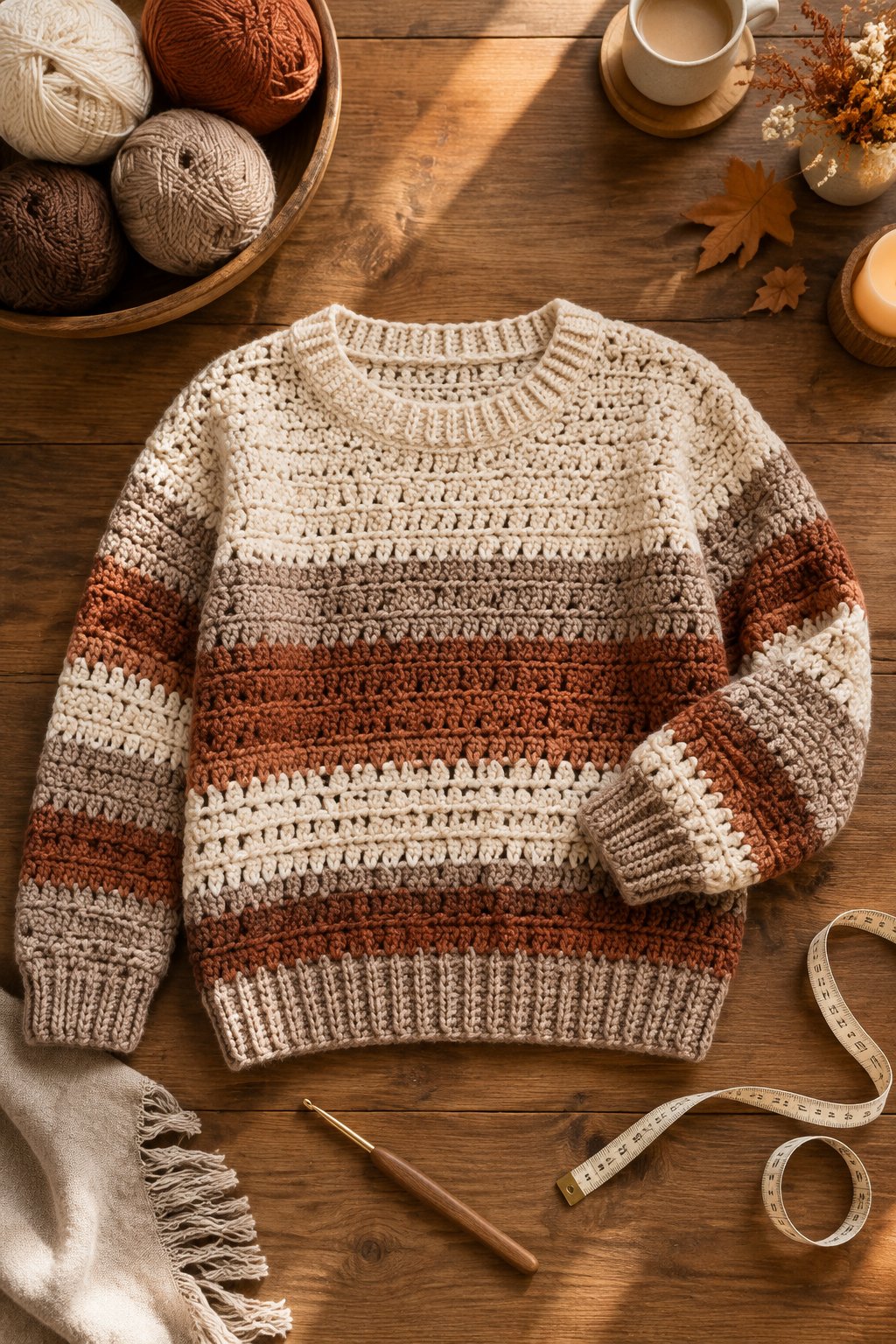
Pick a pattern with familiar stitches, clear construction details, and finished measurements that match your preferred fit. Read through the assembly steps before you start so the project suits both your skills and your patience for finishing.
Which Construction Methods Are Most Manageable for Beginners?
Start with a drop-shoulder sweater made from simple panels if you’re comfortable working straight rows. You’ll practice consistent sizing and seams while keeping shaping manageable.
A top-down raglan is another useful beginner route when you enjoy counting increases and using markers. Look for clear instructions around the sleeve separation, plus a schematic or progress photos. Choose one new challenge at a time, such as garment assembly with stitches you already know.
How Do Bust Measurements and Positive Ease Determine Size?
Measure around the fullest part of your bust, then compare that number with the pattern’s finished bust measurements. Positive ease is the extra room between your body measurement and the finished sweater circumference.
For example, with a 40-inch bust and 4 inches of desired ease, look for a finished circumference near 44 inches. Follow the designer’s intended ease for the pictured fit, and check upper-arm width before selecting your size. If the size chart already includes ease, use its directions to avoid adding that room twice.
How Can You Adjust Body and Sleeve Length Without Changing the Fit?
Adjust length within straight sections that have no active shaping. For a top-down body, that often means adding or removing rounds before the hem ribbing.
For sleeves, preserve the intended cuff width and review where the decreases occur before changing their spacing. If you add substantial length, redistribute the decreases across the new sleeve length as needed. In sideways patterns, use the schematic to identify which stitch counts control length before changing anything.
How to Find and Save the Free Pattern
Find the designer’s own pattern page and save its exact title with the designer’s name. That gives you a reliable route back to the instructions when you’re ready to choose yarn.
Where Is the Designer’s Free Online Version?
Search the pattern title together with the designer’s name, then open the designer’s website from the results. Scroll to the materials list and written instructions to check that you’ve reached the full pattern page.
Before starting, check for separate posts covering sleeves or assembly. Also look for correction notes and US or UK stitch terminology. If you arrive through Pinterest, follow the pin through to the original designer’s page.
Is the Printable PDF a Separate Paid Option?
Check the designer’s page for the terms attached to each format. You’ll often find free browser-based instructions alongside a separately priced, ad-free PDF.
Read the purchase description before paying so you know whether the file includes extras such as charts or photo guides. If you prefer the free version, bookmark every required pattern part. Keep your row notes separately so you can return to the correct place after closing your browser.
What Should You Save With Your Pinterest Pin?
Save the original pattern page with the designer’s name and the sweater’s exact title. Add your chosen size and yarn details to your private project notes.
Record your hook size after swatching, along with any planned length changes. Include the date you accessed the instructions so you can check for later updates. Before buying yarn, reopen the original page and confirm the yardage for your selected size.