Your search for 17+ Heirloom-Quality Baby Blanket Crochet Pattern Ideas for Baby Showers starts with beautiful texture and yarn that stands up to washing. For a gift with lasting appeal, choose a classic stitch design in soft, washable yarn, then give your blanket neatly secured ends and a carefully finished border. You get the charm of a handmade keepsake with details your recipient will appreciate.
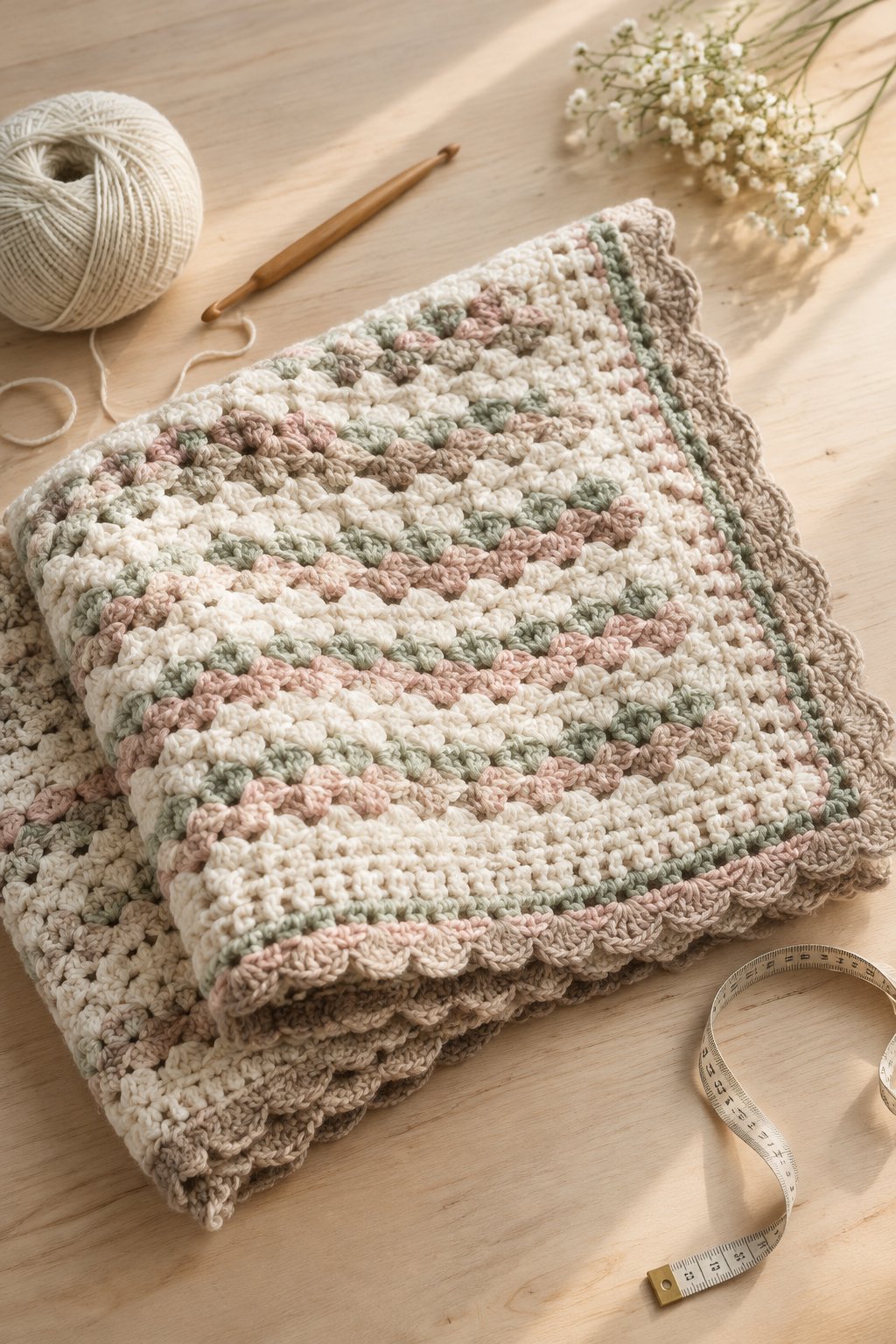
You’ll find plenty to love in soft neutrals, playful stripes, and raised textures that make these designs worth saving for your next project. Use the yarn and hook suggestions as starting points, and follow your chosen pattern’s gauge. Treat the time ranges as planning estimates for roughly 30-inch blankets; your pace, border choice, and stitch density will affect your schedule.
1) Fluffy Meringue Heirloom Baby Blanket
Choose the Fluffy Meringue when you want an ornate square blanket with layers of scalloped texture. In cream or warm ivory, you give its repeating fans a delicate, vintage feel suited to a special baby shower gift.
For a light finish, start with smooth, washable DK yarn and a 4–4.5 mm hook, adjusting to your pattern. You’ll work through layered stitch groups and chain spaces, so stitch markers at the corners help you track each round. Follow the chart one round at a time.
Set this aside as an intermediate project with room in your schedule for counting. Before starting the full blanket, practice one repeat to check your tension. Keep the wrapping simple with a wide paper band so your detailed crochet remains the focus.
|
Detail |
Specification |
|---|---|
|
Yarn Weight |
DK |
|
Skill Level |
Intermediate |
|
Estimated Time |
20–35 hours |
2) Classic Floral Cable Baby Blanket
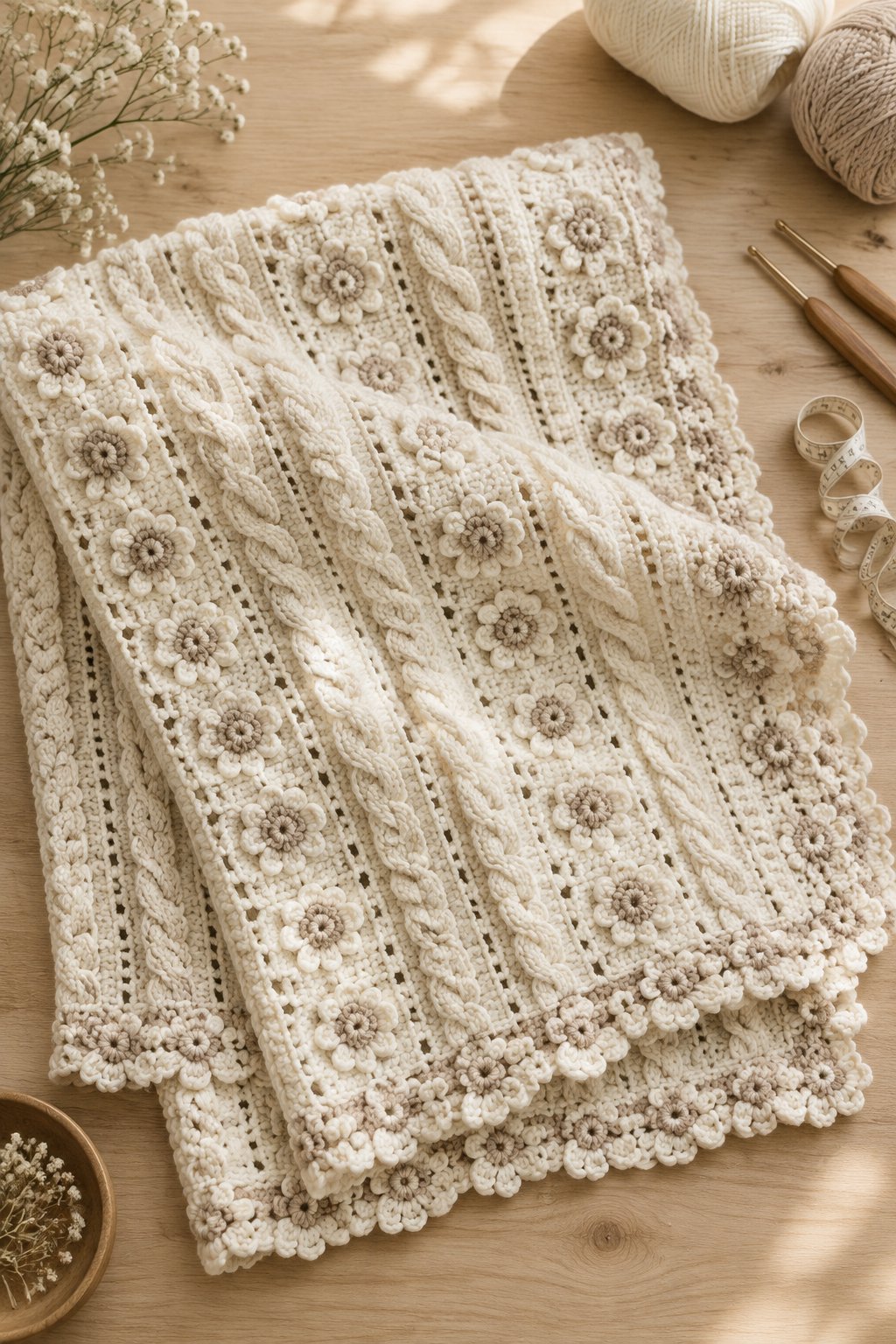
You get a sculpted, heirloom look from floral cables worked across a rectangular blanket. Choose pale oatmeal, dusty rose, or soft sage to make the raised motifs easy to see without competing with the stitchwork.
Use a smooth, washable DK yarn with a 4–4.5 mm hook as your starting combination. Post stitches and crossed stitch groups create the cable texture. Keep your yarn overs relaxed so you have enough room to work around each post without pulling the fabric tight.
You’ll want intermediate skills for following the motif placement and checking stitch counts. Work a complete floral repeat in your swatch before committing to the blanket. For a polished shower gift, finish with the pattern’s border in the same shade and tuck a handwritten care card into the fold.
|
Detail |
Specification |
|---|---|
|
Yarn Weight |
DK |
|
Skill Level |
Intermediate |
|
Estimated Time |
25–40 hours |
3) Dense Shell Stitch Baby Blanket
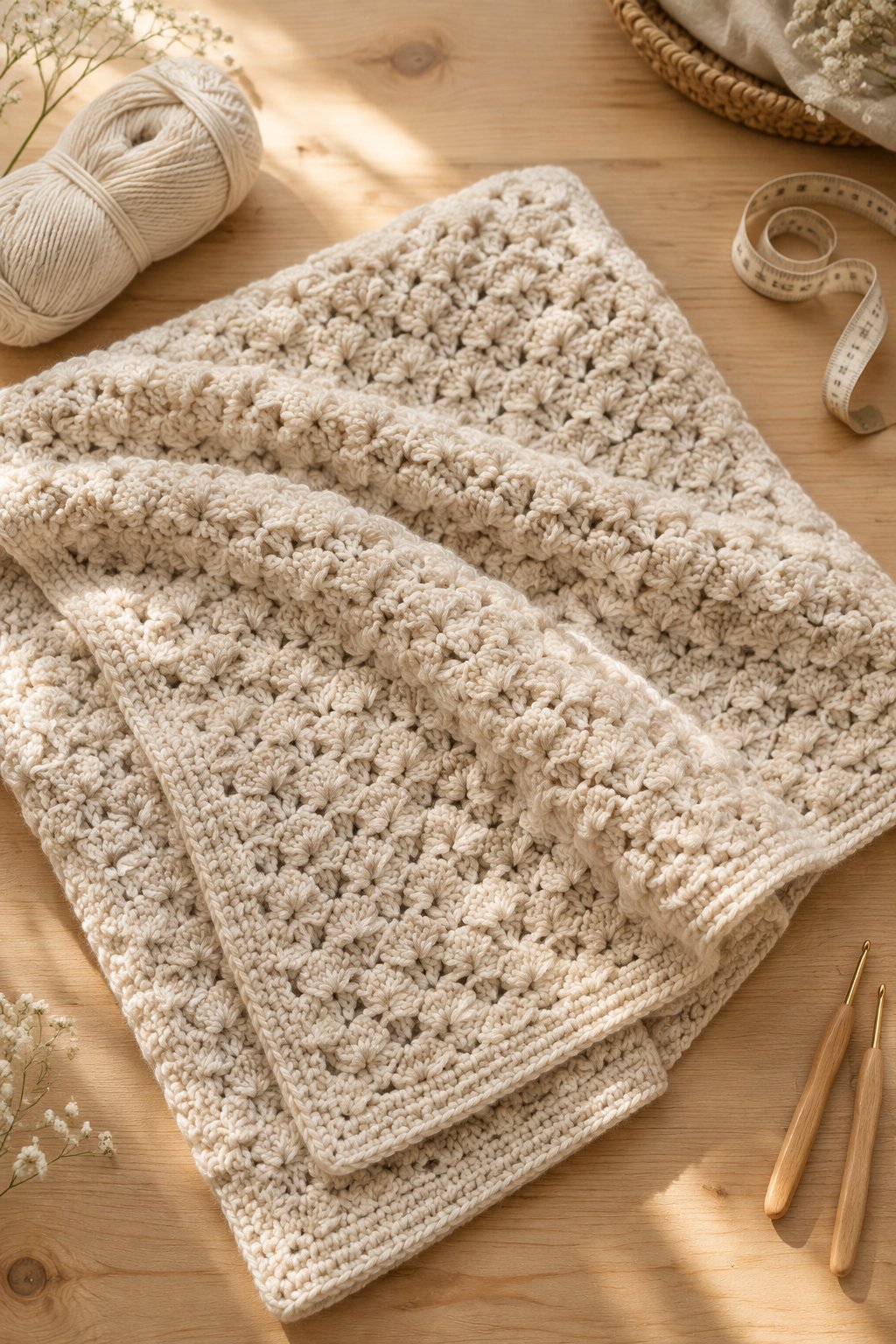
A dense shell stitch gives you rounded fans and a closely worked surface with lovely movement. Try butter yellow for a cheerful gift, or choose warm white for a traditional rectangular blanket with a softly scalloped edge.
Start with washable worsted-weight yarn and a 5 mm hook. You’ll form shells by placing several stitches into one spot, then anchoring them according to your chosen pattern. Choose a dense shell variation if you prefer smaller gaps, and check the washed swatch for drape.
This is an easy project once you recognize where each shell belongs. Mark the first and last stitch of every row to keep the sides straight. Leave enough yarn for an understated edging that supports the shell pattern without adding excessive weight around the blanket.
|
Detail |
Specification |
|---|---|
|
Yarn Weight |
Worsted |
|
Skill Level |
Easy |
|
Estimated Time |
12–20 hours |
4) The Miguel Baby Blanket
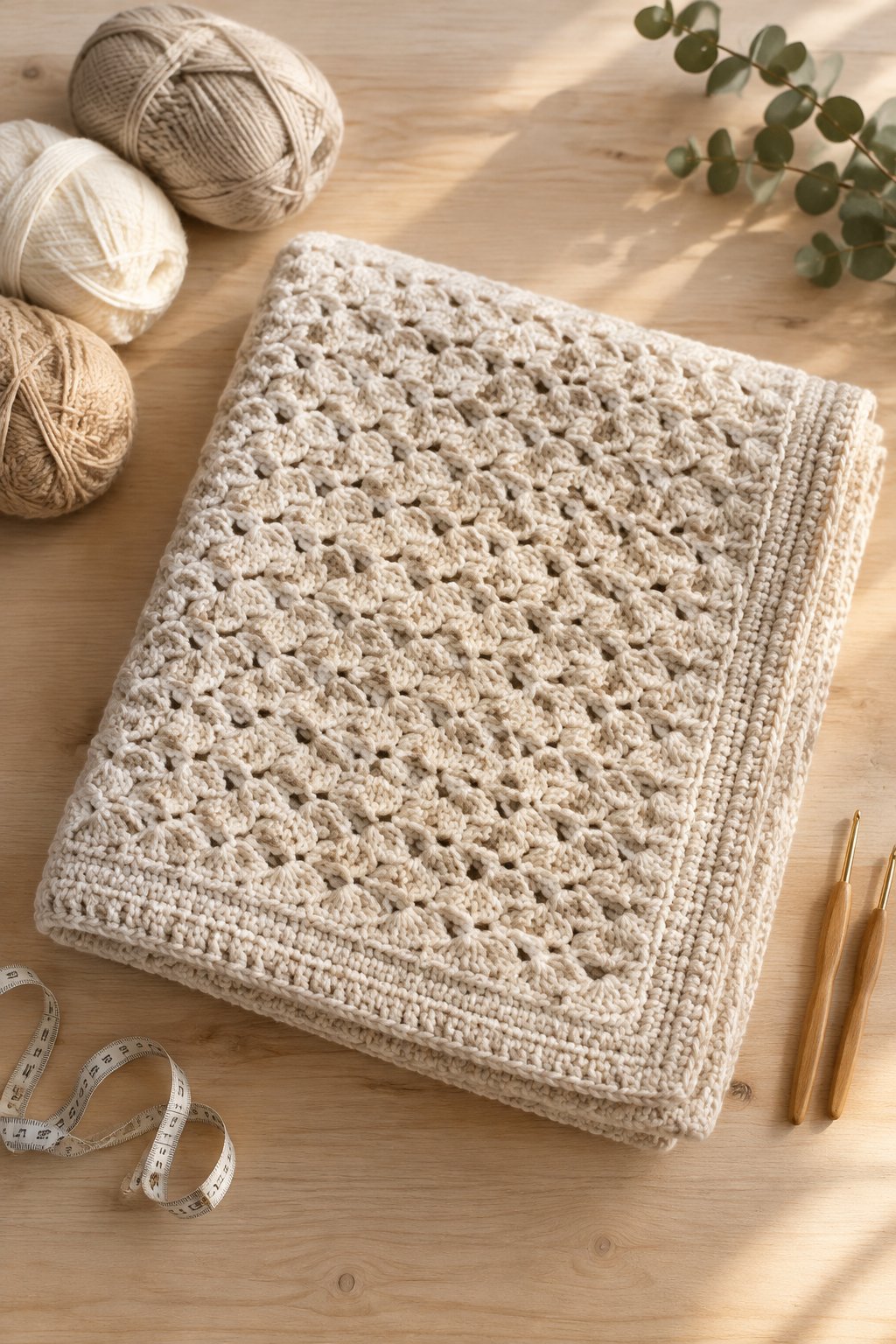
Choose the Miguel for a crisp grid of solid blocks separated by small filet openings. In powder blue or pale mint, you’ll get a clean geometric blanket with enough detail to feel special in a single color.
The design uses DK yarn and a 4.5 mm hook. You’ll work groups of seven double crochets separated by chain-one spaces, with an openwork row crossing the fabric at intervals. Practice the repeat in a small swatch so you recognize how the openings line up.
You’ll find this an approachable next step after a basic double-crochet blanket. Its solid first and last rows give you tidy edges before the border begins. Allow extra finishing time for the decorative shell-and-picot edging, and check each filet row before moving into the next block.
|
Detail |
Specification |
|---|---|
|
Yarn Weight |
DK |
|
Skill Level |
Easy |
|
Estimated Time |
12–20 hours |
5) Beginner-Friendly Striped Baby Blanket
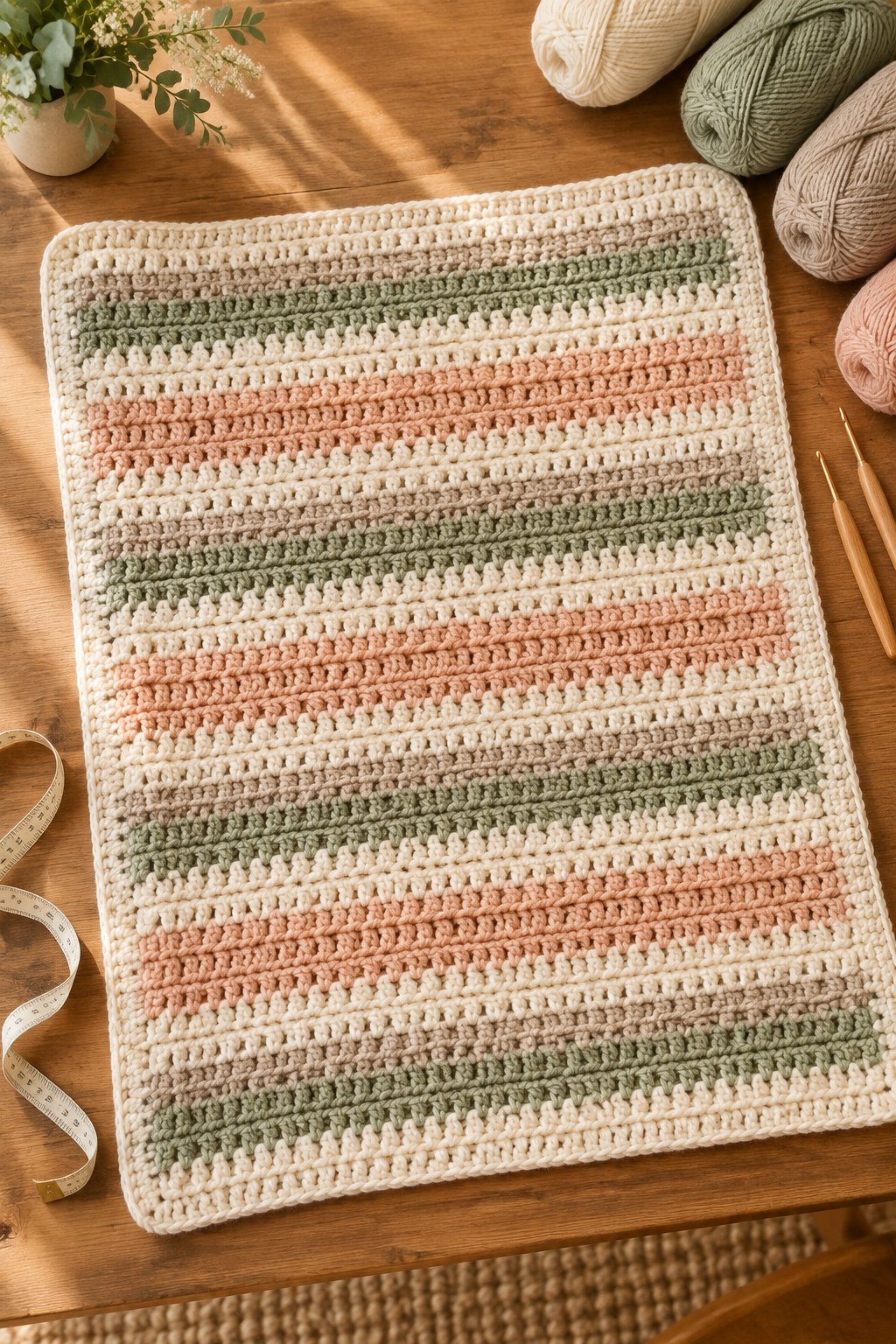
Wide stripes give you an eye-catching baby blanket while keeping the crochet approachable. Build your rectangular design around cream and denim blue, or use peach with muted coral for a warm, cheerful palette.
For an easy version, choose washable worsted-weight yarn and a 5–5.5 mm hook. Work a basic double-crochet stripe pattern, keeping the same stitch count across every row. Change colors on the final yarn over of the previous stitch for a crisp transition.
You’ll get useful practice with turning chains and straight edges as a beginner. Plan the stripe order on paper before starting, and weave in ends after each color block. A narrow single-crochet border brings the colors together and gives your shower gift a tidy frame without a complicated finishing step.
|
Detail |
Specification |
|---|---|
|
Yarn Weight |
Worsted |
|
Skill Level |
Beginner |
|
Estimated Time |
10–16 hours |
6) One-Row Repeat Puff Stitch Baby Blanket
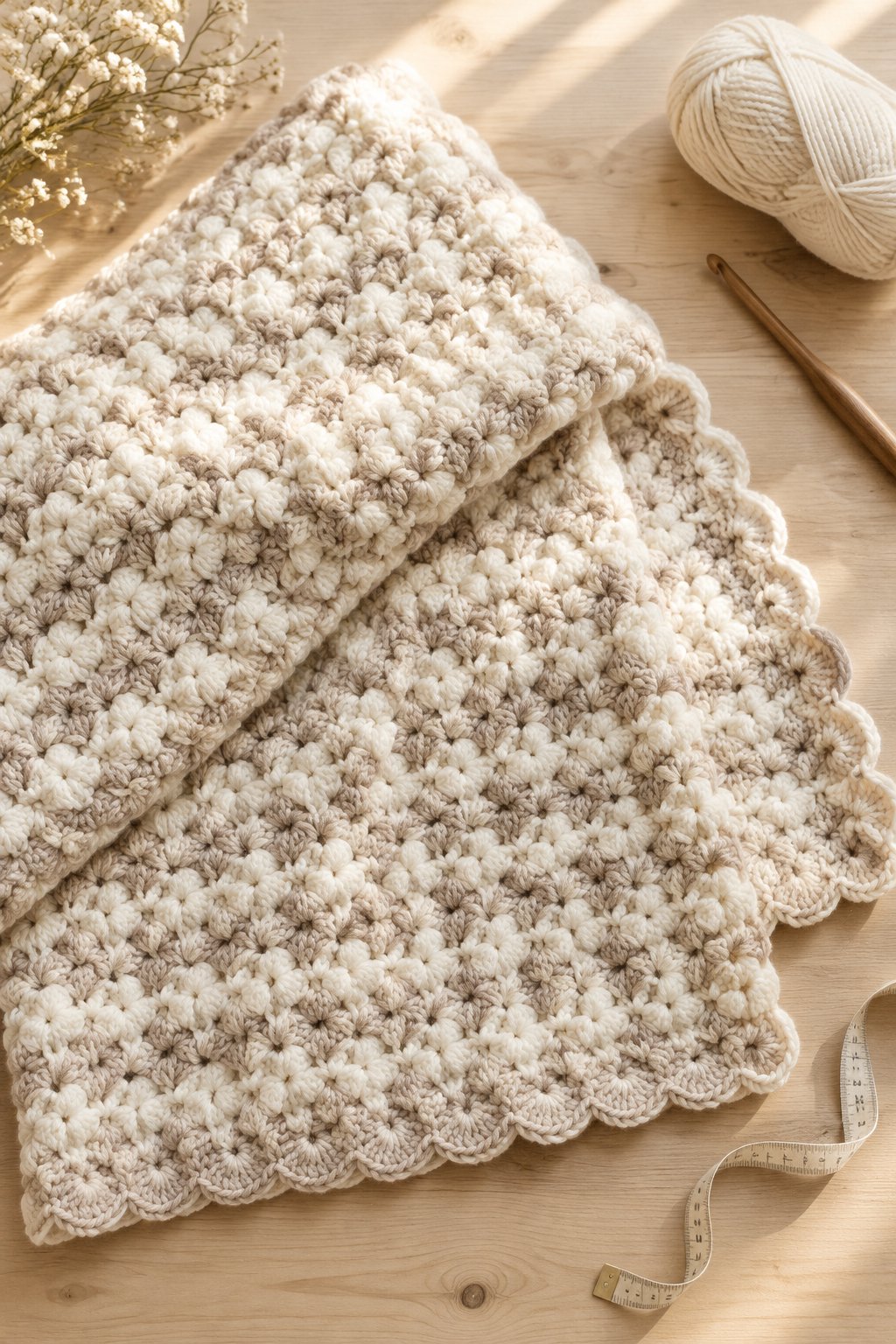
With a repeating puff stitch, you create a softly pebbled blanket that looks especially inviting in a single shade. Try lavender, pale apricot, or creamy beige to show off the texture across a simple square.
Choose a smooth, washable DK yarn and start swatching with a 4.5 mm hook. Your puff loops need an even height, so lift each loop gently before closing the stitch. Follow your selected pattern’s puff definition, since the number of loops varies between designs.
You’ll find the one-row repeat relaxing after the setup, making this an easy project for building confidence with texture. Check your yarn supply before beginning because puff stitches use substantial yardage. Add a slim, flat border to give the raised fabric a balanced finish and a comfortable edge for supervised cuddles.
|
Detail |
Specification |
|---|---|
|
Yarn Weight |
DK |
|
Skill Level |
Easy |
|
Estimated Time |
16–24 hours |
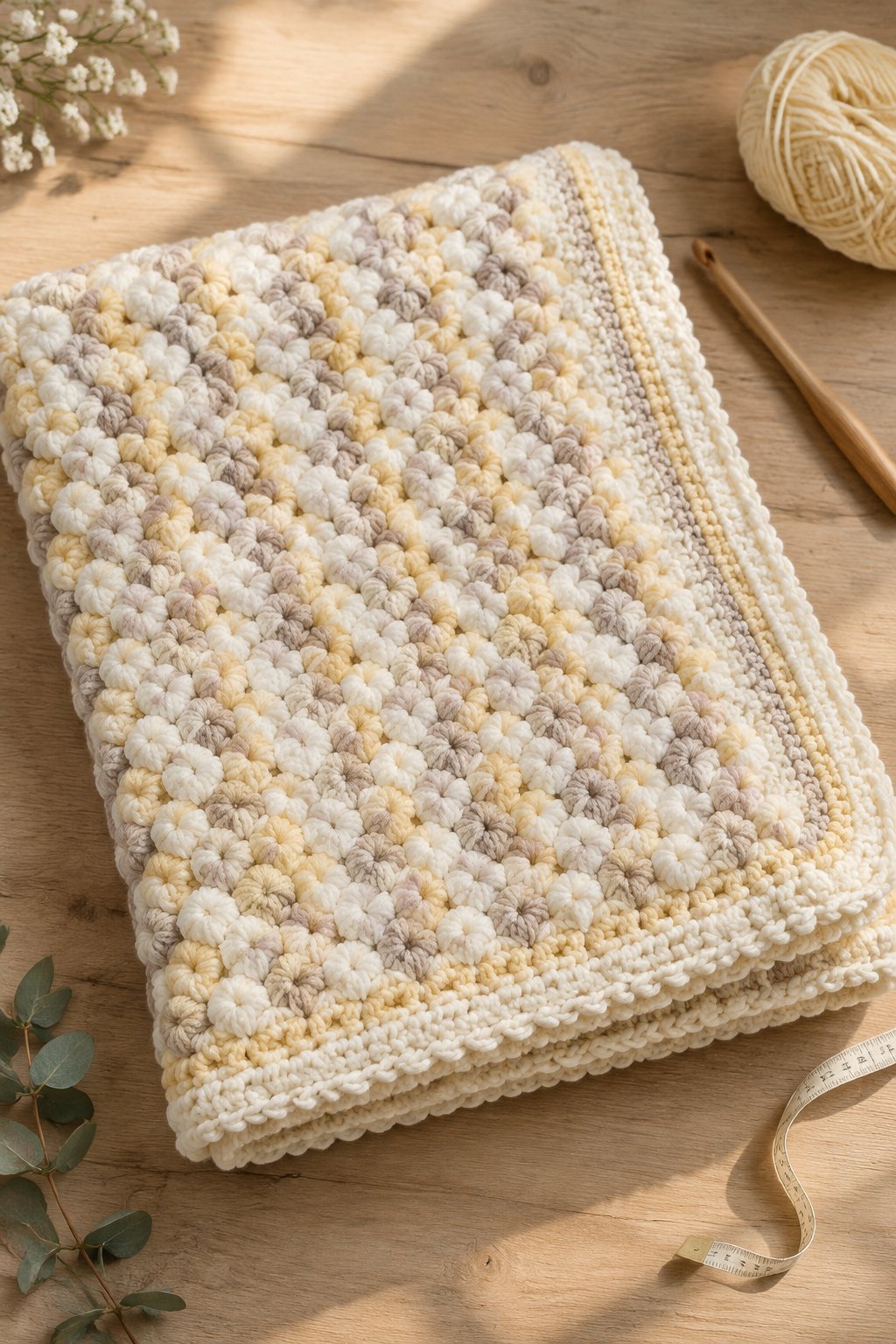
7) Speckled Confetti Cake Baby Blanket
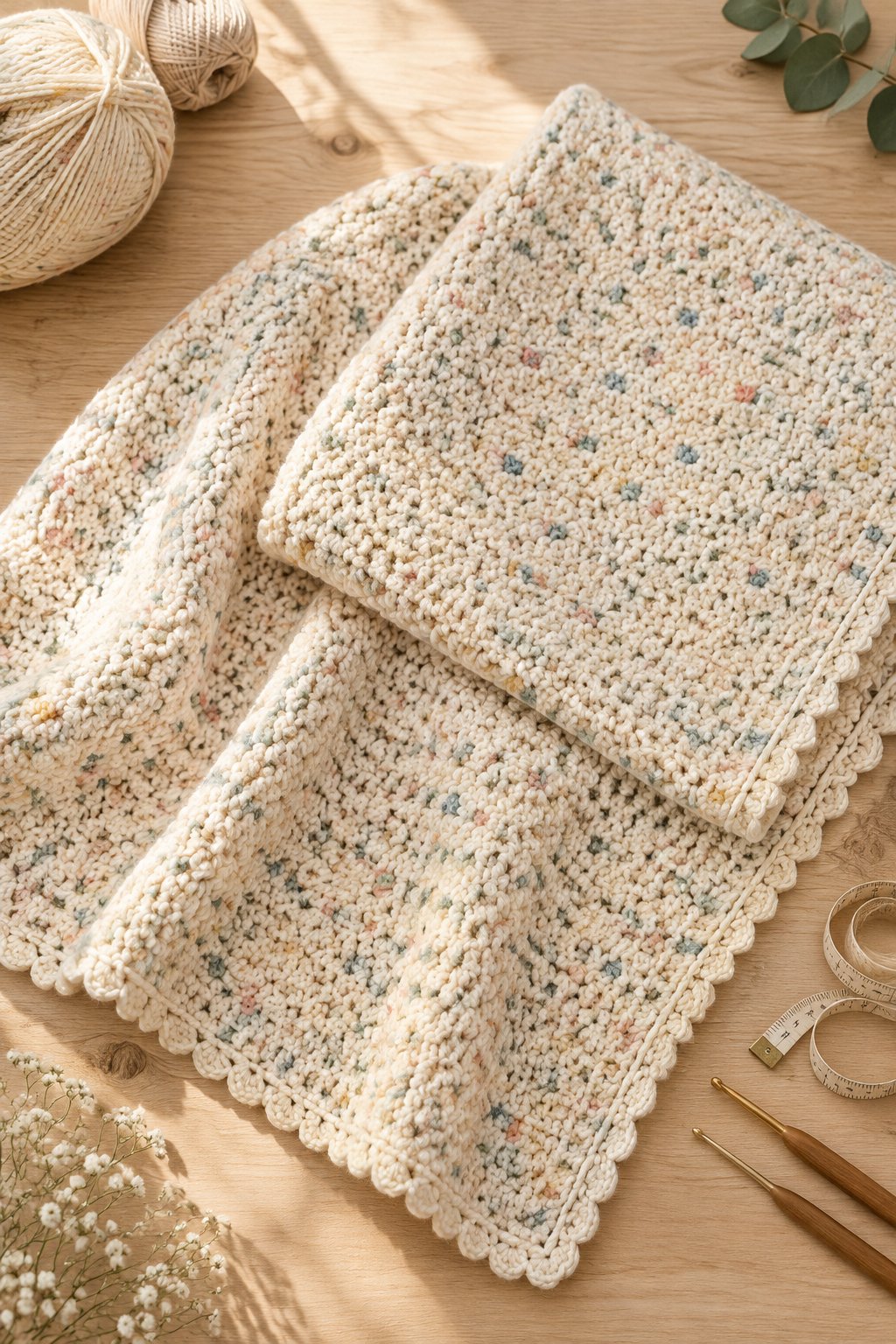
Speckled yarn gives your Confetti Cake blanket playful color without frequent yarn changes. Choose a cream base scattered with pastel flecks for a rectangular gift that feels cheerful while keeping a gentle overall palette.
You’ll get clear stitch definition from a smooth, washable worsted yarn paired with a 5–5.5 mm hook. Front post double crochet adds raised detail to the fabric. Choose smaller, scattered flecks so your color shifts leave the textured rows easy to see.
For an easy-level project, practice working around the stitch post before starting the full width. Compare your swatch in daylight to check how the speckles distribute. Finish with a solid-color border pulled from one fleck shade, then wrap your blanket with a coordinating ribbon that you remove before use.
|
Detail |
Specification |
|---|---|
|
Yarn Weight |
Worsted |
|
Skill Level |
Easy |
|
Estimated Time |
12–20 hours |
8) Cluster V-Stitch Baby Blanket With White Accent Rows
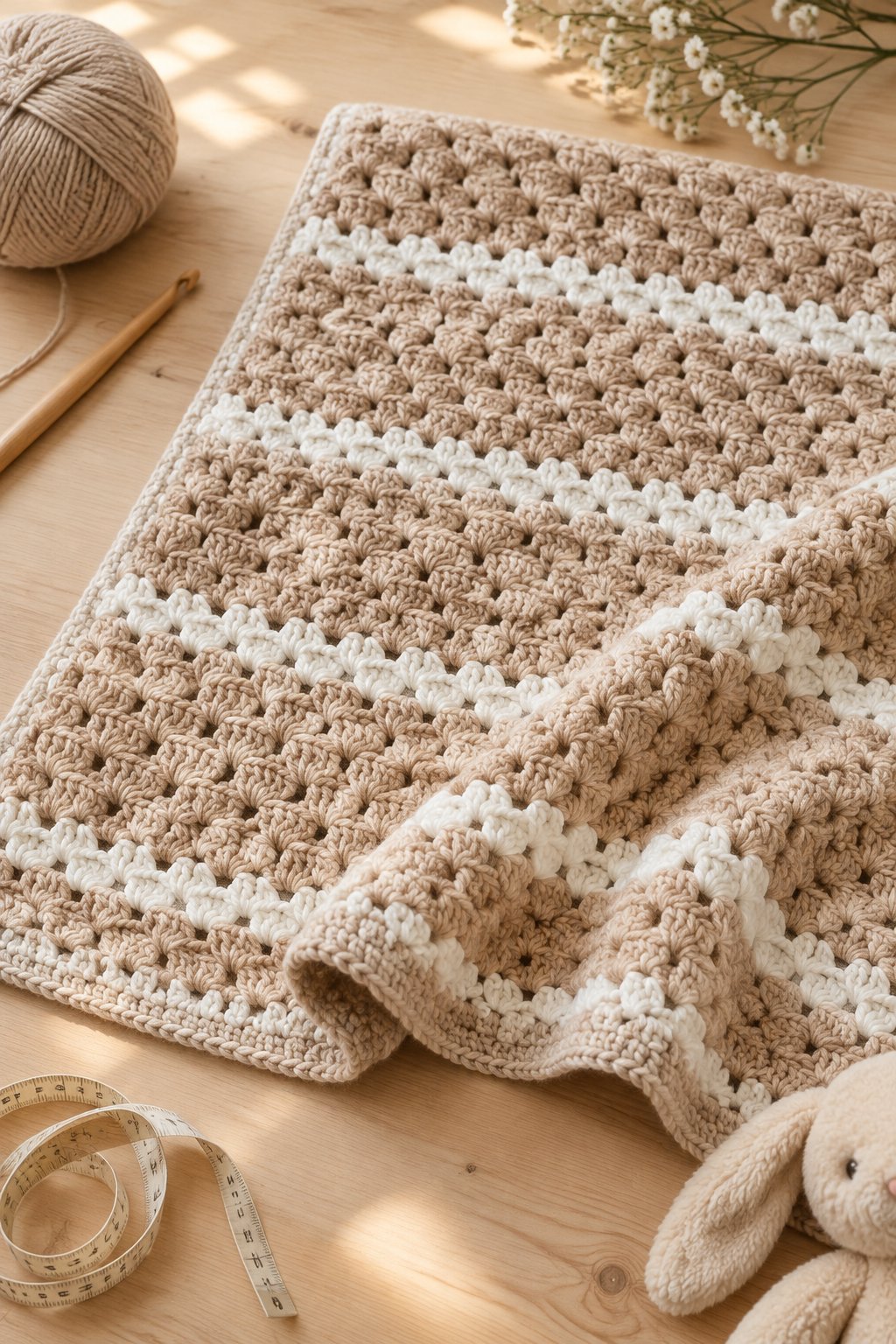
White accent rows give your cluster V-stitch blanket a ribbon-like rhythm across the fabric. Alternate them with dusty pink or seafoam bands to create a rectangular design with a fresh, handmade look.
Start with washable DK yarn and a 4–4.5 mm hook for a lighter blanket. You’ll work clustered stitches into V-shaped groups, following the pattern’s placement carefully. Keep the chains between groups consistent so your rows stay aligned and the openings remain even.
This suits you as a confident beginner ready to learn clusters. Make a two-color swatch to practice closing each cluster and changing shades cleanly. Finish on a complete repeat, then use white for a simple border. Weave the colored tails into matching sections so they stay discreet beneath the lighter accent rows.
|
Detail |
Specification |
|---|---|
|
Yarn Weight |
DK |
|
Skill Level |
Easy |
|
Estimated Time |
14–22 hours |
9) Dapple Crochet Ripple Baby Blanket
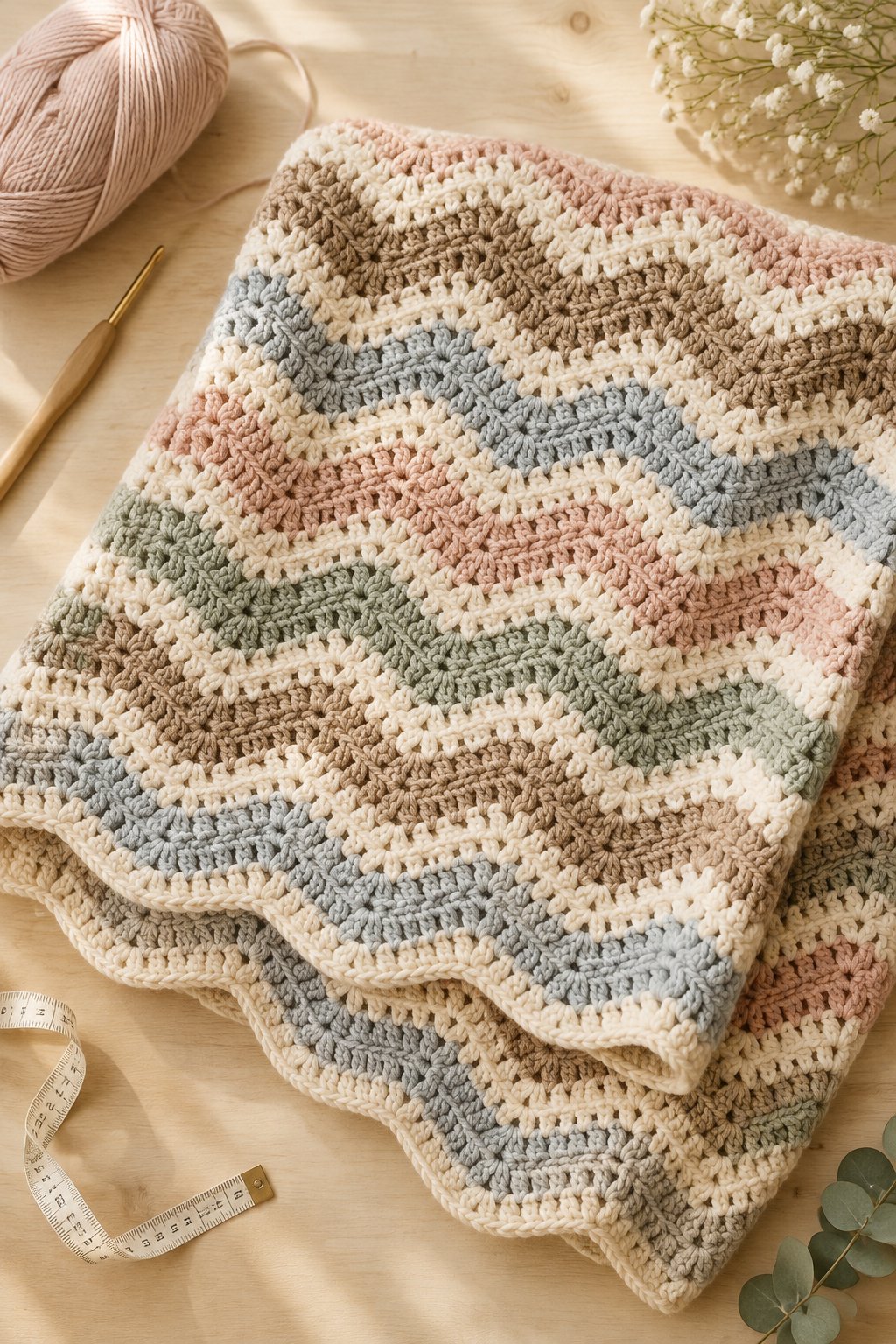
You’ll get flowing waves and lively color from a dapple-style ripple blanket. Choose a softly variegated yarn for gentle movement, or use distinct color bands to make each peak and valley stand out.
For your version, try washable worsted-weight yarn with a 5 mm hook. Ripple shaping uses increases at the peaks and decreases at the valleys. Follow the chosen pattern’s starting-chain multiple exactly, since even a small counting error changes the alignment of later rows.
You’ll need easy-level skills and steady counting through the first few repeats. Place markers at several peaks until the rhythm feels familiar. Measure the width after working several rows because the ripple pulls in from the starting chain. For gifting, keep the wavy top and bottom edges visible when you fold the finished blanket.
|
Detail |
Specification |
|---|---|
|
Yarn Weight |
Worsted |
|
Skill Level |
Easy |
|
Estimated Time |
12–20 hours |
10) From the Middle Modern Granny Baby Blanket
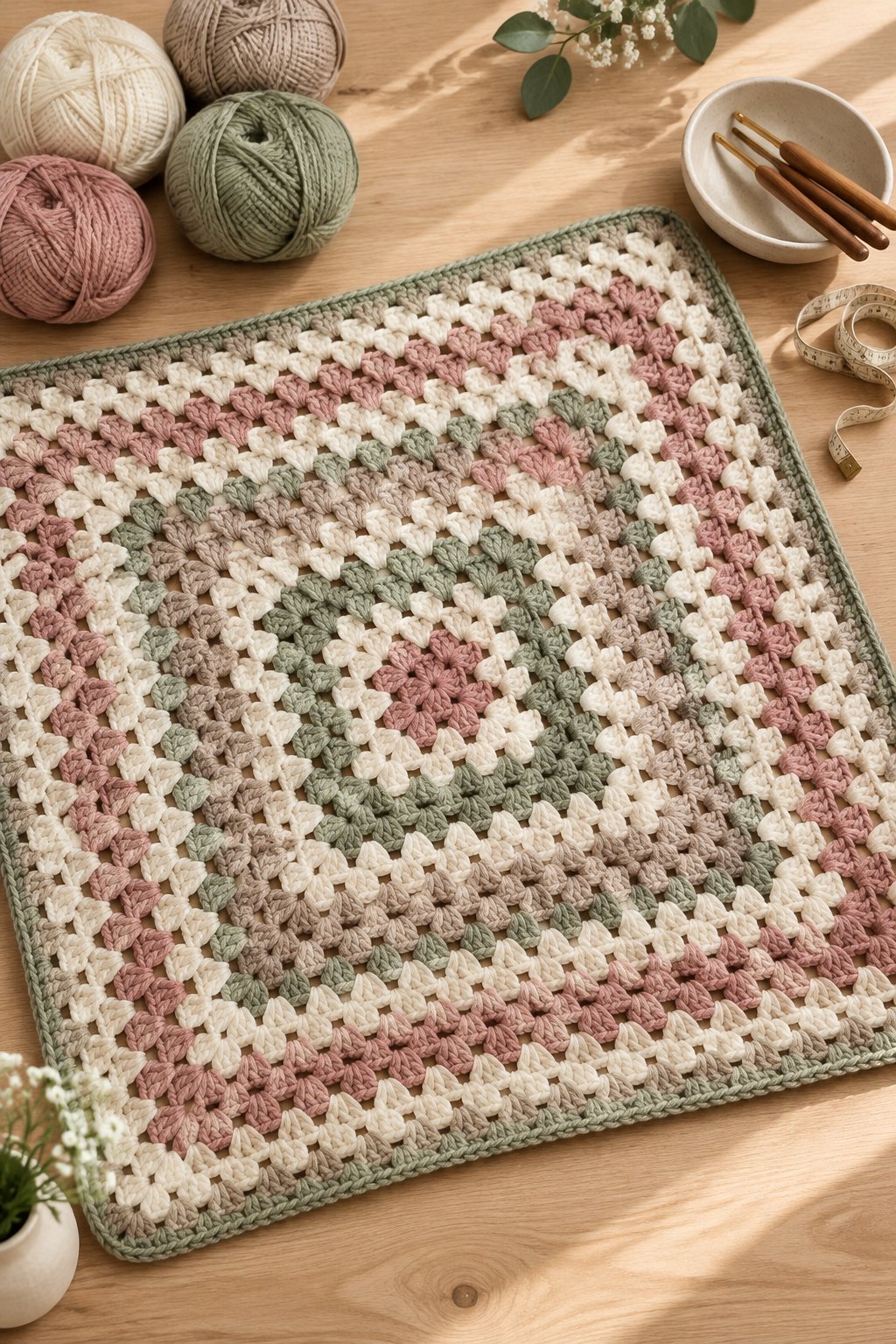
Working from the middle gives you a growing square with modern granny texture and clear color bands. Choose cream with sage and warm gray for a calm palette that suits many nursery styles.
For a plush version, use washable super bulky blanket yarn with an 8–9 mm hook, following the pattern’s gauge. You’ll build outward in rounds, working grouped stitches and shaping each corner. Mark your corner spaces so you spot an incorrect increase quickly.
This easy design suits you when you want fewer long foundation chains and an adjustable stopping point. Lay the square flat after each color band to check for cupping or rippling. Keep your finishing round simple, and test the yarn’s end-securing method on a swatch before starting, especially when you choose slippery chenille.
|
Detail |
Specification |
|---|---|
|
Yarn Weight |
Super bulky |
|
Skill Level |
Easy |
|
Estimated Time |
5–10 hours |
11) Linen Stitch Baby Blanket With a Contrast Border
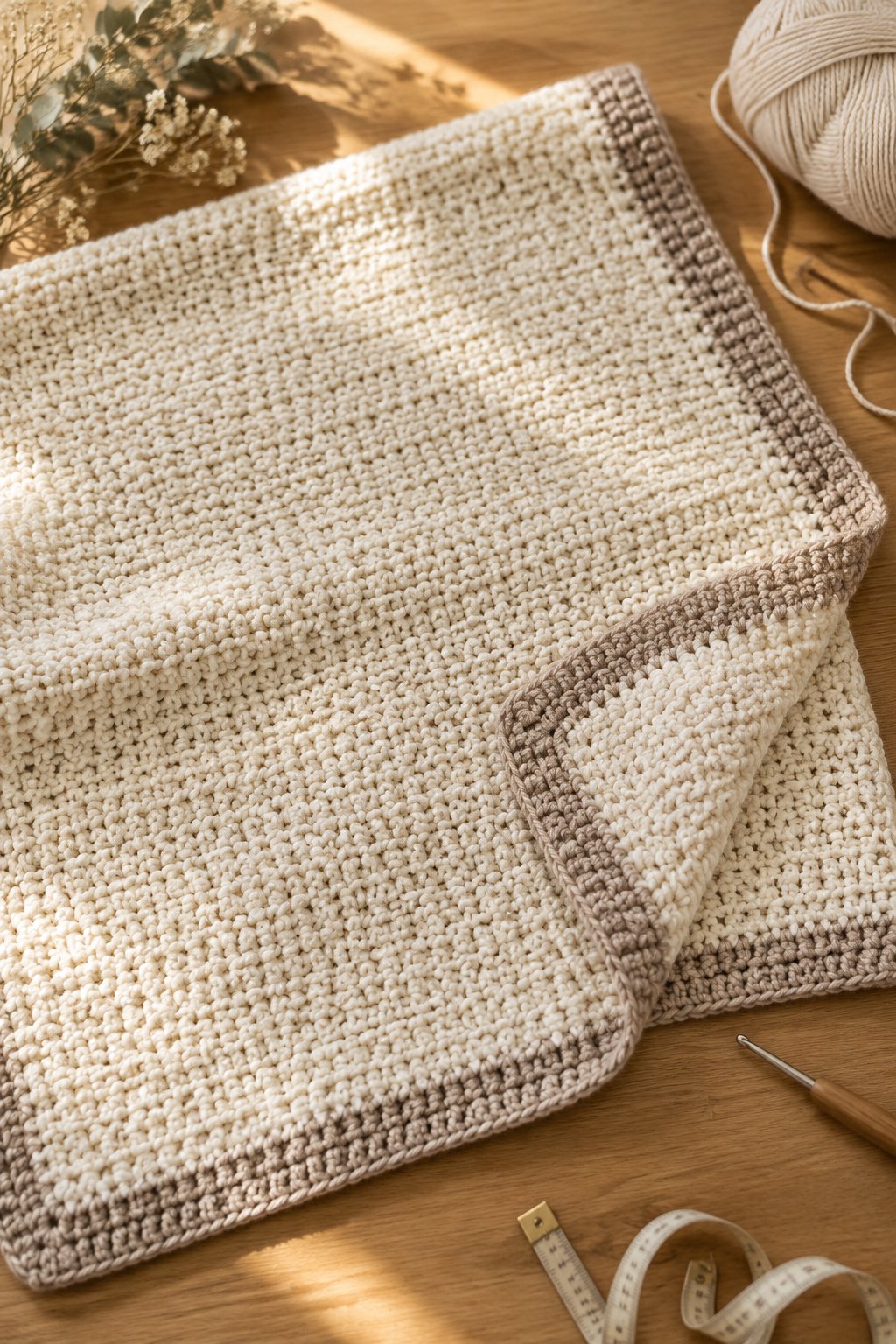
Linen stitch gives your blanket a finely woven appearance with small, even spaces. Pair an oatmeal center with a muted terracotta border for a clean rectangular design that feels warm and modern.
Choose washable DK yarn and begin with a 4.5 mm hook. You’ll alternate single crochet and chain stitches, placing each new single crochet into a chain space from the previous row. Keep your chains relaxed so the fabric bends comfortably after washing.
You’ll find this beginner-friendly once you recognize the chain spaces along the row. Mark both edge stitches because the small stitch pattern makes missed ends harder to notice. Work the contrast border after checking the finished body’s measurements. Start with one evenly spaced round, then add width gradually while checking that your corners lie flat.
|
Detail |
Specification |
|---|---|
|
Yarn Weight |
DK |
|
Skill Level |
Beginner |
|
Estimated Time |
16–24 hours |
12) Waffle Stitch Baby Blanket With a Ribbed Border
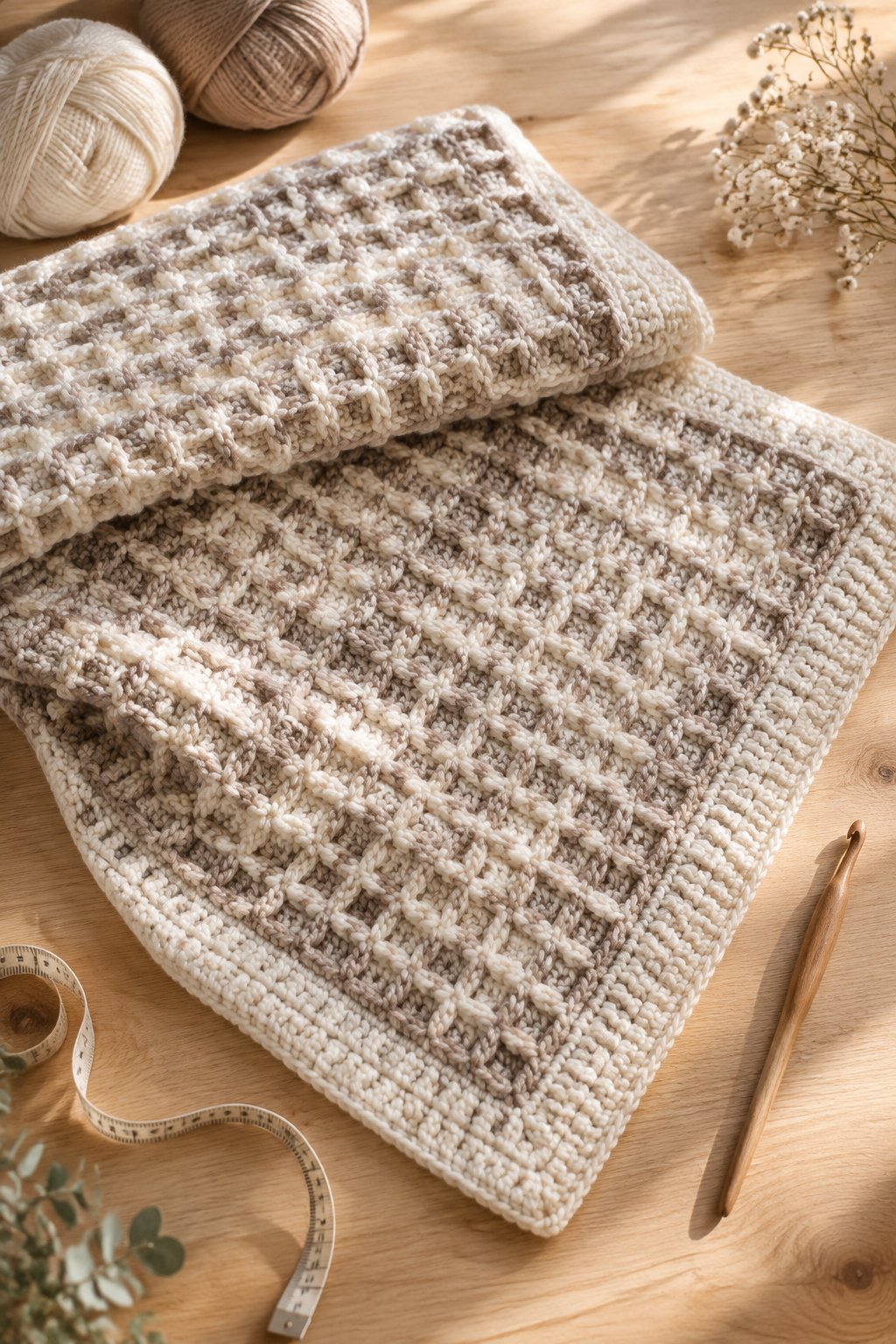
Deep waffle texture gives you a cozy square blanket with a bold grid. Choose honey, soft blue, or warm cream so light catches the raised squares and makes the stitchwork easy to appreciate.
Use washable worsted-weight yarn with a 5.5 mm hook as a swatching starting point. You’ll combine double crochet with front post double crochet, then add a ribbed border using your chosen pattern’s method. Budget generous yardage because the raised texture creates a substantial fabric.
This intermediate project suits you if you already recognize stitch posts and track short repeats. Wash your swatch before deciding on the finished dimensions. Keep the ribbing relaxed as you attach or work it around the edges; a tight border pulls the center inward and makes the corners curl.
|
Detail |
Specification |
|---|---|
|
Yarn Weight |
Worsted |
|
Skill Level |
Intermediate |
|
Estimated Time |
18–28 hours |
13) Basketweave Baby Blanket in a Single Neutral Color
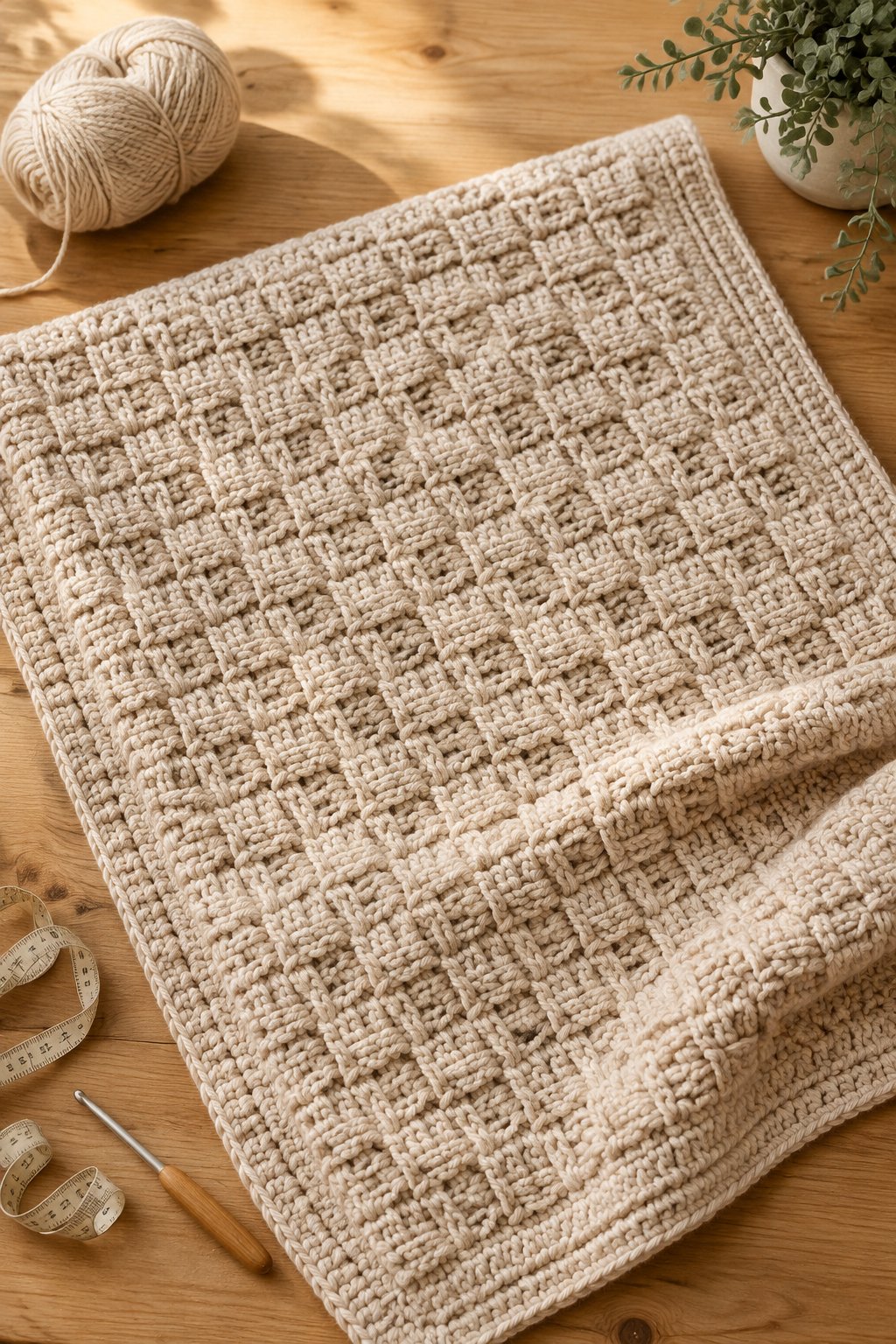
Basketweave gives your blanket a bold, interlocking texture that shines in one neutral shade. Pick mushroom, ivory, or pale gray for a rectangular keepsake with a classic look and clear stitch definition.
For your swatch, pair washable worsted yarn with a 5.5 mm hook. Alternating groups of front and back post double crochet create the woven effect. Keep track of the row where each group changes direction so your blocks stay consistent throughout the blanket.
You’ll want intermediate confidence with post stitches for this design. Check the fabric’s weight early, especially if you’re planning a larger size. A narrow single-crochet edging gives the textured center a neat boundary. When you fold the gift, leave a broad panel exposed so your recipient sees the woven pattern immediately.
|
Detail |
Specification |
|---|---|
|
Yarn Weight |
Worsted |
|
Skill Level |
Intermediate |
|
Estimated Time |
20–30 hours |
14) Corner-to-Corner Gingham Baby Blanket
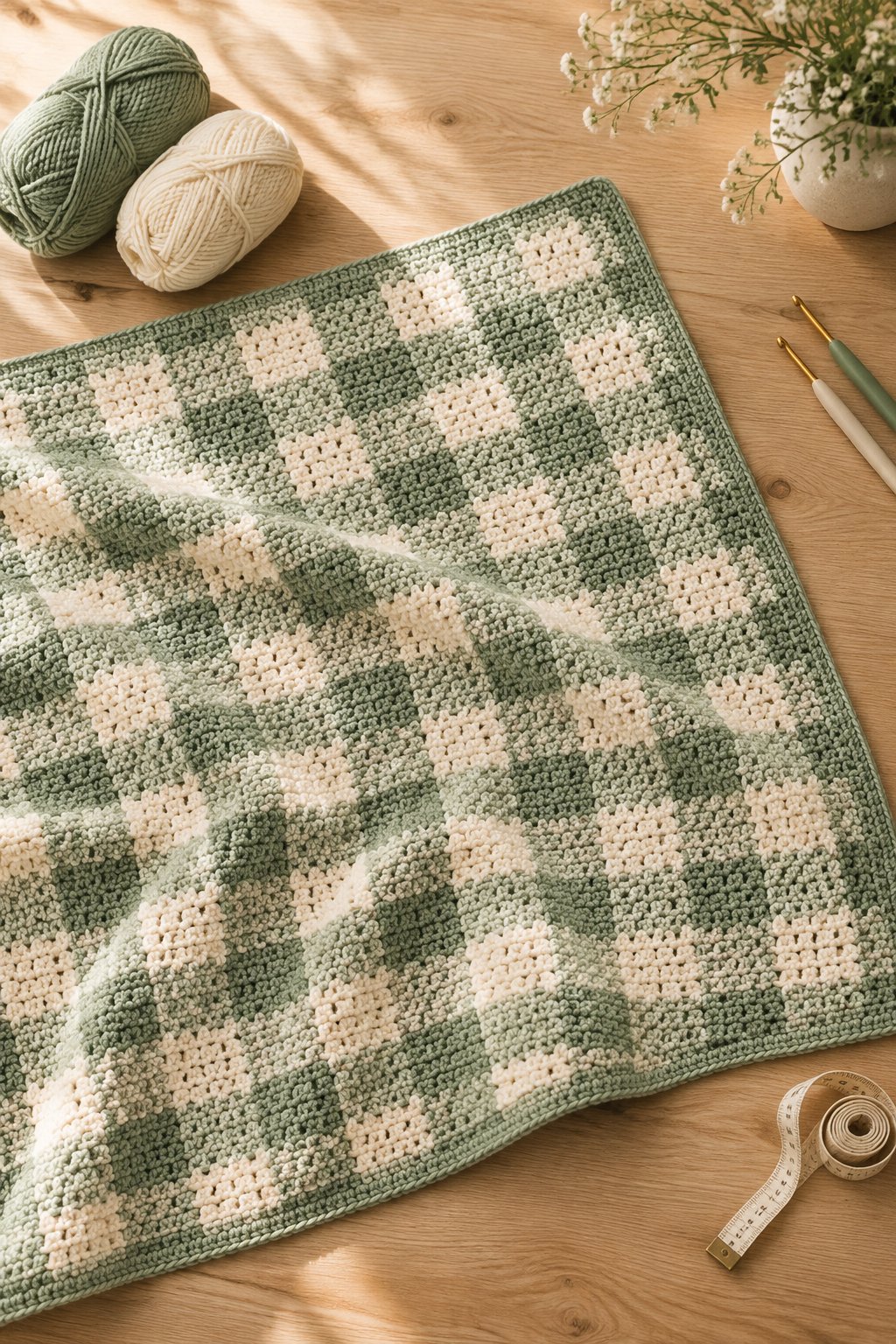
A corner-to-corner gingham blanket gives you crisp checks arranged across a diagonal grid. Use white with light and medium blue, choosing related shades that create the familiar overlap effect of gingham fabric.
Try smooth, washable DK yarn with a 4–4.5 mm hook. You’ll work diagonal blocks while following a color chart, increasing toward the widest point and then decreasing. Keep each color on a small bobbin to make the active strands easier to manage.
This intermediate project rewards careful preparation. Color a small chart before starting, and mark each completed diagonal row as you go. Twist adjacent working strands neatly at color changes to close gaps without tightening the join. A plain border in the lightest shade frames your checks and gives the busy center a quiet edge.
|
Detail |
Specification |
|---|---|
|
Yarn Weight |
DK |
|
Skill Level |
Intermediate |
|
Estimated Time |
22–35 hours |
15) Bobble Heart Baby Blanket With a Flat Border
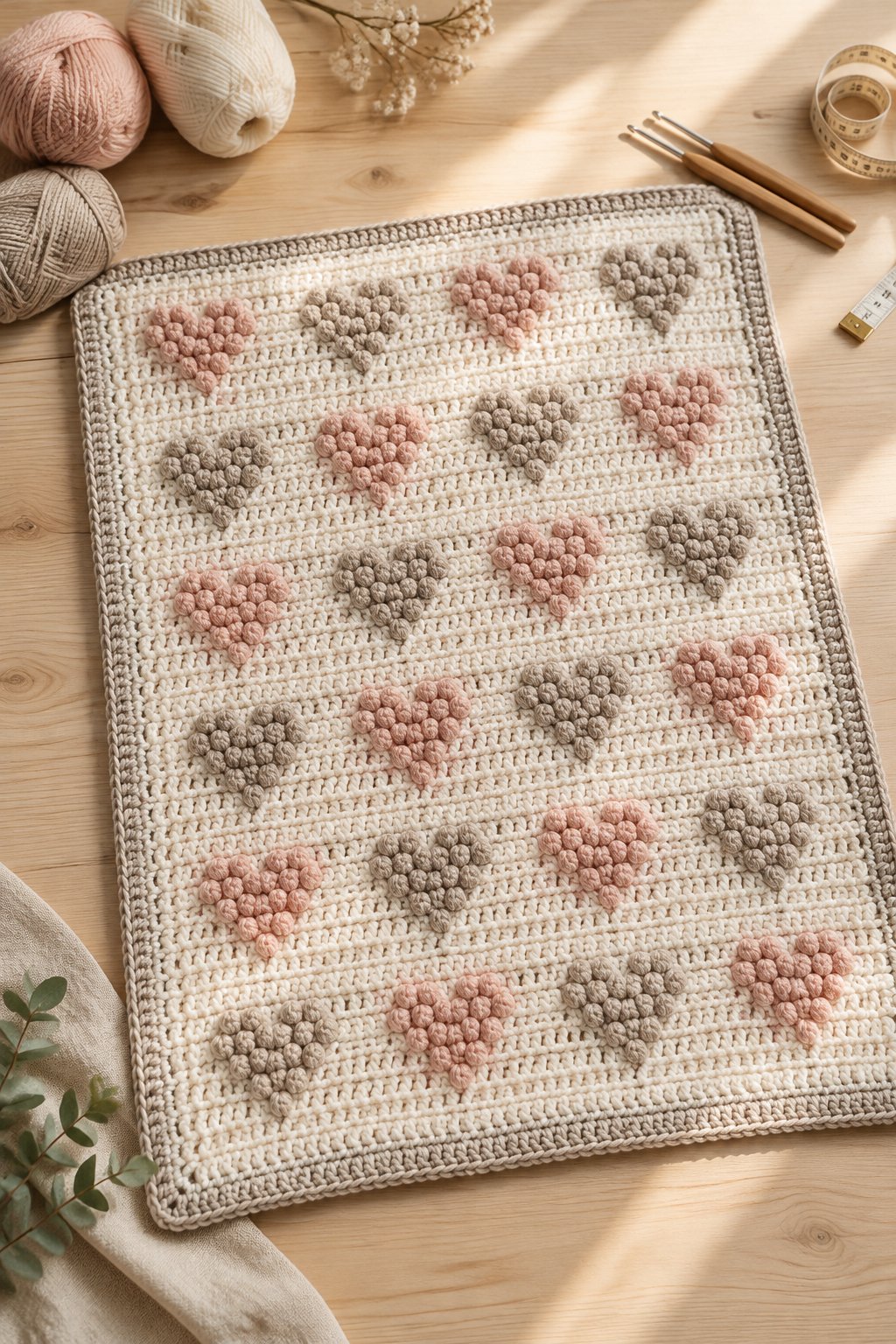
Raised bobble hearts give your blanket a sweet motif that feels personal for a baby shower. Choose blush or pale sage in a single shade to keep the heart shapes readable across a rectangular background.
Use smooth, washable DK yarn with a 4–4.5 mm hook. You’ll place bobbles within a flatter stitch background, following a chart or written row counts. Check which side the bobbles face before continuing so every heart stands out on the intended surface.
You’ll need intermediate counting skills, even when the individual stitches feel familiar. Mark the center of each motif and count the plain stitches between hearts. Finish with a flat single-crochet border to balance the raised center. Keep decorations integrated into your crochet, and skip attached buttons or bows on the finished blanket.
|
Detail |
Specification |
|---|---|
|
Yarn Weight |
DK |
|
Skill Level |
Intermediate |
|
Estimated Time |
20–32 hours |
16) Solid Granny Square Patchwork Baby Blanket
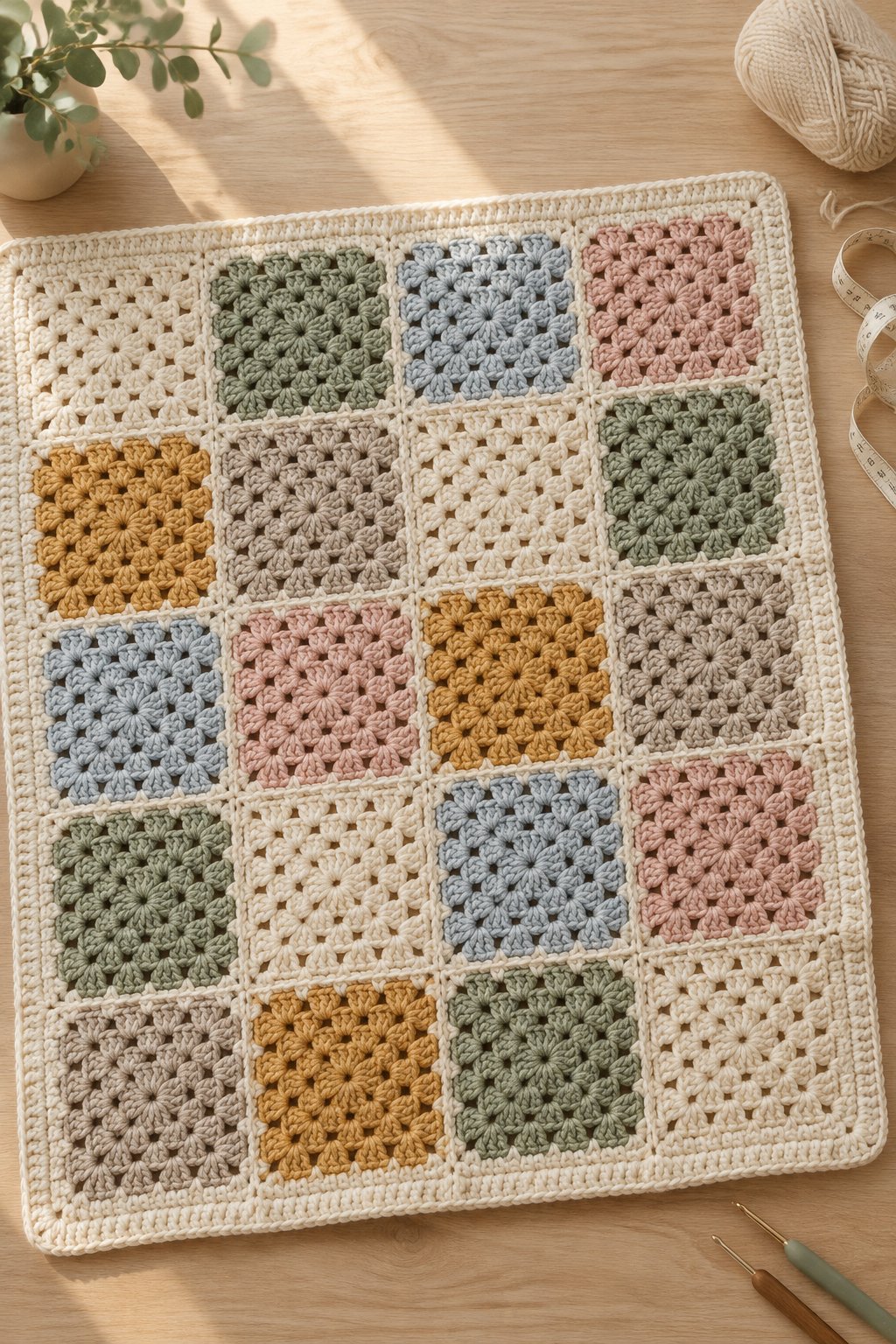
Solid granny squares give you a charming patchwork blanket with manageable pieces and endless color layouts. Try cream with dusty blue and golden yellow, arranging the squares into balanced bands or a scattered quilt-style design.
Choose washable worsted-weight yarn with matching fiber content across colors, and start with a 5 mm hook. You’ll work double-crochet squares with corner increases, then join them using your preferred flat seam. Measure several early squares to check that your tension stays consistent.
This easy project suits you if you enjoy portable crochet and short sessions. Lay out every square before joining, then label the rows to preserve your arrangement. Reserve a generous block of time for seams and ends. Add the outer border only after checking that every join is secure and smooth.
|
Detail |
Specification |
|---|---|
|
Yarn Weight |
Worsted |
|
Skill Level |
Easy |
|
Estimated Time |
18–30 hours |
17) Tunisian Simple Stitch Baby Blanket With a Crochet Edging
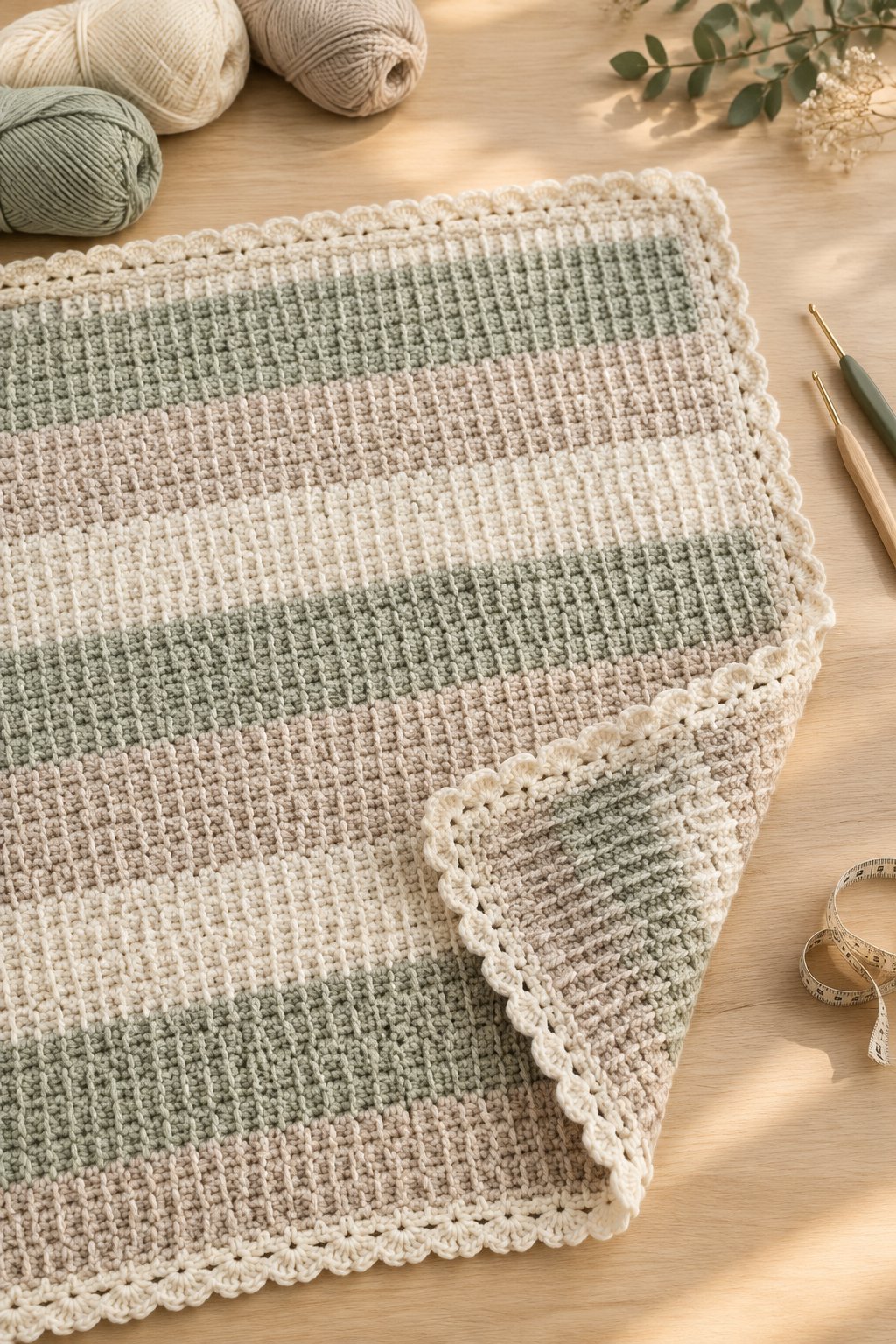
Tunisian simple stitch gives your blanket a neat grid with a soft, woven look. Choose pale aqua for the rectangular center and cream for the edging, or keep everything tonal for a quiet, classic finish.
Start with washable DK yarn and a 5.5–6.5 mm Tunisian hook with a cable long enough to hold your stitches. You’ll work forward and return passes across the fabric. Make a generous swatch because Tunisian simple stitch curls, and your hook choice affects its flexibility.
You’ll find this an easy introduction to Tunisian crochet once you learn to identify the vertical bars. Use a regular crochet hook for the edging, adjusting its size to keep the border flat. Follow your pattern’s edge-stitch method carefully so both sides look even before you begin finishing.
|
Detail |
Specification |
|---|---|
|
Yarn Weight |
DK |
|
Skill Level |
Easy |
|
Estimated Time |
18–28 hours |
How to Choose a Baby Shower Blanket Project
Choose a project whose hardest repeat you can complete comfortably in a small swatch. You’ll make a more useful plan after trying the stitch and checking your calendar than by judging the finished design alone.
Which Designs Match Your Crochet Experience?
Start with stripes or linen stitch if you’re still practicing straight edges. You’ll focus on consistent tension while repeating familiar stitches. A small sample gives you a low-pressure way to learn color changes.
Move toward shells or the Miguel when you’re ready to follow repeating groups. For cables, gingham, and charted bobble hearts, practice a full motif first. Choose a pattern with clear stitch counts and check whether its terms use US crochet notation.
How Much Time Do You Have Before the Shower?
Time your swatch, then use its area to estimate the hours your blanket body will require. Add separate time for the border and finishing. Keep a few days available for washing and complete drying.
If your deadline is close, choose a familiar repeat with limited color changes. Plush from-the-middle designs grow quickly, while patchwork adds joining work after the squares are complete. Set your finish date several days before the shower so you have room to repair a missed stitch.
What Finished Size Will Suit the Intended Use?
Choose dimensions around how your recipient will use the blanket during awake, supervised time. These are useful project targets, measured after washing:
- Small lap blanket: About 24 × 30 inches.
- Square cuddle blanket: About 30 × 30 inches.
- Larger floor-time blanket: About 36 × 40 inches.
Ask about size preferences before buying yarn if you’re making a custom gift. For stroller use, keep the blanket clear of wheels and away from your baby’s face. Reserve loose blankets for awake use and keep the sleep space clear.
How to Choose Yarn and Hooks for a Lasting Finish
Choose soft, washable yarn with clear care instructions, then use your swatch to select the hook. You’ll get a better finish when the fabric stays flexible and holds its shape through washing.
Should You Choose DK, Worsted, or Chunky Yarn?
Choose DK when you want lighter fabric and fine stitch detail. You’ll spend more time covering the same area, especially with compact stitches. Worsted offers a practical middle ground for stripes and textured designs.
Chunky yarn helps you build larger stitches quickly, although a dense pattern creates a heavier blanket. Super bulky chenille also hides stitch structure, which makes counting harder while you learn. Check the yarn for shedding and test how securely its ends stay woven into your swatch.
When Is Cotton or a Cotton Blend a Practical Choice?
Choose cotton or a cotton blend when you want clear stitch definition and care instructions that suit frequent washing. A smooth cotton blend works well for linen stitch or a lightweight striped design. Check the label for both washing and drying directions before purchasing.
Cotton has limited stretch and adds weight in dense crochet. Wash a swatch to check for shrinkage and changes in softness. If you combine colors or brands, choose compatible care requirements and test dark shades for color transfer before starting.
How Do Gauge and Hook Size Affect Drape and Yarn Needs?
Make a swatch at least 6 inches square, then wash and dry it as directed on the label. Measure the center section so edge stitches don’t distort your count. Use the result to check both finished dimensions and fabric feel.
A larger hook creates looser stitches; a smaller hook creates tighter fabric. For textured crochet, check that the swatch folds easily without feeling stiff. Estimate yardage from the pattern at its stated gauge, and buy extra for added size or a wider border, ideally from the same dye lot.
How to Finish and Gift a Baby Blanket
Give your blanket a full finishing check before wrapping it. Secure joins and accurate care instructions help your recipient use the gift with confidence.
How Do You Secure Ends and Check Seams?
Leave tails long enough to weave through several inches of nearby stitches. Use a yarn needle to travel through the fabric in more than one direction, following the stitch structure. Weave each color into a matching section where possible.
Gently stretch every join and examine both sides for loose loops or gaps. Check patchwork intersections with particular care, since several seams meet there. After washing, inspect the ends again and trim exposed tips only once you’re satisfied they remain secure.
How Should You Wash and Block the Finished Blanket?
Follow the yarn label’s washing instructions, using a mild, fragrance-free detergent when suitable. If your blanket includes several yarns, follow the care method safe for every component. Test your planned wash on the swatch first.
Shape the damp blanket to its intended measurements on a clean, flat surface if the label permits. Smooth the corners without stretching the stitches aggressively. Keep direct heat away from acrylic, and allow the blanket to dry completely before folding it into gift packaging.
What Care Instructions and Safe-Use Guidance Should Accompany the Gift?
Include a card with the fiber content and specific washing directions. Add the finished dimensions and your name or the date if you want to document the keepsake. Keep a yarn label for your own records in case your recipient needs help with repairs later.
Write a clear safe-use note: use the blanket for awake, supervised cuddles or floor time, and keep it out of the crib or bassinet during sleep. For babies younger than 12 months, keep loose blankets and other soft items out of the sleep space. Ask your recipient to check for loose strands after laundering and set the blanket aside if any stitches unravel.