You’ll get everyday value from useful things to crochet for your daily life when you choose washable yarn, sturdy stitches, and shapes fitted to the way you use them. Cozy textures and soft color palettes give practical handmade designs plenty of save-worthy charm, especially when you customize the details.
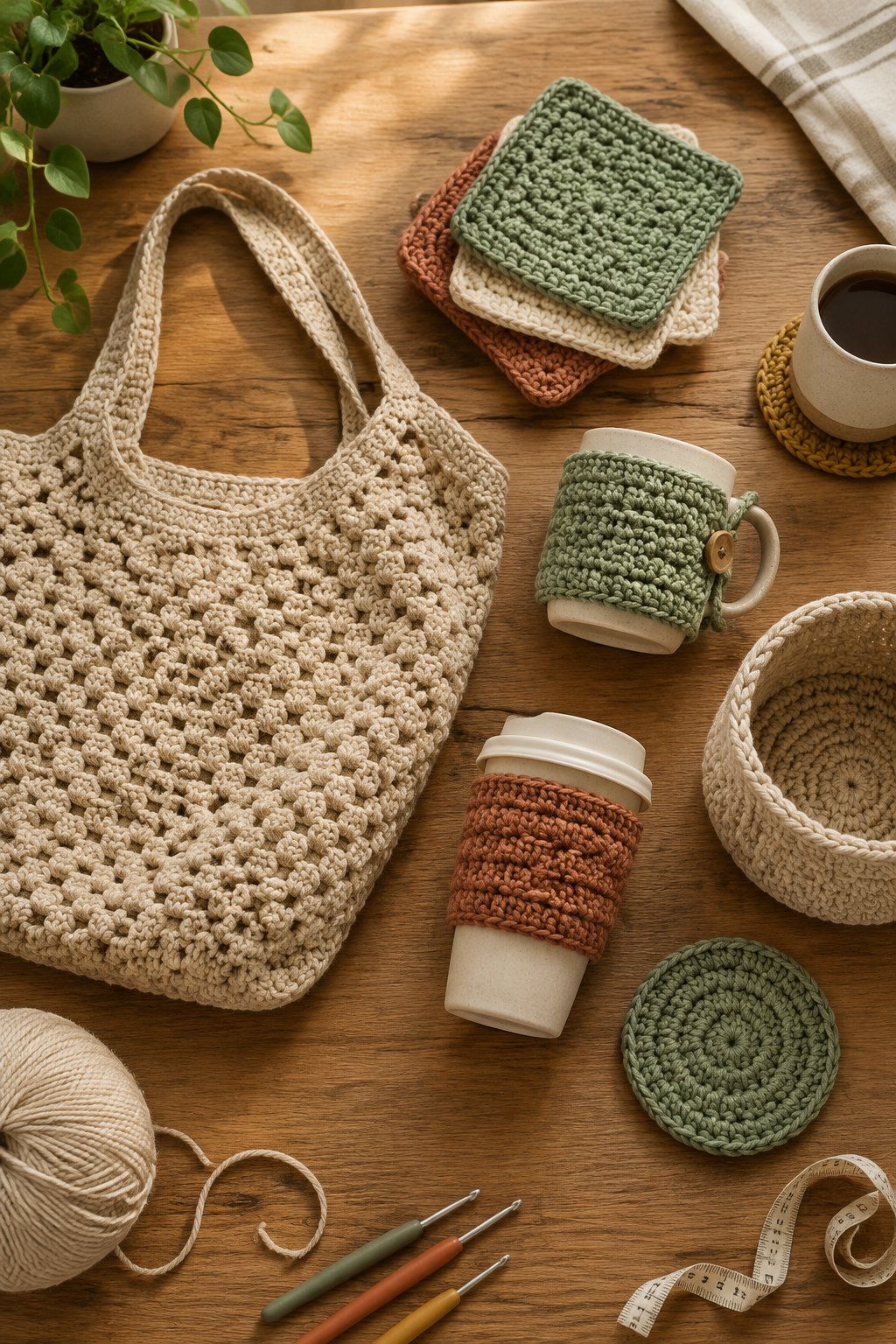
You don’t need an elaborate pattern to make something worth keeping close. A tidy seam or well-placed button adds plenty of usefulness to a small project. Start with a task you do regularly, choose colors you enjoy seeing, and treat the project times below as rough estimates that vary with your size and stitching speed.
1) Textured Cotton Dishcloths With Hanging Loops
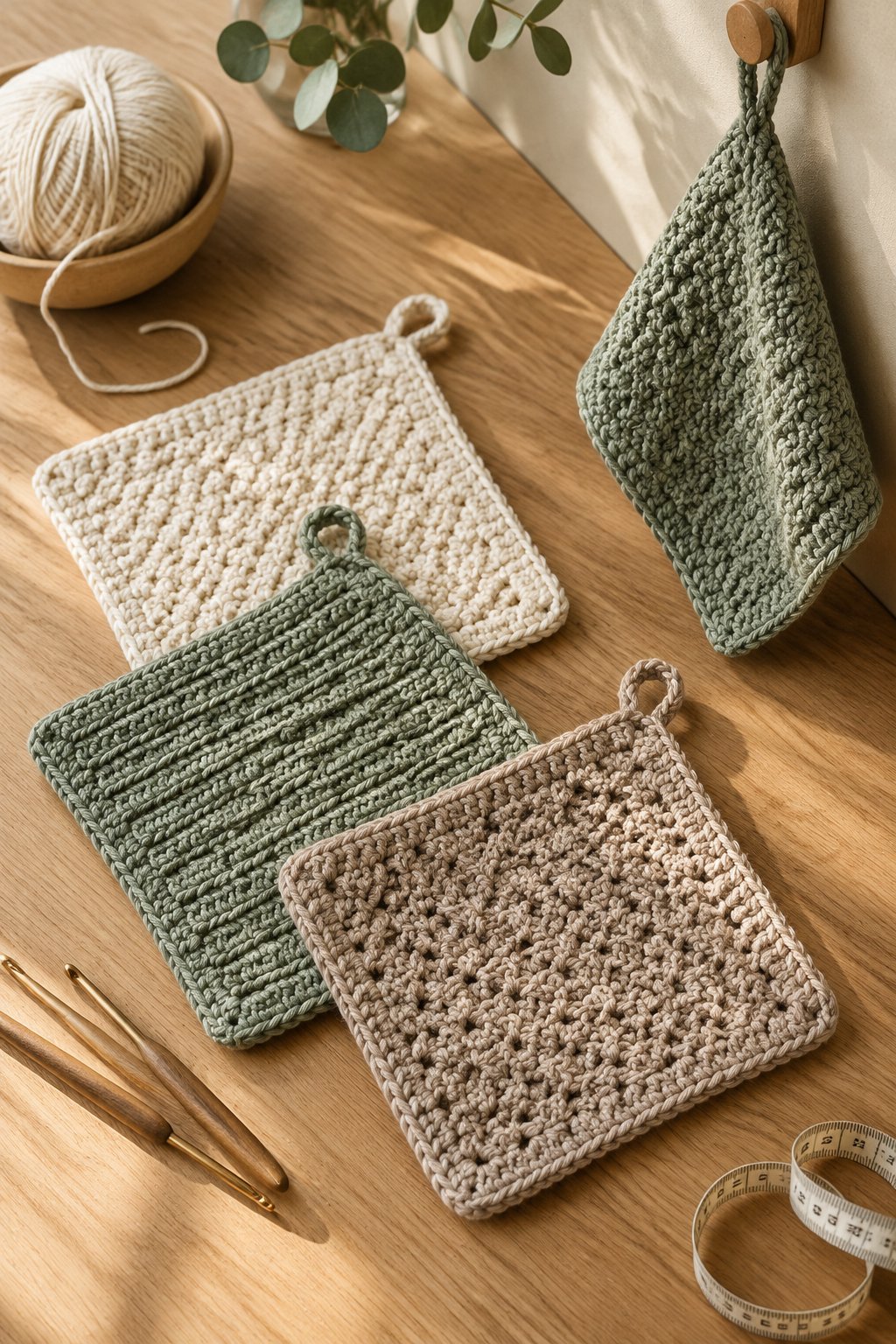
You’ll get a useful sink-side staple from a cotton dishcloth with gentle texture and a secure hanging loop. Choose cream with a sage border for a calm kitchen palette, or use bright stripes to distinguish your cleaning cloths from your handwashing cloths.
Start with worsted-weight cotton and a 4.5–5 mm hook. Alternate single crochet and double crochet across each row to create a pebbled surface, keeping your edges square. Aim for an 8-inch cloth, then add a single-crochet border to tidy the outline.
For this beginner-friendly project, form a short chain loop at one corner and cover it with single crochet for extra strength. Keep the loop large enough for your kitchen hook. Make several so you have a fresh cloth ready while used ones go through the wash, and let each cloth dry fully between uses.
|
Detail |
Specification |
|---|---|
|
Yarn Weight |
Worsted, #4 |
|
Skill Level |
Beginner |
|
Estimated Time |
1–2 hours |
2) Mesh Market Bag With Reinforced Handles
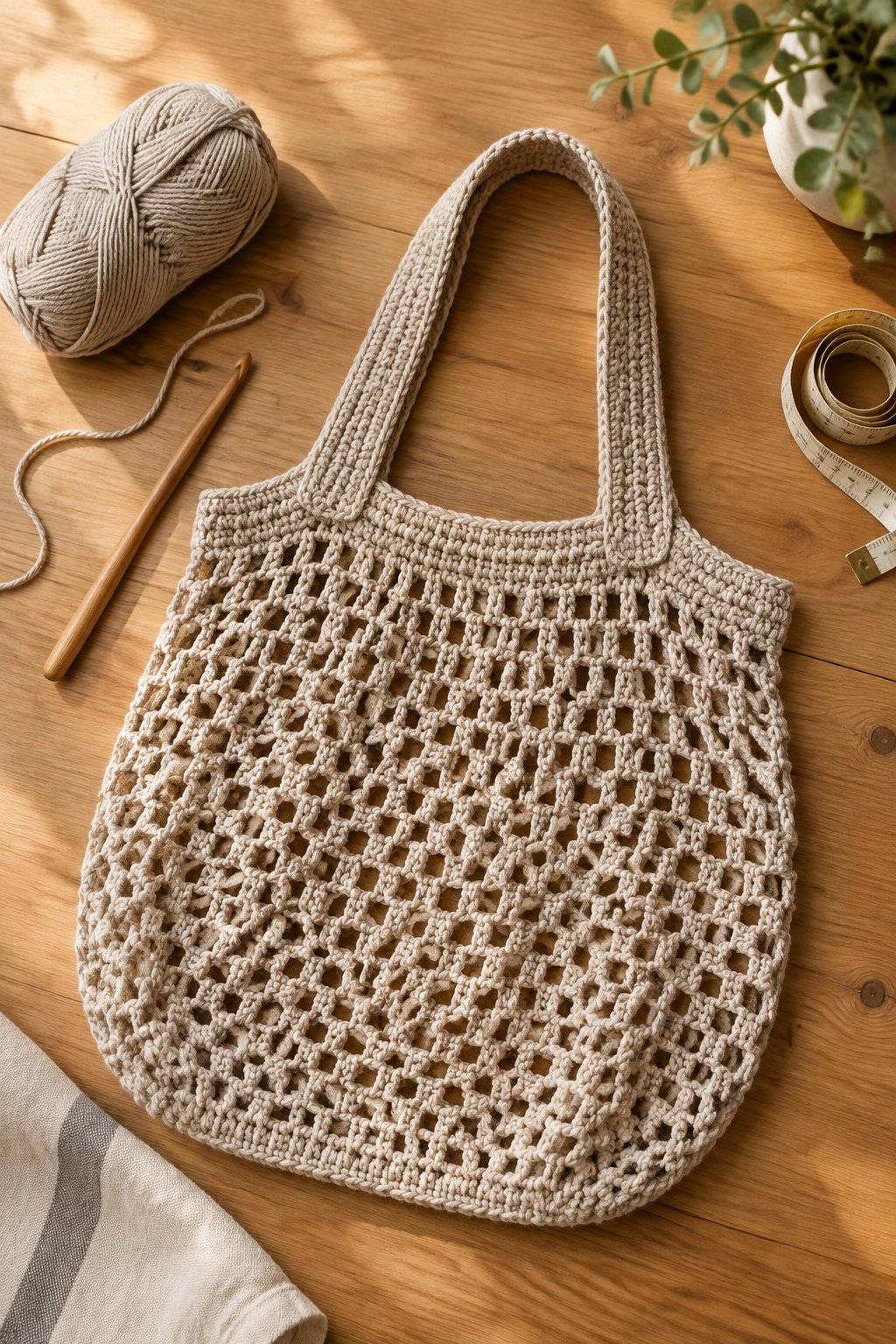
Your mesh market bag earns its place by folding small and opening wide enough for everyday shopping. Try warm ochre or leafy green for a cheerful produce bag, with a solid oval bottom that gives the airy body a defined shape when you set it down.
Use worsted-weight cotton with a 4–5 mm hook, adjusting until your base feels firm. Build the bottom in single crochet, then work chain spaces anchored with single crochet for the mesh. Keep openings modest if you plan to carry small produce.
You’ll want easy-level skills for shaping and working in rounds. Finish the opening with several solid rounds, then make wide handles with multiple rows of single crochet. Check the loaded handle length before fastening off; cotton mesh stretches under weight. Carry loose produce inside reusable produce sacks to keep everything contained.
|
Detail |
Specification |
|---|---|
|
Yarn Weight |
Worsted, #4 |
|
Skill Level |
Easy |
|
Estimated Time |
5–8 hours |
3) Sturdy Catchall Basket With Fold-Over Sides
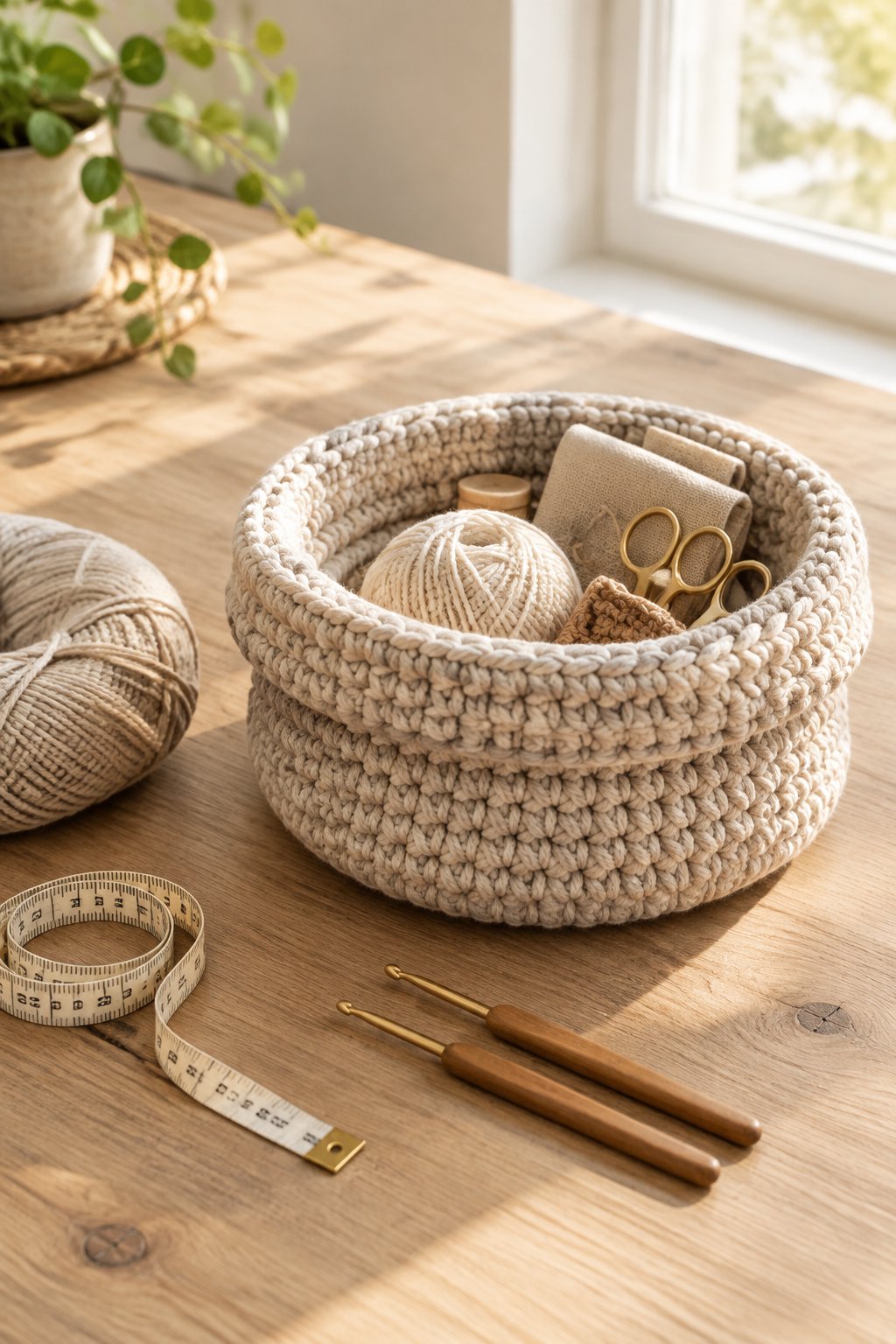
You’ll keep everyday clutter contained with a firm crochet basket whose folded rim supports the sides. A squat cylinder in oatmeal, terracotta, or charcoal looks tidy on an entry table. Give your basket a contrasting inner cuff for a small flash of color.
Choose bulky cotton cord or sturdy T-shirt yarn, starting with the hook size suggested on its label. Tight single crochet creates structure; a hook around 6–8 mm suits many bulky options. Work a flat circular base, then stop increasing to turn upward.
This easy project rewards even tension, though thick yarn takes more hand effort. Make the walls tall enough to fold the top down by about 2 inches. Size your basket for lightweight contents such as hair accessories or remote controls. If your sides slump, shorten the walls or use firmer yarn.
|
Detail |
Specification |
|---|---|
|
Yarn Weight |
Bulky, #5 |
|
Skill Level |
Easy |
|
Estimated Time |
2–4 hours |
4) Flat Cotton Coasters With Scalloped Edges
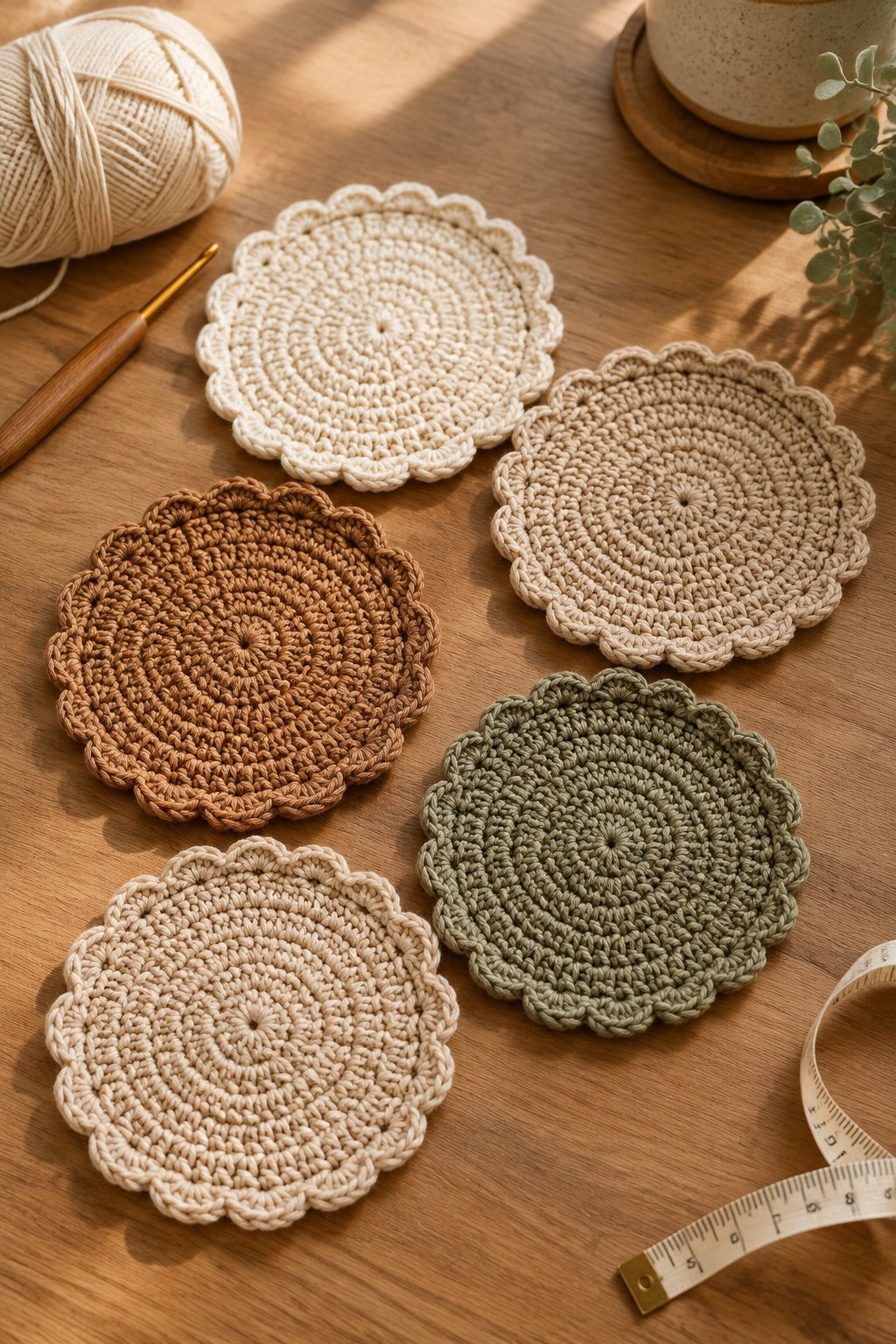
Your cotton coasters give cups a washable landing spot while adding a soft scalloped detail to your table. Pair dusty blue centers with ivory edging for a classic set, or use leftover colors to make each coaster easy to recognize during a gathering.
For a beginner-friendly version, use worsted cotton and a 4–4.5 mm hook. Crochet a solid circle in single crochet, increasing evenly until it measures about 4–4.5 inches across. Place small double-crochet shells around the edge, leaving the cup’s resting area smooth.
Check each coaster with your widest mug before completing the set. A ruffled center needs fewer increases, while a cupped center needs additional increases. Block your finished circles flat according to the yarn label. For moisture-sensitive furniture, place a waterproof barrier beneath them because cotton absorbs condensation and eventually allows moisture through.
|
Detail |
Specification |
|---|---|
|
Yarn Weight |
Worsted, #4 |
|
Skill Level |
Beginner |
|
Estimated Time |
30–60 minutes each |
5) Drawstring Soap Saver Pouch
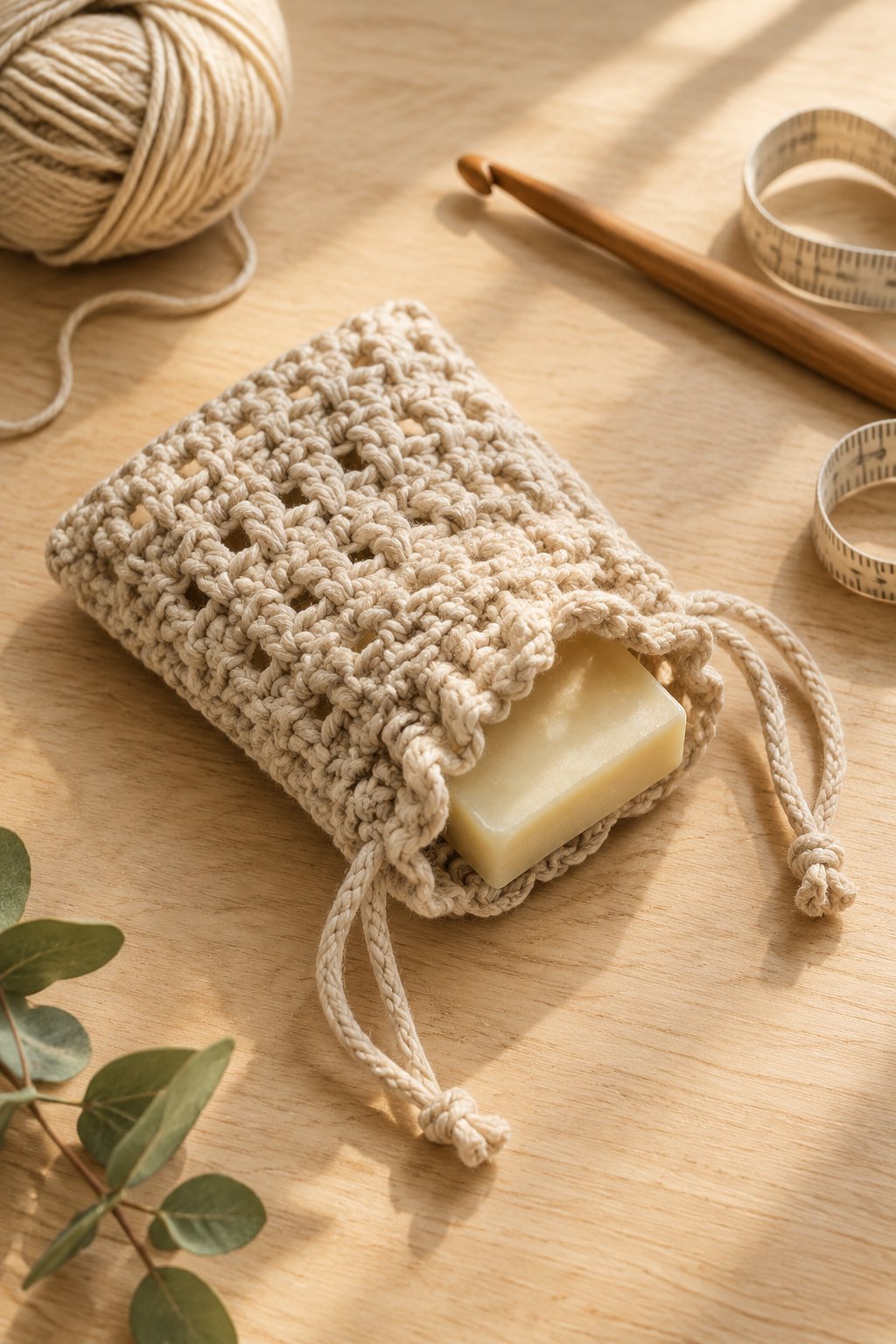
You’ll keep slippery soap pieces together with a drawstring pouch sized to your favorite bar. A small cream or pale peach rectangle gives your bathroom a soft handmade touch. Choose a smooth yarn if you want a gentler surface against your skin.
Use sport- or DK-weight cotton with a 3–4 mm hook. Work a compact base in single crochet, then add lightly spaced mesh rows for drainage. Near the top, create an eyelet round for a crocheted chain cord and leave enough room to close the opening.
This beginner-friendly make also suits a small bath gift when paired with a wrapped soap bar. Leave some ease around the soap so your pouch opens comfortably when wet. After use, rinse away residue and hang it where air circulates. Wash the pouch regularly, following your yarn’s care instructions, and let it dry completely.
|
Detail |
Specification |
|---|---|
|
Yarn Weight |
Sport #2 or DK #3 |
|
Skill Level |
Beginner |
|
Estimated Time |
1–2 hours |
6) Hanging Kitchen Towel With a Button Closure
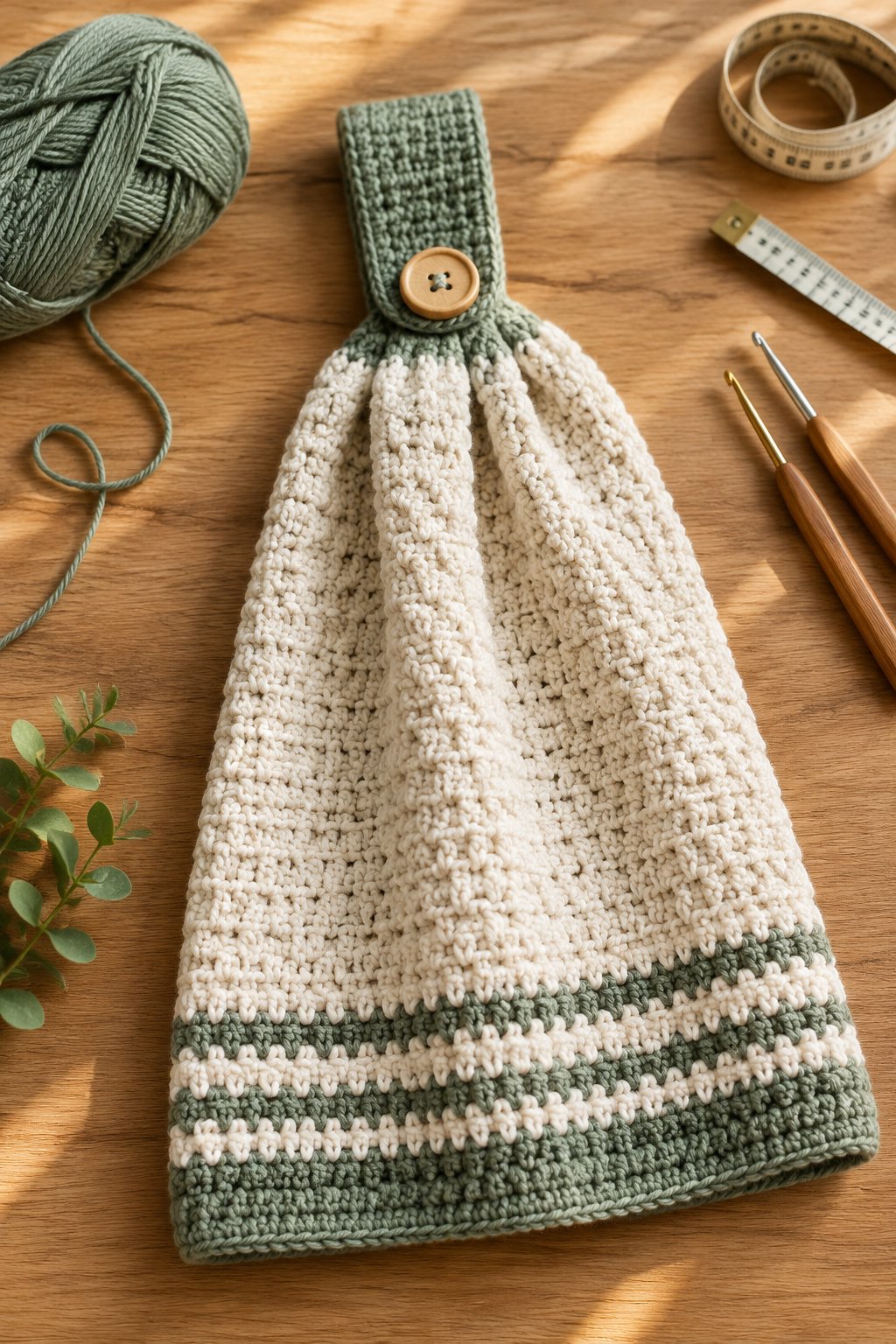
Your hanging kitchen towel stays within reach when you add a buttoned tab that wraps around a handle. A narrow striped body with a solid top looks crisp without much finishing. Choose colors that coordinate with your cabinets, or make a cheerful gingham-inspired version.
Work with absorbent DK or worsted cotton and a 4–5 mm hook. Use moss stitch for a flexible towel body, then switch to closely worked single crochet for the tapered hanging tab. Measure the tab around your intended handle before placing the buttonhole.
You’ll need easy-level skills for decreases and a basic buttonhole. Choose a washable button that passes through the opening with light pressure, and sew it securely through several stitches. Keep your finished towel clear of burners and heating elements. For frequent hand drying, make a second towel so you have a clean replacement ready.
|
Detail |
Specification |
|---|---|
|
Yarn Weight |
DK #3 or worsted #4 |
|
Skill Level |
Easy |
|
Estimated Time |
4–7 hours |
7) Washable Cotton Cover for a Flat Mop
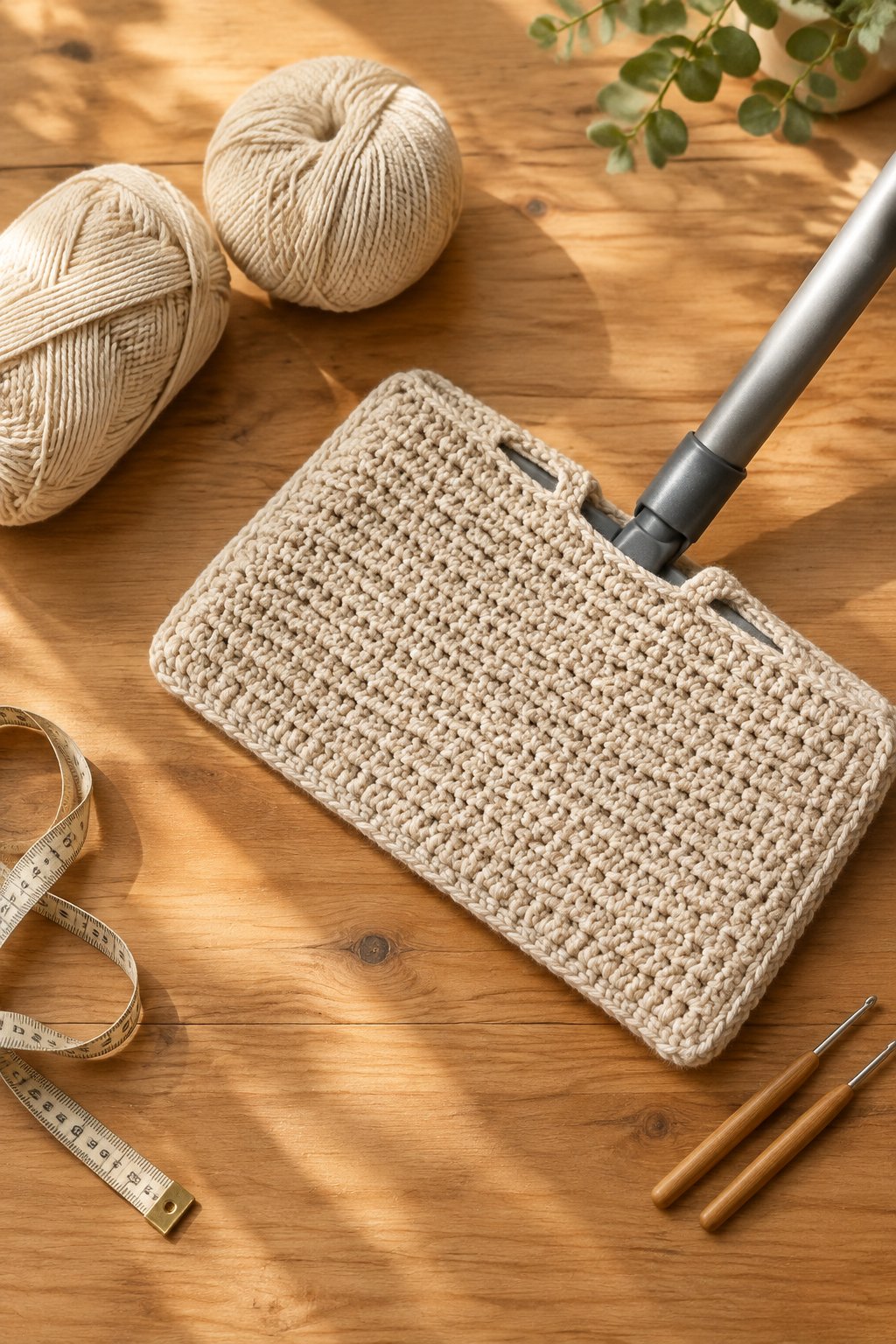
You’ll get a reusable cleaning pad by fitting a cotton cover closely around your flat mop head. Keep the working surface low and even so it moves smoothly across your floor. Choose medium gray or blue if you prefer a practical color for regular cleaning.
Use worsted cotton and a 4–4.5 mm hook for a dense rectangle. Single crochet provides a firm fabric, while shallow ridges add texture without bulky loops. Add pockets at both short ends, sized to hold your mop head securely during back-and-forth movement.
This easy project starts with careful measurements of your specific mop. Wash and dry your swatch before calculating the pad size, since shrinkage affects the fit. Follow your flooring manufacturer’s cleaning advice, especially for wood or laminate. Test the cover in a hidden area and remove grit before each use to reduce scratching.
|
Detail |
Specification |
|---|---|
|
Yarn Weight |
Worsted, #4 |
|
Skill Level |
Easy |
|
Estimated Time |
2–4 hours |
8) Crossbody Water Bottle Sling With a Solid Base
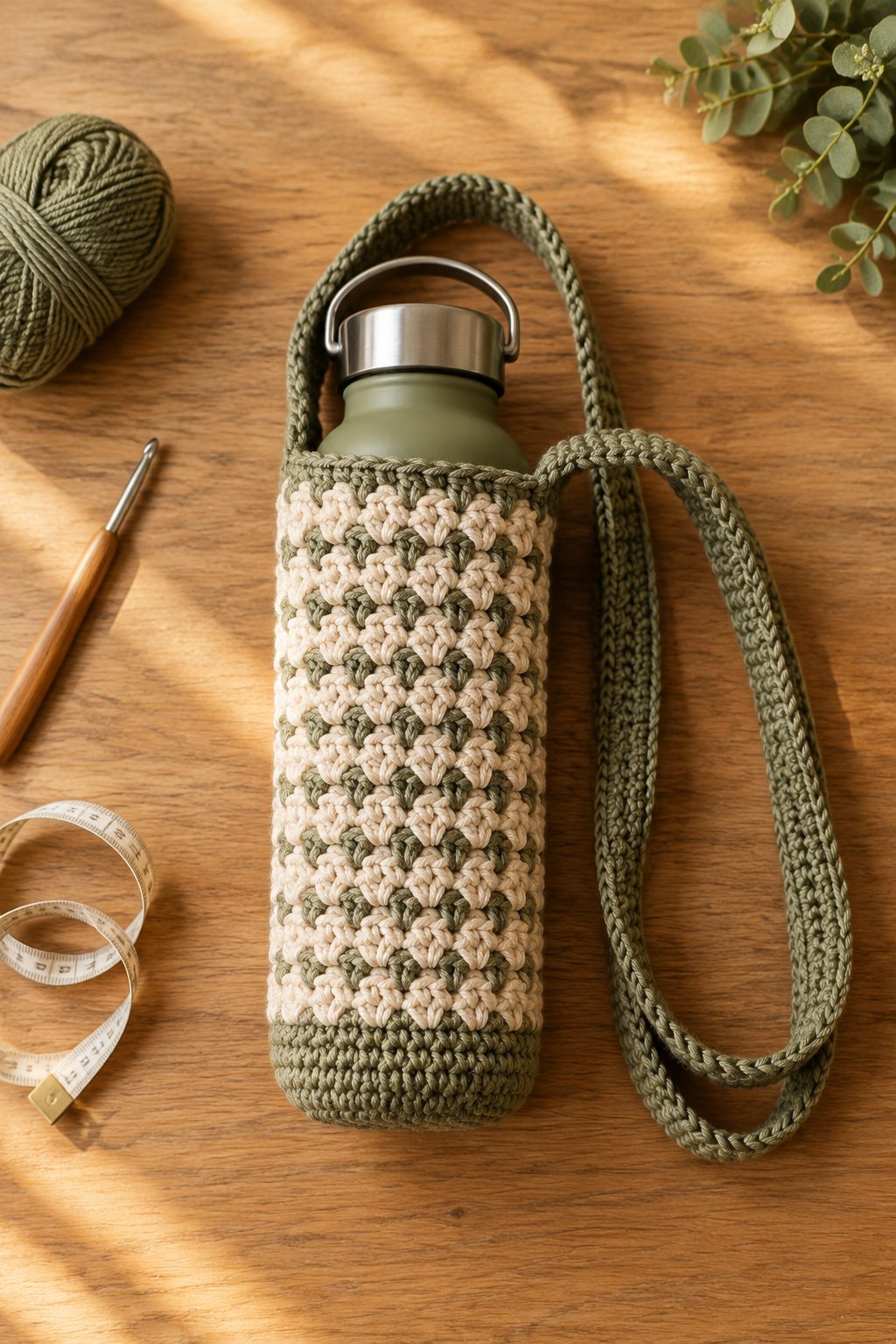
Your bottle sling frees your hands while keeping your water bottle close during walks or errands. A snug cylindrical shape in denim blue or rust looks relaxed and practical. Add a contrasting strap if you want a brighter accessory that works with plain outfits.
Choose worsted cotton and a 4–4.5 mm hook. Work the base in tight single crochet, matching your bottle’s diameter, then build the sides with solid stitches or small mesh openings. Keep enough height to support the bottle while leaving its lid accessible.
For this easy-level project, use a broad, densely stitched strap and attach it across several stitches on opposite sides. Fit the strap with your bottle filled because the added weight stretches the fabric. Make the sling snug enough to hold the bottle securely, then check the seams before taking it out for regular use.
|
Detail |
Specification |
|---|---|
|
Yarn Weight |
Worsted, #4 |
|
Skill Level |
Easy |
|
Estimated Time |
3–5 hours |
9) Eyeglass Case With a Button Flap
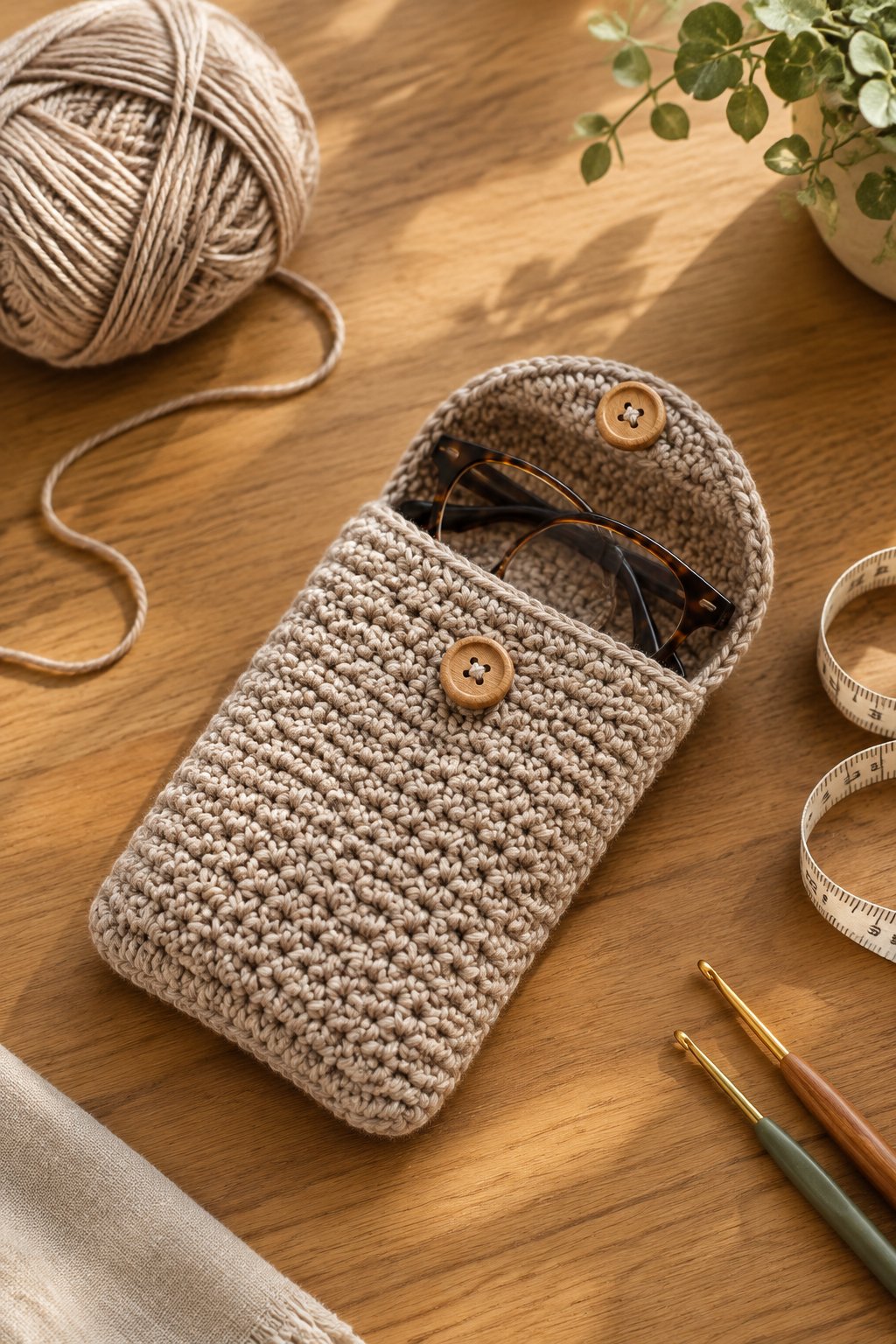
You’ll give your glasses a dedicated place in your bag with a soft case and a buttoned flap. A slim rectangle in lavender or deep teal looks polished with a small wooden-look button. Keep the outside smooth so your case slips easily into a pocket.
Use smooth DK cotton or a washable cotton blend with a 3.5–4 mm hook. Tight single crochet keeps the fabric compact. Crochet a long rectangle, fold the lower portion into a pocket, and leave the upper section free to form the flap.
This beginner-friendly project needs enough room for your folded frames without pressing on the hinges. Add a soft fabric lining with enclosed seams to help protect lenses from yarn texture. Position your button outside the lens area. Use a rigid case whenever your glasses need protection from crushing, including inside a tightly packed travel bag.
|
Detail |
Specification |
|---|---|
|
Yarn Weight |
DK, #3 |
|
Skill Level |
Beginner |
|
Estimated Time |
1–3 hours |
10) Bedside Hanging Caddy With Divided Pockets
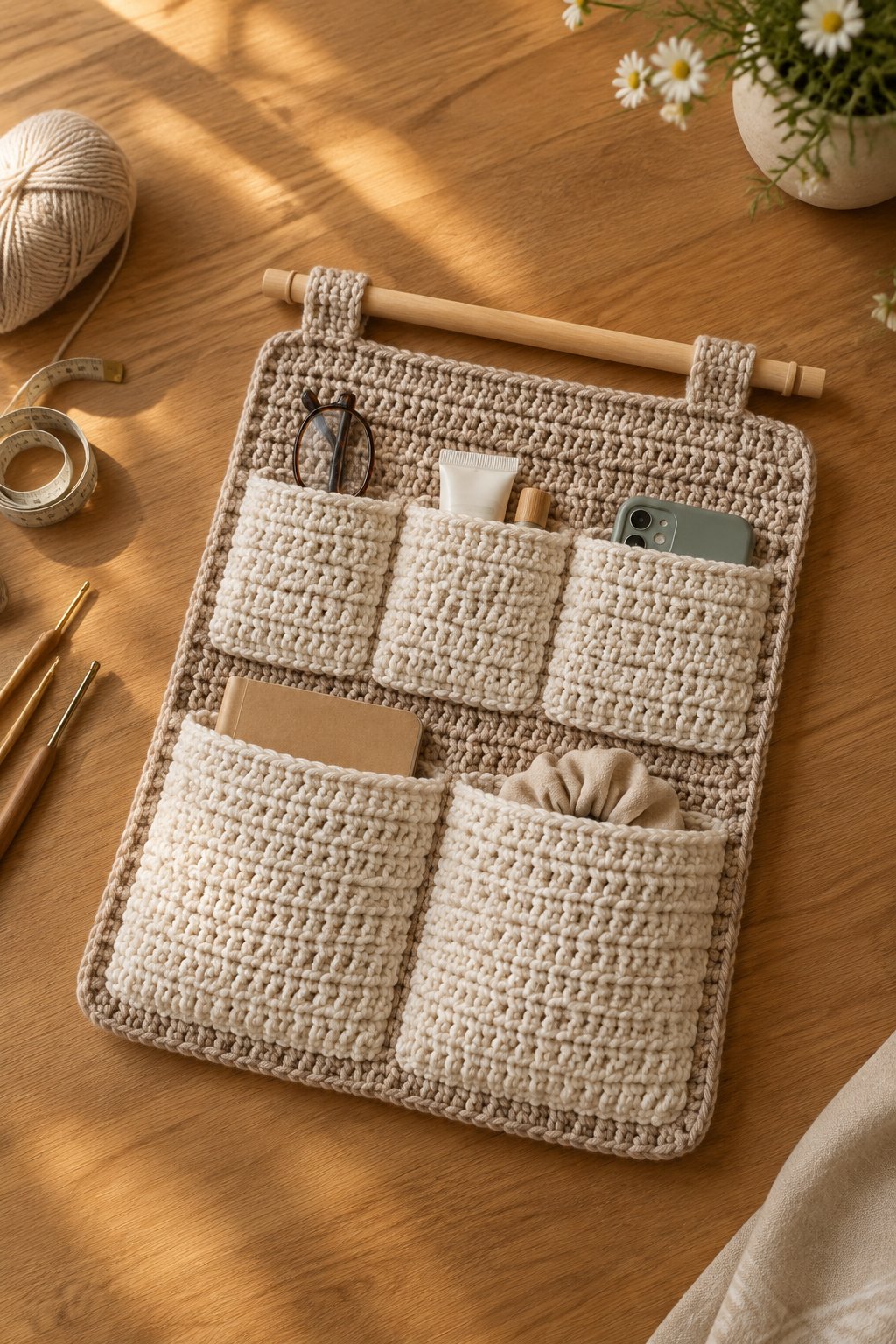
Your bedside caddy keeps small nighttime essentials within reach when your nightstand has limited space. A wide rectangular back with shallow divided pockets looks neat in heather gray or muted green. Match your bedding for a quiet finish, or add contrasting pocket borders.
Choose sturdy worsted cotton and a 4–4.5 mm hook. Use single crochet for the backing and pocket panels, keeping your stitches dense enough to resist stretching. Plan separate spaces around your phone and remote, allowing room to grasp each item without pulling the pocket.
You’ll use intermediate skills to size and assemble the panels. Attach your caddy securely to an adult bed frame with broad straps, checking that it stays clear of moving parts. Keep pocket contents light and reinforce the upper corners. Remove your phone for charging on a firm, ventilated surface, following its manufacturer’s directions.
|
Detail |
Specification |
|---|---|
|
Yarn Weight |
Worsted, #4 |
|
Skill Level |
Intermediate |
|
Estimated Time |
6–10 hours |
11) Button-Up Crochet Cable Ties
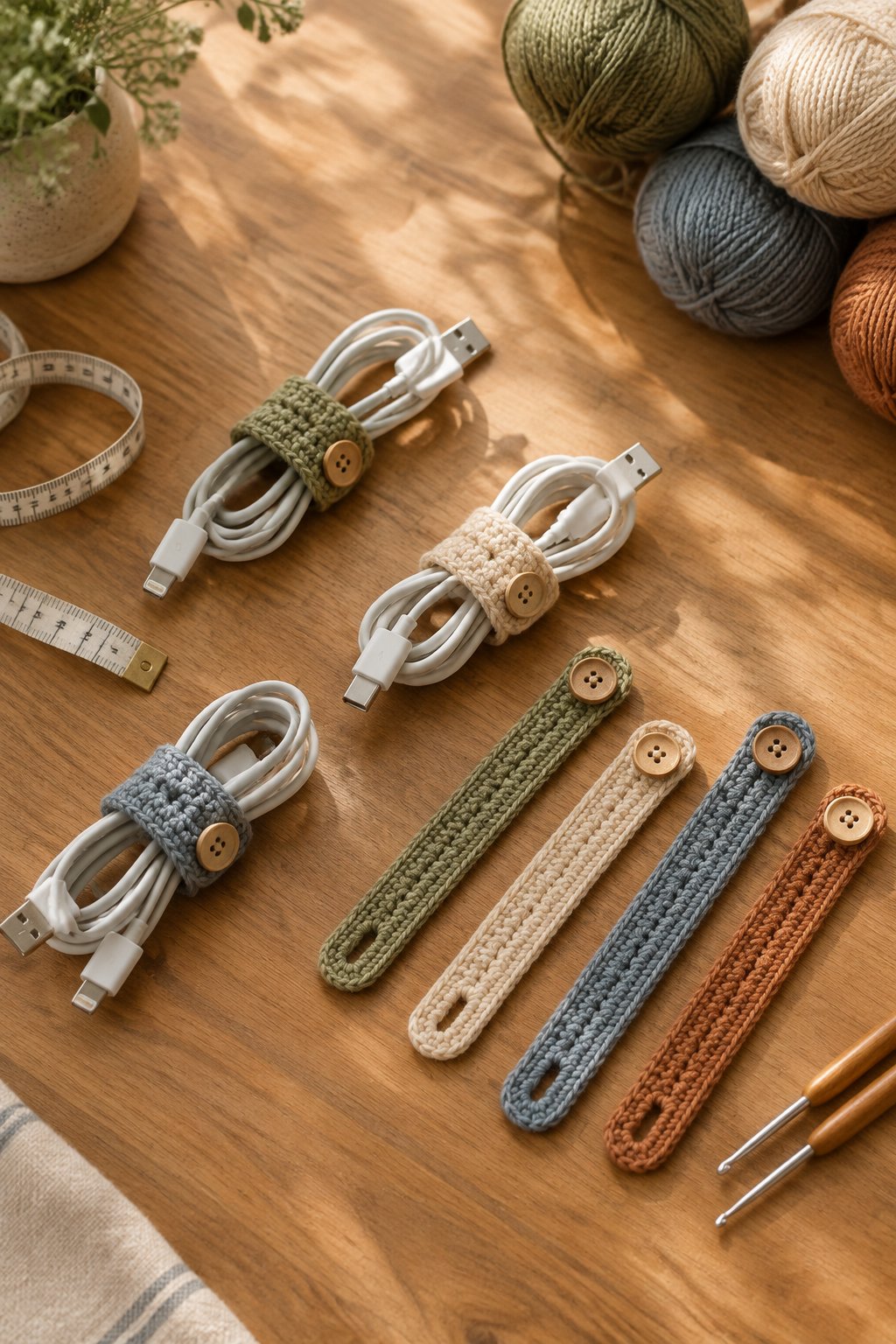
You’ll keep loosely coiled cords organized with small crochet strips that button closed. Use bright scraps to give each cord its own color, or choose a matching neutral set for your desk drawer. Rounded ends and flat buttons keep these little organizers tidy.
Pick sport- or DK-weight cotton and a 3–3.5 mm hook. Work a narrow strip in single crochet, adding a small chain-space buttonhole near one end. Size your strip around the loosely coiled cable before fastening off, allowing space to close it without squeezing.
This beginner project uses very little yarn, making it handy for remnants from larger makes. Sew each button firmly and check that the opening holds it securely. Use your ties for unplugged charging cords or small accessory cables during storage. Keep powered extension cords uncoiled and follow their safety instructions when you use them.
|
Detail |
Specification |
|---|---|
|
Yarn Weight |
Sport #2 or DK #3 |
|
Skill Level |
Beginner |
|
Estimated Time |
15–30 minutes each |
12) Ribbed Twist-Front Ear Warmer
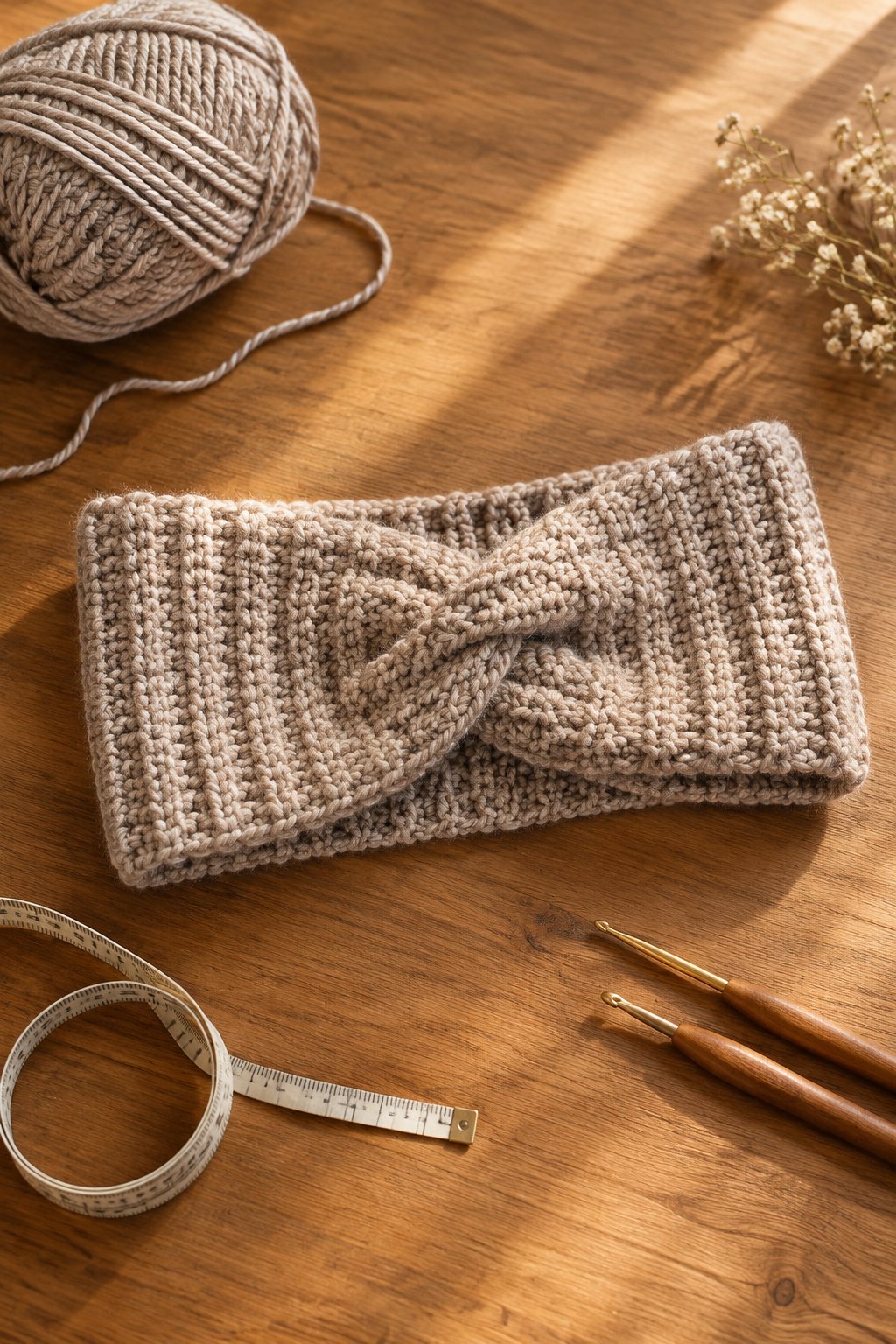
Your twist-front ear warmer gives you cozy ear coverage while leaving room for a ponytail or bun. A wide ribbed band in cranberry, camel, or forest green pairs easily with a winter coat. The folded front adds shape without requiring a separate decorative piece.
Use a soft worsted wool blend with a 5–5.5 mm hook, checking the label for care requirements. Half double crochet worked through the back loop creates flexible ribs. Make a rectangle wide enough to cover your ears, then test its stretch around your head.
You’ll find the stitching beginner-friendly, with an easy-level folded seam at the end. Interlock the folded short ends and sew through all layers before turning the seam inward. Keep the band comfortably snug, checking for pressure at your temples. Choose a smooth washable acrylic if wool irritates your skin during extended wear.
|
Detail |
Specification |
|---|---|
|
Yarn Weight |
Worsted, #4 |
|
Skill Level |
Easy |
|
Estimated Time |
2–3 hours |
13) Fingerless Gloves With Ribbed Cuffs
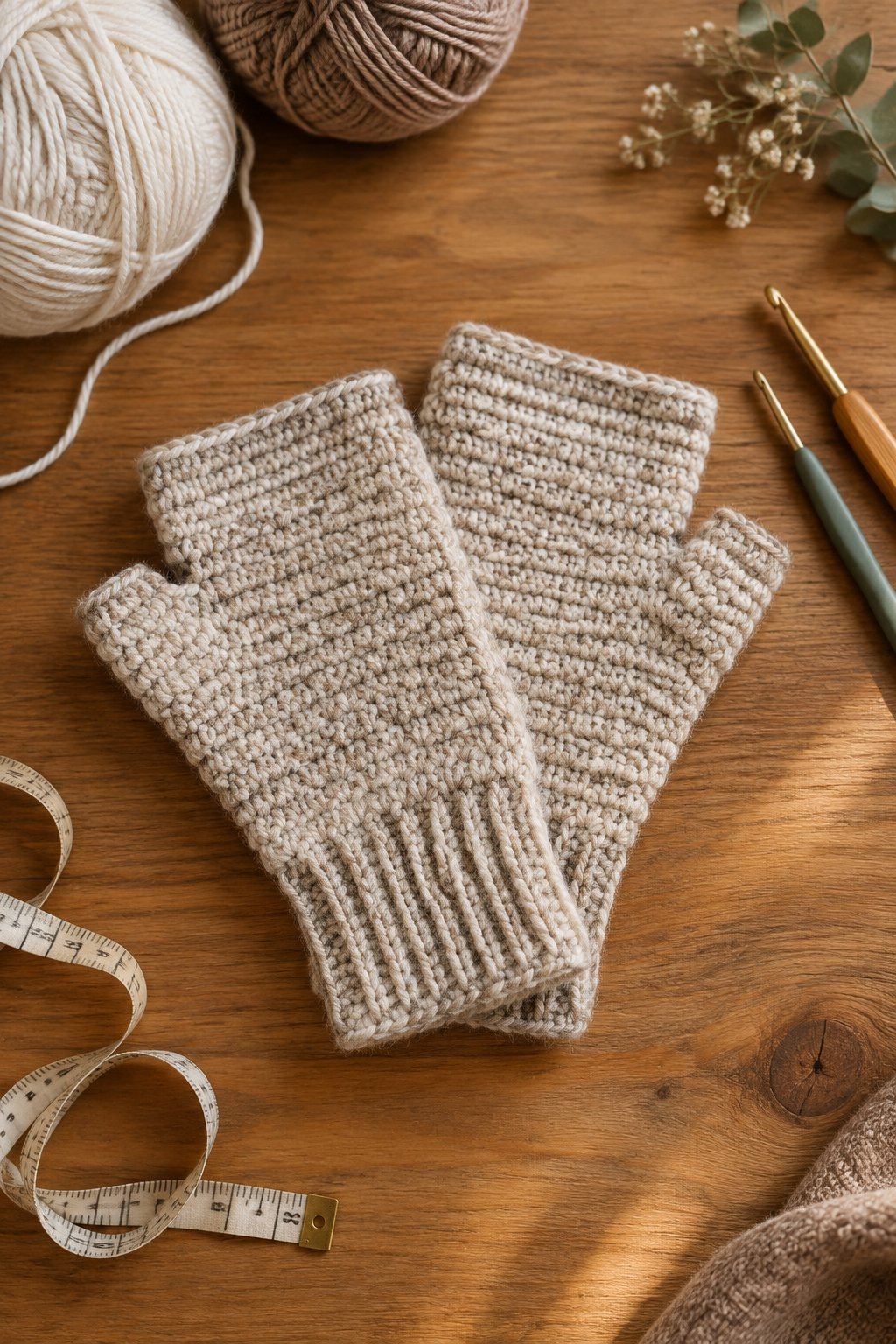
You’ll keep your hands warmer while leaving your fingertips free with a pair of short crochet gloves. A fitted shape in plum or charcoal works well with everyday jackets. Contrasting cuffs add a playful detail without making your gloves bulky around the wrist.
Choose soft DK wool-blend yarn and a 3.5–4 mm hook. Make the cuffs in back-loop single crochet, then build the hand section in half double crochet. Leave a thumb opening at the correct height and finish its edge with a round of single crochet.
This easy-level project becomes more involved if you add shaped thumb gussets. Try on your first glove before making its partner, checking that you can spread your fingers comfortably. Write down your row counts so both gloves match. Keep the palm fabric smooth and avoid bulky decorations where your hand holds everyday objects.
|
Detail |
Specification |
|---|---|
|
Yarn Weight |
DK, #3 |
|
Skill Level |
Easy |
|
Estimated Time |
4–6 hours per pair |
14) Removable Envelope Cushion Cover
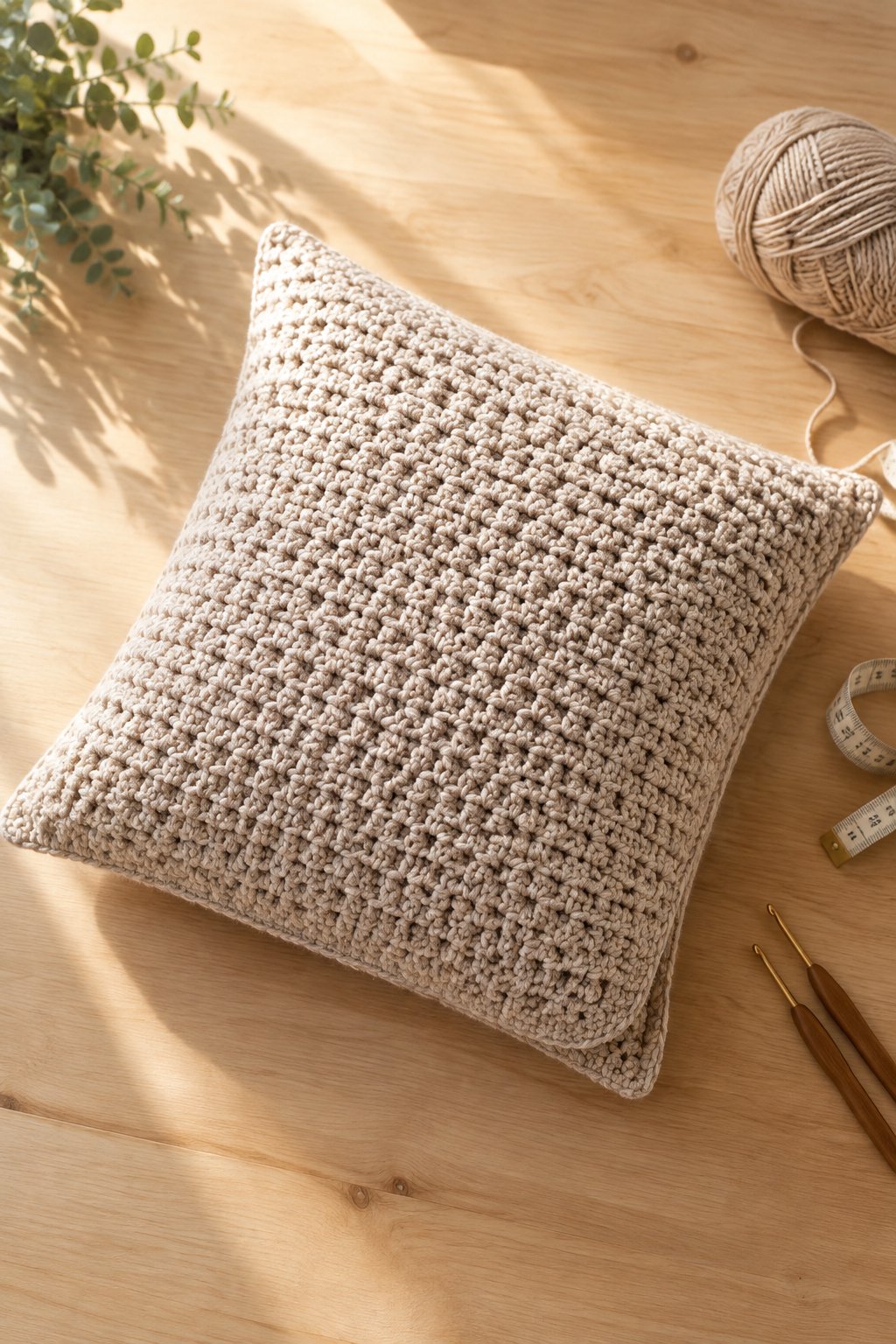
Your envelope cushion cover refreshes a sofa while giving you an opening for easy removal. Choose warm cream with narrow tan stripes for a relaxed look, or use one rich color to highlight the stitch texture. A square shape keeps your measurements straightforward.
Use washable worsted cotton-blend yarn and a 4.5–5.5 mm hook. Half double crochet creates a flexible fabric with moderate coverage. Make one front panel and two back panels that overlap generously, planning about 4–6 inches of overlap for an 18-inch cushion.
You’ll need easy-level skills for measuring and joining straight edges. Check the washed gauge before sizing your panels, and keep the finished cover close to your insert’s dimensions for a full appearance. Join around the outside with a tidy single-crochet edge. Place the overlap across the center back so you can remove the insert for washing.
|
Detail |
Specification |
|---|---|
|
Yarn Weight |
Worsted, #4 |
|
Skill Level |
Easy |
|
Estimated Time |
8–12 hours |
15) Chunky Lap Blanket in Moss Stitch
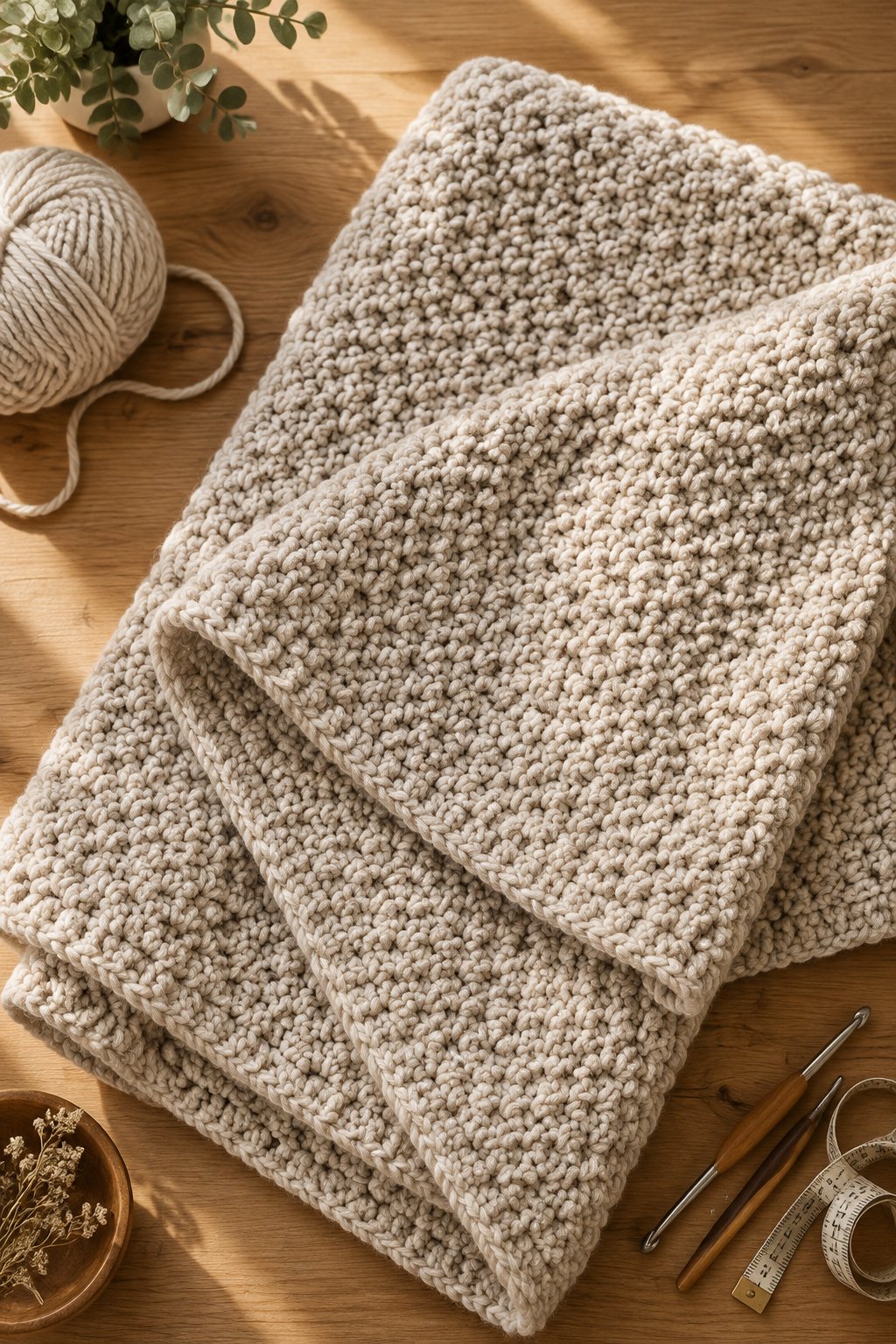
You’ll add comfortable warmth to reading time with a lap blanket worked in soft, chunky moss stitch. Wide bands of oatmeal and muted blue give the simple rectangle a calm look. Keep the palette limited so the woven-looking stitch pattern stays easy to see.
Choose smooth bulky yarn and a 6.5–8 mm hook, adjusting for a fabric that bends easily. Moss stitch alternates single crochet with chain spaces, giving you a steady beginner-friendly repeat. A finished size around 36 by 48 inches suits many lap blankets.
Make a swatch before buying your full yarn supply so you can estimate yardage from your chosen size. Keep your turning chains consistent to prevent the edges from widening. Add a narrow single-crochet border after checking that the corners lie flat. For frequent washing, choose a yarn whose label supports your preferred laundry routine.
|
Detail |
Specification |
|---|---|
|
Yarn Weight |
Bulky, #5 |
|
Skill Level |
Beginner |
|
Estimated Time |
12–20 hours |
16) Fitted Door Draft Stopper With a Removable Insert
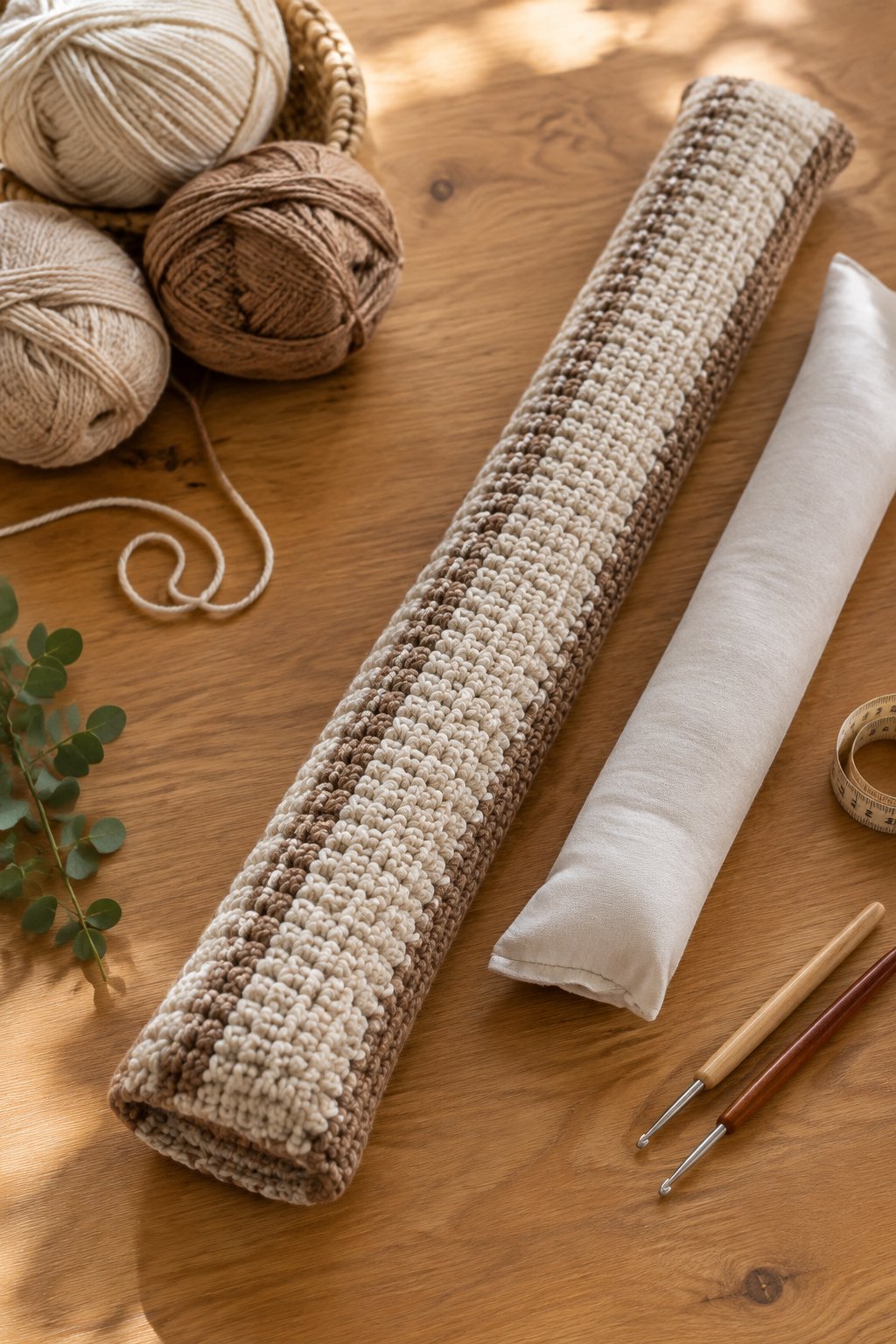
Your fitted draft stopper helps block airflow along a door’s lower gap when its filled tube sits closely against the opening. Choose a long cylindrical shape in a color that blends with your flooring. Subtle stripes also make a useful home accessory feel personal.
Use worsted cotton or a washable cotton blend with a 4–4.5 mm hook. Dense single crochet gives the outer sleeve a firm surface. Measure your door’s width, then make a separate tightly woven fabric insert filled with clean fabric scraps or fiberfill.
This easy crochet project also needs basic sewing for the inner tube. Close the insert securely, then add a buttoned flap to the crochet sleeve so you can remove it for washing. Keep the stopper clear of the door’s swing and walking path. Check that you can open your door fully without catching or dragging it.
|
Detail |
Specification |
|---|---|
|
Yarn Weight |
Worsted, #4 |
|
Skill Level |
Easy |
|
Estimated Time |
4–7 hours |
17) Ribbed Plant Pot Cover With a Folded Cuff
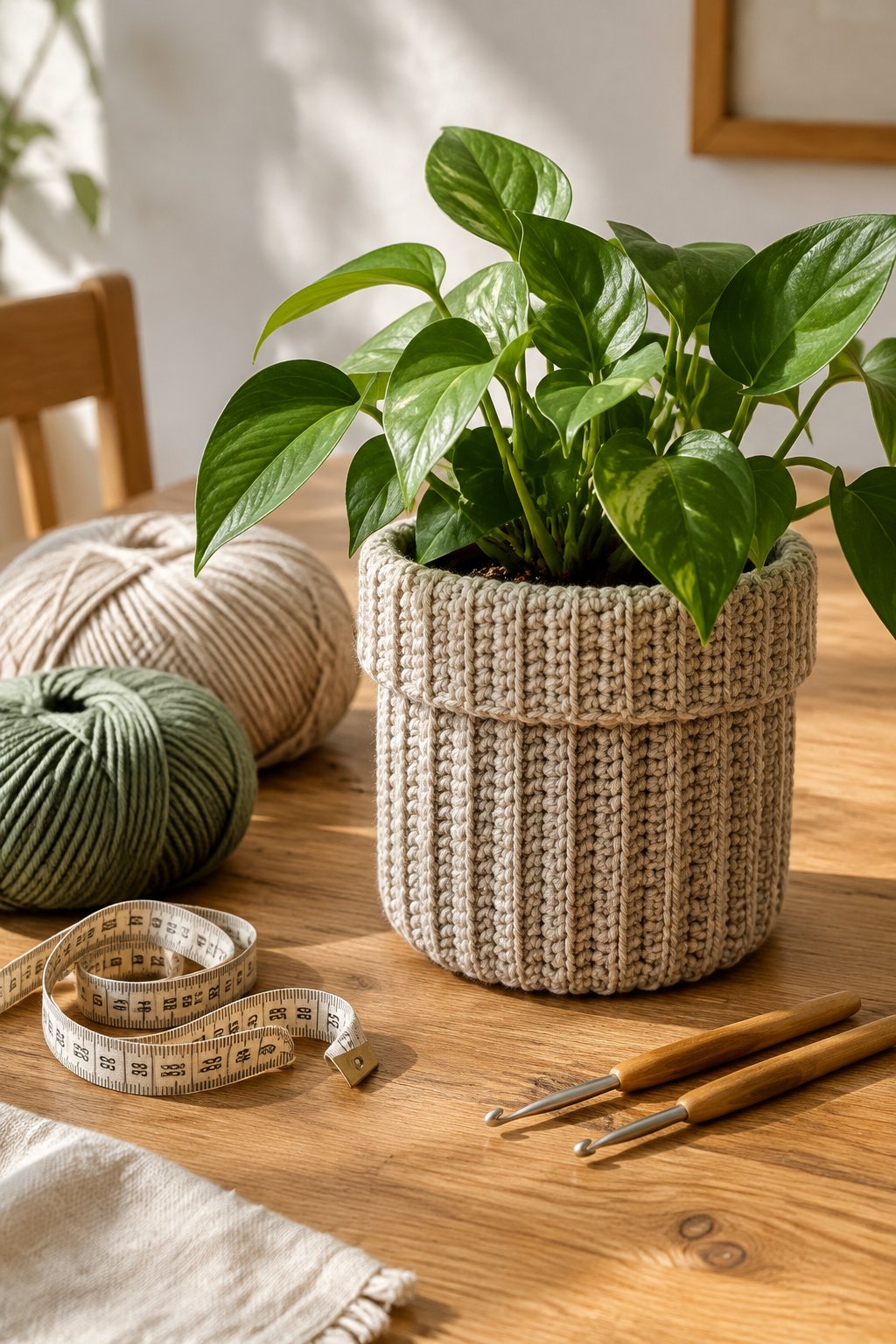
You’ll soften the look of a plain planter with a ribbed crochet sleeve and a neatly folded cuff. Warm beige or moss green complements leafy plants, while a blush cover adds gentle color to a shelf. Match the cylinder to your pot for a fitted finish.
Use worsted cotton with a 4–4.5 mm hook. Work a rectangle in back-loop half double crochet, making the ribbing run vertically when you join the short ends. Add enough height for your cuff, then seam the rectangle into a snug, open-bottomed sleeve.
This beginner-friendly design slips over a waterproof cachepot. Keep your plant in its nursery pot inside, and remove it for watering so the crochet stays dry. Let excess water drain completely before returning the plant. Check beneath the cachepot regularly for trapped moisture, especially when you display it on a wooden shelf.
|
Detail |
Specification |
|---|---|
|
Yarn Weight |
Worsted, #4 |
|
Skill Level |
Beginner |
|
Estimated Time |
2–4 hours |
How To Choose Yarn and Hooks for Practical Projects
You’ll get more dependable results by matching your fiber to the job and your hook to the fabric you need. Treat the hook sizes above as starting points, then check a washed swatch before committing to a fitted project.
When Should You Choose Cotton Instead of Acrylic or Wool?
Choose cotton for absorbent items such as dishcloths and towels, and for sturdy accessories that need limited elasticity. Choose washable acrylic for easy-care blankets, or a wool blend when you want warmth and springy stretch in your wearables. Keep ordinary crochet cloths and coasters away from oven-handling tasks; use purpose-made heat protection for hot cookware.
Which Yarn Weights and Hook Sizes Create the Right Fabric?
Use DK or worsted yarn for most small household projects, and bulky yarn for thicker baskets or blankets. A smaller hook creates denser fabric for cases and containers; a larger hook creates a looser fabric with more drape. Check that your stitches remain comfortable to work and that your finished swatch suits its intended use.
How Do Washing and Drying Requirements Affect Your Choice?
Read the care label before choosing yarn for anything you’ll wash frequently. Machine-washable yarn still needs the correct water temperature and drying method, and some cotton shrinks during laundering. Wash your swatch using your planned routine, then measure it again after it dries fully.
How To Make Crochet Items Work for Everyday Use
Your crochet projects hold up better when you check their fit under realistic conditions and secure the areas that carry weight. Do those checks before weaving in every end so adjustments stay manageable.
How Can You Check Fit and Stretch Before Finishing?
Try fitted projects on their intended object after washing your swatch and confirming gauge. Test bags and bottle slings with their expected contents, then inspect how far the handles stretch. For wearables, move your hands or head through a comfortable range before closing the final seam.
Which Seams and Closures Need Reinforcement?
Reinforce handle attachments, pocket corners, and button tabs because these areas receive repeated pulling. Spread attachments across several stitches, make a second sewing pass where needed, and weave yarn tails securely through dense fabric. Check your buttonholes after a few openings and closings, then tighten any opening that releases too easily.
How Can You Protect Surfaces and Keep Moisture From Collecting?
Place waterproof protection beneath damp-prone items, including plant containers and absorbent coasters used on delicate furniture. Hang wet cloths with room for airflow, and remove damp covers from the objects beneath them. After washing, dry each piece completely before returning it to a drawer, shelf, or fitted container.