With these 16+ crochet flower bouquet Arrangements That Last Forever, you have a cozy DIY starting point for keepsake gifts and colorful displays that need no watering. You get the soft texture of handmade flowers, plus the freedom to choose shades that match your home or someone’s favorite colors.

Save your favorite design for your next yarn-shopping trip, then start with a small bunch of three stems. Use the hook sizes below as starting points alongside your chosen pattern’s guidance. The time ranges are planning estimates for three finished stems, including assembly; give yourself extra time while learning a new flower shape.
1) Layered Red Rose Bouquet With Wrapped Stems

You get a classic gift bouquet with deep red roses, tightly curled centers, and rich green leaves. Choose burgundy for a dramatic arrangement or cherry red for a brighter anniversary gift.
Start with smooth worsted-weight cotton and a 3.5 mm hook for clear petal edges. Follow a rose pattern that builds scalloped petals along a foundation chain, then roll the strip around its smallest end. Stitch through the base several times so your outer petals stay in place.
For this intermediate project, shape each bloom before attaching its stem. Add a green calyx beneath the rose to cover the join, then wrap your secured stem with matching yarn. Leave a little space between flower heads so the layered petals remain visible.
|
Detail |
Specification |
|---|---|
|
Yarn Weight |
Worsted, category 4 |
|
Skill Level |
Intermediate |
|
Estimated Time |
4–6 hours |
2) Pastel Tulip Bouquet With Cupped Petals

Pastel tulips give your bouquet a clean outline with softly rounded flower heads. Combine blush and butter yellow for a gentle spring palette, then add pale lavender if you want more variety.
Use DK cotton with a 3 mm hook to keep the cups compact. Choose an easy pattern worked in single crochet rounds, with decreases shaping the upper edge. A small amount of stuffing supports each head; pack it lightly enough that your stitches keep their shape.
Close the top following your pattern’s instructions to create the familiar divided tulip tip. Add one long leaf per stem and angle the leaves outward. You have an approachable project for practicing increases and decreases, with finished stems that suit a narrow vase or a paper-wrapped birthday gift.
|
Detail |
Specification |
|---|---|
|
Yarn Weight |
DK, category 3 |
|
Skill Level |
Easy |
|
Estimated Time |
3–5 hours |
3) White Daisy Posy With Textured Yellow Centers

Your daisy posy gets its cheerful look from crisp white petals surrounding raised yellow centers. Keep the flower heads fairly small for a casual bunch that fits comfortably in a short jar.
Choose sport-weight cotton and a 2.75 mm hook for neat, lightweight petals. A beginner-friendly pattern with chain loops and double crochet petals gives you a manageable first stemmed-flower project. Work the center separately in tight single crochet rounds, then sew it onto the petal ring.
For extra texture, choose a center pattern with bobble stitches. Secure each flower to a green backing circle so your joining stitches stay covered. Arrange five petals-facing-forward blooms for a fuller display, or tuck your first three stems into a small vase beside your crafting space.
|
Detail |
Specification |
|---|---|
|
Yarn Weight |
Sport, category 2 |
|
Skill Level |
Beginner |
|
Estimated Time |
2–4 hours |
4) Sunflower Bouquet With Oversized Golden Petals

Oversized sunflowers give your arrangement a bold focal point through wide golden petals and dark brown centers. Pair honey yellow with chocolate brown for a warm, late-summer color scheme.
Pick worsted-weight cotton or a firm cotton blend and start with a 3.5 mm hook. Look for an intermediate pattern with a dense circular center and two staggered petal rounds. Half double crochet and taller stitches help build pointed petals with enough width to stand out.
Keep your stuffing light if the center has a front and back panel. Heavy flower heads need sturdy stems and a stable container. Turn each bloom slightly outward so your bouquet shows several faces, then add broad green leaves near the vase rim to soften the base.
|
Detail |
Specification |
|---|---|
|
Yarn Weight |
Worsted, category 4 |
|
Skill Level |
Intermediate |
|
Estimated Time |
5–8 hours |
5) Lavender Bundle With Slender Purple Flower Spikes
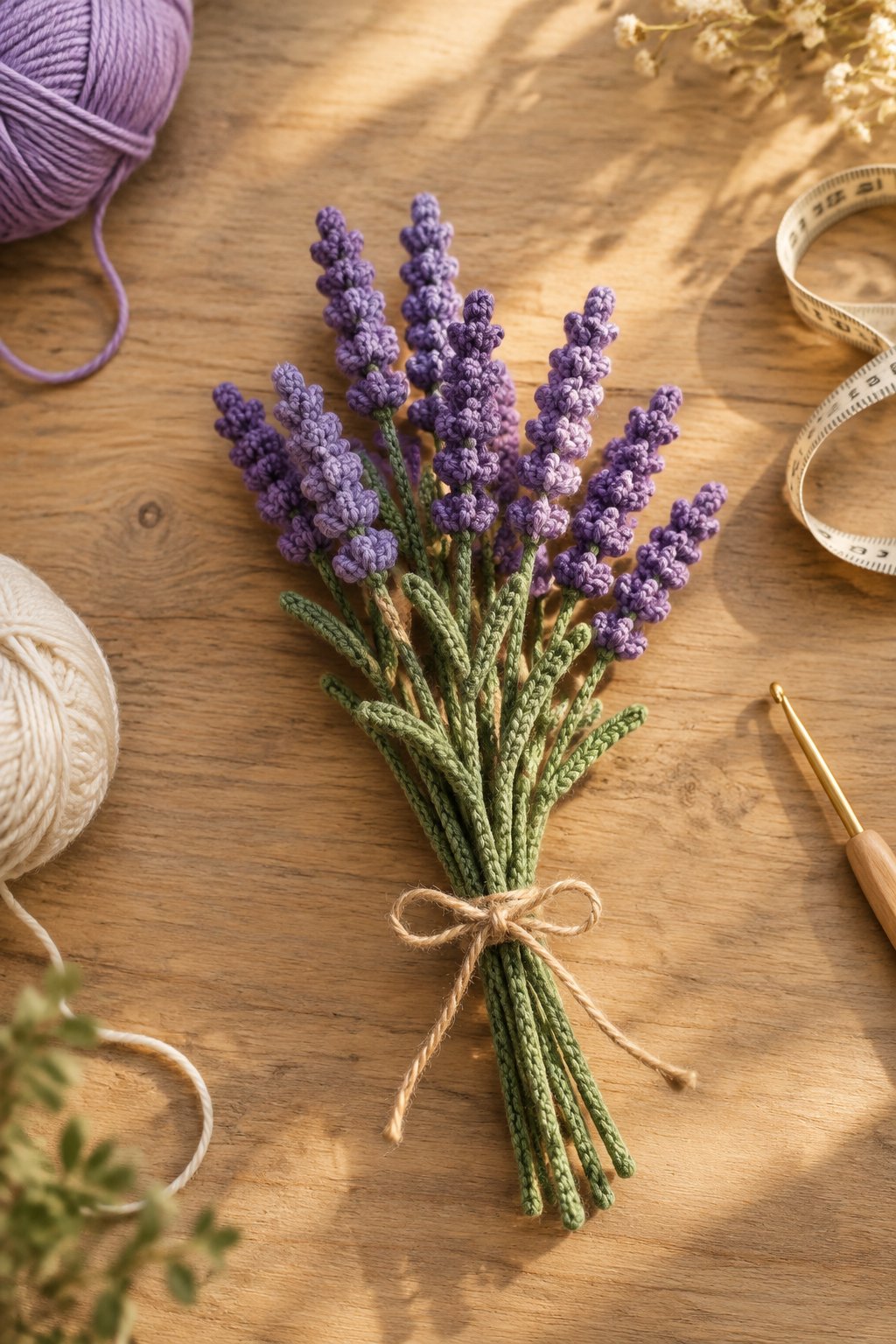
A lavender bundle gives your display height through slim purple spikes and narrow green stems. Mix dusty lilac with a deeper violet to create gentle color variation within one compact bunch.
Use sport-weight cotton and a 2.5 mm hook for small, defined buds. Choose an easy pattern that repeats short chains, slip stitches, or compact clusters along a narrow strip. Wrap that flower strip around the upper stem, securing it with matching thread as you work.
Space the lower buds slightly farther apart to suggest lavender’s tapered shape. You get useful practice with repeated stitches, although assembly takes patience. Tie your completed stems with cotton ribbon and place them in a bud vase. For a fuller gift, repeat the same stem until you have a generous handful.
|
Detail |
Specification |
|---|---|
|
Yarn Weight |
Sport, category 2 |
|
Skill Level |
Easy |
|
Estimated Time |
2–4 hours |
6) Spring Daffodil Bouquet With Raised Trumpet Centers

Raised trumpet centers give your daffodil bouquet its recognizable spring shape. Use pale yellow outer petals with a stronger golden cup, or choose white petals surrounding an orange center.
Start with DK cotton and a 3 mm hook for petals that hold a gentle curve. Follow an intermediate pattern with six pointed outer petals and a separate trumpet worked in rounds. A lightly ruffled rim adds dimension without covering the cup’s opening.
Sew the trumpet firmly to the flower face before adding the backing and stem. Tilt your flower heads slightly forward to show the center from across a room. Long, slim leaves help complete the silhouette. You have a cheerful seasonal centerpiece for a kitchen table, especially when you group the stems in a low ceramic vase.
|
Detail |
Specification |
|---|---|
|
Yarn Weight |
DK, category 3 |
|
Skill Level |
Intermediate |
|
Estimated Time |
4–6 hours |
7) White Calla Lily Bouquet With Curled Petals

White calla lilies give your bouquet a sculptural shape with smooth curves and slender yellow centers. Choose warm ivory yarn for a soft wedding palette or bright white for a crisp tabletop arrangement.
Use sport-weight mercerized cotton with a 2.5–3 mm hook for clean stitch definition. An intermediate pattern that combines single crochet with taller stitches helps shape the broad petal wrap. Make the yellow center separately, then curl the white piece around its base.
Keep your joining seam toward the back so the front stays smooth. Light blocking helps settle the curve before assembly; follow your yarn’s care instructions. Arrange the flowers at staggered angles in a tall, narrow vase. Leave generous space around each head so you preserve the elegant outline.
|
Detail |
Specification |
|---|---|
|
Yarn Weight |
Sport, category 2 |
|
Skill Level |
Intermediate |
|
Estimated Time |
4–6 hours |
8) Blush Peony Bouquet With Ruffled Petal Layers

Blush peonies bring fullness to your arrangement through broad blooms packed with ruffled petals. Combine pale pink outer layers with a slightly deeper center for subtle depth.
Choose DK cotton or a smooth cotton-acrylic blend and start with a 3.25 mm hook. For this intermediate project, look for a pattern with several petal rounds or separately sewn layers. Double crochet fans create soft folds, while smaller inner petals keep the center compact.
Lay out your layers before sewing so you control the final width. Rotate neighboring layers to cover gaps and keep the bloom rounded. A broad green backing supports the heavier head. Style your finished peonies in a short vase with a wide base, or use one as the focal flower in a mixed handmade gift.
|
Detail |
Specification |
|---|---|
|
Yarn Weight |
DK, category 3 |
|
Skill Level |
Intermediate |
|
Estimated Time |
6–9 hours |
9) Lily Of The Valley Posy With Hanging Bell Flowers
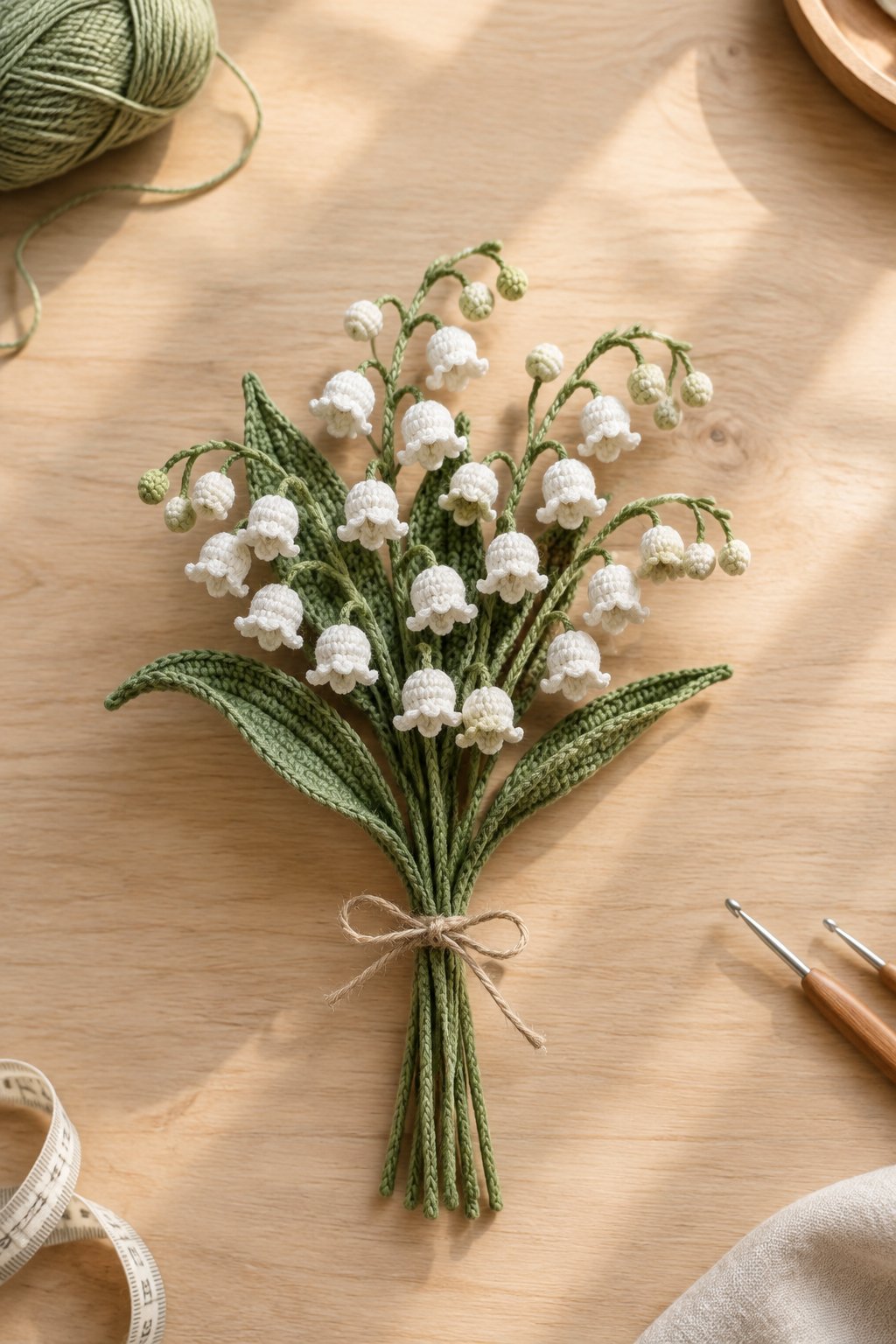
Tiny hanging bells give your lily of the valley posy a delicate, curved silhouette. Pair creamy white flowers with medium green leaves for a fresh woodland look.
Use fingering-weight cotton and a 2 mm hook to keep each bell small. Choose an intermediate pattern worked in tight single crochet rounds, with increases forming the cup and a shaped edge opening the rim. Leave a sewing tail on each bell for attachment.
Build short flower branches separately, then secure them along your main stem. Position the bells so their openings face downward and remain visible between neighboring flowers. Broad leaves provide a useful backdrop for the tiny shapes. Give yourself extra assembly time, and display your finished posy in a small vase where you can appreciate the fine details.
|
Detail |
Specification |
|---|---|
|
Yarn Weight |
Fingering, category 1 |
|
Skill Level |
Intermediate |
|
Estimated Time |
6–9 hours |
10) Blue Hydrangea Bouquet With Clustered Mini Blossoms
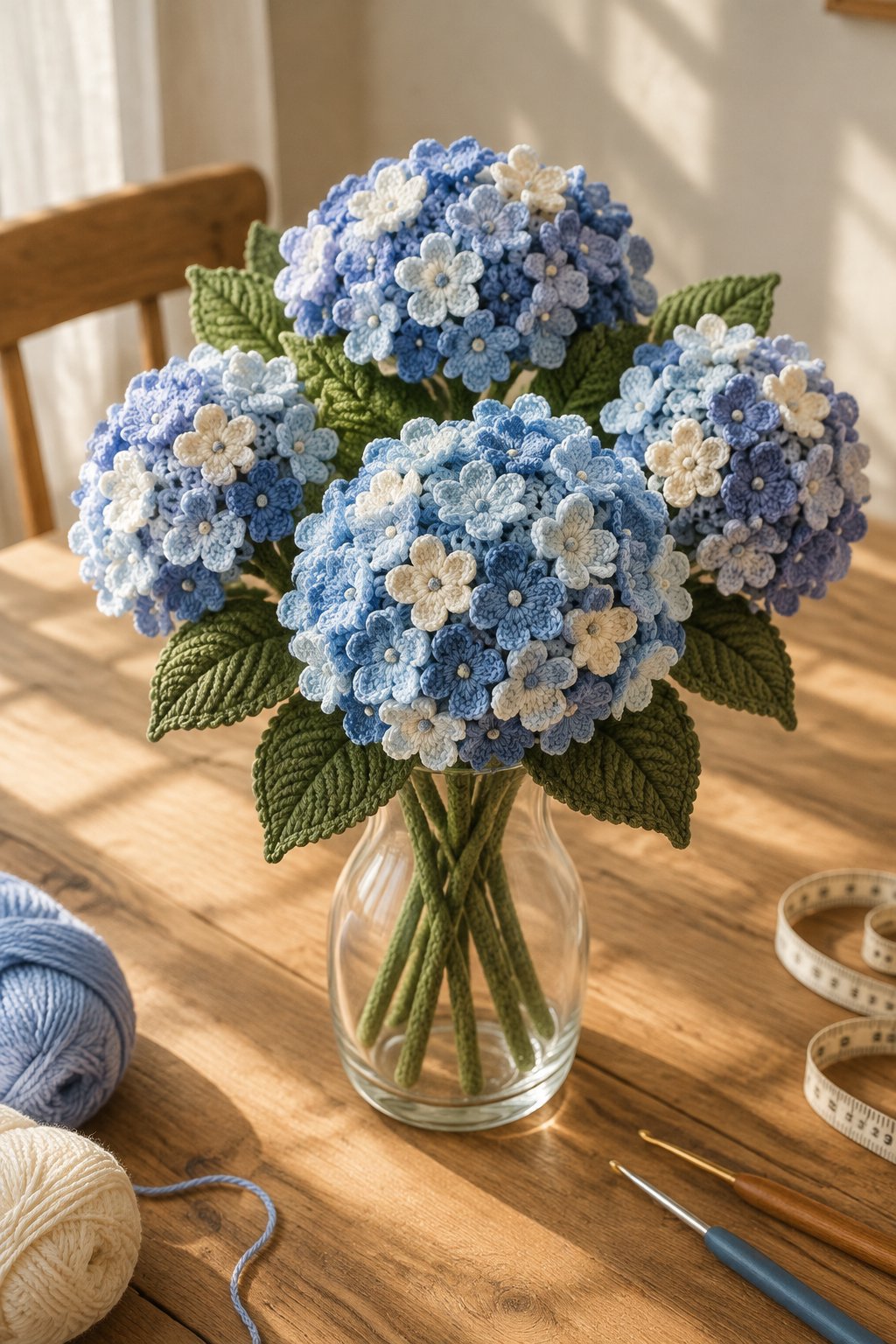
Your hydrangea bouquet gets its rounded shape from many small blossoms grouped into generous heads. Blend powder blue and periwinkle yarn for gentle variation across each cluster.
Choose sport-weight cotton with a 2.5 mm hook so the individual flowers stay light. Look for an intermediate assembly pattern using small four-petal motifs, built from chains and short stitch groups. The crochet repeats are manageable; placing and securing every blossom takes more attention.
Attach your flowers to a crocheted dome or another enclosed support specified by your pattern. Keep the spacing close enough to cover the base while allowing petals to sit freely. Add broad leaves beneath each head. You get a substantial dining-table arrangement from just a few stems, especially when you use a low, sturdy container.
|
Detail |
Specification |
|---|---|
|
Yarn Weight |
Sport, category 2 |
|
Skill Level |
Intermediate |
|
Estimated Time |
8–12 hours |
11) Pink Carnation Bouquet With Frilled Petal Edges
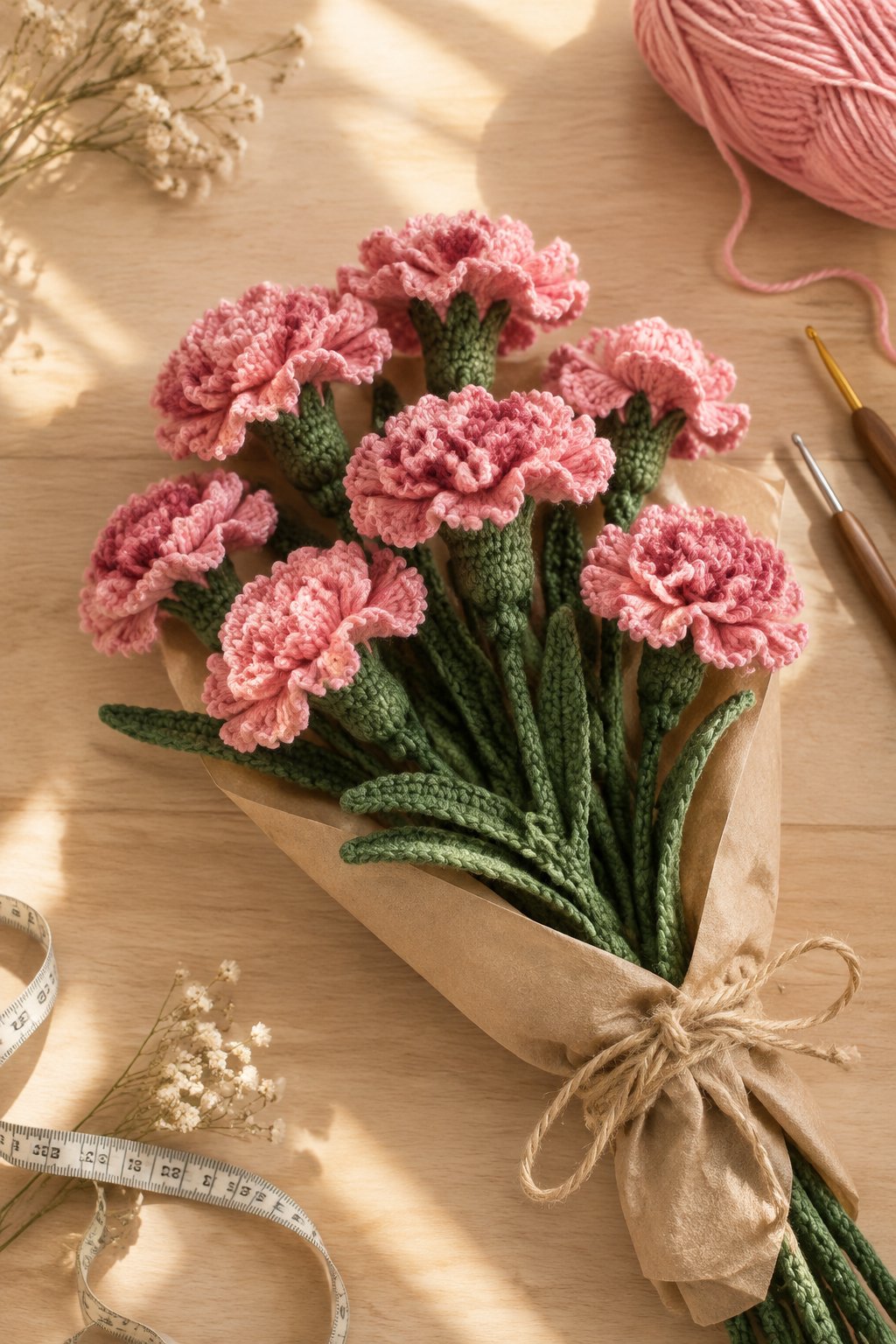
Pink carnations give your bouquet dense, frilled flower heads with plenty of soft texture. Choose dusty rose for a muted gift or combine light pink with coral for a brighter bunch.
Use DK cotton and a 3 mm hook to keep the ruffles distinct. An easy strip-based pattern lets you build fullness through repeated increases and double crochet groups. Roll the finished strip loosely, then stitch through the lower edge to hold the layers together.
Keep your outer folds open while securing the base; pulling every layer tight produces a narrow flower. Add a fitted green calyx to gather the underside and cover the stem join. These repetitive blooms suit an easy weekend project, and your finished carnations look lovely tied into a compact hand-held gift.
|
Detail |
Specification |
|---|---|
|
Yarn Weight |
DK, category 3 |
|
Skill Level |
Easy |
|
Estimated Time |
3–5 hours |
12) Red Poppy Bouquet With Bold Black Centers
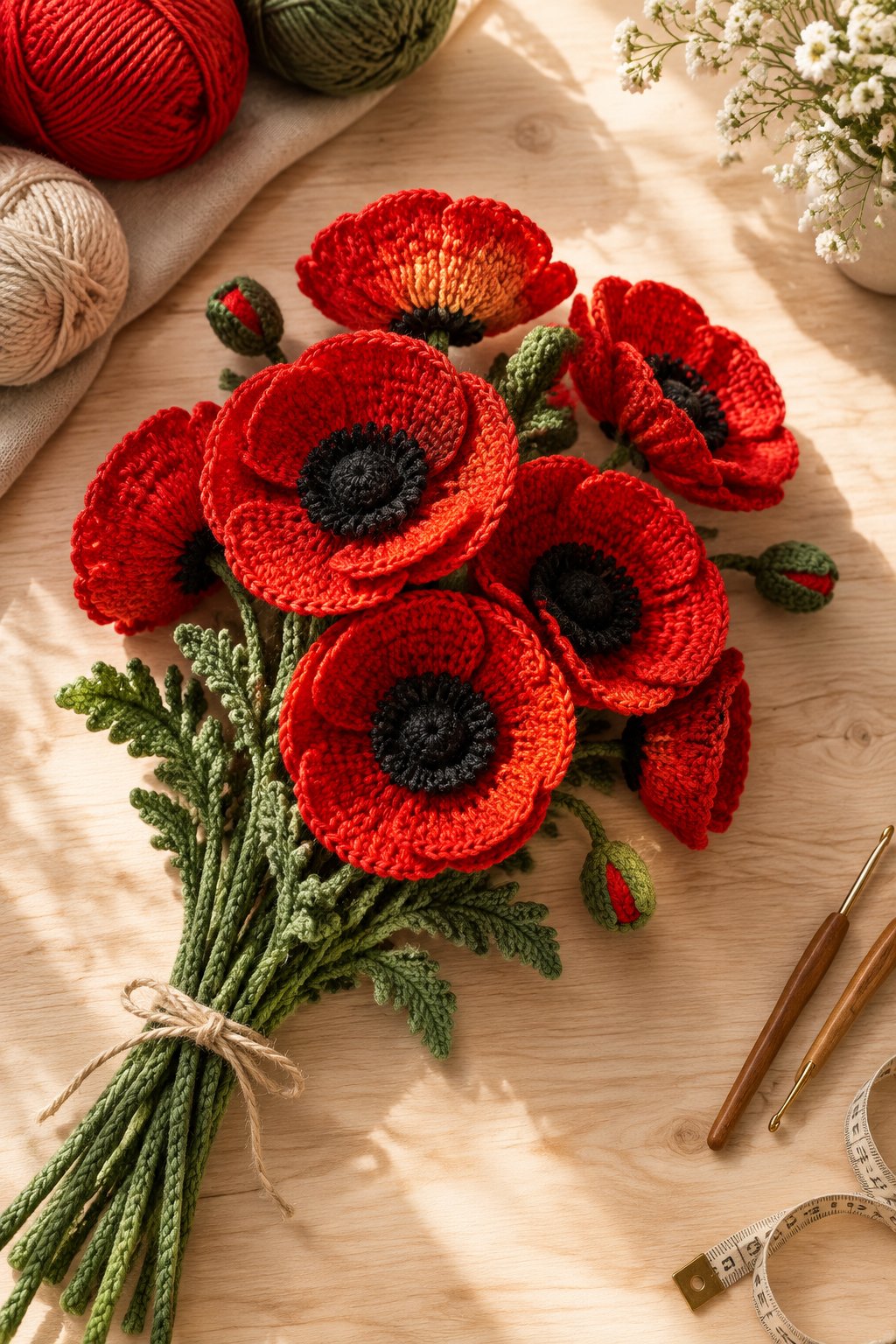
Red poppies give your arrangement strong contrast through broad scarlet petals and dark textured centers. Use a slightly uneven petal arrangement to keep each flower relaxed and open.
Choose sport-weight cotton with a 2.75 mm hook for lightweight petals. Follow an easy pattern with overlapping petal sections shaped by double crochet increases. Work the black center tightly, then add short embroidered stitches around its edge for extra detail.
Sew your petals at their bases so the upper edges remain free to ripple. Keep the flower face open while attaching a small green backing. A few narrow leaves support the airy look without filling every space. Arrange your finished stems loosely in a clear vase, with one flower turned sideways to show the shallow cup shape.
|
Detail |
Specification |
|---|---|
|
Yarn Weight |
Sport, category 2 |
|
Skill Level |
Easy |
|
Estimated Time |
3–5 hours |
13) Purple Iris Bouquet With Draping Two-Tone Petals
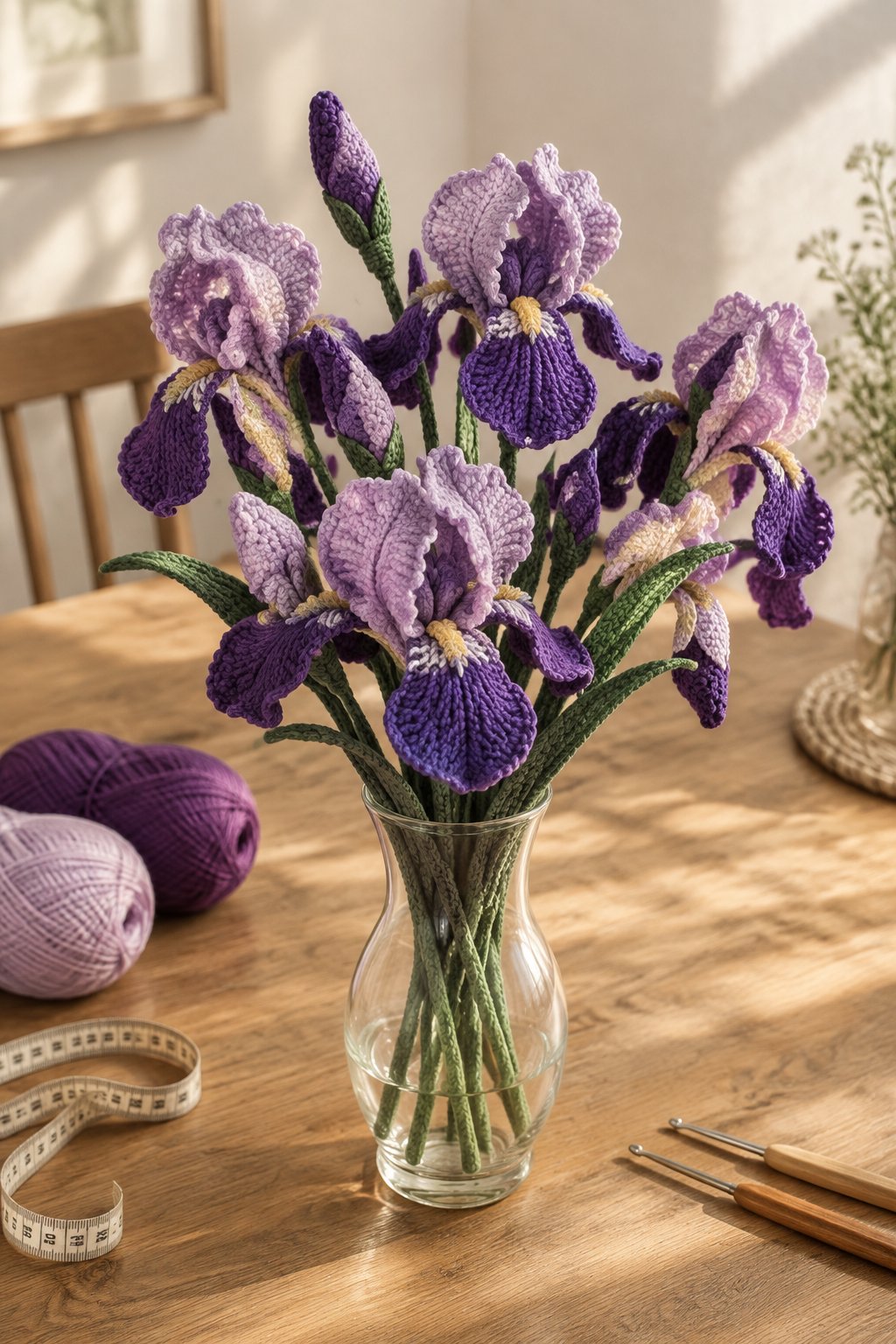
Two-tone irises give your bouquet dramatic height with upright petals above gently draping lower ones. Pair deep violet with lavender, then add a short yellow embroidered accent to each lower petal.
Start with DK cotton and a 3 mm hook for shaped pieces with clear edges. Choose an intermediate pattern that explains the placement of three upright petals and three downward petals. Increases and varied stitch heights build their curved outlines.
Label your pieces as you finish them so assembly stays organized. Secure the lower petals first if your pattern uses that construction, then position the upper group around the center. Add narrow, pointed leaves along the stems. Display your irises in a tall vase with space between heads so the two petal directions remain easy to see.
|
Detail |
Specification |
|---|---|
|
Yarn Weight |
DK, category 3 |
|
Skill Level |
Intermediate |
|
Estimated Time |
6–9 hours |
14) White Anemone Bouquet With Dark Textured Centers
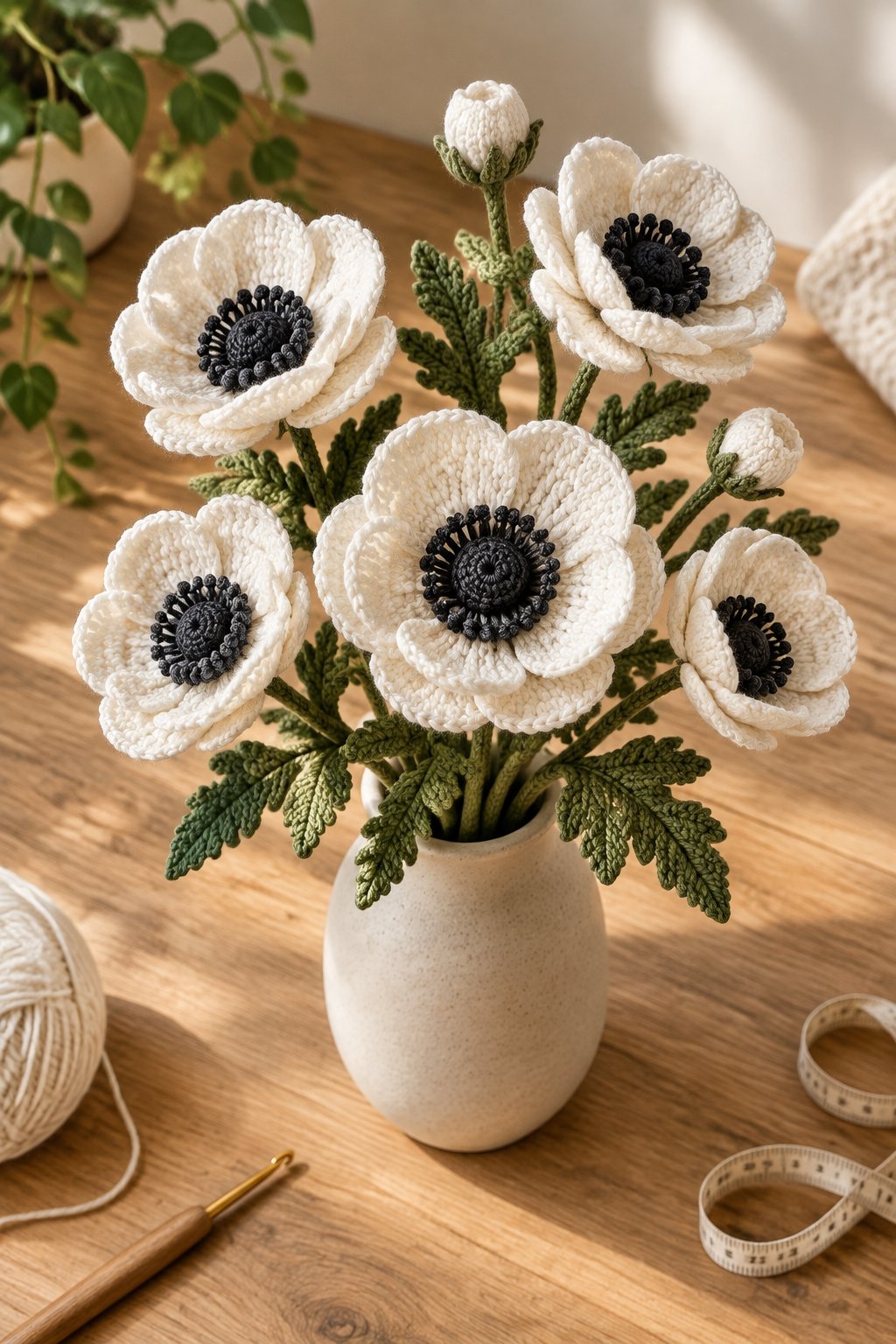
White anemones give your bouquet a graphic look with broad pale petals framing nearly black centers. Choose soft ivory and charcoal for a gentler contrast, especially if your room has warm neutral colors.
Use sport-weight cotton and a 2.5 mm hook to make neat, lightly curved petals. An intermediate pattern with overlapping petal rounds gives the flower face depth. Build your center with tight single crochet, then add small bobbles or short stitched details around the edge.
Keep the dark center compact so the white petals remain the main shape. Sew on a green backing to hide your assembly stitches and support the stem connection. Group your flowers in a plain ceramic vase, or combine them with a few slim green stems for a simple handmade wedding bouquet.
|
Detail |
Specification |
|---|---|
|
Yarn Weight |
Sport, category 2 |
|
Skill Level |
Intermediate |
|
Estimated Time |
4–7 hours |
15) Stargazer Lily Bouquet With Speckled Pink Petals

Speckled pink lilies give your bouquet large star-shaped flowers with striking color detail. Use deep pink through each petal’s center and pale yarn along the edges for a recognizable Stargazer-inspired finish.
Choose sport-weight cotton with a 2.5–3 mm hook for shaped petals that keep their definition. Follow an intermediate pattern using increases and decreases to form six pointed pieces. Embroider darker pink speckles before assembly so you have easy access to the backs.
Curve the petal tips outward and position the pieces evenly around the flower center. Use yarn-covered supports only as directed by your pattern, with all ends enclosed. Add long green leaves beneath the blooms. Your finished lilies suit a tall entryway arrangement where the wide flower heads have room to spread.
|
Detail |
Specification |
|---|---|
|
Yarn Weight |
Sport, category 2 |
|
Skill Level |
Intermediate |
|
Estimated Time |
7–10 hours |
16) Blue Forget-Me-Not Posy With Tiny Five-Petal Blooms

Tiny five-petal forget-me-nots give your posy a delicate scatter of blue flowers with yellow centers. Use sky blue for the main shade, with a few slightly darker blossoms for depth.
Choose fingering-weight cotton and a 2 mm hook for a small-scale finish. Look for an easy motif that repeats five short petal groups around a center ring. Add the yellow detail with a few secure embroidery stitches, keeping the back tidy.
Make several blossoms before arranging them on short branches. Spread the flowers unevenly along each branch so your bunch feels light and loosely gathered. Small leaves help fill the base without hiding the petals. You get useful practice with repeated motifs and fine assembly, plus a sweet keepsake for a bud vase or gift topper.
|
Detail |
Specification |
|---|---|
|
Yarn Weight |
Fingering, category 1 |
|
Skill Level |
Easy |
|
Estimated Time |
4–6 hours |
How To Choose Yarn, Hooks, And Patterns

Start with smooth cotton and a clearly written flower pattern so you can see your stitches and control each petal’s shape. Match your yarn weight to the pattern before adjusting the hook or changing the flower’s size.
Should You Use Cotton, Worsted-Weight, Or Chunky Yarn?
Choose cotton for crisp petals and visible stitch detail. Cotton describes the fiber, while worsted and chunky describe yarn thickness, so you will find cotton in several weights.
For your first medium-size bouquet, worsted-weight cotton gives you stitches that are easy to see and handle. Choose sport or DK for finer flowers. Save chunky yarn for intentionally oversized blooms, and allow for wider stems and a heavier container when planning your display.
Which Hook Size Keeps Petals Firm Without Making Them Stiff?
Use your pattern’s recommended hook as the starting point, then crochet one test petal. For many smooth DK and worsted flower projects, a 3–3.5 mm hook provides a useful starting range.
Check whether your petal holds its outline and still bends under gentle finger pressure. If the fabric has large gaps or flops excessively, try a hook 0.5 mm smaller. If you struggle to insert the hook or your hand becomes tense, move up a size and check your yarn tension.
What Makes A Flower Pattern Beginner-Friendly?
Choose a pattern with a stitch glossary, clear round counts, and labeled assembly pictures. You will have an easier start with repeated petals and only a few separate pieces.
Look for instructions built around chains, single crochet, and double crochet, with increases explained clearly. Check whether the pattern uses US or UK crochet terms before beginning. A flat daisy or rolled carnation offers a manageable first project; tiny branched flowers demand more finishing work even when their stitches are simple.
How Does Yarn Weight Change The Finished Bouquet Size?
Thicker yarn makes your flower larger when you follow the same stitch counts with a suitable hook. It also adds bulk at petal joins and increases the load on your stems.
Make one complete flower before buying yarn for a large arrangement. Measure its width and stem length, then hold it beside your intended vase. When combining different flower patterns, compare their finished measurements so your filler flowers stay smaller than your focal blooms.
How To Assemble And Care For Your Bouquet
Secure your flower heads with sewn joins, balance them in a stable container, and keep the finished arrangement dry. Complete one stem first so you can check its strength before repeating the construction.
How Do You Secure Floral Wire And Cover Sharp Ends?
Use craft wire cutters and pliers to trim and bend your supports. Turn each cut end into a small closed loop, then enclose it inside a sewn flower base or another padded section specified by your pattern.
Stitch the flower firmly to its backing before wrapping the exposed stem. Wind green yarn evenly down the wire, securing the beginning and end with stitching or suitable craft adhesive. Floral tape sticks best when lightly stretched, but it is a wrapping layer; your structural joins still need secure fastening.
Check the finished stem with your fingers for exposed points. Keep wire-supported bouquets away from young children and pets.
How Can You Balance Flower Heights And Fill Gaps?
Place your largest flower first, then position supporting blooms at different heights around it. Turn the container as you work so you can inspect the arrangement from several sides.
For a small tabletop bouquet, try placing your main bloom about an inch above neighboring flowers, then adjust by eye. Add narrow filler stems only where you see an empty opening. Bend supported stems gently below the flower head, and keep heavy blooms close to the center of the vase for stability.
When Should You Use A Vase, Ribbon, Or Paper Wrap?
Choose a vase for everyday display, ribbon for a hand-held bunch, and paper wrap for gift presentation. Check that your vase has enough weight and a suitable opening to support the finished stems.
For a ribbon-tied bouquet, bind the stems securely before adding the decorative bow. Keep paper wrapping loose around the flower heads so the petals retain their shape. Use a clean, dry vase, and enclose any vase filler so loose pieces stay contained during handling.
How Do You Dust And Store Crochet Flowers?
Dust your bouquet with a clean, soft brush while supporting each flower from underneath. Work from the center toward the petal edges, using light strokes around embroidery and small attached pieces.
Spot-clean only as your yarn label and assembly materials allow. Keep wired or glued bouquets out of soaking water, and let any damp areas dry fully before storage. Store your flowers in a roomy box with acid-free tissue between the heads, then place the box in a dry cupboard away from direct sunlight.