You’ll find plenty to save among 15+ crochet stitches for blankets that create the coziest textures, especially when you love handmade throws with visible depth. For a warm, deeply textured blanket, choose waffle stitch; for a beginner-friendly project with soft drape, choose moss stitch and a smooth worsted-weight yarn.

Your favorite texture deserves a yarn that shows off every ridge or cluster. Use US crochet terms throughout, and treat the hook sizes below as starting points for your swatch. For planning, the time ranges assume a roughly 40-by-50-inch throw, exclude breaks, and vary with your speed and stitch tension.
Quick picks:
- Choose moss stitch for your first blanket and an easy, woven-look finish.
- Choose waffle stitch for deep texture and a substantial couch throw.
- Choose basketweave stitch for plush blocks in a solid neutral.
- Choose corner-to-corner box stitch for diagonal stripes and color-block designs.
1) Waffle Stitch for Deeply Textured Throws
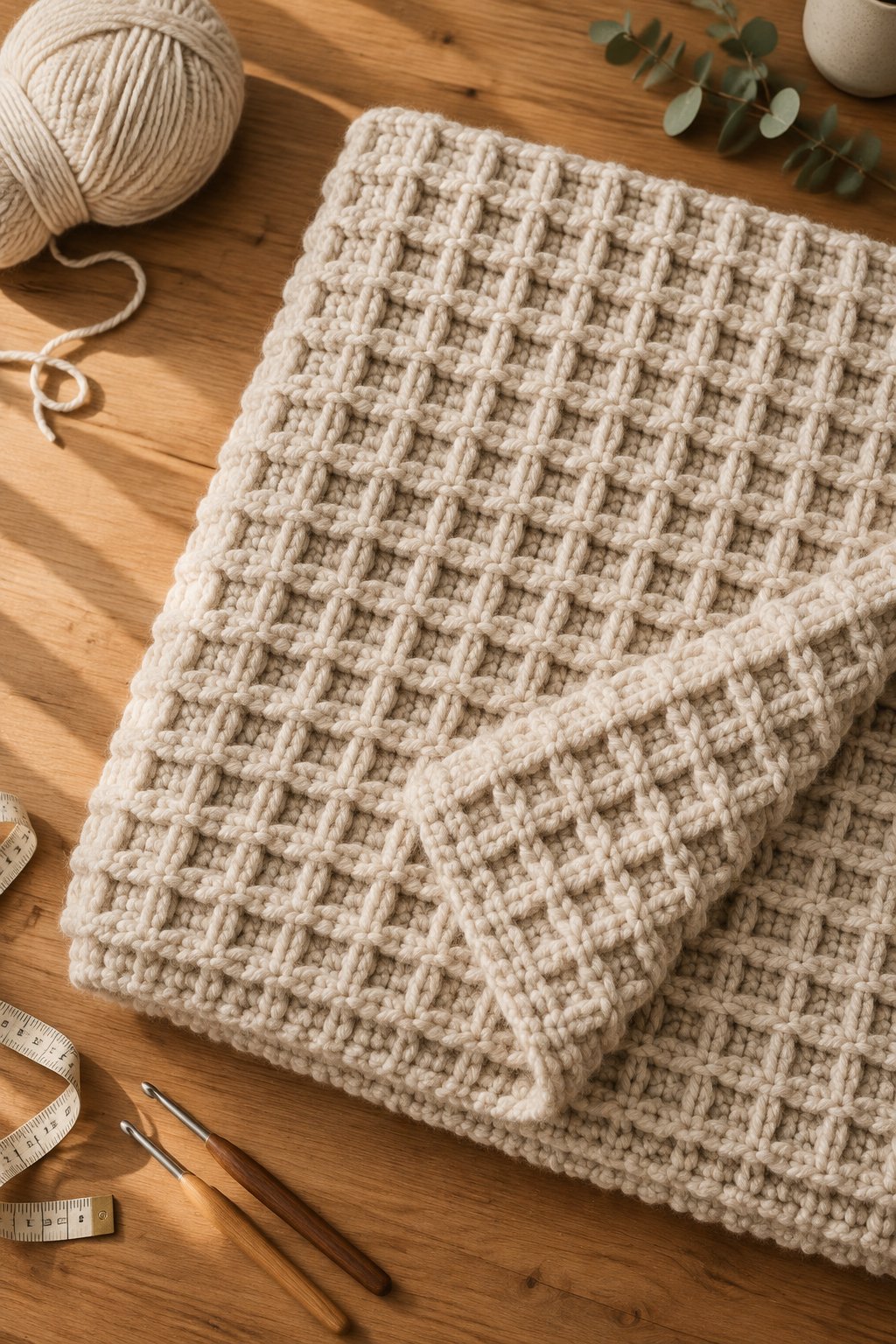
With waffle stitch, you get deep square pockets that give your throw a thick, cushioned feel. Choose oatmeal or warm caramel to highlight the raised grid, or try dusty blue for a softer accent. Your stitch definition stays clearest with smooth worsted-weight acrylic or a wool blend and a 5.5-6 mm hook.
You build the texture with double crochet and front post double crochet, making this an intermediate choice once you know basic stitches. Keep your post stitches relaxed so the fabric lies flat. You’ll use extra yarn for the raised structure, so check your yardage before committing to a large size. Style your finished blanket across a sofa arm with the textured face showing; the reverse has a different, flatter appearance.
|
Detail |
Specification |
|---|---|
|
Yarn Weight |
Worsted, category 4 |
|
Skill Level |
Intermediate |
|
Estimated Time |
35-55 active hours |
2) Blanket Stitch for Soft, Pebbled Texture
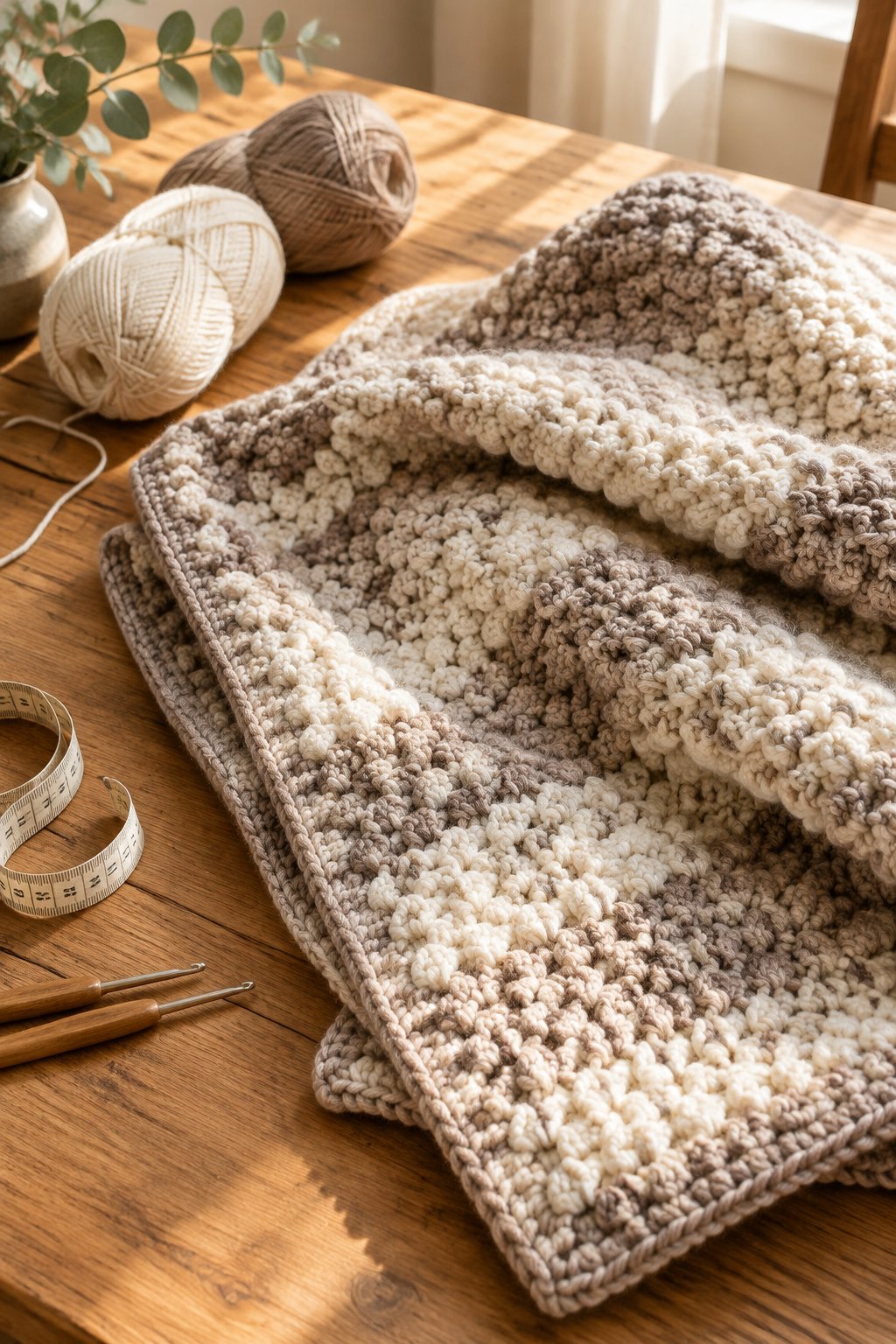
Choose blanket stitch when you want a softly pebbled surface built from familiar stitches. You combine single crochet with groups of double crochet to create small, repeating bumps. In cream or muted sage, your finished fabric has a gentle texture that suits everyday throws and handmade gifts.
Start with washable worsted-weight acrylic and a 5.5 mm hook, then adjust after washing your swatch. You’ll find the repeat approachable as a beginner who already knows single and double crochet. Place a marker in your first and last stitch to keep the sides straight while you settle into the rhythm. For a polished finish, add a narrow single-crochet border in the same color. You preserve the soft texture without adding much extra weight around the edges.
|
Detail |
Specification |
|---|---|
|
Yarn Weight |
Worsted, category 4 |
|
Skill Level |
Beginner |
|
Estimated Time |
25-40 active hours |
3) Moss Stitch for Soft, Woven-Look Blankets

Your moss-stitch blanket gets a woven look from alternating single crochet and chain spaces. You work into those spaces on following rows, giving you an easy placement rhythm. Try cream with thin rust stripes, or use a softly changing yarn for gentle bands of color.
For a supple beginner project, pair smooth worsted-weight yarn with a 5.5-6 mm hook. Keep your chains relaxed; tight chains make the next row harder to enter and pull the fabric inward. You’ll get a lighter feel than with heavily raised post stitches, making this a useful choice for a year-round couch blanket. Change colors at a row end and weave the tails securely through several stitches. Your narrow stripes will look tidy when you fold the throw over a chair.
|
Detail |
Specification |
|---|---|
|
Yarn Weight |
Worsted, category 4 |
|
Skill Level |
Beginner |
|
Estimated Time |
30-45 active hours |
4) Herringbone Half Double Crochet for Subtle Slanted Texture

You get subtle diagonal movement with herringbone half double crochet, giving a plain-colored blanket extra detail. Choose heather gray or pale denim to emphasize the slanted stitches without a busy color pattern. Your finished throw suits a bedroom where you want texture with a smooth profile.
Use worsted-weight acrylic or a soft wool blend with a 5.5-6 mm hook. You make the slant by pulling the newly drawn-up loop through the first loop on your hook before completing the stitch. Practice that motion on a small sample until your loops stay even. This easy-level option suits you once standard half double crochet feels comfortable. Count the stitches at each edge, where the slanted shape makes the last stitch easy to overlook during longer rows.
|
Detail |
Specification |
|---|---|
|
Yarn Weight |
Worsted, category 4 |
|
Skill Level |
Easy |
|
Estimated Time |
25-40 active hours |
5) Griddle Stitch for a Nubby Everyday Throw
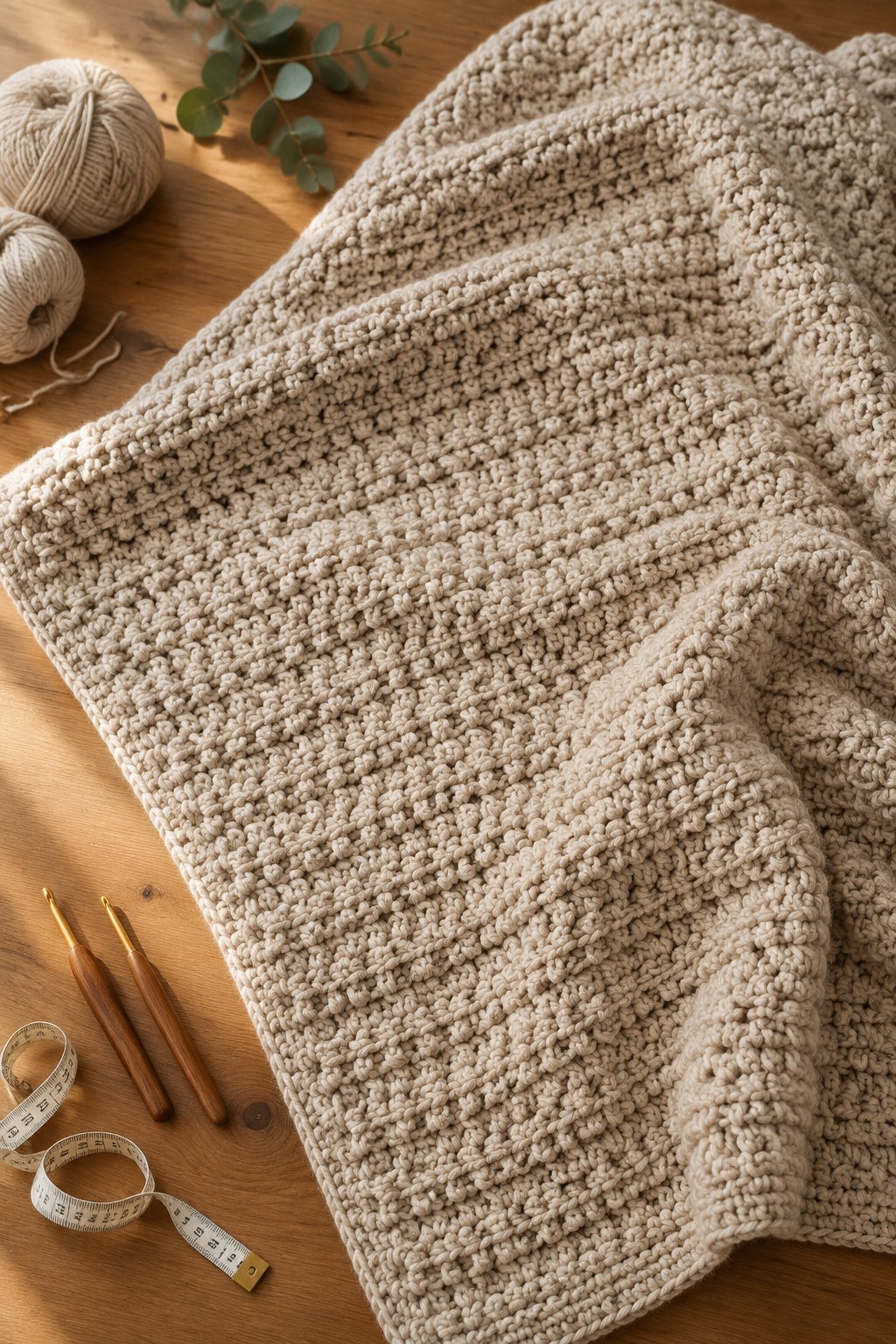
For a nubby blanket with an easy repeat, you’ll enjoy griddle stitch. You alternate single and double crochet, then place each stitch type into the opposite type on the next row. That change in height gives your fabric a gently uneven surface that looks lovely in terracotta or olive.
Choose smooth worsted-weight acrylic with a 5.5 mm hook for a washable everyday throw. You’ll find this beginner-friendly after learning the two basic stitches, although your row ends deserve careful counting. Keep a small note beside your project showing which stitch begins the next row. For a useful housewarming gift, work broad color bands that coordinate with the recipient’s room. Finish with a simple border after checking that both long edges have the same number of rows.
|
Detail |
Specification |
|---|---|
|
Yarn Weight |
Worsted, category 4 |
|
Skill Level |
Beginner |
|
Estimated Time |
25-40 active hours |
6) Alpine Stitch for Raised Diamond Texture
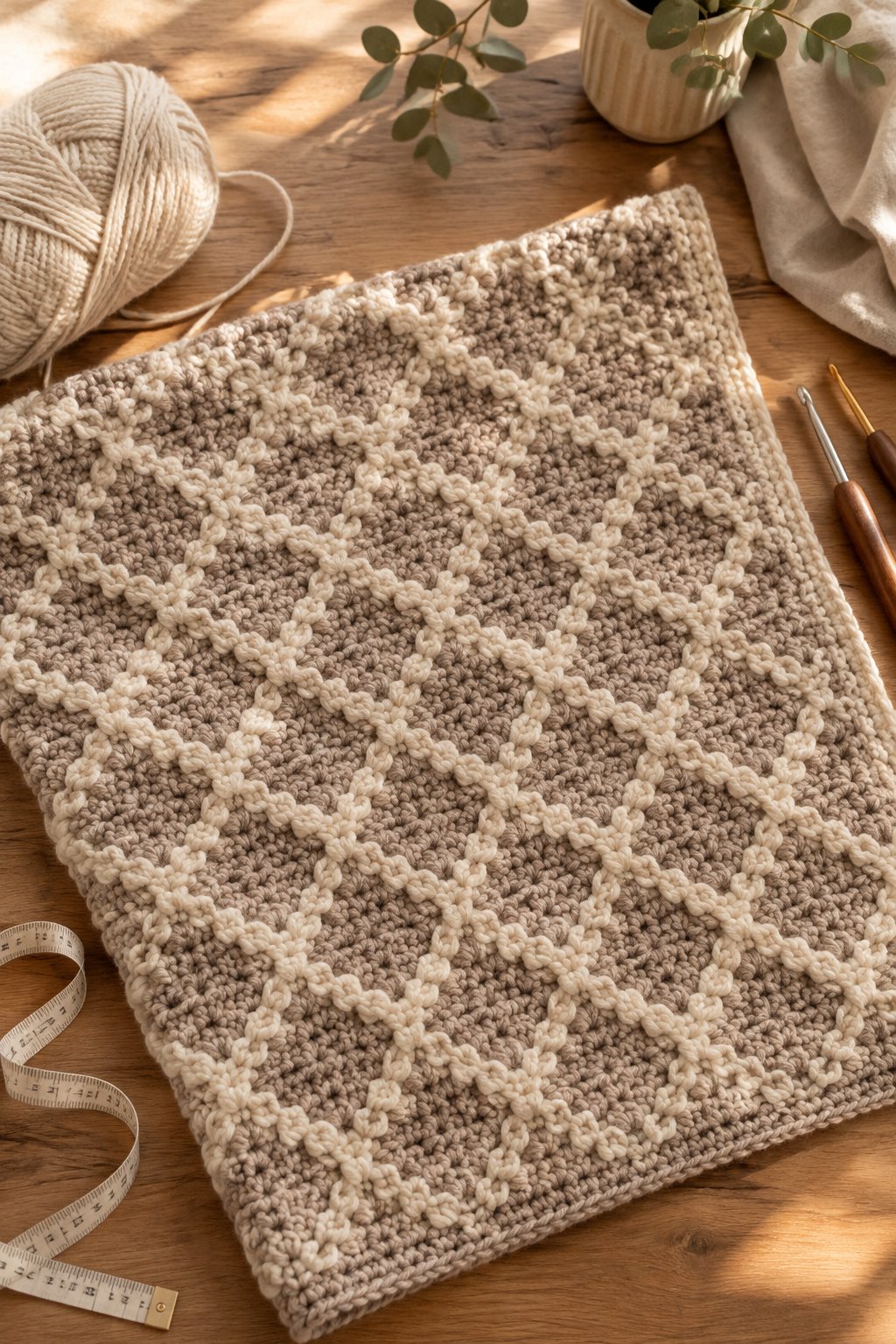
Alpine stitch gives you raised, staggered points that form a diamond-like texture across your blanket. In forest green or warm ivory, you’ll see the relief clearly without needing color changes. Choose this intermediate project when you want a statement throw with a richly textured front.
Pair smooth worsted-weight yarn with a 5.5-6 mm hook to keep the post stitches manageable. You combine single-crochet rows with double crochet and front post double crochet worked around stitches lower in the fabric. Draw those long post stitches up to the current row’s height so your blanket stays flat. Check your work after each textured row because a misplaced post interrupts the staggered pattern. For styling, fold your throw lengthwise across the foot of a bed to display the raised face.
|
Detail |
Specification |
|---|---|
|
Yarn Weight |
Worsted, category 4 |
|
Skill Level |
Intermediate |
|
Estimated Time |
35-55 active hours |
7) Basketweave Stitch for Plush, Woven Blocks

You create plush, woven-looking blocks with basketweave stitch by alternating groups of front and back post stitches. Choose a solid shade such as camel or charcoal so the change in stitch direction stays visible. Your finished blanket will have substantial weight and a structured, cushioned surface.
Try a smooth bulky yarn with a 6.5-8 mm hook for clearly defined blocks. You’ll need intermediate skills to track the post placement and switch the groups after the required number of rows. Mark each change on a row counter, especially when your blocks span several rows. Avoid pulling tightly around the posts, which compresses the fabric. This texture suits a cold-weather lap blanket, and you’ll want to check the finished swatch’s weight before scaling up to a bedspread.
|
Detail |
Specification |
|---|---|
|
Yarn Weight |
Bulky, category 5 |
|
Skill Level |
Intermediate |
|
Estimated Time |
25-45 active hours |
8) Star Stitch for Floral-Inspired Texture

With star stitch, you form small radiating shapes that give your blanket a floral-inspired surface. Pale peach or butter yellow brings out the connected stars, while a solid cream keeps your throw easy to coordinate. You’ll see the detail best with smooth yarn that separates cleanly.
Choose worsted-weight acrylic or a soft blend and start with a 5.5-6 mm hook. You draw up several loops, close them together, and create an eye that helps anchor the next star. This intermediate stitch rewards even loop height, so pause to check each cluster before moving on. Follow one complete pattern because star-stitch versions use different return rows and edge treatments. For a gift blanket, keep your border narrow so the star rows remain the main feature.
|
Detail |
Specification |
|---|---|
|
Yarn Weight |
Worsted, category 4 |
|
Skill Level |
Intermediate |
|
Estimated Time |
35-55 active hours |
9) Bobble Stitch for Playful Raised Dots

Your bobble-stitch blanket gets playful raised dots from groups of partially completed stitches closed together. Space them across a plain background for a tidy grid, or follow a chart to form simple shapes. Cream bobbles on a cream base give you texture with a calm, modern finish.
Use smooth worsted-weight yarn with a 5-5.5 mm hook so you can see the loops clearly. You’ll need intermediate skills to track placement and keep the background stitches even. Follow your pattern’s bobble count because cluster size changes the finished bump. Check which side faces you before starting a bobble row; many patterns form the bumps toward the opposite face. For a couch throw, leave generous plain space between bobbles to control the blanket’s weight and yarn use.
|
Detail |
Specification |
|---|---|
|
Yarn Weight |
Worsted, category 4 |
|
Skill Level |
Intermediate |
|
Estimated Time |
35-60 active hours |
10) Puff Stitch for Soft, Rounded Clusters
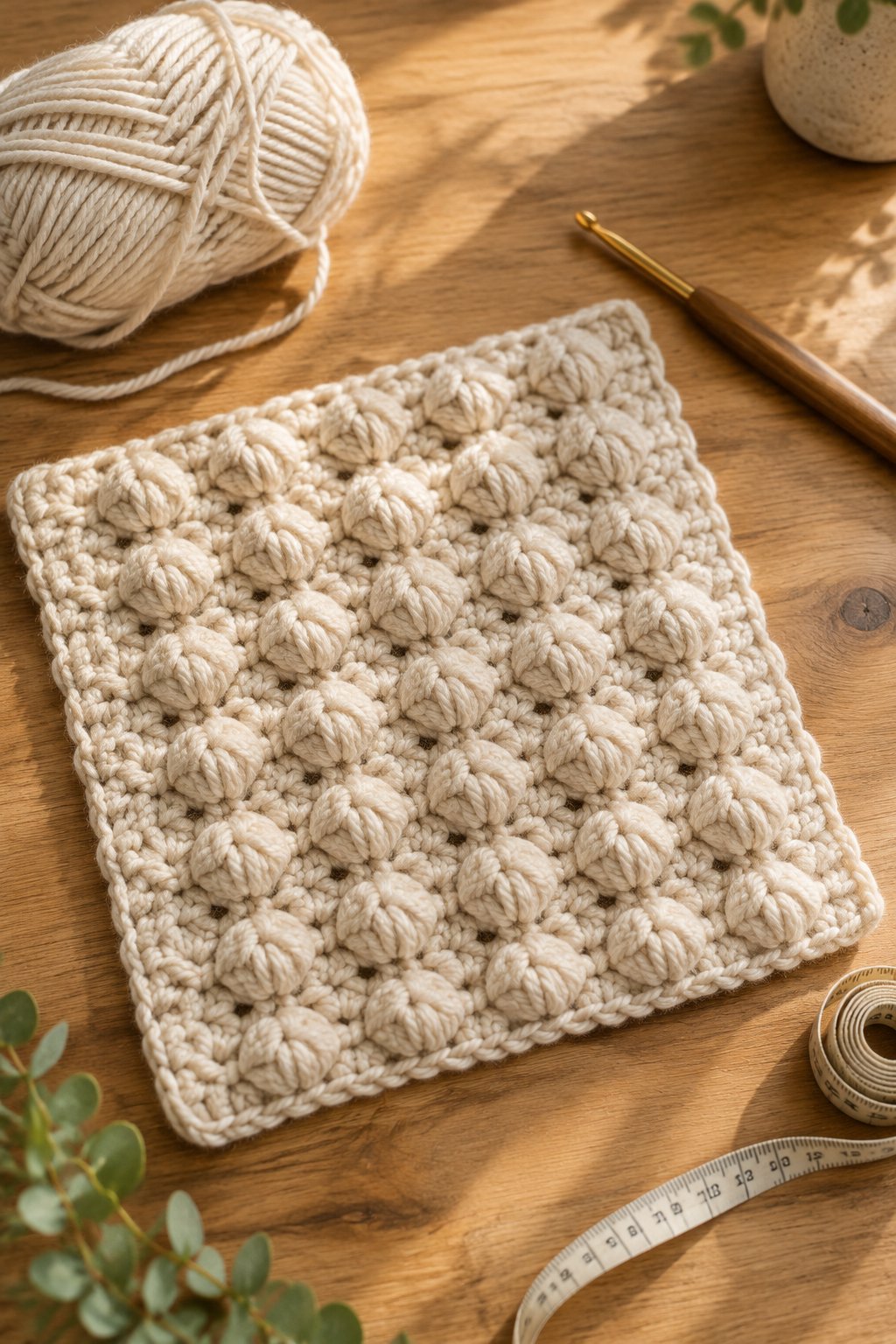
Choose puff stitch when you want rounded clusters with a soft, pillowy outline. You build each puff from repeated yarn-overs and drawn-up loops, then close the loops together. Muted lavender or dusty rose gives your blanket a gentle look, especially when you use one color throughout.
Start with a smooth, lightly plied worsted yarn and a 6 mm hook. You’ll find this an intermediate project because equal loop height controls both the puff shape and your row width. Draw every loop to the same height before closing the cluster, and follow the pattern’s securing-chain instructions. For a manageable first puff blanket, choose rows of puffs separated by a simpler stitch. You’ll reduce bulk while keeping enough texture for a cozy reading-chair throw or special handmade gift.
|
Detail |
Specification |
|---|---|
|
Yarn Weight |
Worsted, category 4 |
|
Skill Level |
Intermediate |
|
Estimated Time |
35-60 active hours |
11) Shell Stitch for Layered Fans and Scalloped Detail
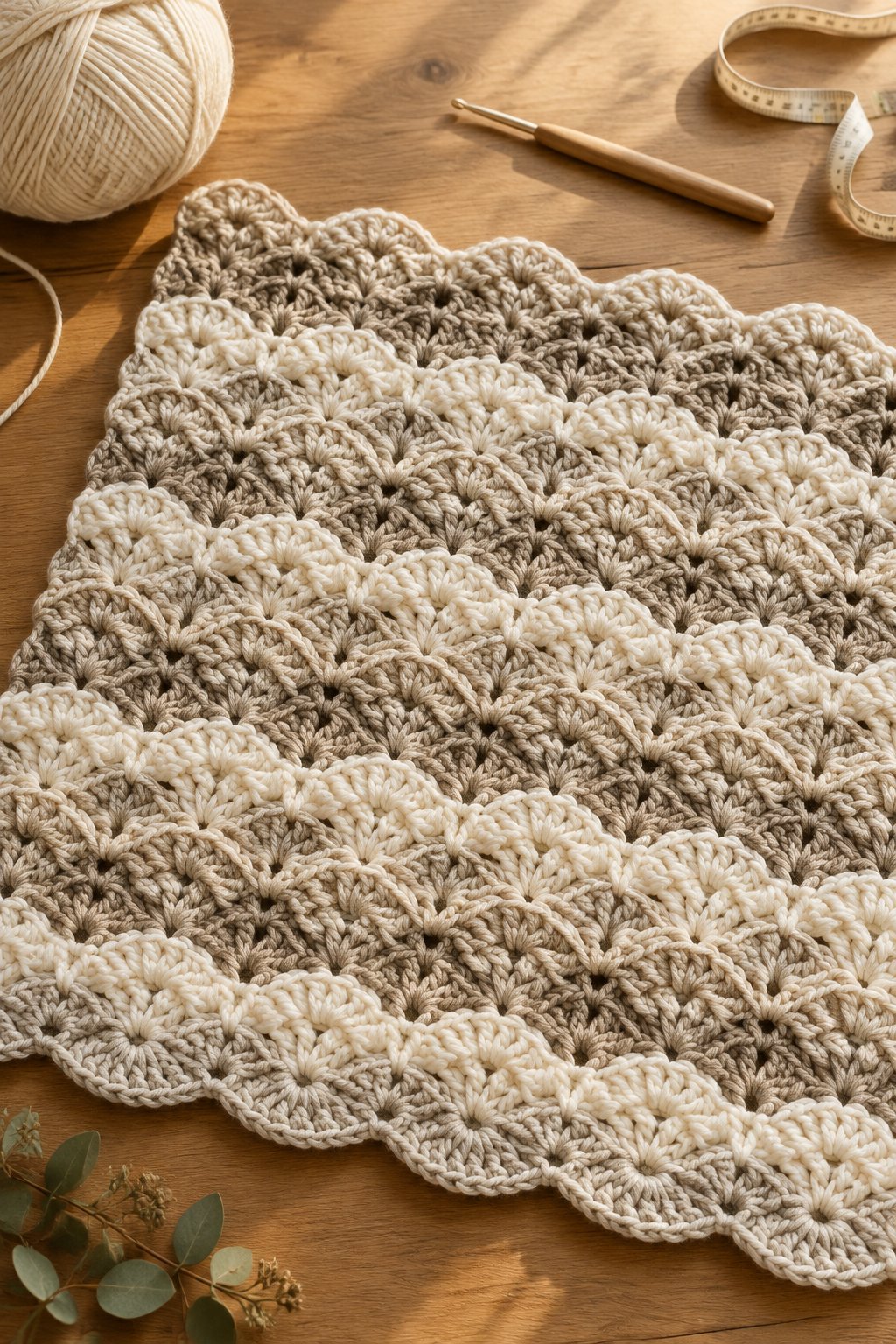
You’ll get layered fans and gentle scallops with shell stitch, especially in a closely spaced blanket pattern. Work in warm white for a delicate finish, or alternate soft color bands to highlight each row of fans. Your blanket will have a graceful edge that suits a folded display.
Choose smooth worsted-weight acrylic with a 5-5.5 mm hook for an easy-level project. You form shells by placing several double crochets into one stitch or space, with shorter stitches anchoring the gaps. Check your pattern’s spacing before starting because shell variations differ in openness. For a warmer throw, select a dense version with small gaps between fans. Count the shells across every few rows so a missed anchor stitch stays easy to correct before you add more fabric.
|
Detail |
Specification |
|---|---|
|
Yarn Weight |
Worsted, category 4 |
|
Skill Level |
Easy |
|
Estimated Time |
25-40 active hours |
12) Rice Stitch for Dense, Reversible Texture
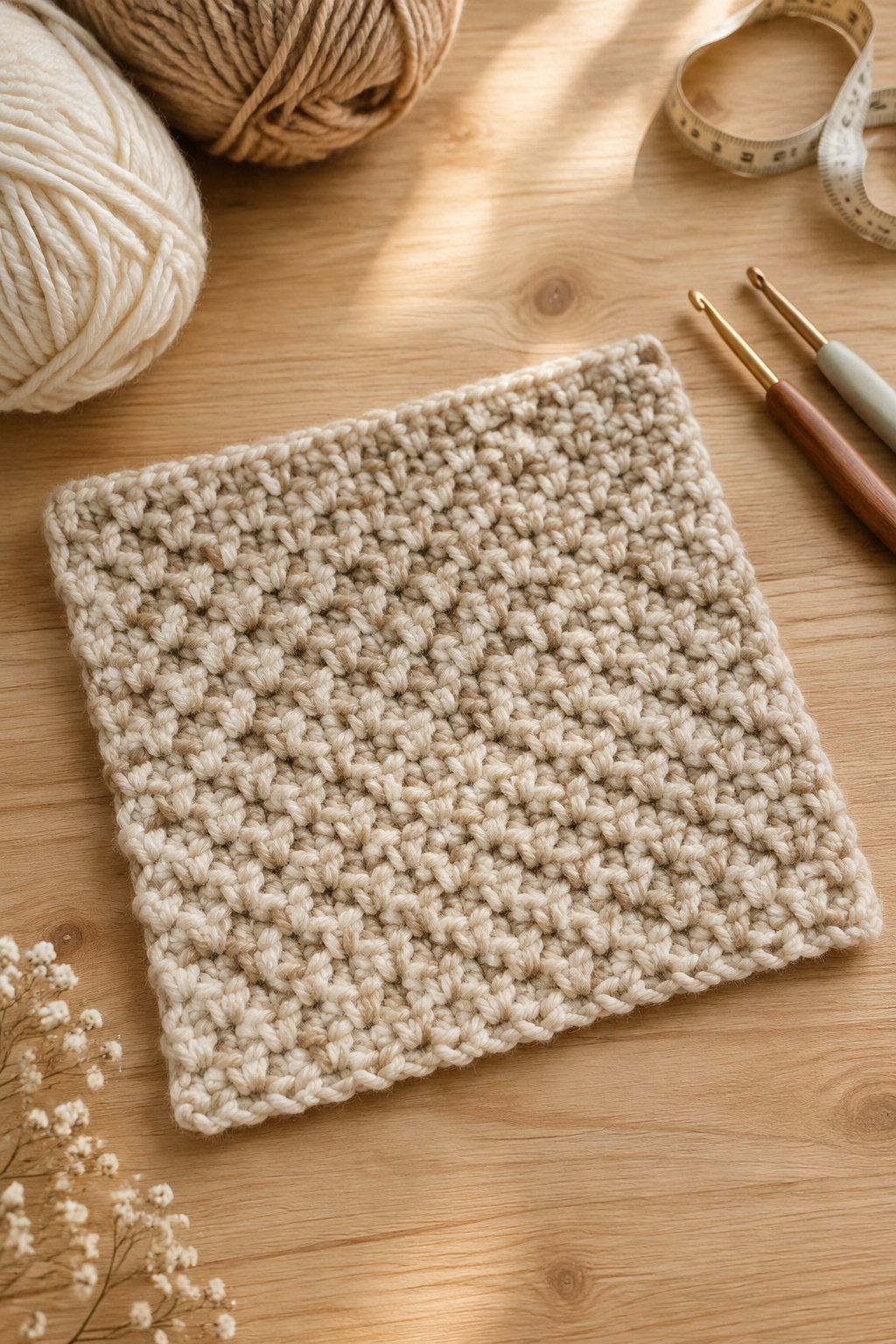
Rice stitch gives you a dense, pebbled blanket with useful texture on both faces. Choose a reversible rice-stitch pattern if you want your throw to look finished whichever way you fold it. In heathered beige or muted teal, your small raised stitches create interest without large shapes.
Use smooth worsted-weight yarn with a 5.5-6 mm hook to keep the dense fabric flexible. You’ll work alternating front and back post stitches, with stitch heights set by your chosen version. This intermediate option asks you to recognize the posts from both sides of the work. Make a generous swatch and handle it after washing to judge the weight. For your first project, a lap-size blanket gives you room to enjoy the repeat while keeping the finished piece manageable.
|
Detail |
Specification |
|---|---|
|
Yarn Weight |
Worsted, category 4 |
|
Skill Level |
Intermediate |
|
Estimated Time |
35-55 active hours |
13) Catherine Wheel Stitch for Bold Circular Motifs

For bold circles worked in rows, you’ll love the Catherine wheel stitch. You combine fan-shaped increases and gathered decreases to build connected wheel motifs across your fabric. Try alternating cream and deep blue to outline the shapes, or use related shades for a gentler color shift.
Choose smooth worsted-weight yarn and a 5.5 mm hook so the gathered stitches remain easy to handle. You’ll need intermediate skills to track skipped stitches and complete clusters across several stitch tops. Follow a full pattern for the foundation and edge sections, which establish the wheel alignment. Keep your decrease loops loose enough to close without tugging. For a striking sofa throw, plan color changes around complete wheel repeats and check your stitch count before each new motif row.
|
Detail |
Specification |
|---|---|
|
Yarn Weight |
Worsted, category 4 |
|
Skill Level |
Intermediate |
|
Estimated Time |
35-55 active hours |
14) Ripple Stitch for Cozy Chevron Stripes
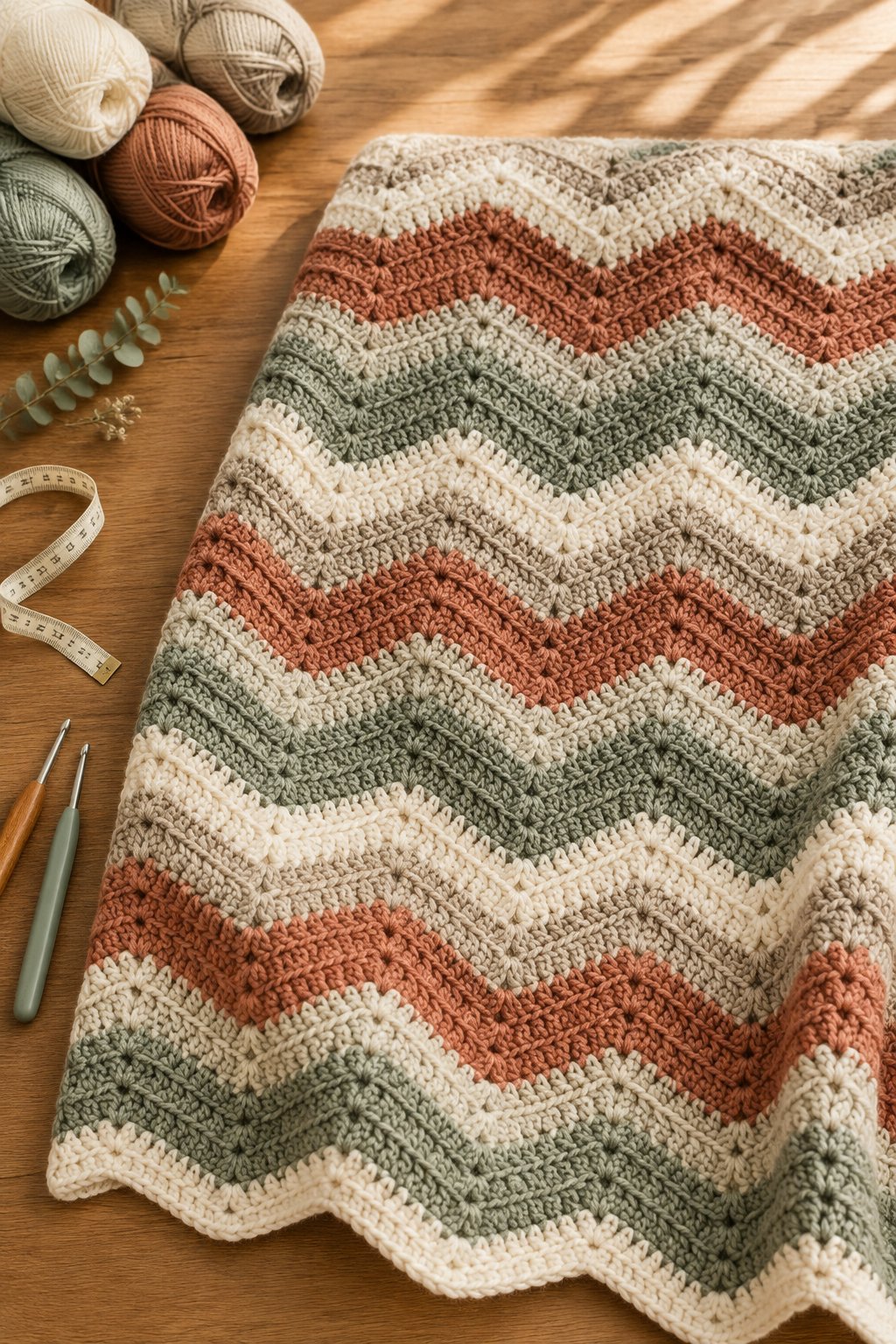
Your ripple blanket gets its familiar waves from increases at the peaks and decreases at the valleys. Choose rounded ripples for a soft look or a sharper chevron pattern for crisp points. Wide bands of cream and rust give you a cozy palette with clear movement.
Pair worsted-weight acrylic with a 5.5-6 mm hook for an easy-level throw. You’ll need steady counting even when your chosen version uses only double crochet. Place removable markers at the peaks during your first few rows, then check that every valley lines up below the next. Follow the pattern’s foundation multiple exactly to keep both edges balanced. For a neat finish, weave color-change tails along stitches of the same shade and preserve the wavy ends when you add your border.
|
Detail |
Specification |
|---|---|
|
Yarn Weight |
Worsted, category 4 |
|
Skill Level |
Easy |
|
Estimated Time |
25-40 active hours |
15) Corner-to-Corner Box Stitch for Textured Diagonal Blocks
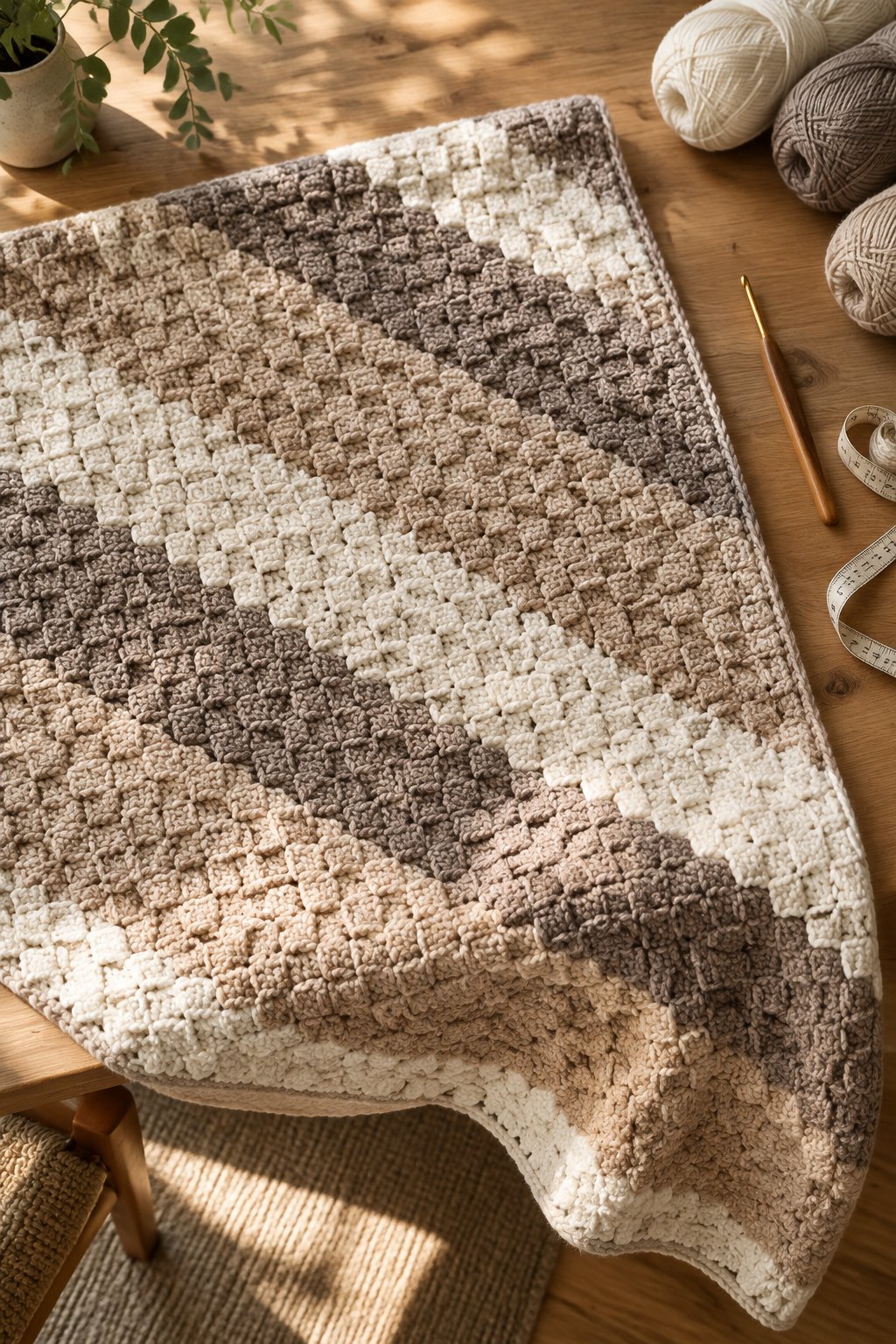
With corner-to-corner box stitch, you grow your blanket in diagonal rows of small textured tiles. Use broad diagonal stripes for a simple design, or follow a chart for a picture blanket. Your alternating tile directions create visible texture even when you choose a single solid shade.
Start with worsted-weight yarn and a 5.5-6 mm hook for an easy project after basic stitch practice. You build each tile with chains and double crochets, joining it to the next with a slip stitch. Learn the increase and decrease edges before starting a large blanket. For a rectangle, you’ll decrease along one edge while continuing to increase along the other. Keep separate small yarn supplies for charted color sections, and secure your tails before adding a plain border.
|
Detail |
Specification |
|---|---|
|
Yarn Weight |
Worsted, category 4 |
|
Skill Level |
Easy |
|
Estimated Time |
25-45 active hours |
How to Choose Yarn and Hooks for a Cozy Blanket
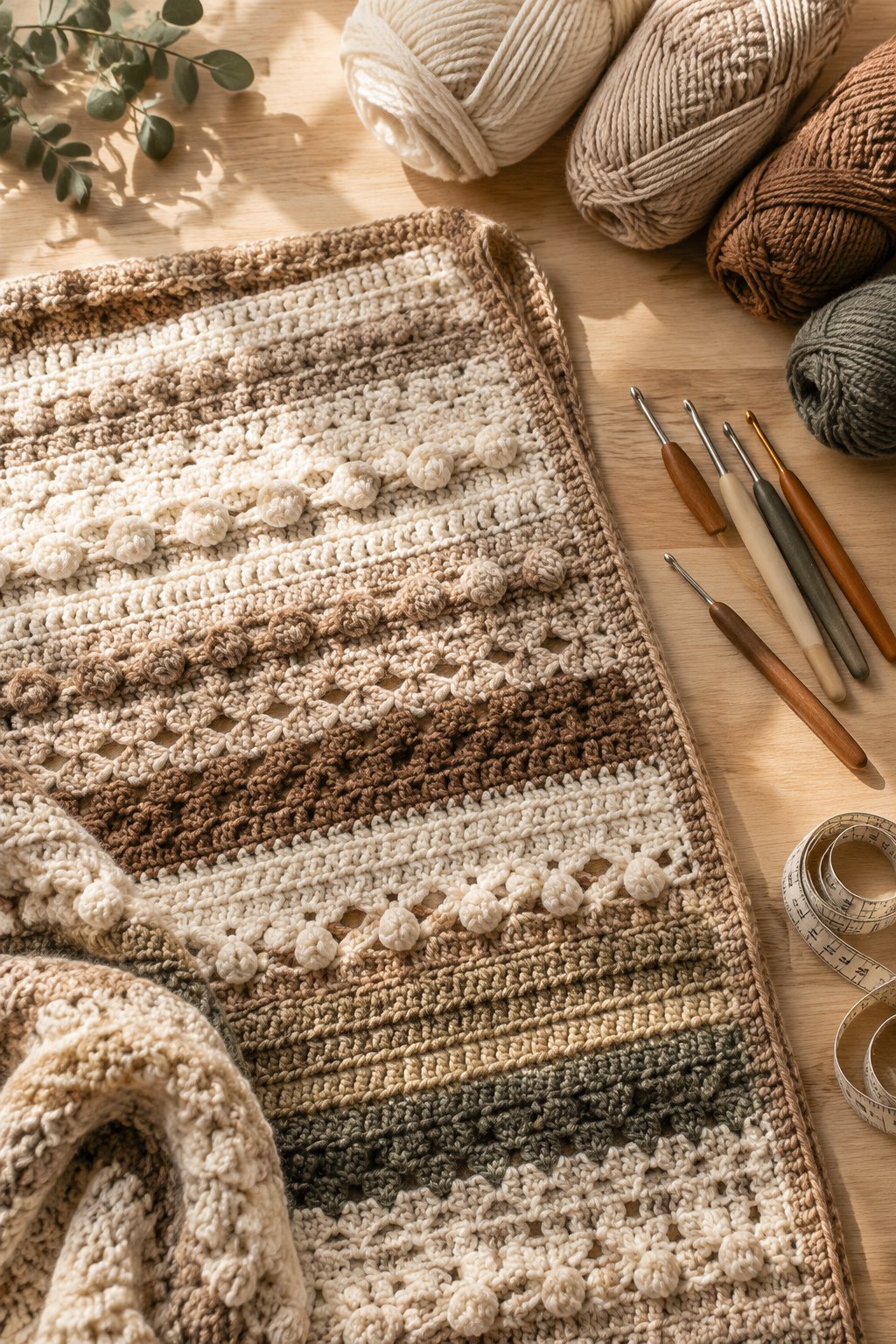
Choose a smooth yarn and a hook that gives your washed swatch flexible fabric. Use this comparison to narrow your texture choice before buying supplies.
|
Stitch |
Surface |
Drape at Suggested Gauge |
Relative Yarn Demand |
|---|---|---|---|
|
Waffle |
Deep grid |
Structured |
High |
|
Blanket |
Small pebbles |
Moderate |
Medium |
|
Moss |
Woven-look |
Fluid |
Medium |
|
Herringbone half double crochet |
Slanted lines |
Moderate |
Medium |
|
Griddle |
Fine bumps |
Moderate |
Medium |
|
Alpine |
Raised diamonds |
Structured |
High |
|
Basketweave |
Woven blocks |
Structured |
High |
|
Star |
Radiating clusters |
Moderate |
High |
|
Bobble |
Raised dots |
Placement-dependent |
High |
|
Puff |
Rounded clusters |
Spacing-dependent |
High |
|
Shell |
Layered fans |
Pattern-dependent |
Medium |
|
Rice |
Dense pebbles |
Structured |
High |
|
Catherine wheel |
Connected circles |
Moderate |
High |
|
Ripple |
Waves |
Moderate |
Medium |
|
Corner-to-corner box |
Diagonal tiles |
Moderate |
Medium |
Should You Choose Worsted, Bulky, or Super Bulky Yarn?
Choose worsted weight for clear details and a manageable blanket weight. Use bulky yarn for larger stitches and faster coverage; reserve super bulky yarn for simple repeats after checking the swatch’s heft.
When Is Cotton Better Than Wool or Acrylic?
Choose cotton for a cooler-feeling throw with clear stitch definition, keeping its weight in mind. For warmth, try wool; for easy-care gifts, choose acrylic with suitable machine-washing instructions.
How Does Hook Size Change Softness and Drape?
Increase your hook size when your swatch feels stiff or difficult to fold. Check that the resulting gaps still suit your blanket’s intended use.
How to Plan Your Blanket Before You Start

Plan your blanket from a washed swatch and your intended finished measurements. Record your yarn, hook size, and repeat before starting.
How Do You Swatch and Calculate Your Starting Chain?
Make a swatch at least 6 inches square, then wash and dry it as directed. Multiply stitches per inch by your planned width, adjust to the pattern repeat, and add its required edge or turning chains; for corner-to-corner, measure tiles instead.
How Can You Estimate Yardage for Yarn-Hungry Textures?
Weigh your dry swatch and divide the blanket’s planned area by the swatch area. Multiply that result by the swatch weight, convert grams to yards using your yarn label, and add about 15% for finishing and variation.
Which Textures Suit Your Skill Level and Intended Use?
Start with moss, blanket, or griddle stitch when you’re building confidence; choose post stitches or clusters for a focused intermediate project. For frequently washed gifts, use secure ends and label-approved care, and keep loose decorative additions off blankets intended for young children.