You’ll get the most wear from crochet summer tops made with breathable yarn, comfortable shaping, and details you can adjust to suit your body. Their handmade texture brings a cozy touch to warm-weather outfits, while open stitches keep your projects light enough for sunny days.
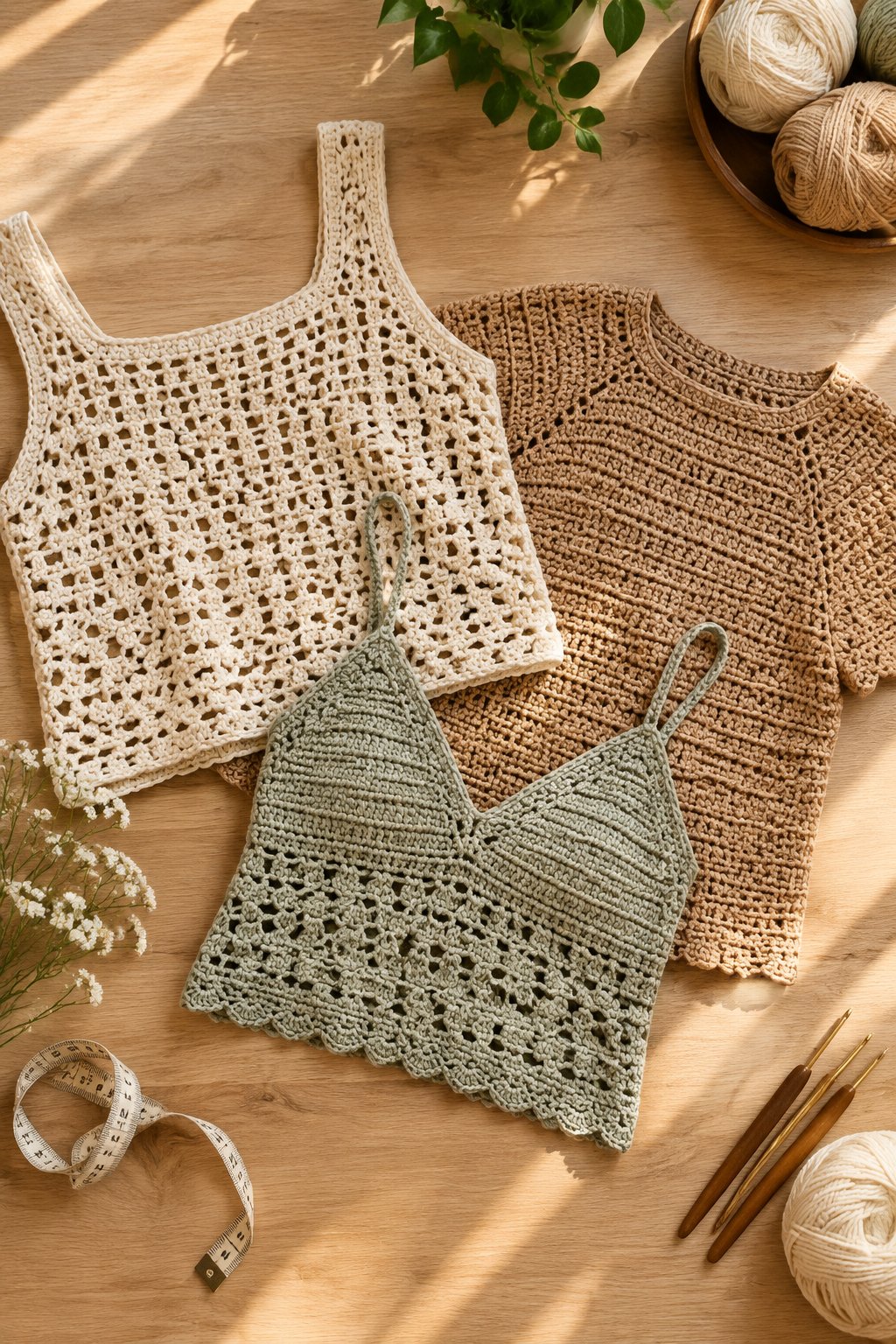
Give your next project a palette you love, whether you reach for soft neutrals or bright vacation colors. These save-worthy designs give you room to practice useful garment skills and create something that works with clothes you already own. Treat the hook sizes and making times as starting estimates, then follow your chosen pattern’s gauge and sizing.
1) Ribbed Cotton Tank With Wide Straps
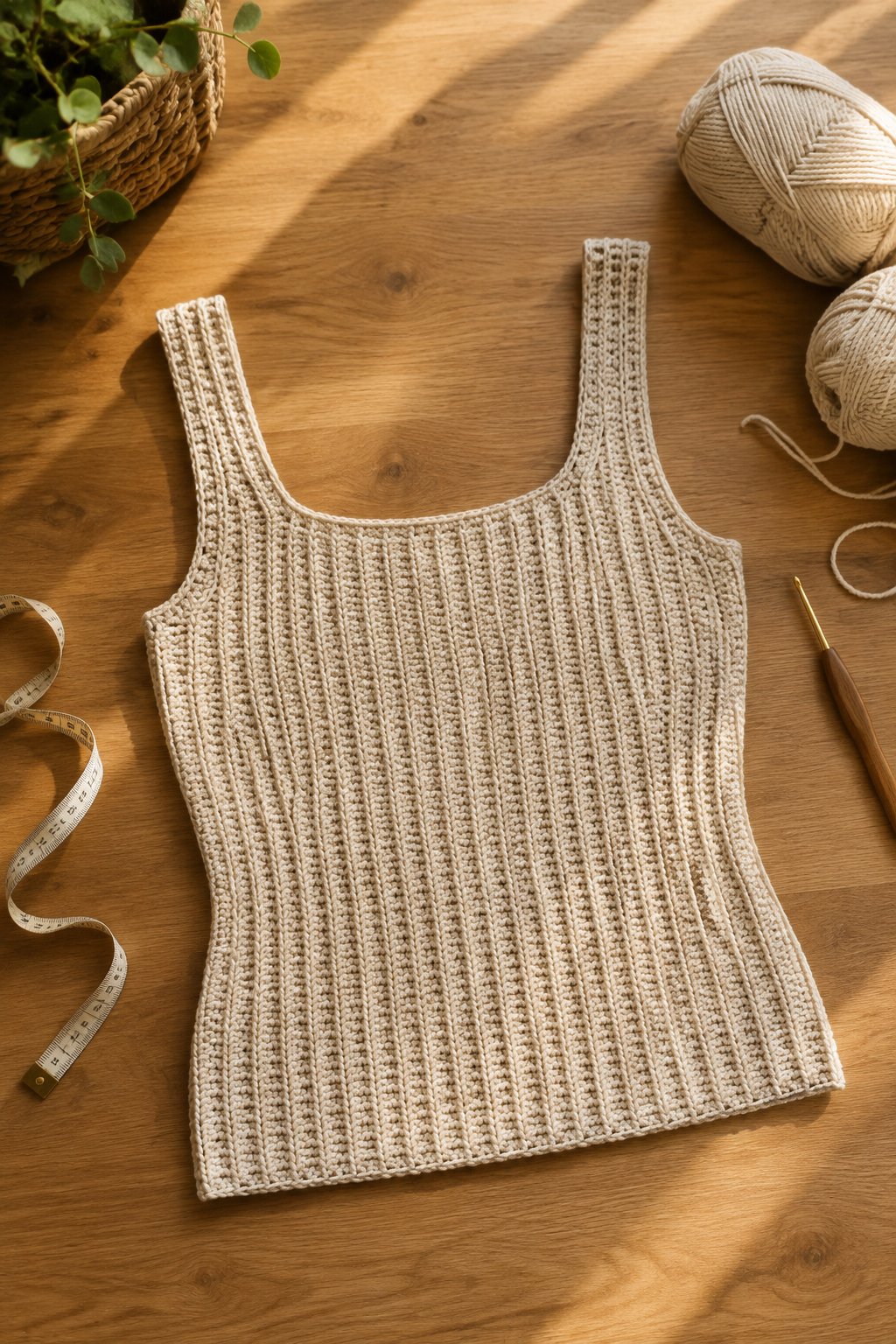
You’ll reach for a ribbed cotton tank when you want an easy layer with comfortable shoulder coverage. Choose oatmeal or faded blue for a simple silhouette that pairs with printed shorts. Wide straps also give you more room to cover everyday bra straps.
Use DK cotton with a 4 mm hook as your swatching starting point. Back-loop half double crochet creates pronounced ribs; working sideways lets those ribs run vertically when you wear the finished top. Keep your turning edges even so the side seams sit smoothly.
You’ll find this an approachable beginner garment if you’re comfortable counting rows and seaming. Make the front and back to matching measurements, then check the armhole depth before joining. Finish your neckline with a light edging that preserves its stretch.
|
Detail |
Specification |
|---|---|
|
Yarn Weight |
DK, #3 |
|
Skill Level |
Beginner |
|
Estimated Time |
10–16 hours |
2) Two-Panel V-Neck Tee With Airy Stitches
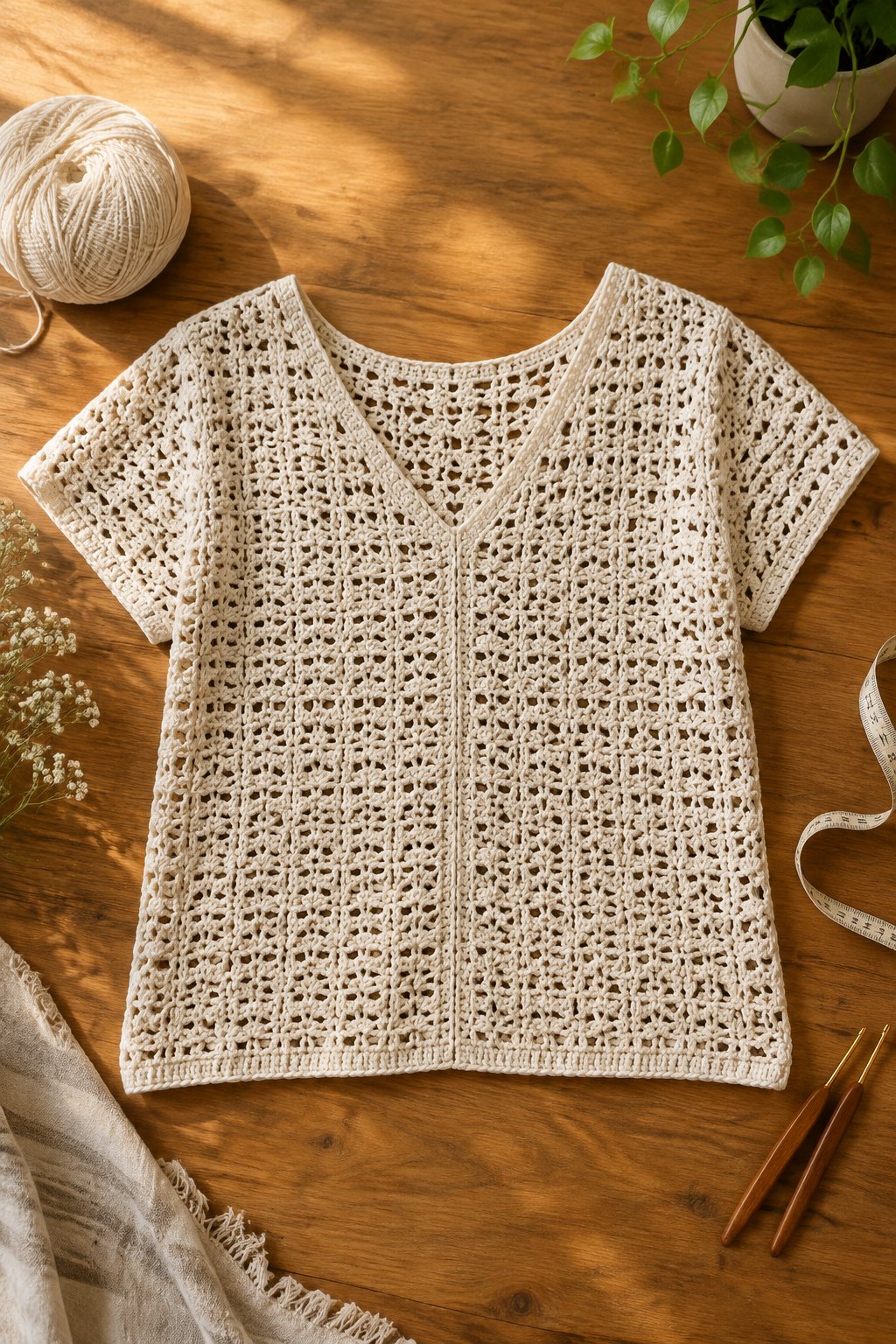
A two-panel V-neck tee gives you a relaxed summer shape with manageable construction. Try pale sage for a soft everyday look, or use coral to brighten your denim. Your neckline adds definition while the loose body leaves room for a light layer underneath.
Start with sport-weight cotton-linen yarn and a 3.5 mm hook. Choose a pattern that combines double crochet with chain spaces and explains the neckline shaping clearly. Your panels should match at the shoulders and side edges before you begin seaming.
You’ll enjoy this easy project after practicing basic increases and decreases. Leave the upper side seams open for armholes, following your pattern’s measurements. Pair your tee with a smooth camisole, and check that the V sits comfortably when you lean forward.
|
Detail |
Specification |
|---|---|
|
Yarn Weight |
Sport, #2 |
|
Skill Level |
Easy |
|
Estimated Time |
12–20 hours |
3) Granny Square Camisole With a Solid Bust Panel
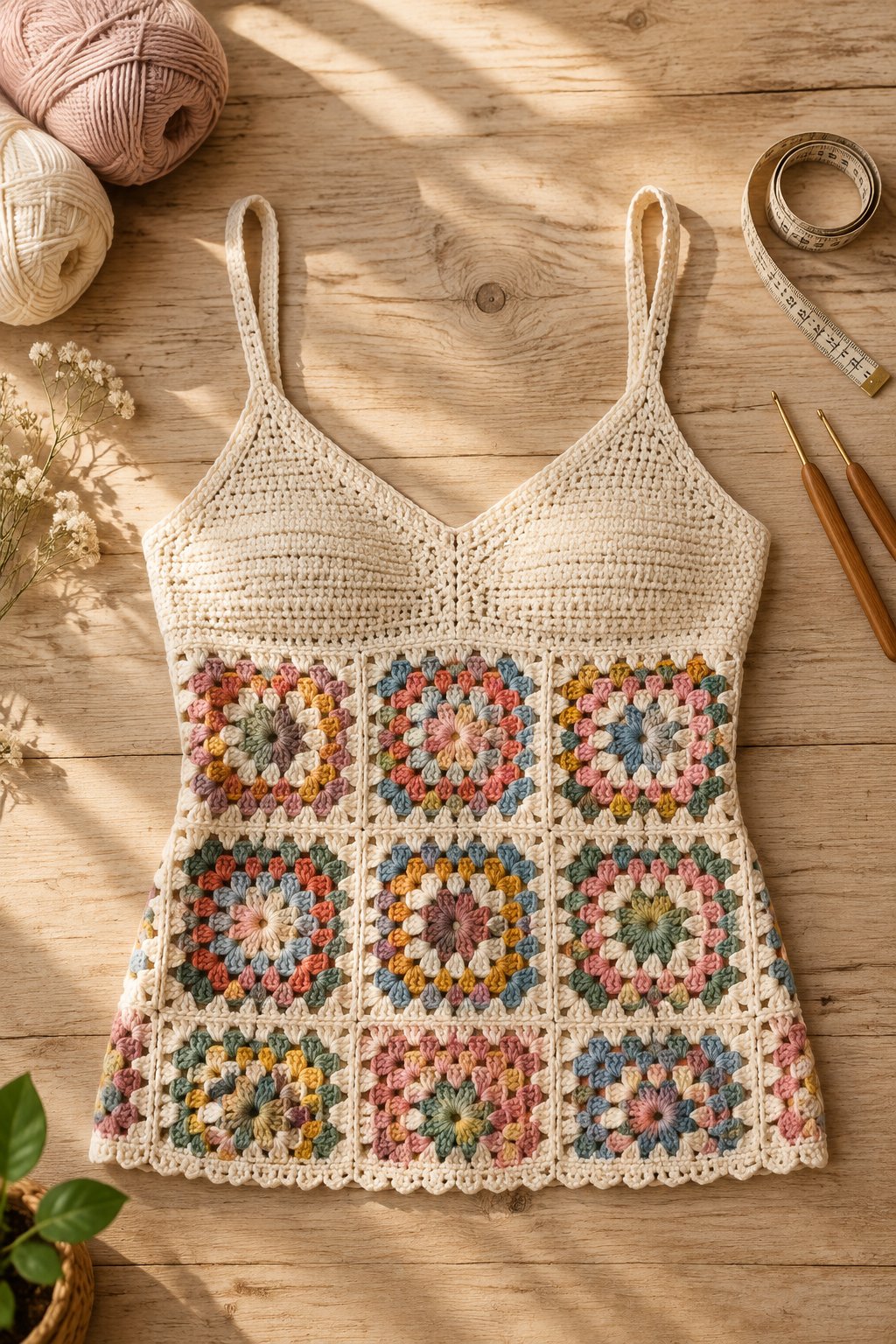
You get cheerful patchwork detail and useful coverage when you combine granny squares with a solid bust panel. Use cream borders around peach and marigold centers for a sunny palette. Keep your upper panel in one coordinating shade to give the design a clear focal point.
Choose sport-weight cotton and begin swatching with a 3.5 mm hook. Work your squares in familiar double-crochet clusters, then use a denser stitch across the bust. Measure your blocked motifs before planning their arrangement.
This intermediate project suits you if you enjoy joining pieces and adjusting garment proportions. Try the bust panel against your body before attaching straps, and check the square placement at each side. Wear your finished camisole with high-waisted linen pants or a full skirt.
|
Detail |
Specification |
|---|---|
|
Yarn Weight |
Sport, #2 |
|
Skill Level |
Intermediate |
|
Estimated Time |
14–22 hours |
4) Boatneck Mesh Tee With Drop Shoulders
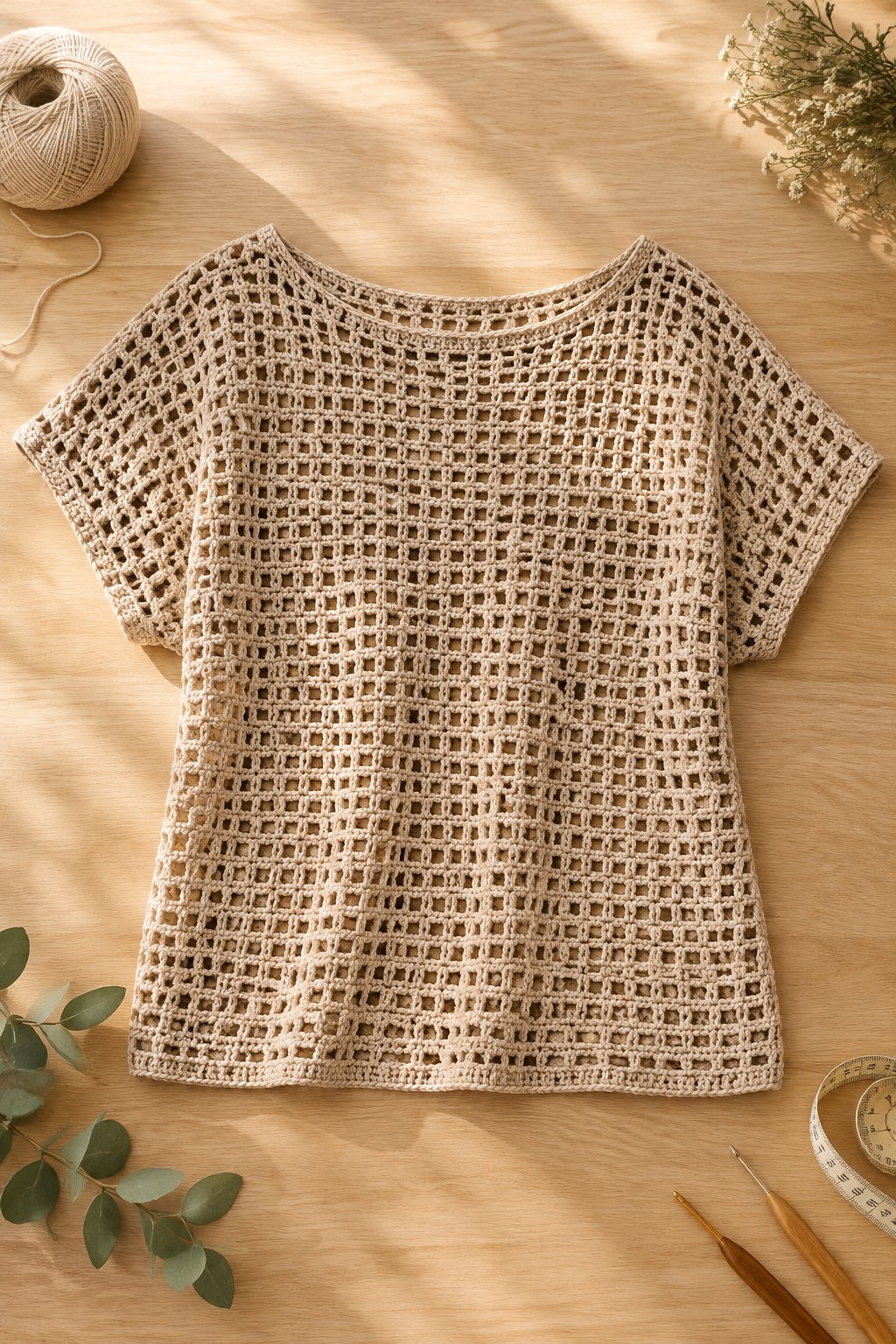
For an effortless layering piece, give your mesh tee a wide boatneck and dropped shoulders. Sea-glass green highlights the open grid, while ivory works beautifully over colorful swimwear. Your relaxed shoulder line gives the finished garment an easy, slightly oversized shape.
Use fingering-weight cotton with a 3.5 mm hook to test a light fabric. Double crochet and chain spaces create a straightforward mesh repeat. Count the spaces at the end of each row so your rectangular panels keep their intended width.
You’ll find this beginner-friendly when your chosen pattern uses simple panels and minimal shaping. Secure the shoulder seams carefully because a wide neckline needs firm stopping points. Layer your tee over a fitted tank, and keep the sleeves short enough to avoid bunching under your arms.
|
Detail |
Specification |
|---|---|
|
Yarn Weight |
Fingering, #1 |
|
Skill Level |
Beginner |
|
Estimated Time |
10–18 hours |
5) Lemon Peel Stitch Crop Top With a Square Neckline
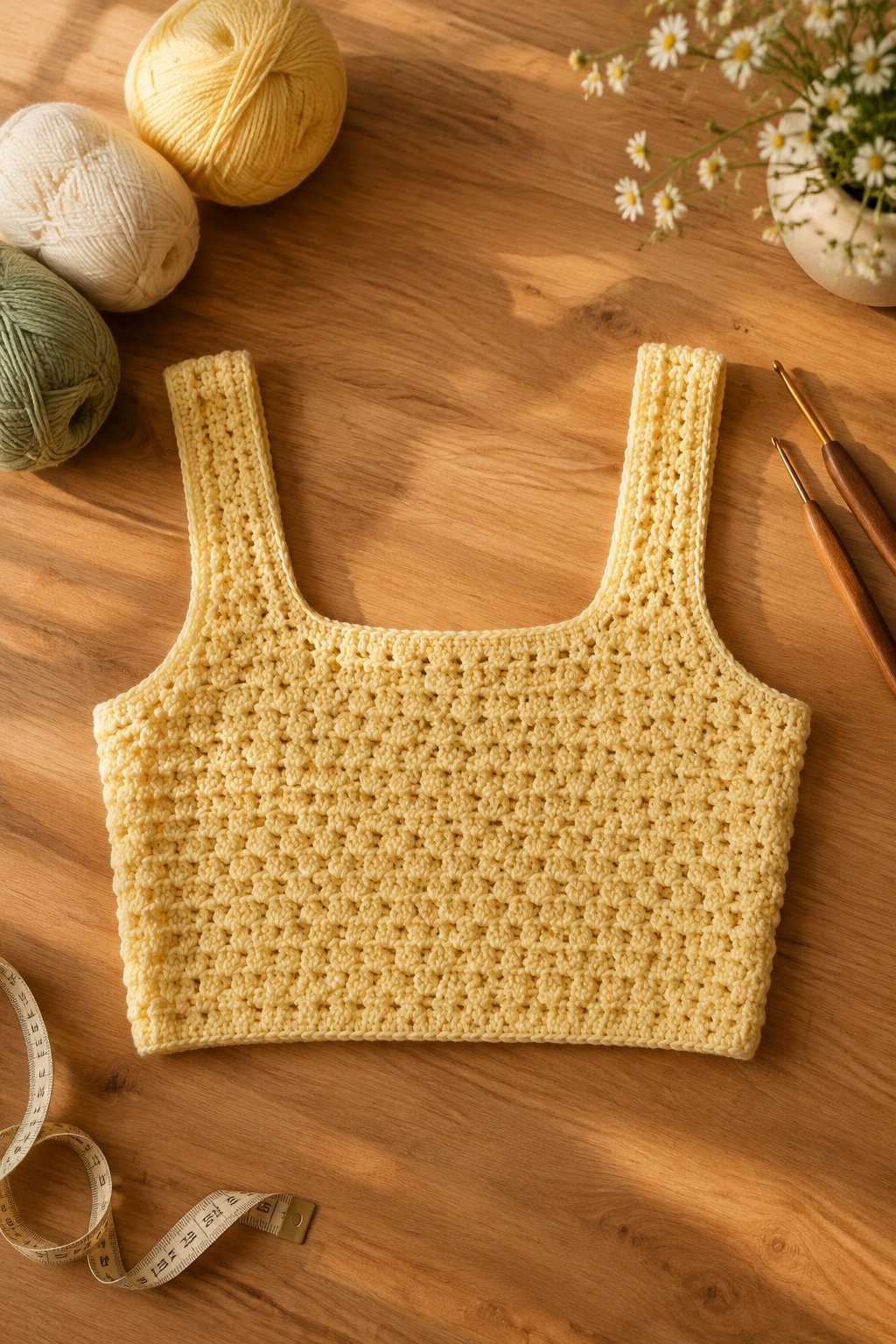
You’ll get subtle texture and a neat outline from a lemon peel crop top with a square neckline. Butter yellow brings out the small, pebbled stitches; dusty lavender gives you a softer option. A waist-skimming length pairs neatly with high-rise shorts.
Choose sport-weight cotton and start with a 3.5 mm hook. Alternating single and double crochet creates lemon peel texture, giving you a fairly dense fabric. Keep the body lightweight by checking the swatch’s thickness before committing to your yarn.
This easy project helps you practice straight edges and separate shoulder sections. Use stitch markers at the neckline corners so your straps begin in matching positions. Try your top on before edging, then keep the corner stitches loose enough for the neckline to lie flat.
|
Detail |
Specification |
|---|---|
|
Yarn Weight |
Sport, #2 |
|
Skill Level |
Easy |
|
Estimated Time |
10–16 hours |
6) Tie-Back Halter Top With a High Neckline
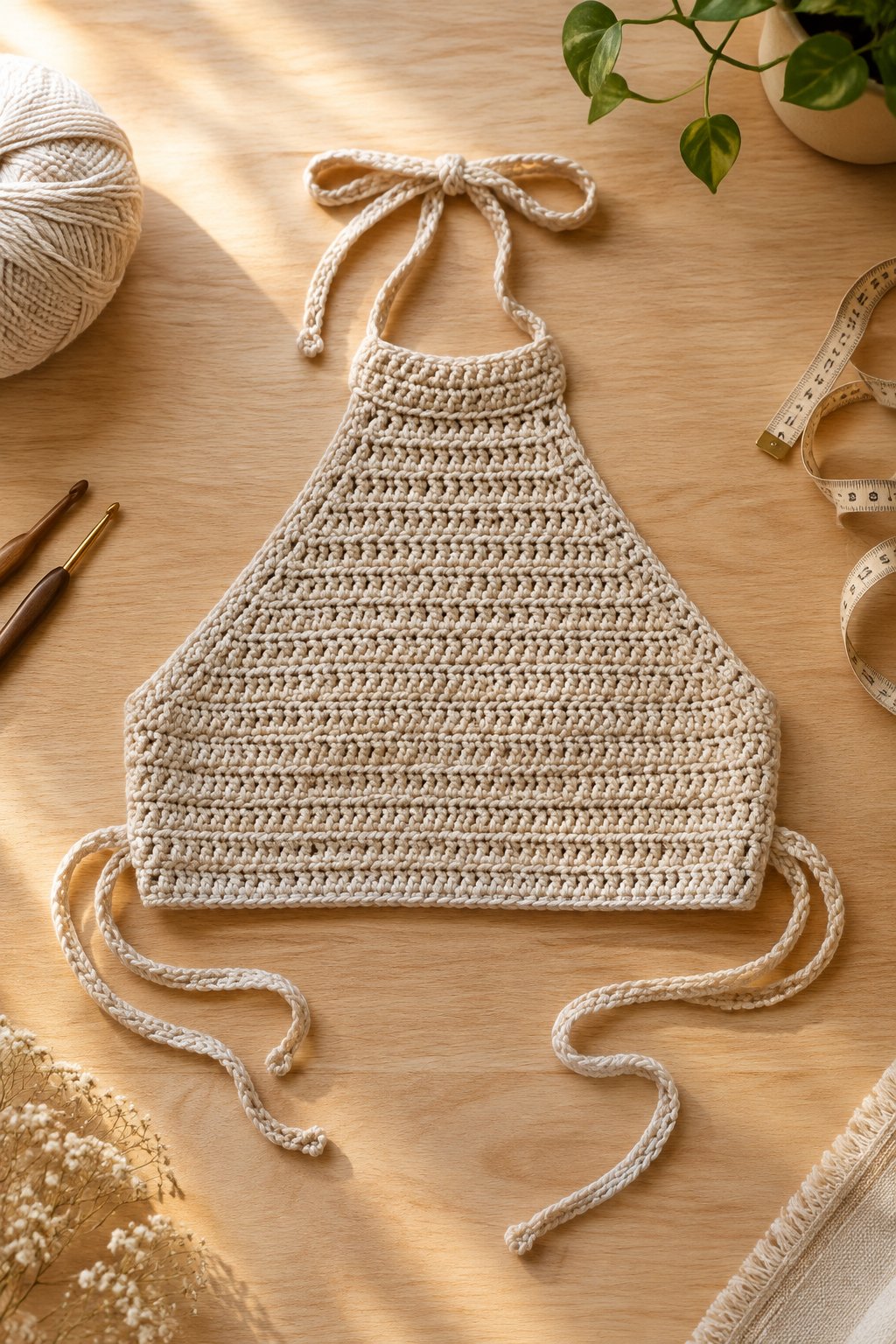
A high-neck halter gives you front coverage with an open back and adjustable ties. Choose terracotta for a warm, earthy look or cobalt for a bold summer accent. Your tapered upper panel draws attention to the shoulder line without adding sleeves.
Use sport-weight cotton and a 3.5 mm hook as a starting combination. Half double crochet creates a compact front, while shaped edges narrow the panel toward your neck. Follow a graded pattern so the upper shaping matches your chosen size.
You’ll need intermediate skills for balanced decreases and secure tie attachments. Make your ties wide enough to distribute pressure, then test the fit while sitting and moving your arms. Pair the halter with relaxed trousers, and choose your preferred backless underlayer before setting the final panel width.
|
Detail |
Specification |
|---|---|
|
Yarn Weight |
Sport, #2 |
|
Skill Level |
Intermediate |
|
Estimated Time |
8–14 hours |
7) Shell Stitch Sleeveless Top With a Scalloped Hem
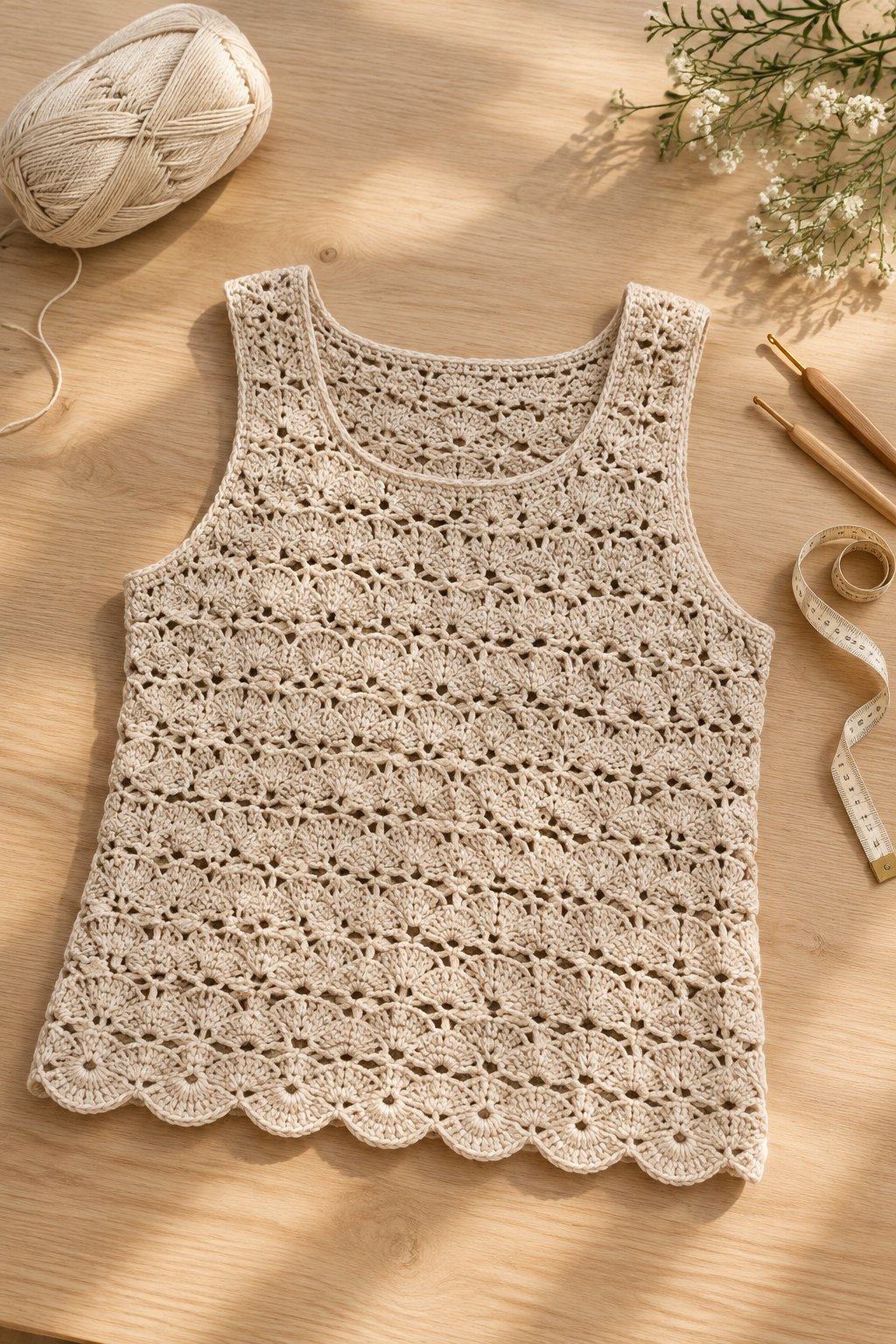
You’ll add a soft, dressy touch to your summer wardrobe with shell stitches and a scalloped hem. Try pale pink for a delicate finish or navy for stronger stitch definition. Your repeating fans create texture without needing several colors.
Select sport-weight cotton or a cotton-bamboo blend, then swatch with a 3.5 mm hook. Shells group several stitches into one space, so your fabric needs enough room to spread. Follow the pattern’s stitch multiple when choosing your size or adjusting the width.
This easy-level top suits you once you’re comfortable reading repeats. Mark the first shell of each round to keep your placement clear. End at a complete shell row for an intentional hem, then pair your finished top with tailored shorts or a simple midi skirt.
|
Detail |
Specification |
|---|---|
|
Yarn Weight |
Sport, #2 |
|
Skill Level |
Easy |
|
Estimated Time |
12–20 hours |
8) Striped Granny Stitch Tee With Cap Sleeves
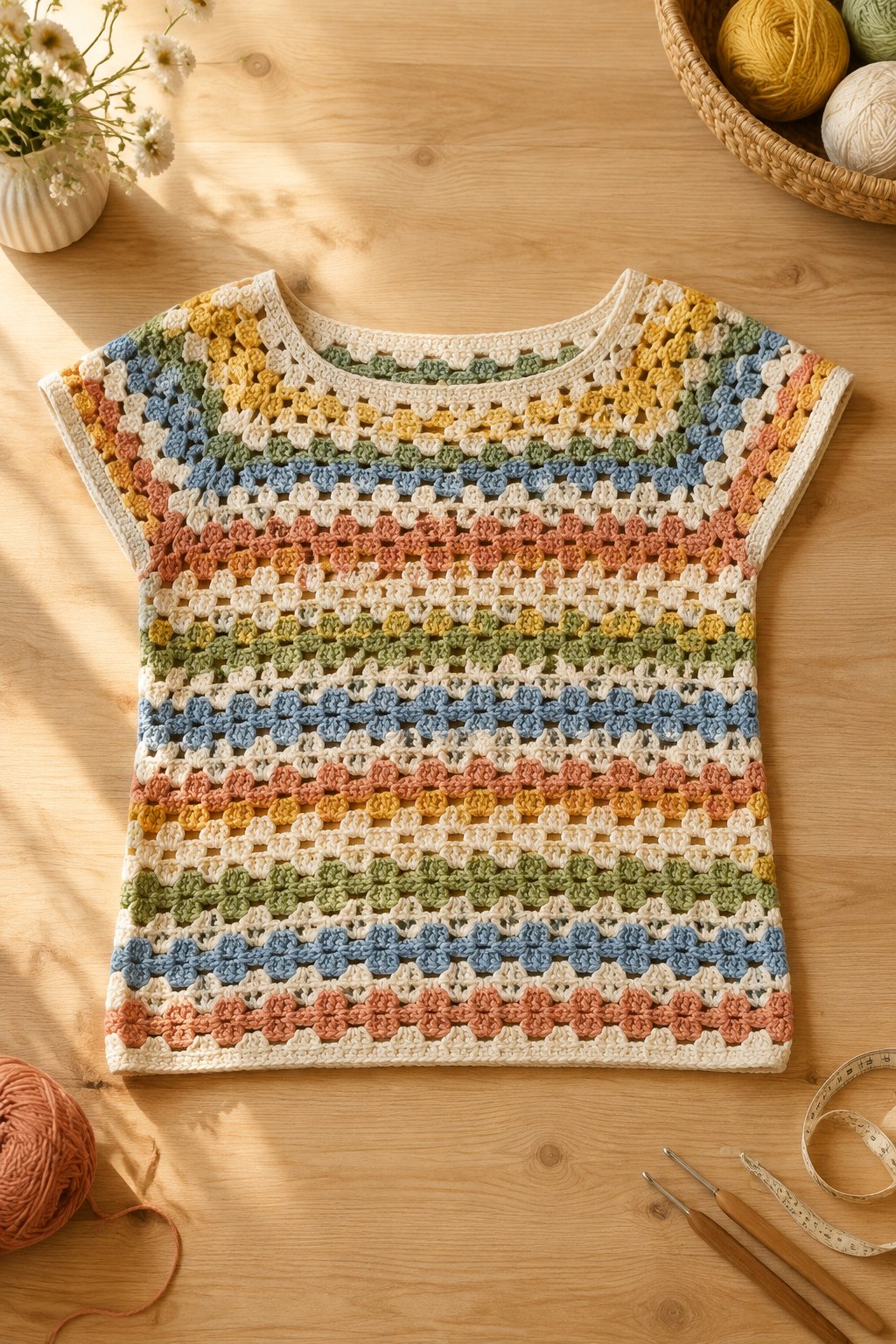
Your striped granny stitch tee brings playful color to a familiar, easy-to-wear shape. Alternate cream with rust and turquoise for a retro feel. Keep your cap sleeves shallow so the upper body stays light and comfortable.
Choose DK cotton and test your granny clusters with a 4 mm hook. Use yarns from the same range to keep the stripes consistent in thickness and care needs. Plan your color sequence before starting, especially if you want both sleeves to match.
You’ll find this an easy project with basic seaming and careful row counting. Weave in color-change ends as you finish each panel to keep the final assembly manageable. Wear your tee with solid-color bottoms, and repeat one stripe color in your sandals or bag for a coordinated outfit.
|
Detail |
Specification |
|---|---|
|
Yarn Weight |
DK, #3 |
|
Skill Level |
Easy |
|
Estimated Time |
12–18 hours |
9) Filet Crochet Tunic With Side Slits
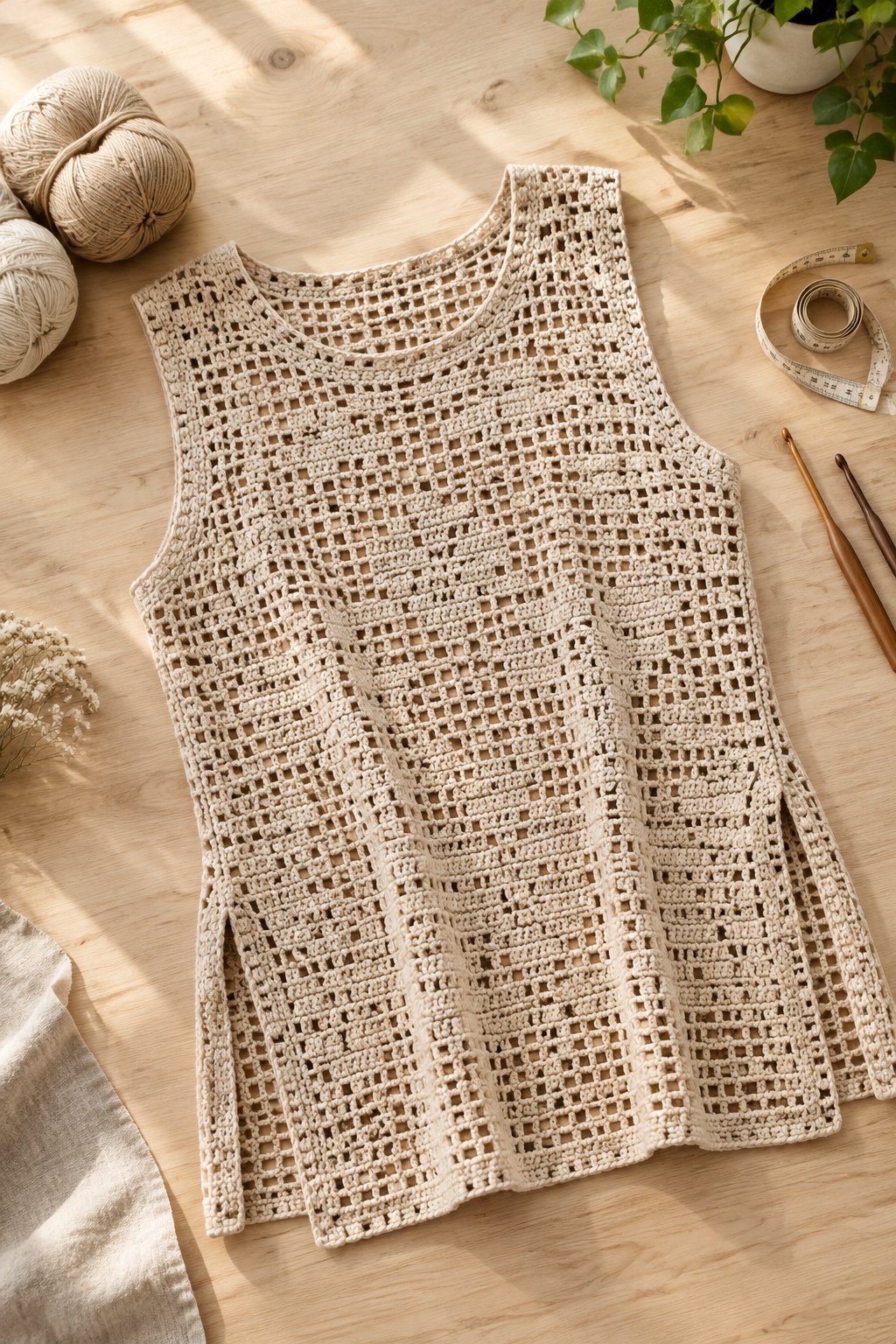
You’ll get breezy coverage and easy movement from a filet crochet tunic with side slits. Choose white for a crisp beach layer or sand for a softer neutral. Your longer silhouette works well over a fitted tank and shorts.
Use fingering-weight cotton with a 3 mm hook as your initial swatch setup. Filet crochet combines open mesh squares with filled blocks, so your chart determines the visible design. Count blocks carefully and mark completed rows to keep a geometric motif aligned.
This intermediate project rewards steady counting more than complicated stitches. Follow your pattern’s slit depth, then reinforce each opening where the side seam stops. Check the tunic while seated before finishing the hem, especially if you plan to wear it over narrow skirts or fitted pants.
|
Detail |
Specification |
|---|---|
|
Yarn Weight |
Fingering, #1 |
|
Skill Level |
Intermediate |
|
Estimated Time |
20–35 hours |
10) Linen Stitch Peplum Top With Adjustable Straps
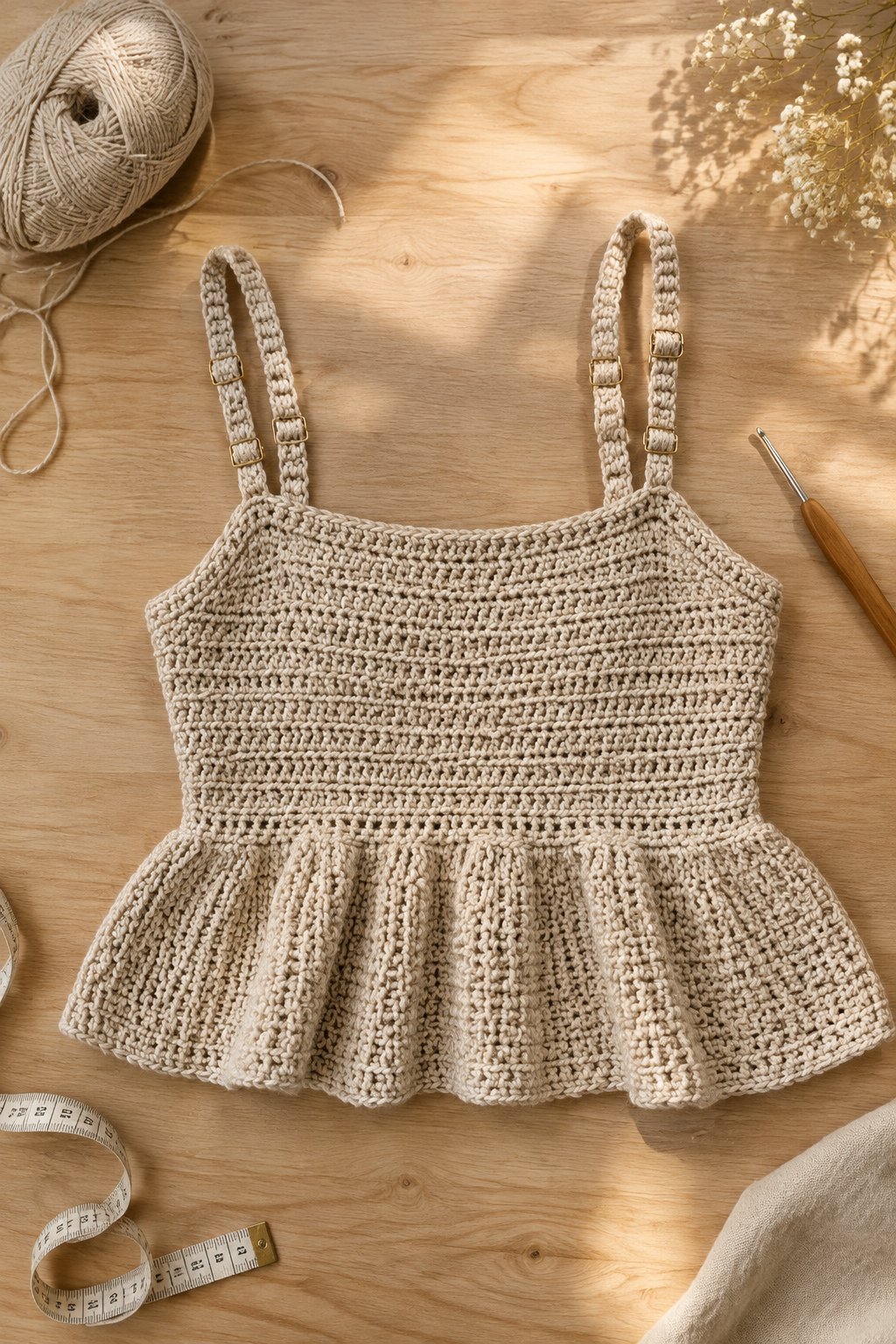
A linen stitch peplum gives you a softly flared shape with a tidy, woven-looking surface. Try muted rose or pistachio for a gentle summer palette. Your adjustable straps help position the waist seam where the flare feels comfortable.
Choose sport-weight cotton and begin with a 3.5 mm hook. Linen stitch uses single crochet and chain spaces, creating a fabric that needs careful tension control. Follow a peplum pattern with planned increases so your lower section widens evenly.
You’ll use intermediate skills to manage shaping while maintaining the stitch repeat. Place a removable marker at the waist join and try the bodice on before adding length. Pair your finished top with straight-leg jeans, and keep the strap ends short enough to stay clear of the underarm.
|
Detail |
Specification |
|---|---|
|
Yarn Weight |
Sport, #2 |
|
Skill Level |
Intermediate |
|
Estimated Time |
16–24 hours |
11) Daisy Motif Festival Top With Lace-Up Sides
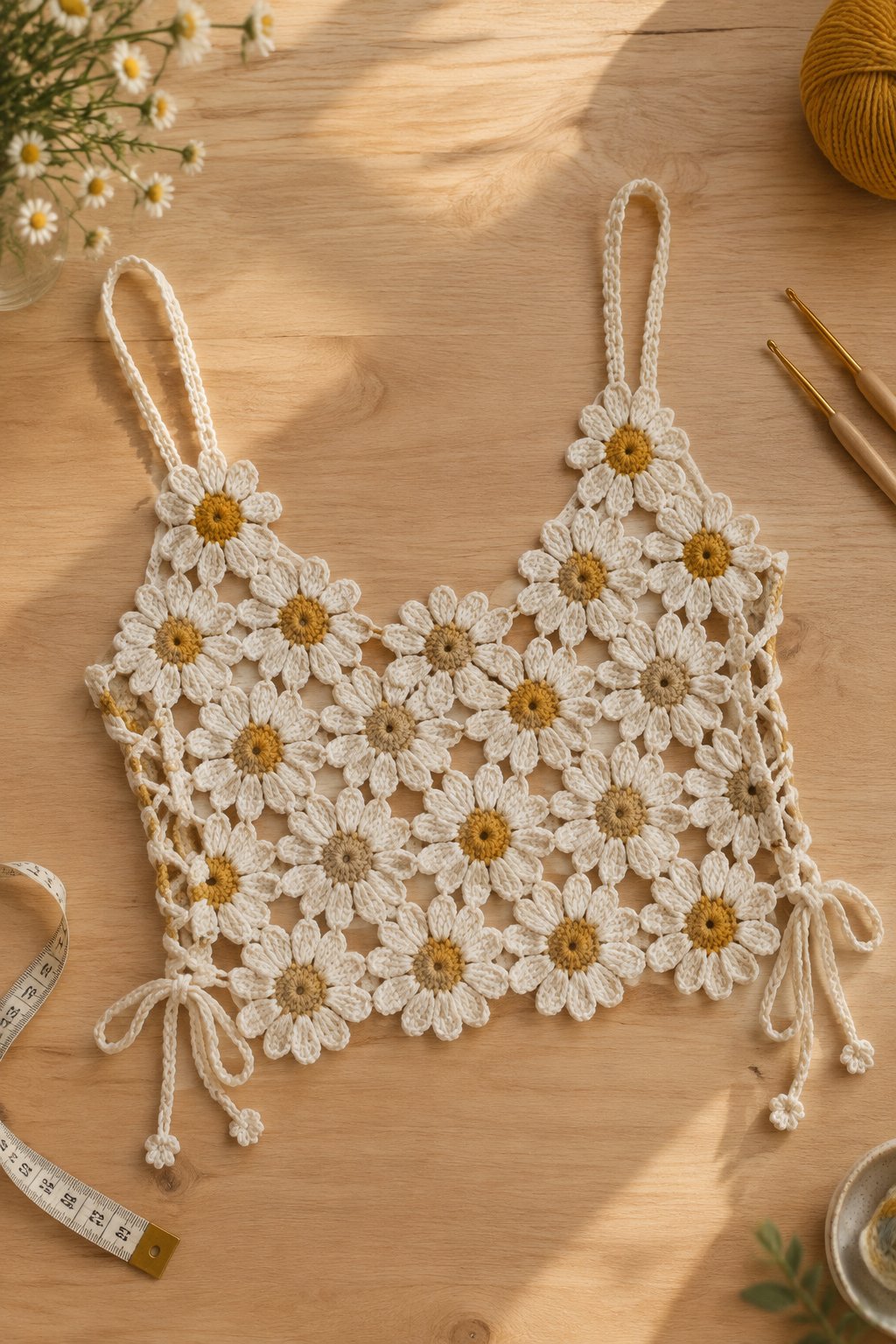
You’ll create a cheerful statement piece with daisy motifs framed by adjustable lace-up sides. White petals and golden centers look fresh against a leafy green background. Keep your joining color consistent to give the separate flowers a connected appearance.
Use sport-weight cotton and a 3.5 mm hook for defined petals without excessive bulk. Your pattern might combine clusters or puff stitches with chain spaces, so practice one complete motif first. Block that sample before calculating how many flowers your size requires.
This intermediate design asks you to manage joins and side-edge tension. Add firm edging around the lacing holes, then thread both sides evenly. Wear your top over a bandeau for extra coverage, and secure the cords away from bag straps before heading out.
|
Detail |
Specification |
|---|---|
|
Yarn Weight |
Sport, #2 |
|
Skill Level |
Intermediate |
|
Estimated Time |
14–24 hours |
12) Off-the-Shoulder Top With a Ruffled Neckline
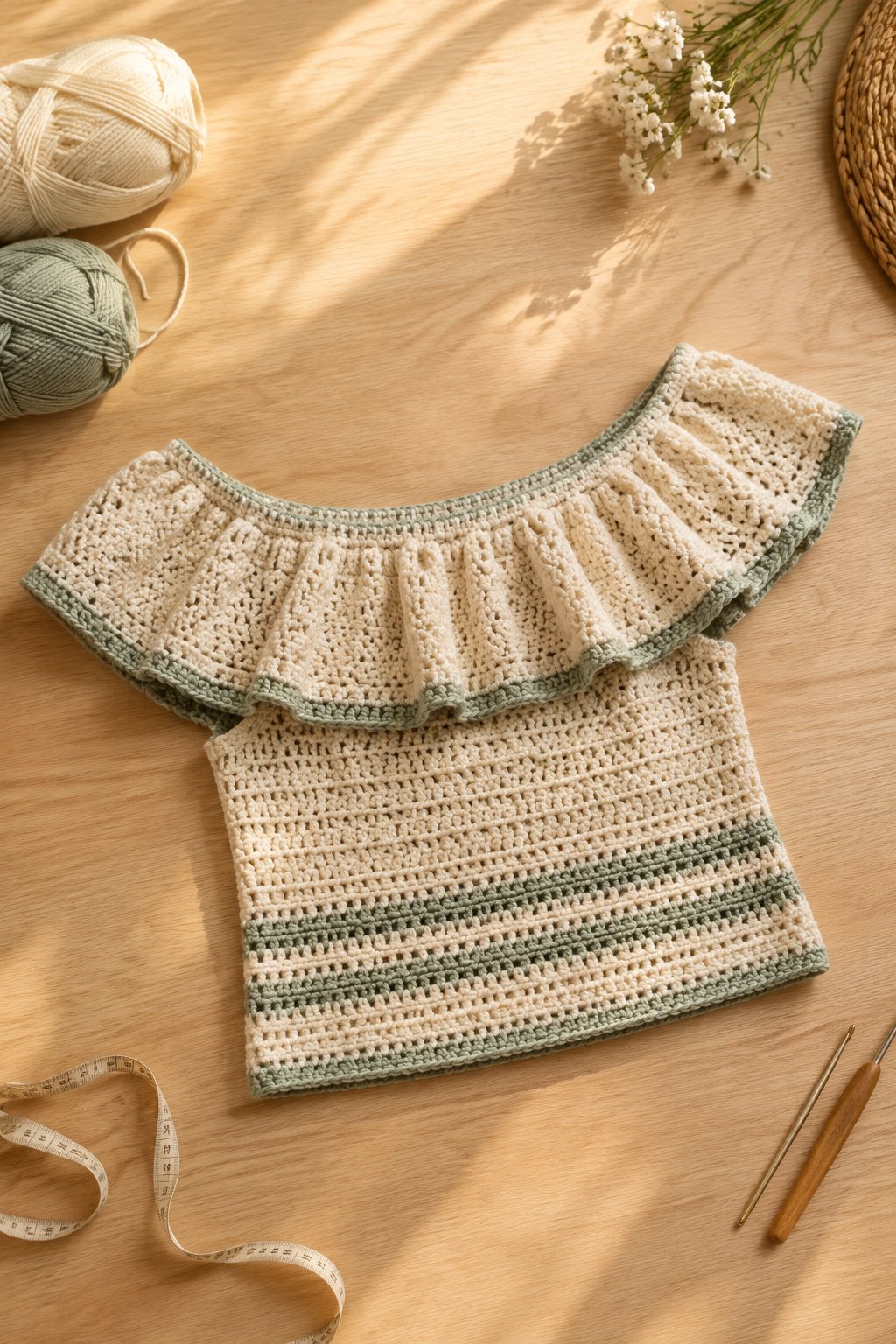
For a romantic summer layer, choose an off-the-shoulder top with a light neckline ruffle. Soft peach gives you a warm finish, while pale blue feels fresh with white denim. A shallow ruffle keeps the detail delicate around your upper arms.
Work with sport-weight cotton and start swatching around a 3.5 mm hook. Use a pattern with a stable upper band and evenly spaced ruffle increases. If your instructions include elastic, test its length comfortably around your shoulders before securing it.
You’ll need intermediate skills to balance neckline fit with freedom of movement. Raise your arms during a fitting check and adjust the band before adding the ruffle. Style your top with a strapless underlayer, then keep necklaces short so they sit clear of the crochet edge.
|
Detail |
Specification |
|---|---|
|
Yarn Weight |
Sport, #2 |
|
Skill Level |
Intermediate |
|
Estimated Time |
16–26 hours |
13) Front-Tie Butterfly Top With Shaped Wings
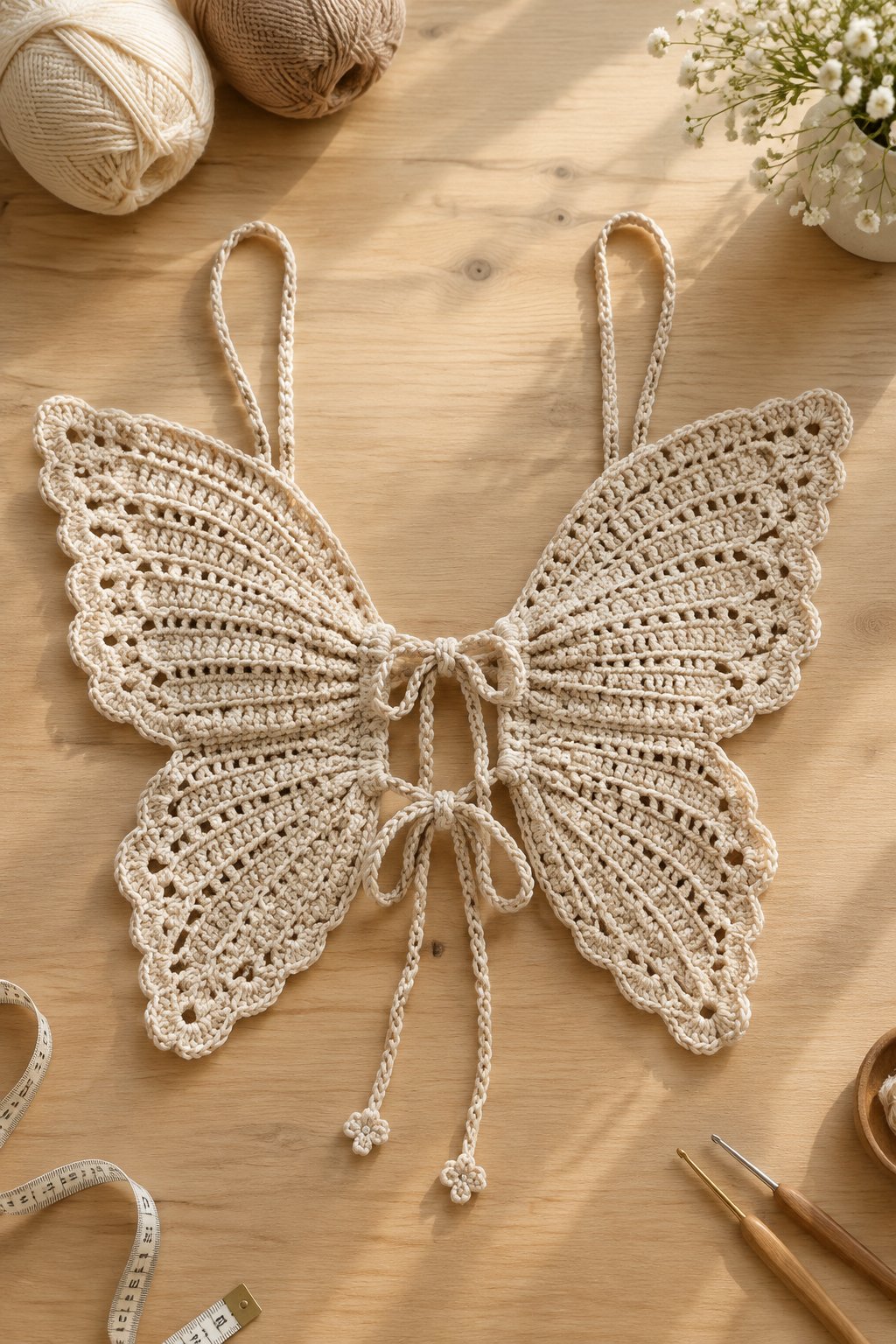
You’ll get a bold, sculpted silhouette from a butterfly top with shaped wings and front ties. Choose lilac with plum edging to emphasize the outline. Your matching wing sections create symmetry, while the center ties let you adjust their spacing.
Use sport-weight cotton with a 3 mm hook as a starting point for firm stitches. Follow a size-inclusive pattern that explains the increases and short rows used to shape each wing. Compare both pieces frequently so their outer edges remain balanced.
This intermediate project needs careful fitting because the open areas expose more skin. Check coverage with your intended underlayer before finishing the ties, and reinforce every attachment point. Pair your butterfly top with high-waisted bottoms, keeping the front knots secure without pulling the wings out of shape.
|
Detail |
Specification |
|---|---|
|
Yarn Weight |
Sport, #2 |
|
Skill Level |
Intermediate |
|
Estimated Time |
10–18 hours |
14) Button-Front Crochet Vest With a Deep V-Neck
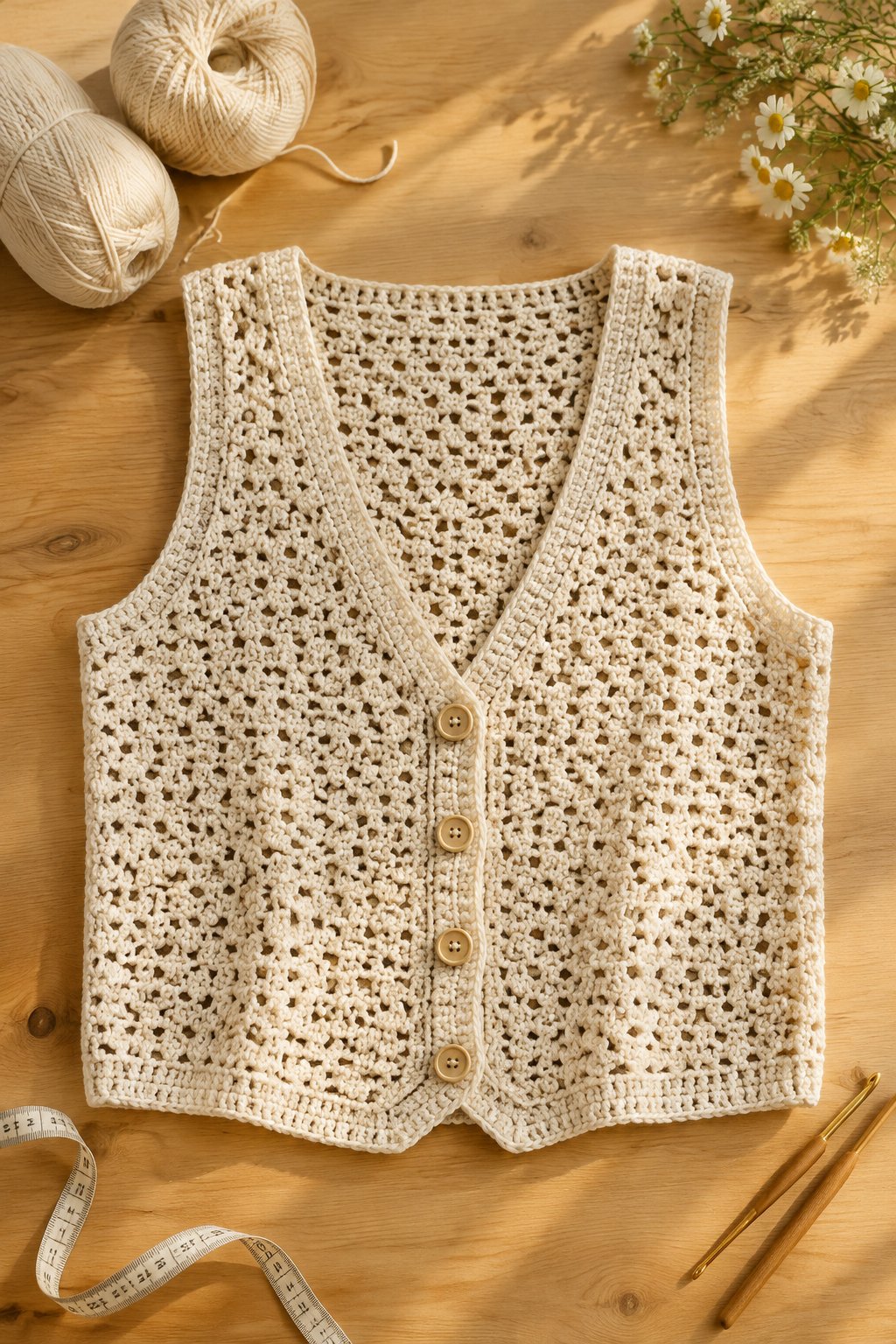
Your button-front crochet vest gives you a polished layer that works open or fastened. Choose cream with wooden buttons for a warm neutral look. A deep V-neck lengthens the front visually and leaves space for your favorite pendant.
DK cotton with a 4 mm hook makes a useful starting swatch. Try half double crochet for a substantial body, then work a firm single-crochet button band. Test a sample buttonhole with your chosen buttons before completing the entire edging.
You’ll find this an easy-to-intermediate project, depending on the neckline shaping. Measure button placement with the vest lying flat, keeping the fullest bust area in mind. Wear your vest over a tank, or choose a shallower V and denser fabric if you want to wear it alone.
|
Detail |
Specification |
|---|---|
|
Yarn Weight |
DK, #3 |
|
Skill Level |
Intermediate |
|
Estimated Time |
14–22 hours |
15) Wrap Top With Cross-Over Panels and Waist Ties
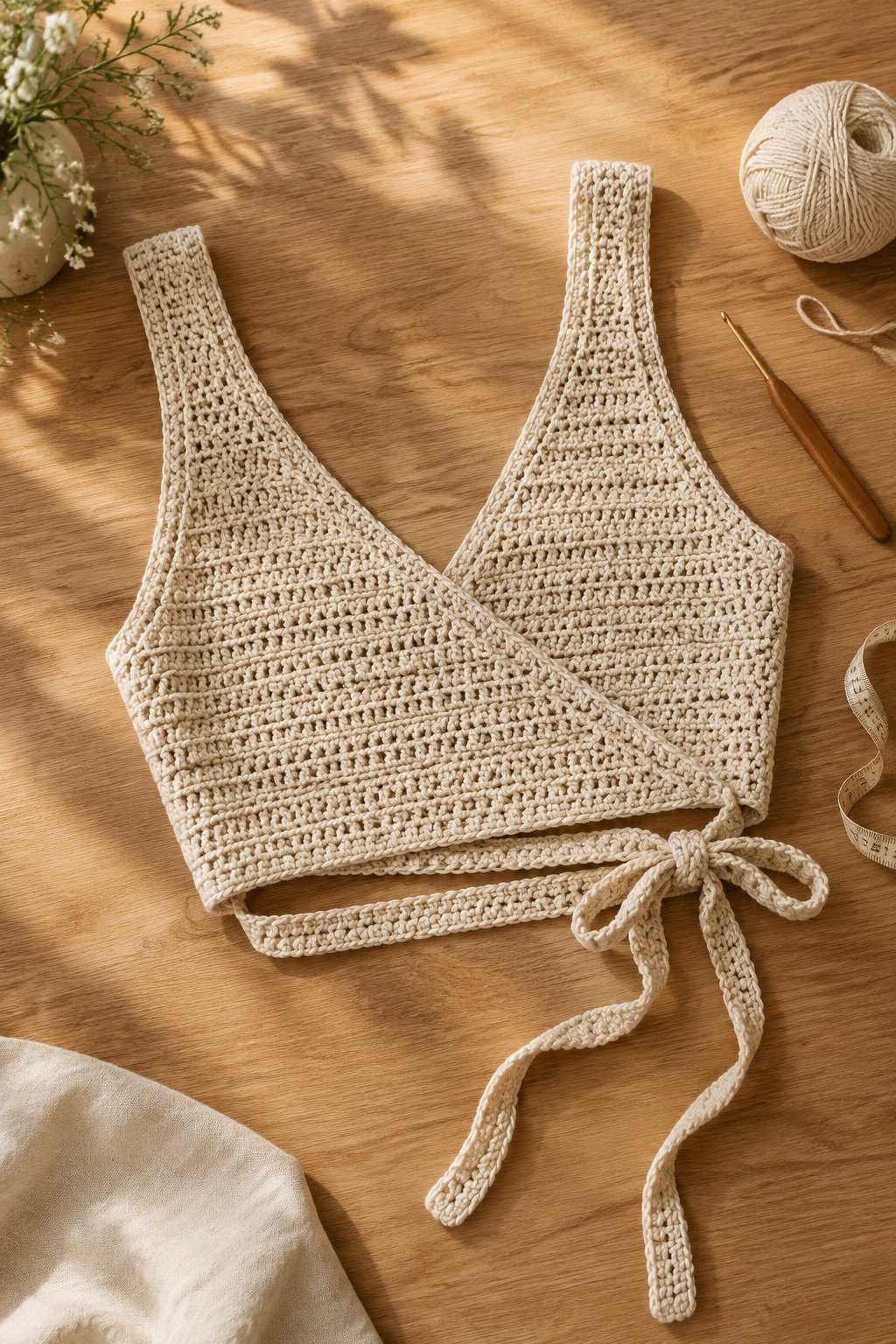
You’ll get flexible waist adjustment from a wrap top with overlapping panels and long ties. Choose muted teal for a versatile finish that pairs with denim or cream linen. Your diagonal front edges give the garment shape without a separate button band.
Use sport-weight cotton-bamboo yarn and start with a 3.5 mm hook. Half double crochet gives you a smooth base, while regular edge increases or decreases form the cross-over panels. Follow the pattern’s shaping sequence closely to keep both sides balanced.
This intermediate design benefits from fitting checks before the ties are attached. Confirm that your panels overlap comfortably while seated, then position the tie opening at your natural waist. Reinforce that opening with firm edging, and tie the finished top without stretching the fabric across your bust.
|
Detail |
Specification |
|---|---|
|
Yarn Weight |
Sport, #2 |
|
Skill Level |
Intermediate |
|
Estimated Time |
18–28 hours |
16) Pineapple Lace Blouse With Flutter Sleeves
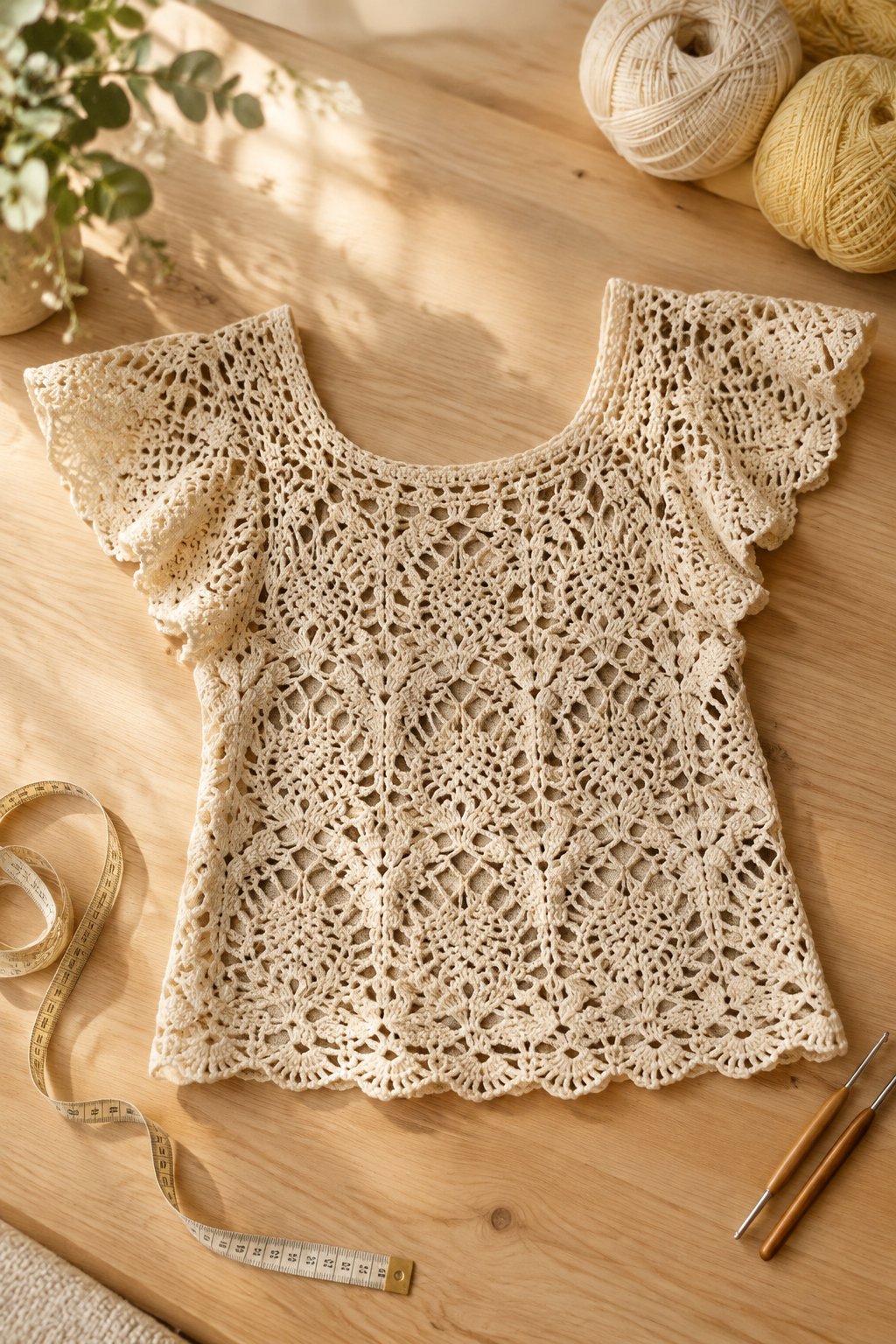
A pineapple lace blouse gives you intricate texture and soft movement through the sleeves. Choose pearl gray for a dressy layer or pale aqua for a lighter look. Your teardrop-shaped motifs become clearer after gentle blocking opens the lace.
Select fingering-weight cotton and test a 2.75–3.25 mm hook against your pattern’s gauge. Pineapple lace combines chain arches with grouped stitches, so track both the written rows and chart symbols. Place markers between repeats to catch a missed space early.
You’ll need intermediate skills and patience for this detailed project. Check the sleeve depth before adding the final edging, since extra lace adds length and weight. Wear your blouse over a smooth camisole, and choose simple bottoms that leave the motif work easy to see.
|
Detail |
Specification |
|---|---|
|
Yarn Weight |
Fingering, #1 |
|
Skill Level |
Intermediate |
|
Estimated Time |
25–40 hours |
17) Open-Stitch Hooded Beach Top With a Drawstring Hem
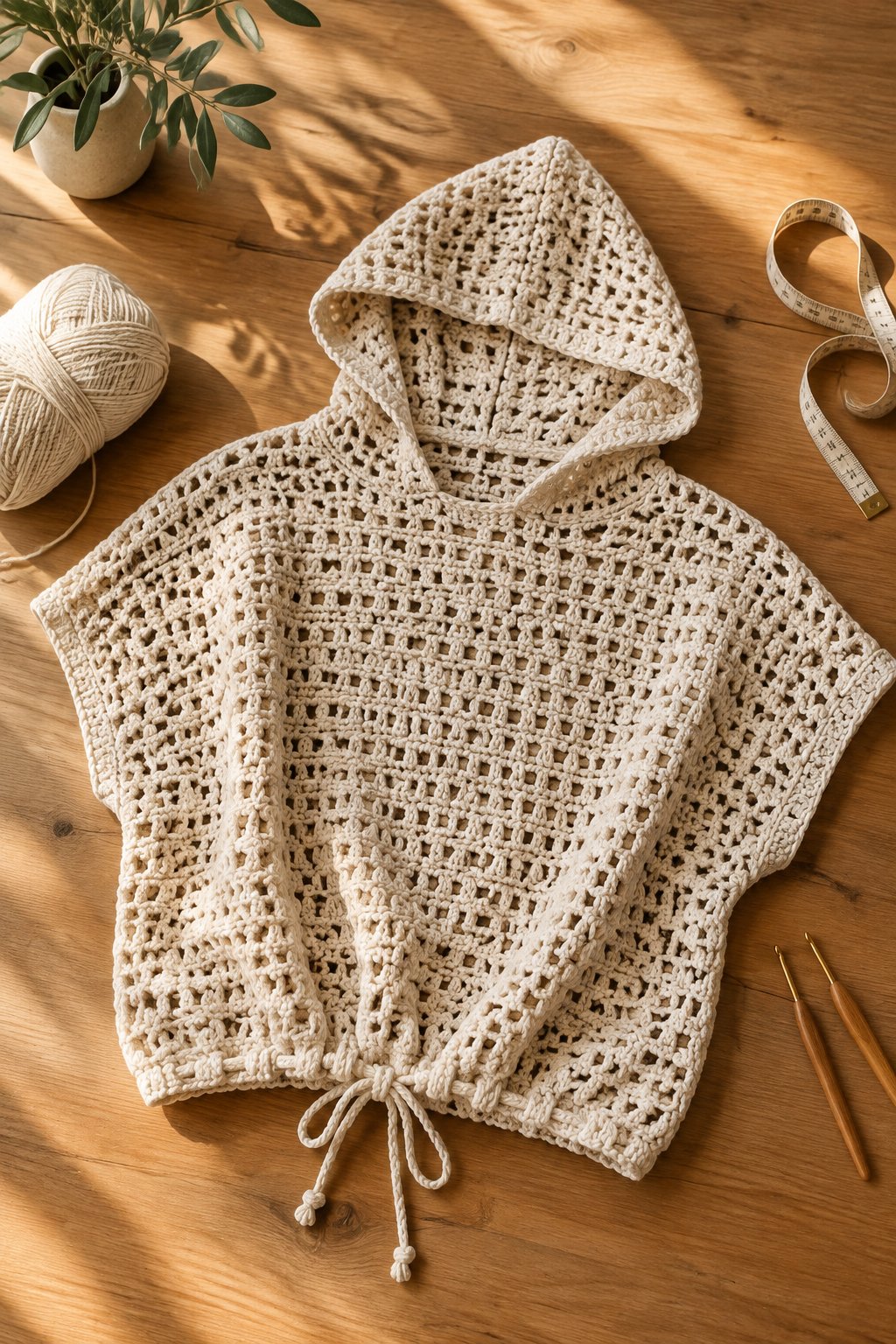
You’ll have a relaxed swimsuit layer with an open-stitch hooded top and adjustable drawstring hem. Choose sandy beige for a beachy neutral or bright turquoise for stronger color. Your loose hood adds shape around the neckline without requiring a close fit.
Use DK cotton-linen yarn with a 4.5 mm hook as a swatching starting point. Double-crochet mesh keeps the body open, while a firmer lower band holds the drawstring. Follow your pattern’s hood measurements so it rests comfortably when lowered.
This intermediate project suits you if you’re ready to join a hood and manage several garment sections. Keep the drawstring ends short and secure them before swimming. Use your top as a cover-up, and apply separate sun protection because open crochet leaves skin exposed.
|
Detail |
Specification |
|---|---|
|
Yarn Weight |
DK, #3 |
|
Skill Level |
Intermediate |
|
Estimated Time |
16–26 hours |
How to Choose Yarn and Hooks for Summer Tops
You’ll get a comfortable summer fabric by matching your fiber and yarn weight to the stitch pattern, then choosing a hook through swatching. Use the pattern’s listed materials as your first guide, especially when the design includes fitted shaping.
Which Yarn Weights and Fibers Feel Comfortable in Heat?
Start with fingering, sport, or DK yarn when you want a lightweight top. Cotton gives you clear stitches and absorbs moisture, while linen adds strength and softens with washing. Cotton-linen blends offer a useful balance for everyday garments.
If you prefer a silkier feel, try a cotton blend containing bamboo-derived viscose. Expect extra drape and check for lengthwise growth in your swatch. Read the care label before buying enough yarn, particularly if you want your finished top to be machine washable.
When Does Worsted Cotton Work Better Than Lightweight Yarn?
Choose worsted cotton for a short tank or structured vest when you want substantial stitches and a quicker build. Its thicker strand makes each row taller, so you’ll cover more fabric with fewer stitches. Dense worsted fabric also adds weight and warmth.
Keep your silhouette simple and test the fabric against your skin. Begin with the pattern’s recommended hook, which might fall around 4.5–5.5 mm for this weight. If your sample feels heavy, use a more open stitch pattern or select a lighter yarn with a matching pattern.
Why Is Chunky Yarn Usually Better Reserved for Open Mesh?
Reserve chunky yarn for very open mesh when you want a bold summer texture. A thick strand creates substantial fabric, and large spaces reduce how much yarn sits against your body. Choose a short silhouette to limit the finished garment’s weight.
Look for a lightweight cotton blend or an airy construction, then check its behavior after washing. Start with the hook recommended by your chosen pattern and yarn label. Avoid assuming that a large hook alone guarantees drape; test the completed mesh before planning a full top.
How Do Hook Size and Gauge Affect Drape?
Your hook size controls stitch size and influences how freely the fabric moves. A smaller hook produces a tighter surface; a larger hook creates more space between stitches. The yarn’s fiber and construction also affect the result.
Make a swatch at least 6 inches square in the actual stitch pattern, then wash it before measuring. Check stitch gauge and row gauge separately because both affect garment proportions. If you match the stated gauge but dislike the fabric, choose another yarn or pattern that gives you the feel you want.
How to Get a Comfortable, Wearable Fit
You’ll improve your finished fit by comparing the pattern’s garment measurements with your body and checking the work as it grows. Keep a well-fitting summer top nearby as a reference for details such as armhole depth and shoulder width.
How Much Ease Should a Summer Top Have?
For a relaxed tee, use 2–4 inches of positive ease at the bust as a starting point. That means choosing a finished bust measurement 2–4 inches larger than your body measurement. A loose beach layer might use 4–8 inches, depending on the intended silhouette.
For a fitted tank, begin near your actual bust measurement and follow the pattern’s intended ease. Use negative ease only when the design and fabric support that fit. Check the finished measurement chart carefully, since the size label alone gives you limited information.
How Can You Check Coverage and Bra Compatibility?
Try your work over the exact bra or underlayer you plan to wear. Check the front and side views in daylight, then look at the fabric while gently stretched. Open stitches reveal more when tension spreads them apart.
Before fastening seams, pin the garment securely and test sitting, reaching, and leaning forward. Move the pins before removing the garment. Mark any strap or neckline changes with removable stitch markers, and check both sides so your adjustments stay balanced.
Why Should You Wash Your Gauge Swatch Before Measuring?
Wash your swatch because your yarn’s finished dimensions depend on how it responds to water and drying. Cotton fabric can relax, while drapey blends need particular attention to lengthwise growth. An unwashed measurement leaves that change out of your sizing calculations.
Treat the sample exactly as you plan to treat the top, following the yarn’s care instructions. Let it dry fully on a flat surface before measuring the center. Record its width and height before and after washing, then use the finished gauge for your size calculations.
How Can You Adjust Straps, Length, and Neckline Depth?
Adjust straps during a fitting check, with the garment’s weight supported on your body. Temporarily baste them in place, then check the neckline and underarms together. Shortening a strap raises both areas, so judge the entire upper fit before securing the ends.
Add body length at a straight section where your pattern allows complete repeats. For a neckline change, plan the shaping before working the upper front and preserve enough shoulder width for support. Write down every adjustment, including row counts, so you can repeat it accurately on the matching panel.