For your first crochet cowl free pattern project, choose a chunky ribbed design: you’ll repeat one main stitch and get a thick, stretchy layer for cold days. You’ll bring the same handmade appeal to dressier outfits with textured stitches, soft neutrals, or a bold pop of color.

Save the designs that suit your wardrobe, then choose a free pattern with clear sizing and stitch instructions. Use the hook sizes below as starting points, and treat project times as rough estimates for an adult cowl with basic finishing. Your pace and chosen dimensions will affect how long you spend crocheting.
1) Chunky Ribbed Cowl With Back-Loop Half-Double Crochet

You’ll get a plush, stretchy cowl by working half-double crochet through the back loop. Choose oatmeal or charcoal for a ribbed tube that pairs easily with your winter coat. A slightly taller shape gives you enough fabric to fold the upper edge.
Start with bulky-weight yarn and an 8 mm hook, then check the fabric against your pattern’s gauge. Work a rectangle with the rows running across its short dimension; joining the first and last rows turns the ribbing vertically. Keep your turning edges even so the seam sits neatly.
You’ll find this beginner-friendly when you’re comfortable making half-double crochet stitches. Slip it over a crewneck sweater, or choose a washable wool blend for a practical handmade gift. Leave the seam loose enough to preserve the ribbing’s stretch.
|
Detail |
Specification |
|---|---|
|
Yarn Weight |
Bulky, #5 |
|
Skill Level |
Beginner |
|
Estimated Time |
3–5 hours |
2) Worsted-Weight Moss Stitch Cowl With Color-Block Stripes

With moss stitch, you’ll create small, woven-looking blocks that show off broad color stripes. Try cream with rust for a warm palette, or pair navy with pale blue for a quieter finish. Keep the silhouette relaxed so your cowl falls softly around your neckline.
Choose smooth worsted-weight yarn and begin swatching with a 5.5 mm hook. You’ll alternate single crochet and chain stitches, placing each new single crochet into a chain space. Follow your pattern’s starting-chain count closely to keep the repeat aligned.
You’ll enjoy this easy project if you want practice finding spaces between stitches. Change colors at the round join and carry unused yarn only across short distances. Wear your finished cowl inside an open jacket, with one stripe positioned near your face for a deliberate color accent.
|
Detail |
Specification |
|---|---|
|
Yarn Weight |
Worsted, #4 |
|
Skill Level |
Easy |
|
Estimated Time |
5–7 hours |
3) Button-Up Neck Warmer With a Fold-Over Collar

A button-up neck warmer gives you an adjustable opening and a collar you can fold away from your chin. Choose cranberry yarn with dark wooden buttons for a classic look. A rectangular shape with overlapping ends keeps your finished accessory compact beneath a coat.
Use worsted-weight wool-blend yarn with a 5 mm hook as your swatching starting point. Half-double crochet gives you a flexible base, while a few rows of ribbing define the collar. Follow a pattern that explains buttonhole placement before you begin the closing edge.
You’ll need easy-level skills plus basic button sewing for this design. Test each button against its opening before securing it, since loose holes let the overlap slip. Fasten your neck warmer slightly off-center when you want the folded collar to frame a shirt neckline.
|
Detail |
Specification |
|---|---|
|
Yarn Weight |
Worsted, #4 |
|
Skill Level |
Easy |
|
Estimated Time |
4–6 hours |
4) Waffle Stitch Cowl With Deep, Cozy Texture

Choose waffle stitch when you want a cowl with deep pockets of texture and a substantial feel. In honey gold or forest green, you’ll see the raised grid clearly. Give your cowl a short, generous tube shape so the textured fabric gathers beneath your chin.
Start with smooth worsted yarn and a 5.5–6 mm hook. You’ll combine regular double crochet with front-post double crochet to build the grid. Keep extra yarn available because post-stitch fabric uses more yardage than a comparable plain double-crochet panel.
You’ll find this an intermediate project if post stitches are new to you. Check the first few repeats before continuing, and keep your hook from catching only part of the yarn strand. Pair the finished texture with a plain coat so your stitchwork remains easy to see.
|
Detail |
Specification |
|---|---|
|
Yarn Weight |
Worsted, #4 |
|
Skill Level |
Intermediate |
|
Estimated Time |
7–10 hours |
5) Granny Square Cowl With a Patchwork Color Palette

Your granny square cowl brings a patchwork look to a simple loop, with each motif adding its own color accent. Use leftover jewel tones and a shared cream border to tie your squares together. Arrange the motifs before joining so you control where the brightest colors sit.
Choose worsted-weight yarns with matching fiber content and start with a 5 mm hook. You’ll use double-crochet clusters and chain spaces, then join equal-sized squares into a band. Follow your selected pattern for the number of motifs and the joining method.
You’ll need easy-level crochet skills and patience for weaving in ends. Block your squares to matching measurements before assembly to reduce puckering along the joins. Wear the finished loop over a denim jacket, or make a coordinated version using a gift recipient’s favorite colors.
|
Detail |
Specification |
|---|---|
|
Yarn Weight |
Worsted, #4 |
|
Skill Level |
Easy |
|
Estimated Time |
8–12 hours |
6) Alpine Stitch Cowl With Raised Post-Stitch Texture

You’ll create a richly textured surface with alpine stitch’s staggered raised stitches. Choose spruce green or dusty rose to highlight the pattern without competing color changes. Keep your cowl moderately tall for a gathered shape that shows several rows of the repeating texture.
Use a smooth worsted-weight wool blend and try a 5.5 mm hook. You’ll alternate single-crochet rows with rows containing double crochet and front-post treble crochet worked around stitches below. Follow the pattern’s placement notes carefully so the raised stitches form an even stagger.
Plan on intermediate skills, especially when learning to judge the height of elongated post stitches. Draw those loops up far enough to prevent the fabric from pulling downward. Style your finished cowl with a simple knit sweater, leaving its upper edge loose for comfortable movement.
|
Detail |
Specification |
|---|---|
|
Yarn Weight |
Worsted, #4 |
|
Skill Level |
Intermediate |
|
Estimated Time |
7–10 hours |
7) Herringbone Half-Double Crochet Cowl With a Slanted Texture
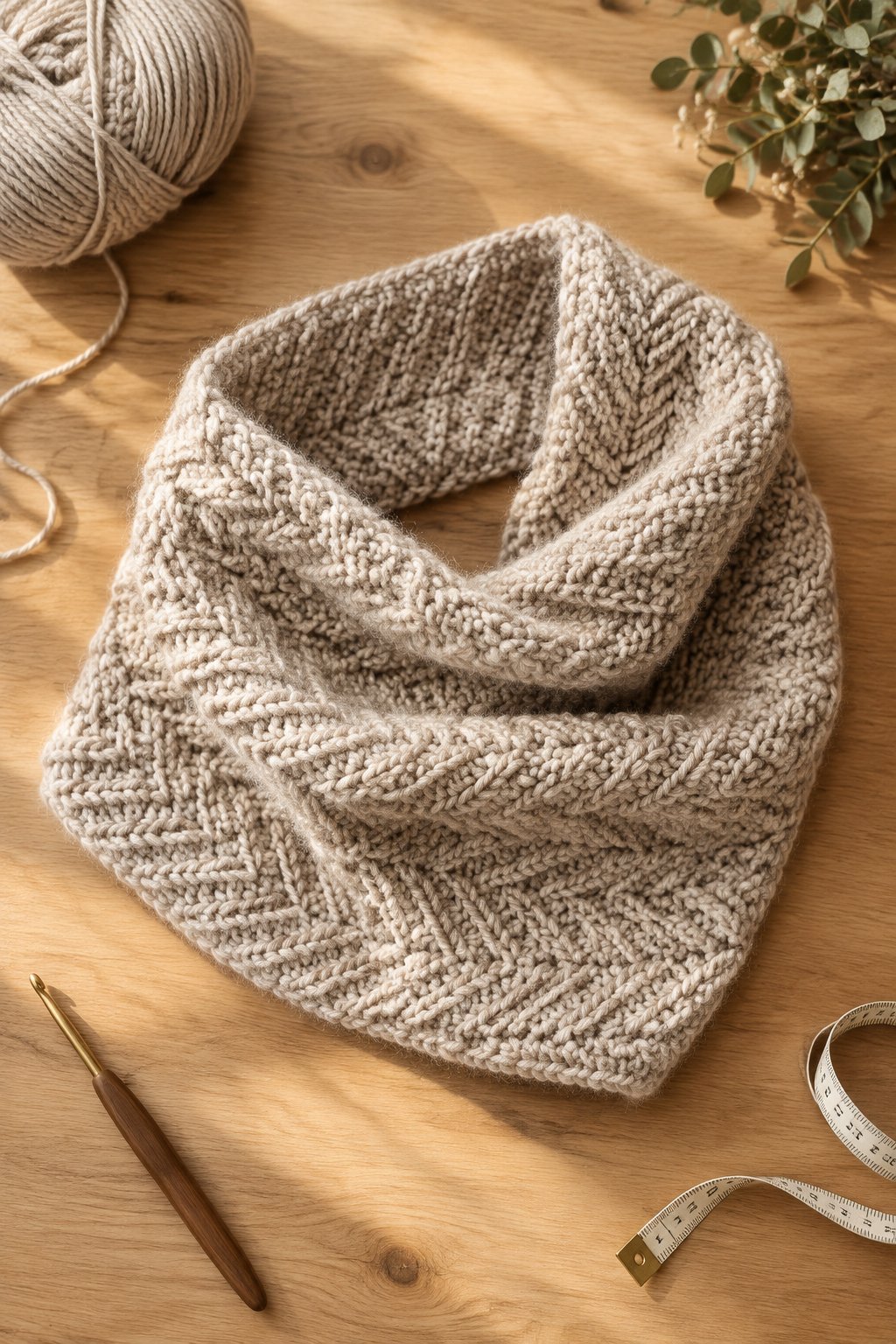
For subtle diagonal detail, you’ll enjoy herringbone half-double crochet in a smooth, solid-colored yarn. Try camel or slate blue for a polished loop that works with your everyday outerwear. A relaxed tube gives the slanted stitches room to show without holding a stiff shape.
Start with worsted-weight yarn and a 5.5 mm hook. To form the stitch, yarn over, insert your hook, and draw up a loop through the stitch and the first loop on your hook. Yarn over again and pull through the remaining two loops.
You’ll find this an easy next step after standard half-double crochet. Keep your first pull-through loose so the fabric stays flexible, and follow your pattern’s instructions for turning rows or rounds. Tuck the lower edge into your coat for a tidy, low-bulk layer.
|
Detail |
Specification |
|---|---|
|
Yarn Weight |
Worsted, #4 |
|
Skill Level |
Easy |
|
Estimated Time |
5–8 hours |
8) Basketweave Cowl With Alternating Front and Back Post Stitches
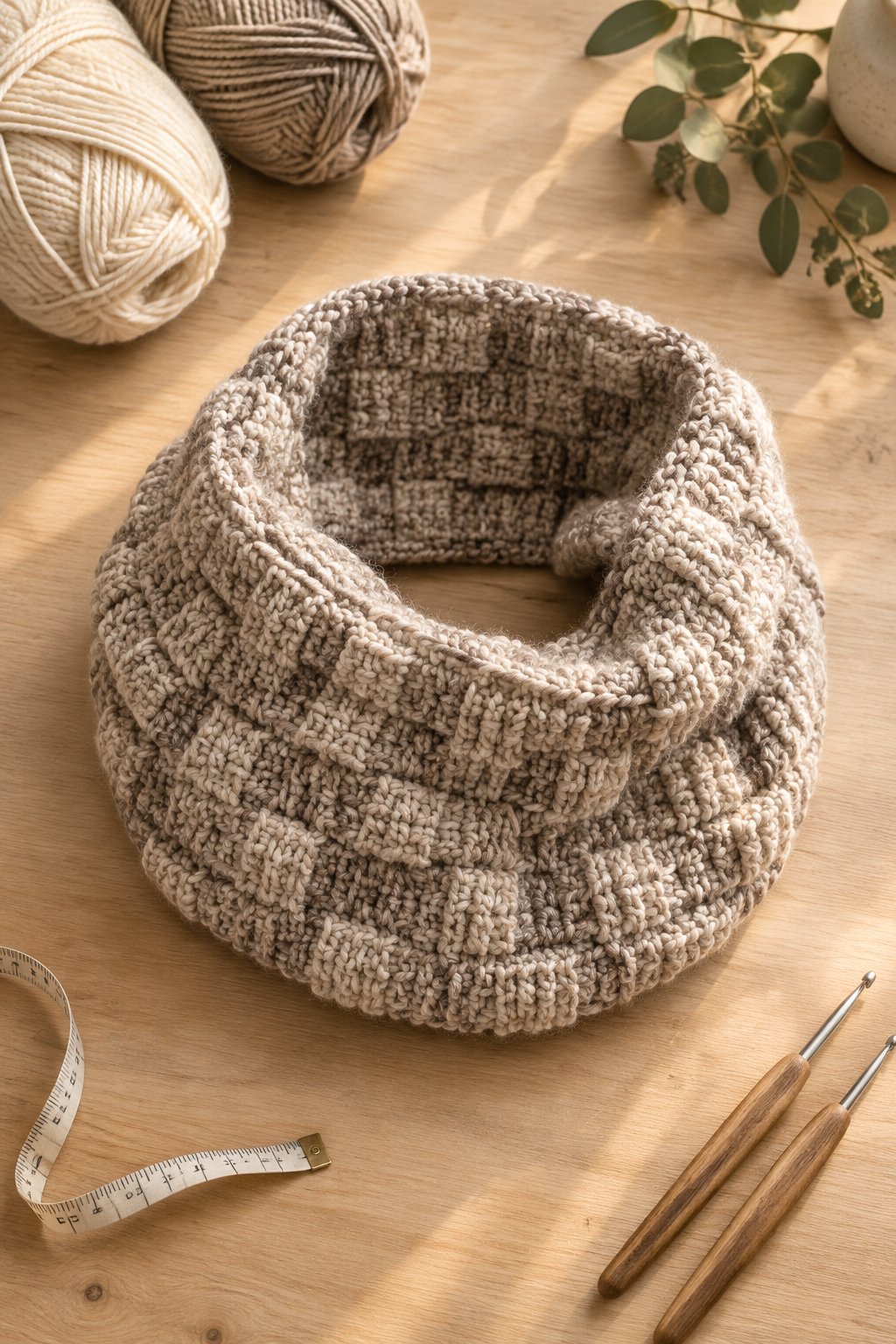
You’ll get a structured, woven-block effect by alternating groups of front- and back-post stitches. Choose chocolate brown or deep burgundy for a substantial winter accessory. Keep the circumference comfortable and the height moderate, since the dense fabric adds noticeable volume around your neck.
Select worsted-weight yarn with good stitch definition and swatch with a 5.5–6 mm hook. You’ll work groups of post double crochet, then reverse their placement after the number of rows specified in your pattern. Count each group to keep the blocks consistent.
This intermediate design suits you when you’re ready to read raised and recessed stitches. Place a marker at the start of each round so the block changes stay aligned. Wear your finished cowl with a streamlined coat, and allow extra drying time after washing its thick fabric.
|
Detail |
Specification |
|---|---|
|
Yarn Weight |
Worsted, #4 |
|
Skill Level |
Intermediate |
|
Estimated Time |
8–12 hours |
9) Chevron Cowl With Contrasting Zigzag Stripes

Make your cowl a focal point with contrasting chevron stripes and gently pointed edges. Pair black with cream for bold definition, or use peach and terracotta for softer movement. A loose loop lets the zigzags remain visible when you wear it over a plain sweater.
Choose smooth worsted-weight yarn and begin with a 5.5 mm hook. You’ll create peaks with increases and valleys with decreases or skipped stitches, following your chosen pattern’s repeat. Check your stitch count after each early row to catch a shifting peak quickly.
You’ll want intermediate skills for steady shaping and clean stripe changes. Place markers at the peaks while learning the repeat, then remove them once you recognize the rhythm. Keep both colors similar in thickness so your stripes maintain even depth throughout the finished fabric.
|
Detail |
Specification |
|---|---|
|
Yarn Weight |
Worsted, #4 |
|
Skill Level |
Intermediate |
|
Estimated Time |
6–9 hours |
10) Puff Stitch Cowl With a Ribbed Border

With puff stitches and a fitted ribbed border, you’ll create a rounded cowl with a soft, bobbly surface. Choose blush pink or warm ivory to make the raised stitches stand out. Keep the border shallow so the puff-stitch body remains the main visual feature.
Try a smooth worsted-weight acrylic or wool blend with a 6 mm hook. You’ll draw up several loops for each puff, then close them together as your pattern directs. Work the ribbing in back-loop stitches using the same yarn for a coordinated finish.
You’ll need intermediate skills to maintain even puff height and attach the edging neatly. Pull every loop to the same height before closing the stitch, and count the spaces between puffs. Wear your finished cowl with a simple cardigan, or choose a washable yarn for gifting.
|
Detail |
Specification |
|---|---|
|
Yarn Weight |
Worsted, #4 |
|
Skill Level |
Intermediate |
|
Estimated Time |
7–10 hours |
11) Tunisian Simple Stitch Cowl With a Woven-Look Finish

You’ll achieve a close, woven-looking surface with Tunisian simple stitch, especially in a lightly heathered yarn. Choose denim blue or moss green for a restrained finish. Work your cowl as a flat rectangle and seam the short ends to form a clean, unfussy loop.
Use worsted-weight yarn and start with a 6.5–7 mm Tunisian hook long enough to hold your row. You’ll collect loops on the forward pass and work them off during the return pass. Expect the lower edge to curl before finishing.
You’ll find this approachable as a beginner to Tunisian crochet, though the forward-and-return rhythm takes practice. Follow a pattern with a stabilizing border, and block according to your yarn label. Pair the finished cowl with a tailored jacket, placing the seam at the back of your neck.
|
Detail |
Specification |
|---|---|
|
Yarn Weight |
Worsted, #4 |
|
Skill Level |
Easy |
|
Estimated Time |
6–9 hours |
12) Hooded Crochet Cowl With an Extended Neck

A hooded cowl gives you connected head and neck coverage, with an extended lower section that tucks into your coat. Choose charcoal or plum for an easy-to-style winter layer. Look for a rounded hood shape with enough depth to cover your ears comfortably.
Start with bulky-weight wool-blend yarn and an 8 mm hook. You’ll find designs built from half-double crochet, with a shaped or seamed hood joined to the neck. Choose a pattern that supplies separate hood-depth and neck-length measurements before gathering your yarn.
You’ll need intermediate skills for assembly and checking the hood’s proportions. Try on the unfinished piece before completing the face edging, keeping enough room to turn your head freely. Wear the neck inside your jacket and let the hood rest over the collar when you lower it.
|
Detail |
Specification |
|---|---|
|
Yarn Weight |
Bulky, #5 |
|
Skill Level |
Intermediate |
|
Estimated Time |
10–15 hours |
13) Bandana Cowl With a Pointed Front

Choose a bandana cowl when you want a pointed front that fills the opening of a jacket. In faded teal or cinnamon, you’ll get a relaxed accessory with a scarf-like shape. The shorter back keeps extra fabric away from your coat collar.
Use a soft DK-weight wool blend and start swatching with a 4.5 mm hook. You’ll find patterns that begin with a triangle and later join into a neck opening. Double crochet gives the front gentle drape, while a simple edging helps define the point.
You’ll need easy-to-intermediate skills, depending on the shaping method. Mark the center increase so the point stays balanced, and check the neck opening before working the final rounds. Wear the tip centered over a T-shirt or shift it slightly to one side beneath a cardigan.
|
Detail |
Specification |
|---|---|
|
Yarn Weight |
DK, #3 |
|
Skill Level |
Intermediate |
|
Estimated Time |
5–8 hours |
14) Two-Tone Fair Isle Crochet Cowl Worked in the Round

You’ll create a striking patterned tube with two-tone crochet colorwork inspired by Fair Isle motifs. Choose cream and navy for crisp contrast, keeping the design to small diamonds or repeating geometric bands. A straight-sided shape helps your motif stay readable around the full circumference.
Use smooth DK-weight yarn and try a 4 mm hook. Follow a crochet-specific chart that explains its stitch choice and color changes. For a stranded version, keep the unused yarn relaxed across the inside and follow any instructions for securing longer floats.
You’ll need intermediate skills for chart reading and managing two yarns. Check the fabric’s stretch frequently because tight floats restrict the opening. Wear your cowl with a solid-colored coat, and position the round join toward the back so the main motif faces forward when you put it on.
|
Detail |
Specification |
|---|---|
|
Yarn Weight |
DK, #3 |
|
Skill Level |
Intermediate |
|
Estimated Time |
10–15 hours |
15) Cotton-Blend Shell Stitch Cowl for Lightweight Layering

For a light decorative layer, you’ll enjoy a cotton-blend shell stitch cowl with an open, scalloped surface. Choose pale sage or sandy beige for a soft spring palette. Give your loop a relaxed circumference so the shells fall into gentle folds across your chest.
Use DK-weight cotton-acrylic yarn and begin with a 4.5 mm hook. You’ll work groups of double crochet into shared stitches or spaces, separated by the anchors specified in your pattern. Keep your shell groups consistent to maintain an even lower edge.
You’ll find this an easy project after learning double crochet. Count each shell’s stitches before moving on, especially when you reach the round join. Layer your finished cowl over a long-sleeve top for mild weather, and lay it flat to dry to help preserve its original shape.
|
Detail |
Specification |
|---|---|
|
Yarn Weight |
DK, #3 |
|
Skill Level |
Easy |
|
Estimated Time |
5–8 hours |
How to Choose Yarn and Hooks for Your Cowl
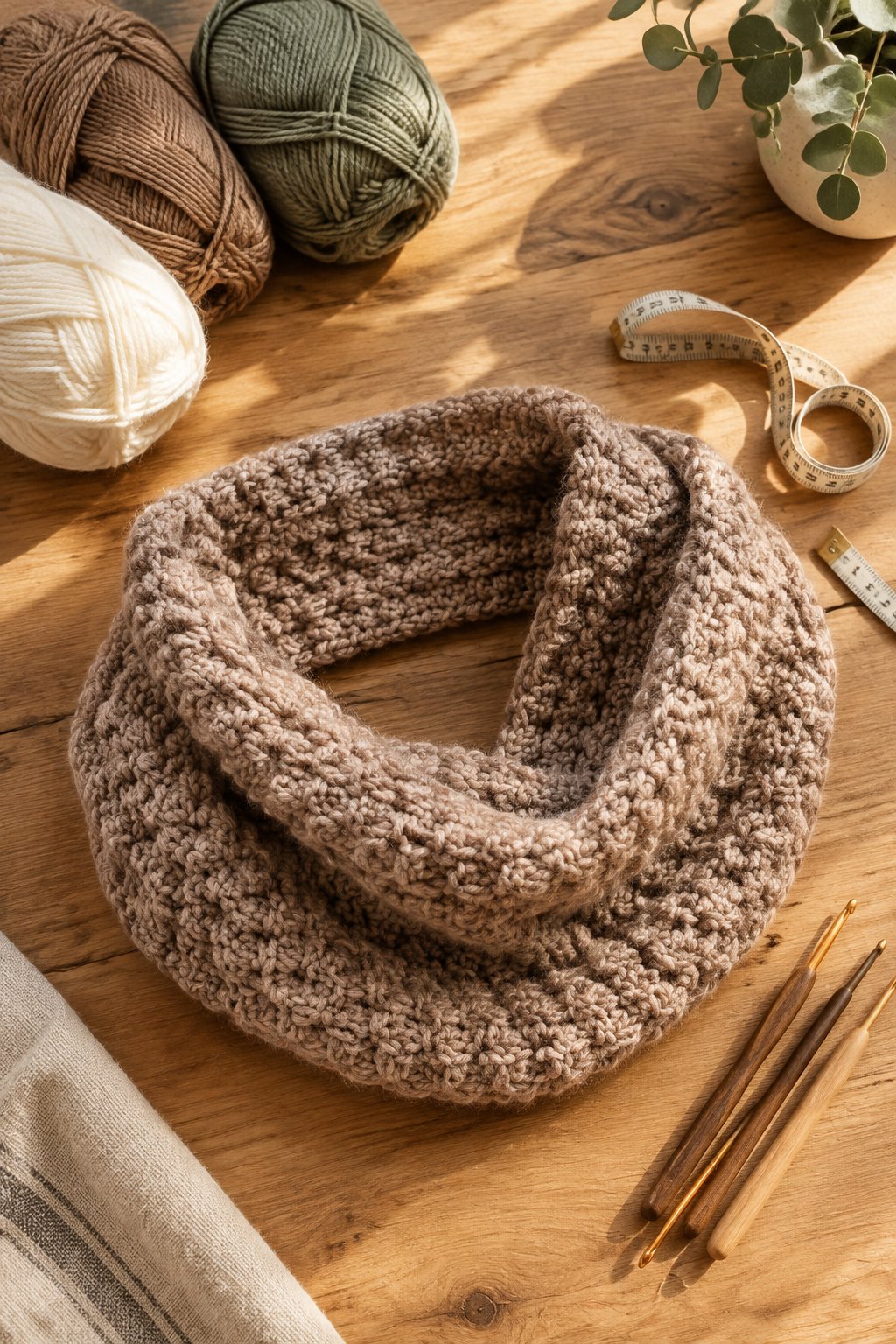
Match your yarn weight to the pattern, then adjust your hook through swatching. You’ll preserve the intended proportions while checking how the fabric feels.
Should You Choose Worsted, Chunky, or Lightweight Yarn?
Choose worsted weight for your first textured cowl because its stitches are easy to see. Use chunky yarn for thick winter layers, or DK and lighter yarns for softer folds. Check yardage when substituting, since equal skein weights contain different lengths.
Which Fibers Feel Comfortable Against Your Neck?
Hold a yarn sample against your neck before committing to several skeins. Try fine merino for springy warmth, acrylic for straightforward care, or a cotton blend for lightweight wear. Check the label for washing instructions, especially when choosing gift yarn.
How Does Hook Size Affect Warmth and Drape?
A larger hook creates looser fabric with more drape; a smaller hook creates a tighter fabric. Stay close to the pattern’s gauge, then assess the washed swatch for flexibility. If your fabric feels stiff, test the next hook size before changing the project dimensions.
How to Get a Comfortable Fit and Neat Finish

Check your cowl’s opening early and finish the joins with the same care as the visible stitches. You’ll catch sizing problems before investing in the full height.
How Much Neck and Head Clearance Do You Need?
Measure around the widest part of your head for a pull-on cowl, then check the pattern’s opening and stretch. Use a 24–28-inch circumference as a starting range for a relaxed adult cowl, adjusting for your measurements. Test the foundation edge over your head before continuing.
When Should You Make a Gauge Swatch?
Swatch before starting fitted cowls, shaped hoods, or any yarn substitution. Wash and dry your sample as directed on the yarn label, then measure away from its edges. Compare both stitch and row gauge with the pattern.
How Can You Keep Seams, Edges, and Color Changes Tidy?
Match stitch to stitch when seaming, keeping your sewing tension flexible. Work color changes at the location your pattern specifies and weave tails through several stitches in different directions. Check the inside for long loops that might catch on earrings.
What to Check Before Starting a Free Pattern
Check that your chosen free pattern includes complete instructions and the details needed to reproduce its fit. Read through the finishing steps before buying yarn.
Is the Complete Pattern Free, or Only the Preview?
Look for the full materials list, stitch instructions, and finishing directions on the page or downloadable file. If you see a paid PDF option, check whether the designer also provides the complete pattern free on the webpage.
Does the Pattern Use US or UK Crochet Terms?
Find the terminology note before interpreting abbreviations. In US terms, single crochet corresponds to UK double crochet; US double crochet corresponds to UK treble crochet. Keep a conversion note beside your pattern if you use the other system.
Are Yardage, Finished Measurements, and Special Stitches Explained?
Confirm the required yardage and finished circumference before selecting your yarn. Read special-stitch definitions and any chart key, then check how the pattern handles joins and turning chains. For unfamiliar techniques, practice one repeat with scrap yarn before starting your cowl.